tech4xmas 2021: The Q Series Quantum Edition (QE) Pro series are the flagship Android TVs by Singapore brand PRISM+. I tried the Q65-QE Pro and found that it indeed offered excellent value-for-money. Quality that’s almost as good as the flagship of established brands – but at a fraction of the price.
The PRISM+ Q65-QE Pro standing pretty in front of my Samsung 55-inch TV. The image quality isn’t far behind but the price is like half. Super value-for-money.
Appearance-wise, the Q65-QE Pro looks really smart with almost no bezel on three edges – left, right and top sides.
Along the bottom of the TV is a 1-cm bezel as well as the brand logo and LED status light on a thin extension below the centre of that bezel.
PRISM+ Q Series QE Pro TVs
PRISM+ makes three sizes for the Q Series QE Pro 4K UHD Android TVs.
86-inch: S$2,999
65-inch: S$1,199
55-inch: S$999
Apart from their different sizes and price tags, all three TVs share the same specifications.
All are bezel-less Quantum IPS panels with 4K UHD (3,840 x 2,160) resolution offering 1.07 billion colours, running the latest Android TV OS 10.0 with Google Play Store, and 3 years onsite full warranty.
Features include Active HDR10, Dolby Vision, Dolby Atmos, DTS TruSurround, Digital TV, and in-built Chromecast Google Assistant for hands-free voice control.
The TVs are also bundled with free subscriptions with meWATCH (12 mths) and Viu (3 mths).
Connectivity is excellent with 3 x HDMI 2.0, 2 x USB 2.0, Composite AV, Optical Audio (SPDIF) out, RF in, Bluetooth 5.0, Ethernet LAN, and Wi-Fi (2.4GHz/5GHz).
Excluding the stand, the panel measures 1447 x 827 x 85 mm with a weight of 19.9kg
Including the stand which is very stable, the TV measures 1447 x 904 x 290 mm, with a weight of 20.15kg.
The TV can also be mounted on the wall with a mounting measuring 400 x 200mm.
Picture quality-wise, Dolby Vision’s HDR technology provides good natural colours, with better tone definition, contrast management and greater detail.
The IPS panel accords a wide viewing angle (178 degrees), while the Quantum Color backlit technology of the series further enhances overall brightness and contrast, as well as greater colour volume and accuracy than similarly priced TVs.
Compared to its predecessors (Q-series), the Q65-QE definitely offers a wider colour gamut and higher dynamic range.
In fact, I find the image quality quite almost as good as my own Samsung 55” TV, which is priced roughly twice the Q65-QE Pro.
Audio wise, I find the 2 x 10W output adequate – I don’t think an external soundbar is necessary, except perhaps to boost the bass.
Xiaomi 11T, together with the Xiaomi 11T Pro and a refreshed Xiaomi 11 Lite 5G NE, is the latest addition to the Xiaomi 11 family of flagship smartphones. Overall, you get a mid-range smartphone with flagship-level features at a reasonable price.
The Xiaomi 11T comes in 3 colors: Meteorite Gray, Moonlight White, and Celestial Blue.
The Xiaomi 11T & Xiaomi 11T Pro are the company’s first smartphones to do away with the Mi prefix and branding.
Both phones continue the product line’s focus on creators and content creation.
There are two configurations available for the Xiaomi 11T, both with 8GB RAM:
8GB + 256GB (S$649)
8GB + 128GB (S$629)
With only S$20 separating the two configurations, it’s a no-brainer to go for the version with 256GB storage.
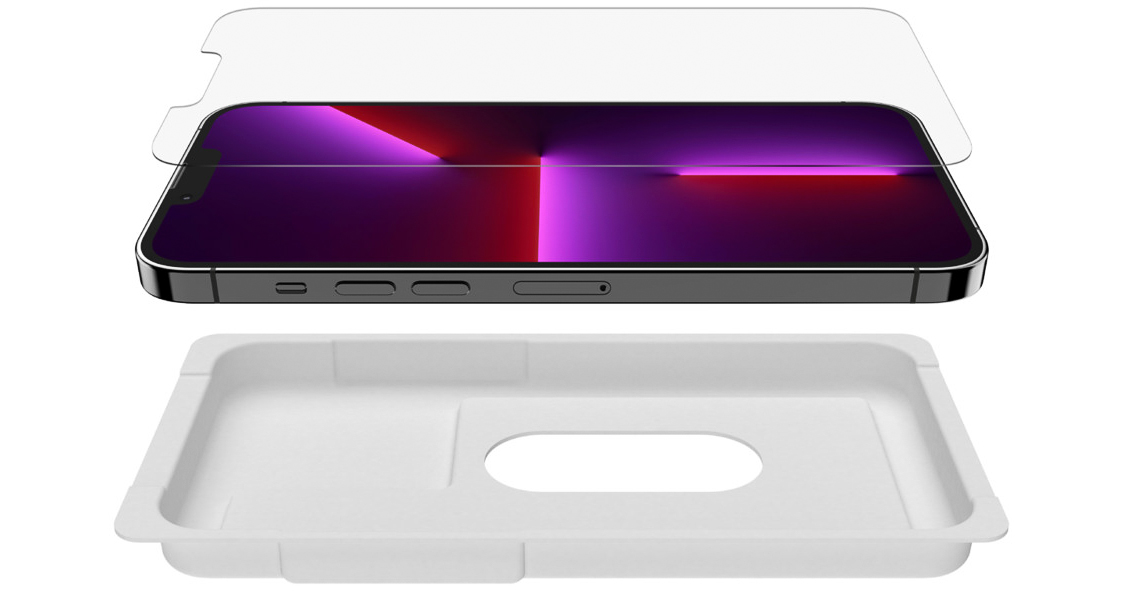
Tech-U-Can-Use (TUCU): Guest reviewer Jennifer Lee just received her new iPhone 13 Pro Max so in order to protect it, she got herself the Belkin SCREENFORCE UltraGlass screen protector and applied it herself to the phone. Here’s her experience.
#tech4xmas: This SCREENFORCE UltraGlass screen protectorfrom Belkinmakes an ideal Christmas present for the iPhone 13 Pro Max owner.
I am amazed at how easy the application was.
No fuss, just follow the very simple step by step visual guide (included) using the Easy Align Tray.
Belkin makes it easy and fuss-free to self-apply the SCREENFORCE UltraGlass screen protector DIY, as the reviewer tried out.
Unlike most screen protectors, the Belkin Ultraglass application was flawless, precise and bubble-free even at the first attempt.
The Ultraglass feels seamless on the screen, without any curves or bends and you won’t realise there is another layer of screen protector on top.
Tech-U-Can-Use (TUCU): My mom’s in-box power supply for her phone died on her, so I got her a replacement wall charger – as a replacement and upgrade.
The Belkin BoostCharge USB-C PD 3.0 PPS Wall Charger 25W is an intelligent charger for those new phones that doesn’t include chargers in the box, as a second charger at the office, or simply as a spare/backup charger.
The main features of Belkin’s BoostCharge 25W wall charger can be gleaned from its lengthy name.
It’s a wall charger, it can charge at up to 25W max power, it uses USB-C, it is PD 3.0 certified, and it is equipped with PPS technology.
It used to be that the new phones come with chargers in the box, but phone makers are now beginning to exclude the charger in the box. So we’ll begin to shop more for 3rd-party chargers.
Do you remember these different plugs for different chargers, not to mention different power ratings for each device?
I remember years ago when I was writing for the Straits Times Digital Life about what tech to pack when travelling, I’d lamented that the charger for different phones used proprietary chargers that were not interchangeable – in terms of the plugs and the power ratings.
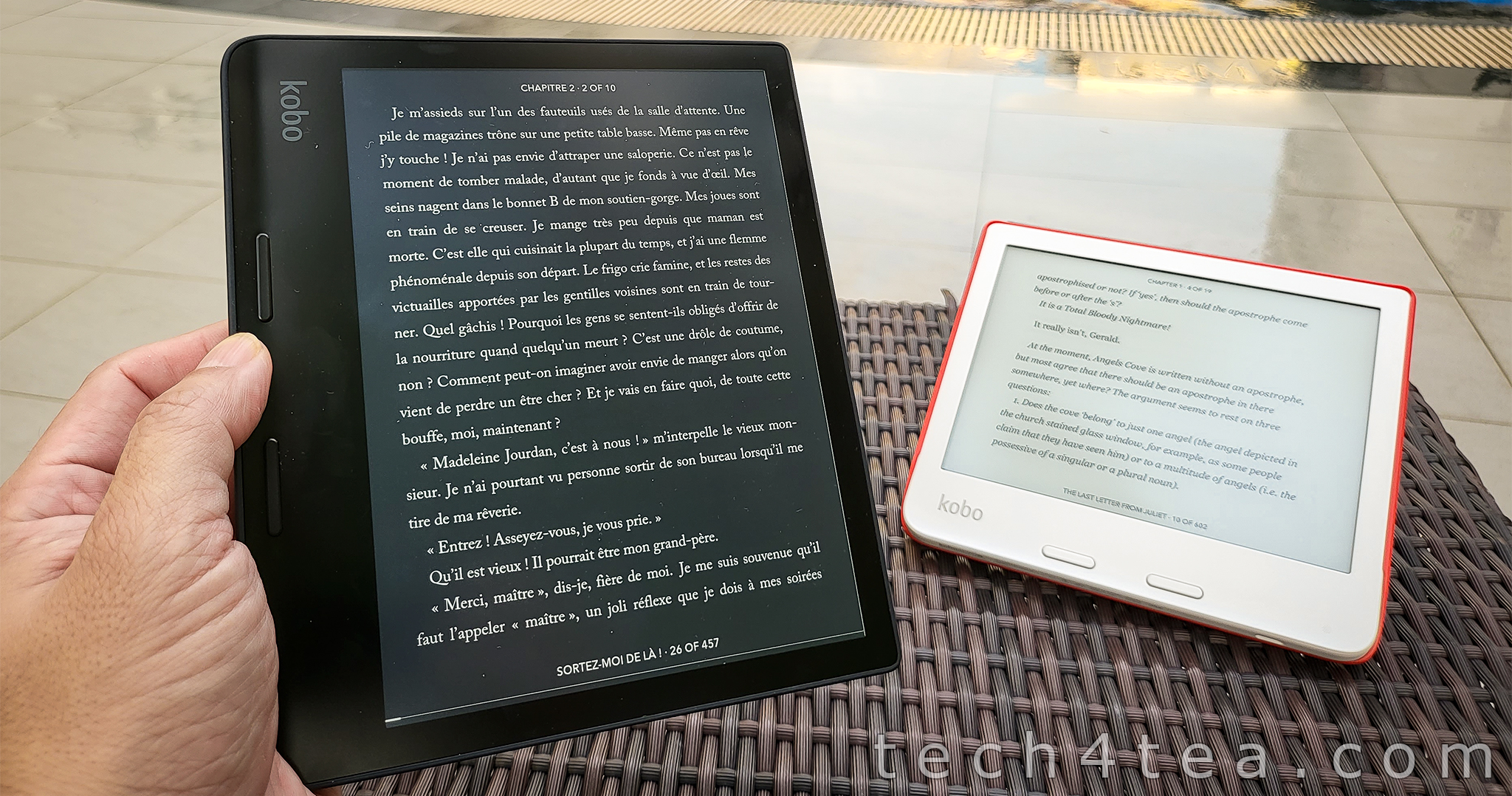
An e-reader makes a fantastic Christmas present for an avid reader. I’ve gotten my wife the latest Rakuten Kobo Sage for this year’s X’mas. For those who prefer a slightly smaller form-factor (and lower price-tag), the Kobo Libra 2 is also an excellent e-reader.
The Rakuten Kobo Sage (left) and Kobo Libra 2 are both waterproof to IPX8 rating so you can safely read by the pool and in the bath. In this photo, the new Dark Mode is enabled on the Kobo Sage. Notice that the text is clearly legible even under bright sunlight.
The Kobo Sage (S$399.90) and Kobo Libra 2 (S$289.90) are the two latest e-readers that Rakuten Kobo launched in October.
The Kobo Sage is slightly cheaper than Amazon’s flagship Kindle Oasis, while the Kobo Libra 2 is similarly priced to the latest Kindle Paperwhite.
Christmas prezzies for the wife and son who are avid readers. The 8″ Kobo Sage (left, in Dark Mode) and 7″ Kobo Libra 2 (with an audiobook) in their sleepcovers which protects them and doubles up as a stand.
The 8-inch Kobo Sage is the new flagship of Kobo’s e-reader line-up, taking over the baton from the Kobo Forma (S$349.90) which is still available.
Check out other tech4xmas gift ideas that I’ve curated for this year’s Christmas here.
The 7-inch Kobo Libra 2 is the new version that succeeds the Libra H2O that my wife has been using, with great satisfaction, for the past year – it was her Christmas present for last X’mas.
So what are the key improvements of the two new e-readers?
Fewer accidents and greater road safety are central to the vision for automated vehicles (AVs). Enabling that vision requires greater situational awareness and the ability to inform the car and its drivers what is happening a mile in front of them, foreseeing what’s likely to happen next, and automatically taking preemptive actions.
In this guest commentary, Cheryl Ajluni from Keysight Technologies shares her insights into C-V2X certification.
C-V2X Applications (Image courtesy of Qualcomm).
Cellular vehicle-to-everything (C-V2X) technology provides see-through, 360-degree, non-line-of-sight (NLOS) sensing in good, as well as adverse weather conditions to enhance the functionality and safety of autonomous driving (see the cover illustration).
Editor’s Comments
The future of motoring is in the connected/networked smart vehicle.
As demand rises around the world, the connected vehicle market is one of the fastest growing segments of the Internet of Things, potentially generating application revenue of US$273 billion by 2026, according to Machina Research’s forecasts.
C-V2X complements line-of-sight (LOS) sensors such as radar, lidar, camera, with information beyond their reach, and allows the vehicle to make more informed and coordinated decisions.
Whereas LOS sensors cannot indicate vehicle or driver intent, C-V2X conveys intent by sharing sensor data – resulting in a higher level of predictability in traffic situations such as lane changes, variable speeds, or road hazards.
Day one use cases include safety features such as emergency electronic brake light and forward collision warning, ‘do not pass’ warning, blind spot and lane change warning, vulnerable road user, road works warning, and intersection movement assistance.
Here are some gift ideas that I’ve curated for X’mas 2021. I’ll be adding to this list over the next few weeks, so check back daily for new gift ideas as I collate them.
The tech4xmas gift guide is meant to provide ideas to start you off, so do check out some of them online and in the shops if they are what you think would bring a smile to your loved ones this Christmas. Start by shopping (on Redbubble) for accessories (phone cases, mouse pads, T-shirts, mugs etc) based on this lovely watercolour painting painted by my wife.
It’s now time to shop for presents for Christmas 2021, and bring some cheer to two years living under the shadow of COVID-19.
Cover Art for tech4xmas 2021
This year’s cover art for tech4xmas 2021 has been painted by my wife. Check out her other paintings on Instagram at @kkmakesandbakes.
This cutie in a Christmas sweater is a watercolour painting that she did for this year’s Christmas and has kindly agreed to be used as the tech4xmas 2021 banner.
Around this time of year, I’m usually inundated with requests from readers and friends on Christmas gift ideas for their loved ones or themselves.
So here are some tech that I would use myself or get for MY loved ones, based mostly on those gadgets that I’ve tried or reviewed.
Not all are the latest and newest, but they are what I think are some of the best-in-class in their category of products.
Three rapidly advancing technologies are driving this collective race towards zero-emission e-mobility: wide-bandgap (WBG) devices, more power-dense batteries, and faster charging capabilities.
In this guest commentary, Hwee Yng Yeo from Keysight Technologies shares her insights into the great EV race.
GaN and SiC wide-bandgap power semiconductors facilitate a host of onboard EV power conversion applications. Image credit: Keysight Technologies.
Since its inception on a paper napkin more than a decade ago, Formula E has evolved rapidly as a motorsport with a mission.
Entertainment aside, this electric streetcar racing’s founding mission is to showcase sustainable mobility to the world, and it has done pretty well.
Editor’s Comments
The Electric Vehicle (EV) is the future of the automotive industry and Tesla has this week just become the first carmaker to be valued at US$1 trillion – the sixth American company to hit a trillion-dollar valuation.
The company is now worth more than the next nine most valuable public carmakers combined.
It’s the only motorsport to have ISO 20121 certification for net zero carbon footprint since its first race in Shanghai in 2014.
Getting the Formula E car into pole-position entails a lot of hardware and software technology to extract maximum efficiency from the electric vehicle’s (EV) powertrain and battery.
For the key automotive OEMs, it’s not just about getting their car across the checkered flag first.
With billions of R&D dollars poured into developing better EVs, the goal of participating automakers goes beyond the championship trophy.
Learnings from these high-intensity races are applied to improve electromobility technologies back in the R&D labs.
Three rapidly advancing technologies are driving this collective race towards zero-emission e-mobility:
wide-bandgap (WBG) devices
more power-dense batteries
faster charging capabilities
Efficient power conversion with WBG devices
A lot of power conversion takes place in the EV.
A DC-DC converter for example, steps down the power from the high-voltage EV battery to 12 V, with further conversions to run onboard systems like lighting, radio, and air-conditioning (see the diagram above).
The author of this article is Hwee Yng Yeo, the industry solutions manager for Automotive and Energy at Keysight Technologies.
WBG devices such as Silicon carbide (SiC) and Gallium nitride (GaN) semiconductors are used in transistors to facilitate this power conversion throughout the vehicle.
GaN applications are an emerging technology area, and developers find it hard to validate their design for these high-performance power converters.
Increased frequency and higher power affect the reliability of measurements needed to characterise the device’s performance.
It can be hard to distinguish whether the measured signal is the device’s characteristic or caused by the measurement setup.
IoT – or the Internet of Things – has been the buzzword for a while now and businesses are constantly on the lookout for ways to fast track their IoT adoptions and rollouts.
I spoke with Jitender Khurana to find out how a traditional lighting network can be harnessed to rapidly transform a dumb building into a smart IoT-enabled environment.
Jitender Khurana is the Country Head & Managing Director for Singapore and Emerging Markets at Signify. Photo: Signify.
I asked Jitender the key to Signify’s competitive advantage in helping its customers embrace IoT.
Three simple words: “Lighting is ubiquitous,” says Jitender, head honcho for Singapore and Emerging Markets at Signify.
“Lighting is ubiquitous,” says Jitender Khurana, head honcho for Singapore and Emerging Markets at Signify.
But how does that give Signify a leg up in helping businesses embrace IoT more quickly and easily?
Well, the most tedious aspect of rolling out an IoT implementation is typically the deployment of IoT sensors and the network connecting these sensors back to the IoT platform.
Laying the network for both power supply and data tends to be both costly and time-consuming.
For Signify – that network is simply the lighting network that forms the basic infrastructure of any building or facility.
As far as the world leader in lighting is concerned, “Where there’s light(ing), there can be an IoT sensor integrated into the luminaire”.