Posts Tagged ‘security’
Thursday, March 31st, 2022
The losses were due to system crashes, human error and cyberattacks. The Acronis Cyber Protection Week Global Report 2022 highlights growing threats and need for integrated cyber protection solutions.

The annual Cyber Protection Week Global Report 2022 surveyed more than 6,200 IT users and IT managers from small businesses to enterprises across 22 countries.
Acronis has released its annual Cyber Protection Week Global Report 2022 timed to this year’s World Backup Day.
“As the entire world is increasingly at risk from different types of attacks, accelerating to universal all-in-one solutions is the only way to achieve truly complete cyber protection. And that’s precisely the problem Acronis has set out to solve. Attackers don’t discriminate when it comes to means or targets, so strong and reliable security is no longer an option, it’s a necessity,” says Candid Wuest, Acronis V.P. of Cyber Protection Research.
The report exposes some of the most critical shortcomings appearing in cyber protection practices today and examines why they’re appearing, offering guidance on how they can be fixed.
One of the key findings last year was that 80% of organizations ran as many as 10 solutions simultaneously for data protection and cybersecurity — yet more than half of them suffered downtime because of data loss.
So more solutions do not necessarily translate into more protection.
This year, the trend seems to be getting worse.
While 78% of organizations globally run as many as 10 different solutions, 76% of organizations experienced downtime due to data loss — a 25% increase from 2021.
(more…)
Tags:Acronis, Cyber security, reports, security, software, study
Posted in Acronis, Brief, Business IT, Figures, Press Release, Security, Software, Study | 3 Comments »
Friday, March 18th, 2022
Every network has a security vulnerability – where is yours? In this guest commentary, Keith Bromley from Keysight Technologies shares a three-point plan on how to find your security vulnerability before hackers beat you to it.
One of the top questions on the minds of network security personnel is “how do I reduce my security risk?”
Even for smaller organisations this is important because every network has a weakness. But, do you know where you are the most vulnerable? Wouldn’t you like to fix the problem now, before a hacker exploits it?
Here is a three-point plan that works to expose intrusions and decrease network security risk.
Network security – It all starts with prevention
Inline security solutions are a high impact technique that businesses can deploy to address security threats. These solutions can eliminate 90% or more of incoming security threats before they even enter your network.
(more…)
Tags:insights, intrusions, Keysight, networking, opinions, security, Tech Focus, technology, vulnerability
Posted in Keysight, Network, Opinion, Security, Tech Focus | 2 Comments »
Thursday, November 4th, 2021
Cyberattacks on online retailers and shoppers are projected to rise in November in conjunction with Singles’ Day, Black Friday and Cyber Monday. Here are some protective measures that shoppers and retailers can practise.

According to the Imperva’s “The State of Security Within eCommerce 2021” report, threats are escalating for the retail industry.
Imperva has released a new eCommerce report and issued advice around safe retailing in conjunction with the world’s biggest online shopping event on Nov 11 − Singles’ Day.
“The 2021 holiday shopping season is shaping up to be a nightmare for both retailers and consumers. With the global supply chain conditions worsening, retailers will not only struggle to get products to sell in Q4, but will face increased attacks from motivated cybercriminals who want to benefit from the chaos. Retailers and consumers alike need to take the necessary steps to protect themselves,” says Peter Klimek, Director of Technology, Office of the CTO, Imperva.
The company helps organisations protect their data and all paths to it – securing their applications, data and websites from cyber attacks.
Last year, Chinese e-commerce giants Alibaba and JD.com racked up around US$115 billion in sales across their platforms during the Singles Day shopping event, setting a new record.
Singles’ Day online sales in China usually surpass the US Cyber Monday sales, Black Friday or any other 24-hour shopping campaign by a wide margin making it the biggest shopping holiday in the world.
Scams typically rise in tandem with the number of online shoppers, and Imperva’s 12-month analysis on cybersecurity risks in the retail industry suggests that the 2021 holiday shopping season will be no different.
In fact, in Imperva’s “The State of Security Within eCommerce 2021” report, the number of victims this year is projected to surpass that of last year’s.
More details below from the report
(more…)
Tags:cybersecurity, eCommerce, Imperva, security, shopping
Posted in Announce, Figures, Internet, Press Release, Security, Shopping, Study, Trends | No Comments »
Wednesday, October 27th, 2021
The Yubico “Security Key C NFC” (US$29) is the latest keey to join the Security Key Series.

The new Security Key C NFC key from Yubico.
The blue Security Key C NFC offers FIDO-only support in a USB-C form factor with NFC capabilities.
It provides enhanced, modern security for applications, services, and user accounts for both desktop and mobile authentication.
(more…)
Tags:accessories, security, Yubico
Posted in Accessories, Availability, Gadgets, gadgets, newArrivals, Press Release, Prices, Security, Specifications | No Comments »
Monday, March 15th, 2021
Did you know that sex toys could be connected to the Internet, to a smartphone or to another sex toy? Along with the technology that makes sex toys smart, vulnerabilities are introduced that could endanger the user’s data, privacy and even safety!
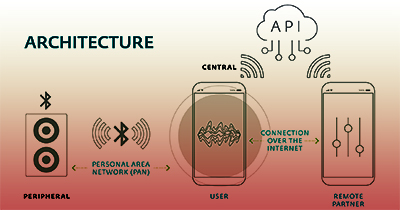
Architecture of a smart sex toy.
With the emergence of the IoT, many manufacturers have entered the sexual pleasure market by integrating the ability to control devices through mobile apps as well as adding web-based interconnectivity.
There are currently numerous different apps available, each of which offers the ability to control a wide range of models.
In terms of their architecture, most of these devices can be controlled via Bluetooth Low Energy (BLE) from an app installed on a smartphone.
Sex in the Digital Era
ESET has published a White Paper on their study on the potential security and safety flaws of connected sex toys.
The title of the report is “Sex in the Digital Era – How secure are smart sex toys?” and here is an excerpt on the characteristics of sex toys.
The main advantages of this protocol are that it has very low power requirements, communications are within an acceptable range, there is interoperability among chipset manufacturers, and it all comes in a very compact size.
As a result, a lot of smart devices for the home, health, car, and even sex toy fields, use BLE between the device and the app that controls it.
Like Bluetooth, BLE operates on the 2.4 GHz ISM band.
However, unlike standard Bluetooth, BLE stays in sleep mode all the time, except when a connection is initiated.
Also, the actual connection times themselves are just a few milliseconds, unlike Bluetooth, which takes more than 100 milliseconds.
(more…)
Tags:Bluetooth, ESET, IoT, security, sex, study, toys, vulnerabilities, White Paper
Posted in Accessories, ESET, Gadgets, gadgets, Reference, smartphones, Study | No Comments »
Sunday, March 14th, 2021
ESET has published a White Paper on their study on the potential security and safety flaws of connected sex toys. The title of the report is “Sex in the Digital Era – How secure are smart sex toys?” and here is an excerpt on the evolution of sex toys.

“Sex in the Digital Era – How secure are smart sex toys?” is an ESET Research White Paper published by Denise Giusto and Cecilia Pastorino.
As IoT (Internet of Things) devices continue to seep into our homes and offer an increasingly wide range of features, new concerns are beginning to arise about the security of the data processed by these devices.
Though they have been subject to countless security breaches leading to the exposure of people’s login details, financial information, and geographical location, among others, there are few kinds of data with more potential to harm users, if published, than those relating to their sexual behavior.
Sex in the Digital Era
So, how secure are adult toys right now?
Have the necessary precautions been taken to protect people’s data and privacy?
These are some of the concerns addressed in this whitepaper.
We will analyse the increasingly important role played by these types of devices and the vulnerabilities in some of them, placing an emphasis on the importance of demanding—as informed consumers—that best practices and standards are applied to these products in order to ensure that our data is secure and we are unharmed.
With new models of smart toys for adults entering the market all the time, we might imagine that progress is being made in strengthening the mechanisms to ensure good practices in the processing of user information.
However, our research shows that we are a long way from being able to live out our sexuality through digital media without exposing ourselves to the risk of cyberattack.
Today, these findings are more relevant than ever, since we are seeing a rapid rise in sex toy sales as a reflection of the current health situation around the world and the social distancing measures related to COVID-19.
Though many experts have devoted time to identifying and reporting security flaws within this industry, with every passing year these devices incorporate an ever wider range of features: Group chats, multimedia messages, videoconferencing, synchronisation with lists of songs or audio books, and much more.
Each time their code is re-engineered, some vulnerabilities are corrected, new vulnerabilities may be created, and many more remain unchanged in the updated versions.
Read about the evolution of sex toys below.
(more…)
Tags:ESET, IoT, security, sex, study, toys, White Paper
Posted in Accessories, ESET, Gadgets, Internet of Things, IoT, Security, Study | No Comments »
Saturday, March 13th, 2021
Vulnerabilities in smart sex toys could leave users at risk of data breaches and attacks, both cyber and physical, according to a new white paper from global cybersecurity experts at ESET.

The We-Vibe Jive (left) and Lovense Max (right) analysed in the study.
The “Sex in the Digital Era – How secure are smart sex toys?” report explores the potential security and safety flaws of connected sex toys and includes an in-depth analysis of two popular devices.
Amidst ongoing social restrictions due to the pandemic, sales of sex toys has risen rapidly, and associated cybersecurity concerns mustn’t be overlooked.
Sex in the Digital Era
“Sex in the Digital Era – How secure are smart sex toys?” is an ESET Research White Paper published by Denise Giusto and Cecilia Pastorino.
Stay tuned over the next few days as I feature interesting extracts from the White Paper.
As newer, technologically advanced models of sex toys enter the marketplace, incorporating mobile apps, messaging, video chat, and web-based interconnectivity, devices become more appealing and exploitable to cybercriminals.
The consequences of data breaches in this sphere can be particularly disastrous when the information leaked concerns sexual orientation, sexual behaviors, and intimate photos.
(more…)
Tags:ESET, IoT, Lovense, security, sex, study, toys, We-Vibe, White Paper
Posted in Accessories, ESET, Gadgets, gadgets, Internet of Things, IoT, Press Release, Security, Study | No Comments »
Wednesday, September 30th, 2020
With the COVID-19 pandemic, much of the school’s curriculum has been migrated to online learning from home. With the threats out there in the World Wide Web, how can concerned parents better safeguard their children from online predators? Here are some tips.
My kids have never used the computer and the Internet so much before the pandemic set in at the beginning of the year.
It started with a bang when school was closed to students during the nationwide lockdown, and students had to do ALL their lessons online, using online video conferencing tools such as Zoom and Google Meet.
Parents had to scramble to help their children be ready for #HomeBasedLearning – the new buzzword for families with school-going kids.
From buying laptops, to setting them up, to teaching the kids how to use the video conferencing software.
There was hardly any time and energy left to figure out how to secure the laptop and online learning sessions from Internet predators.
So parents – below are some areas to watch out for when preparing your child for #HomeBasedLearning.
- Dubious websites and content
- Dubious “Friends” in chat rooms and social media
- Cyberbullying
- Scams
Dubious websites and content
The World Wide Web is full of interesting stuff, much of it inappropriate for children e.g. pornography, racism, hate and violence.
So keep a close eye on what your kids are surfing – check their search/browser histories and designate an open location in the home for the kids to use the computer, so that everybody can help keep an eye out.
(more…)
Tags:cybersecurity, HBL, howtos, Internet, Norton, safety, security, tips, WWW
Posted in Featured, Home, Howtos, Internet, Norton, Opinion, Security, Tips | 2 Comments »
Sunday, September 20th, 2020
With employees working from home due to the COVID-19 pandemic, how can SMBs better protect against cybercriminals?
Kaspersky experts suggest the following tips for SMBs to avoid being lured by cybercriminals through phishing, crypto-mining and ransomware.
(more…)
Tags:cryptojacking, cryptomining, cybersecurity, howtos, Kaspersky, opinion, phishing, ransomware, security, Singapore, tips
Posted in Brief, Business IT, events, Howtos, Online, Opinion, Security | No Comments »
Wednesday, September 16th, 2020
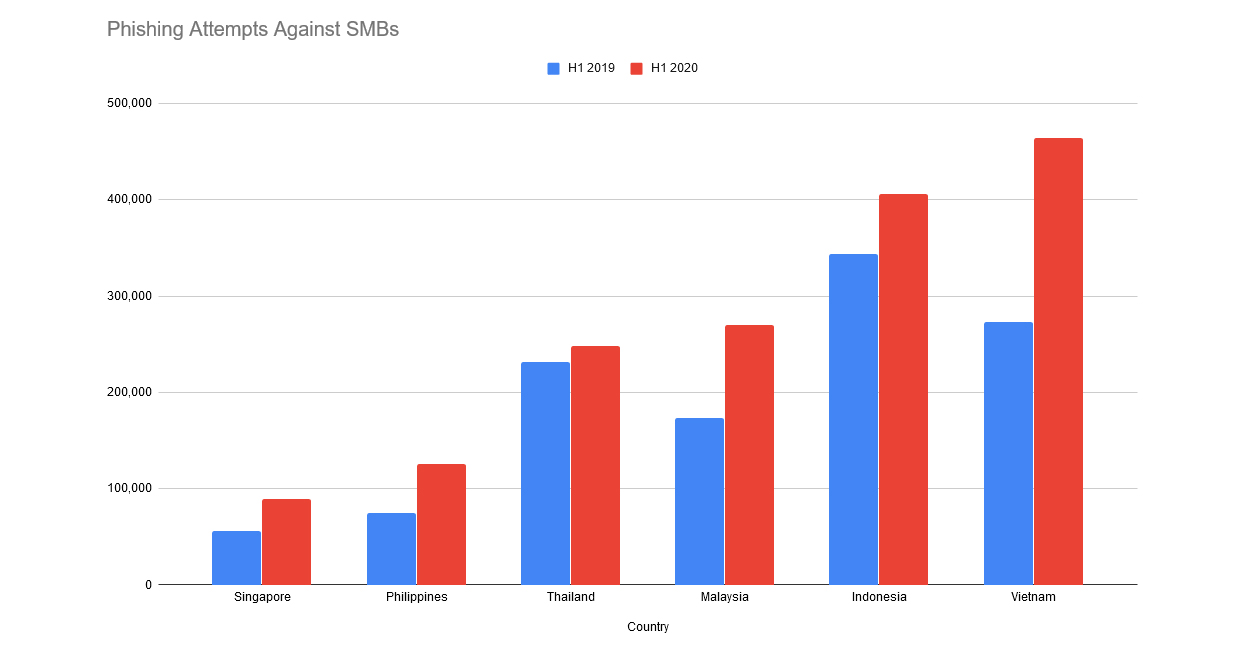
In the first half of 2020, phishing attempts targeting SMBs in Singapore increased by 61%, mirroring similar increases across South East Asian countries.

Number of phishing attempts against SMBs blocked by Kaspersky Anti-Phishing System, year-on-year.
With the COVID-19 pandemic accelerating Singapore’s digitalisation efforts, SMBs have become the focal point of discussion for many, as funding worries and the shift to telecommuting have left them in no man’s land.
“Despite the COVID-19 pandemic, Singapore continues to retain attraction as the region’s premier business hub, and speaks well of the local businesses’ ability to remain resilient despite headwinds from the global slowdown. However, almost half (41%) of businesses continue to express that the high costs of investment – lack of financing and funding – are major barriers holding them back from digitalisation. The implications of this statistic are significant, as it means cybersecurity may not be a key priority for businesses during this period of cost-cutting,” says Stephan Neumeier, Managing Director for Asia Pacific at Kaspersky.
While the Government has launched generous initiatives such as the new training and adult education industry digitalisation plan to augment SMBs’ competitiveness, malicious actors continue to find new ways to test businesses’ digital readiness.
According to Kaspersky’s latest statistics, the global cybersecurity company foiled 89,351 phishing attacks against SMBs in H1 2020, compared to 55,653 in the same period last year.
Although Singapore continues to fare better than their SMB counterparts in Indonesia, Malaysia, Philippines, Thailand and Vietnam to witness the lowest volume of phishing attacks in Southeast Asia, the 61% increase suggests that more can be done by Singapore’s SMBs to improve their cybersecurity.
More details below from the presentation and press release.
(more…)
Tags:COVID, cryptojacking, cybersecurity, figures, Kaspersky, phishing, ransomware, SEA, security, Singapore, study, survey, Tech Focus
Posted in Brief, Events, events, Figures, Infographic, Online, Press Release, Security, Seminars, Software, Study, Trends | 2 Comments »