Posts Tagged ‘technology’

Tech Focus: Monitoring Battery Temperature by Using a Data Acquisition System or Specialised Battery Test System

Wednesday, January 19th, 2022

In today’s electronics applications, batteries power nearly all of our portable electronic devices. Batteries also serve as emergency power backup systems on large premises. And all-electric vehicles use large cascading battery packs to meet the expected power for the required performance.

In this guest commentary, Bernard Ang from Keysight Technologies shares his insights on specialised battery testing.

Batteries are the key to our portable/mobile electronic gadgets in this digital era.

Batteries are the key to our portable/mobile electronic gadgets in this digital era.

Battery packs need the required specific power (W/kg) to be able to dispense enough current to achieve the electric vehicle speed performance.

They also need the required specific energy (Wh/kg) to achieve longer runtime or travel range.

Why is it important to monitor battery temperature?

Most rechargeable batteries today are lithium ion and have an operating range between 15 °C and 35 °C at which their full performance and capacity kicks in.

  • If the battery and its ambient temperature is below 15 °C, you may experience sluggish electrochemical reactions within the battery and as a result, lower battery performance and reduced charge capacity.
  • If the battery or battery pack operates above 35 °C in ambient temperature, battery degradation can accelerate over time. As a result, you may notice shorter battery life, non-uniform aging due to thermal gradients, greater exposure to safety issues, and higher life cycle costs. At extremely hot temperatures, batteries can break down and cause leakage, smoke, fire, and even explosions.

The power map chart below shows the power limits of your lithium-ion battery or battery packs across the temperature range.

(more…)

Tech Focus: Looking Ahead – High Speed In-Vehicle Display and Sensor Connections (Part 2 of 2)

Friday, December 17th, 2021

In this two-part guest commentary, Carrie Browen and Kevin Kershner from Keysight Technologies share their insights into the future of high speed in-vehicle display and sensor connections. You may find Part 1 here.

Automotive display use-case. © 2021 MIPI Alliance, Inc.

Automotive display use-case. © 2021 MIPI Alliance, Inc.

For this second half of our commentary, we begin with an introduction of SerDes.

In today’s infotainment systems, it is common for in-vehicle cameras and displays to be connected to the image-processing electronic control unit (ECU) via a SerDes (serializer/deserializer) connection.

Today, they are delivered by individual vendors using closed, proprietary standards.

Extending the reach of feature-rich SerDes links can require operating at lower Baud rates and higher order modulations (e.g. PAM-4).

In addition, it will require higher bandwidth Ethernet links as primary interconnects between zones, perhaps with 802.3ch support up to 10 Gbps throughput.

Emerging SerDes standards like mobile industry processor interface (MIPI) A-PHY (MIPI A-PHY is a physical layer specification targeted for ADAS/ADS surround sensor applications and Infotainment display applications in automotive) and Automotive SerDes Alliance (ASA) will be implemented by multiple silicon vendors.

This will create a competitive market that acts to drive down the cost while delivering application specific features.

(more…)

Tech Focus: Looking Ahead – High Speed In-Vehicle Display and Sensor Connections (Part 1 of 2)

Thursday, December 16th, 2021

In this two-part guest commentary, Carrie Browen and Kevin Kershner from Keysight Technologies share their insights into the future of high speed in-vehicle display and sensor connections.

A conceptual diagram of a zone-based in vehicle network architecture. Image: Keysight Technologies.

A conceptual diagram of a zone-based in vehicle network architecture. Image: Keysight Technologies.

It is no secret the pace of innovation in the automotive industry is exploding.

If the last 20 years have been linear in the development of electrification, the last two to three years have been exponential.

It used to be that a car was a means of getting from A to B.

Now, we can safely say that is not true for the vehicles of today and certainly not for the new vehicles of tomorrow.

Just about every new car on the market has a backup camera, park assist, and blind spot monitoring.

Some offer a 360-degree view.

Other features offer real-time traffic updates, cellular connection to potential hazards, other road users, vehicles, or pedestrians.

There are features that can detect if a driver is distracted or tired.

Meanwhile, the people in the car are often unaware of driving conditions, while they enjoy infotainment systems.

These features are delivered through a mixture of sensors, cameras, and networks.

As demands go up, next-generation advanced driver-assistance systems (ADAS) require camera and radar systems with increasingly high resolution.

(more…)

Tech Focus: C-V2X Certification – Necessary or Just Nice to Have?

Monday, November 22nd, 2021

Fewer accidents and greater road safety are central to the vision for automated vehicles (AVs). Enabling that vision requires greater situational awareness and the ability to inform the car and its drivers what is happening a mile in front of them, foreseeing what’s likely to happen next, and automatically taking preemptive actions.

In this guest commentary, Cheryl Ajluni from Keysight Technologies shares her insights into C-V2X certification.

C-V2X Applications (Image courtesy of Qualcomm).

C-V2X Applications (Image courtesy of Qualcomm).

Cellular vehicle-to-everything (C-V2X) technology provides see-through, 360-degree, non-line-of-sight (NLOS) sensing in good, as well as adverse weather conditions to enhance the functionality and safety of autonomous driving (see the cover illustration).

C-V2X complements line-of-sight (LOS) sensors such as radar, lidar, camera, with information beyond their reach, and allows the vehicle to make more informed and coordinated decisions.

Whereas LOS sensors cannot indicate vehicle or driver intent, C-V2X conveys intent by sharing sensor data – resulting in a higher level of predictability in traffic situations such as lane changes, variable speeds, or road hazards.

Day one use cases include safety features such as emergency electronic brake light and forward collision warning, ‘do not pass’ warning, blind spot and lane change warning, vulnerable road user, road works warning, and intersection movement assistance.

(more…)

Tech Focus: The Electric Vehicle Race to Market

Friday, October 29th, 2021

Three rapidly advancing technologies are driving this collective race towards zero-emission e-mobility: wide-bandgap (WBG) devices, more power-dense batteries, and faster charging capabilities.

In this guest commentary, Hwee Yng Yeo from Keysight Technologies shares her insights into the great EV race.

GaN and SiC wide-bandgap power semiconductors facilitate a host of onboard EV power conversion applications. Image credit: Keysight Technologies.

GaN and SiC wide-bandgap power semiconductors facilitate a host of onboard EV power conversion applications. Image credit: Keysight Technologies.

Since its inception on a paper napkin more than a decade ago, Formula E has evolved rapidly as a motorsport with a mission.

Entertainment aside, this electric streetcar racing’s founding mission is to showcase sustainable mobility to the world, and it has done pretty well.

It’s the only motorsport to have ISO 20121 certification for net zero carbon footprint since its first race in Shanghai in 2014.

Getting the Formula E car into pole-position entails a lot of hardware and software technology to extract maximum efficiency from the electric vehicle’s (EV) powertrain and battery.

For the key automotive OEMs, it’s not just about getting their car across the checkered flag first.

With billions of R&D dollars poured into developing better EVs, the goal of participating automakers goes beyond the championship trophy.

Learnings from these high-intensity races are applied to improve electromobility technologies back in the R&D labs.

Three rapidly advancing technologies are driving this collective race towards zero-emission e-mobility:

  1. wide-bandgap (WBG) devices
  2. more power-dense batteries
  3. faster charging capabilities

Efficient power conversion with WBG devices

A lot of power conversion takes place in the EV.

A DC-DC converter for example, steps down the power from the high-voltage EV battery to 12 V, with further conversions to run onboard systems like lighting, radio, and air-conditioning (see the diagram above).

The author of this article is Hwee Yng Yeo, the industry solutions manager for Automotive and Energy at Keysight Technologies.

The author of this article is Hwee Yng Yeo, the industry solutions manager for Automotive and Energy at Keysight Technologies.

WBG devices such as Silicon carbide (SiC) and Gallium nitride (GaN) semiconductors are used in transistors to facilitate this power conversion throughout the vehicle.

GaN applications are an emerging technology area, and developers find it hard to validate their design for these high-performance power converters.

Increased frequency and higher power affect the reliability of measurements needed to characterise the device’s performance.

It can be hard to distinguish whether the measured signal is the device’s characteristic or caused by the measurement setup.

(more…)

Livinguard Re-Affirms Protection Against Delta Variant in Tests

Thursday, September 23rd, 2021

Livinguard’s face masks passed tests by the Indian National Institute (NII) of Immunology, showing an average of more than 99% effectiveness against viruses and bacteria. The test report can be found here.

The positive results are timely as the spread of the COVID-19 Delta variant drives new mask wearing requirements worldwide

The positive results are timely as the spread of the COVID-19 Delta variant drives new mask wearing requirements worldwide

The tests reinforces the efficacy of Livinguard’s patented technology in protecting wearers of its masks at a time when face masks are again at the frontline of the fight against COVID-19.

In Singapore, Livinguard recently partnered with Grab Singapore to provide 22,000 masks for the company’s private car hire and delivery drivers to protect them from COVID-19 virus microbes.

This will provide them with the comfort that they are protected in the course of their work, where they encounter a variety of commuters, F&B staff and home diners, even as Singapore sees an ongoing tally of infections as it moves into managing COVID-19 as endemic.

In addition to being available for purchase online, Livinguard’s selection of antiviral masks is also now available at selected Guardian outlets island-wide, making it easier for those who prefer to shop in person.

More details below from the press release.

(more…)

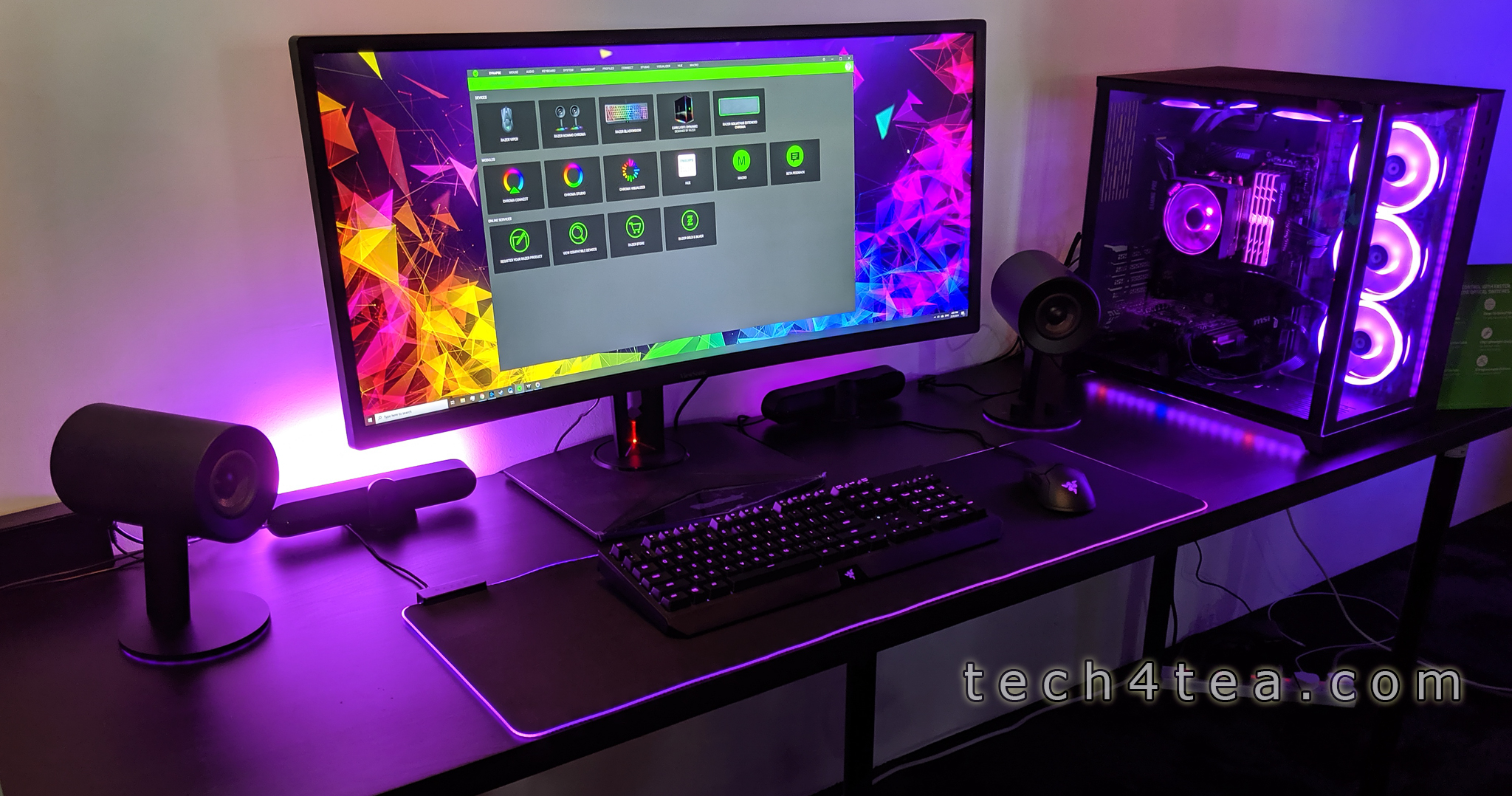
Tech4WorkFromHome: Tech U Can Use To Work & Study From Home

Tuesday, May 25th, 2021

#tech4wfh is a new series to curate technology and gadgets that you can use to set up your home environment for #WorkFromHome and #HomeBasedLearning – based on what I use for my own home office.

What is your #WorkFromHome or #HomeBasedLearning setup at home? Stay tuned for tech4WorkFromHome series of curated technology and gadgets to set up your work or study environment at home.

What is your #WorkFromHome or #HomeBasedLearning setup at home? Stay tuned for #tech4WorkFromHome series of curated technology and gadgets to set up your work or study environment at home.

It’s been more than a year since the start of the COVID-19 pandemic.

By now, workers and students all over the world have become accustomed to lockdowns and social distancing in the fight against the respiratory disease.

#WorkFromHome and #HomeBasedLearning have become the norm for the time being.

As a result, I’ve been inundated with requests for recommendations on technology and gadgets for setting up the home environment for working and for studying.

(more…)

Tech Focus: Artificial Intelligence Consumes Energy Too

Wednesday, May 19th, 2021

Jo De Boeck notes the growing list of Artificial Intelligence (AI) applications as they take up more and more of the resources on Earth to deliver anything from Amazon recommendations to deciphering a virus DNA.

In this guest blog, the EVP/CSO of imec shares his insights into how power-hungry AI can be and the need for an Energy label for AI.

Jo De Boeck is the Executive Vice President & Chief Strategy Officer of imec, an R&D and innovation hub in nanoelectronics and digital technologies, based in Belgium. Photo: imec.

Jo De Boeck is the Executive Vice President & Chief Strategy Officer of imec, an R&D and innovation hub in nanoelectronics and digital technologies, based in Belgium. Photo: imec.

AI has become more intelligent in recent years.

Fuelled by seemingly infinite computational power that is easily available on tap today, it now processes huge amounts of data to recognise patterns every day.

Yet, with each new “trick” that an AI can learn, whether this is differentiating a cat from a dog or getting a robotic arm to figure out a Rubik’s Cube, billions of calculations go into each task.

“We need to talk about an Energy Label for AI,” says Jo De Boeck, EVP & CSO, imec. Photo: imec.

“We need to talk about an Energy Label for AI,” says Jo De Boeck, EVP & CSO, imec. Photo: imec.

That takes a lot of energy to power up, adding to an already fraught situation with global warming.

Compare this to the human brain.

It can effortlessly complete many of these cognitive feats that AI is accomplishing and celebrated for today, while requiring a small fraction of the energy.

So, while AI can be useful to help save energy by optimising its use, there is energy needed to train an AI model as well. This energy is not insubstantial.

Can this inspire us to develop more energy-efficient AI systems?

Will they bring a net positive in efforts to prevent or reverse permanent environmental damage?

(more…)

OPPO Unveils Three Concept Gadgets at INNO DAY 2020

Wednesday, November 18th, 2020

OPPO unveiled the OPPO X 2021 rollable concept handset, OPPO AR Glass 2021, and OPPO CybeReal AR application, as the company rolled out its 3+N+X technology development strategy.

The OPPO X 2021 rollable concept handset.

The OPPO X 2021 rollable concept handset.

OPPO says that the three concept products demonstrate all-new possibilities of human-tech interaction and exploration of future technology.

  1. OPPO X 2021 rollable concept handset
  2. OPPO AR Glass 2021
  3. OPPO CybeReal AR application

The OPPO X 2021 rollable concept handset features a flexible display and structural stacking, offering users a more natural interactive experience.

The concept handset features OPPO’s three proprietary technologies.

  • Roll Motor powertrain
  • 2-in-1 Plate
  • Self-developed Warp Track high-strength screen laminate

The OLED display can vary from 6.7 inches to 7.4 inches, allowing users to adjust the size of the display based on actual needs.

OPPO AR Glass 2021 adopts a new split design, which is compact and ultra-light; making it nearly 75% lighter than its predecessor.

(more…)

New Arrival: Qualcomm Snapdragon 750G 5G Mobile Platform

Thursday, September 24th, 2020

Qualcomm has added a new 5G mobile platform to its Snapdragon 7-series, with the Snapdragon 750G enabling global 5G, HDR gaming and on-device AI.

The new Qualcomm Snapdragon 750G 5G mobile platform.

The new Qualcomm Snapdragon 750G 5G mobile platform.

To date, there have been more than 275 designs announced or in development based on Snapdragon 7- series mobile platforms, including 140 5G designs.

“We continue to see great traction with our high-tier Snapdragon 7-series 5G mobile platforms. As we continue to build out this relatively new tier of our mobile roadmap, we’re always looking for ways to support the growing needs of our OEM customers. Snapdragon 750G delivers a selection of premium mobile features to an even wider audience,” said Kedar Kondap, vice president of product management, Qualcomm Technologies, Inc.

The new Snapdragon 750G features the truly global Qualcomm Snapdragon X52 5G Modem-RF System, which supports both mmWave and sub-6 GHz, SA and NSA modes, TDD, FDD and Dynamic Spectrum Sharing (DSS), and global roaming and global multi-SIM.

This comprehensive modem-to-antenna solution allows devices powered by Snapdragon 750G to support multi-gigabit connections with fast upload and download speeds.

Snapdragon 750G offers select Qualcomm Snapdragon Elite Gaming features to allow for smooth, low- latency gameplay for richer entertainment quality.

More details below from the press release.

(more…)