Posts Tagged ‘Canon’

IT Show 2012 promotions: Canon

Thursday, March 8th, 2012

Canon will be at IT Show 2012 in Suntec Singapore at Level 4, Hall 404, Booth 8101; with its entire range of digital imaging products. 5 cameras and one professional printer are also making their debuts at the show today.

Six new Canon products are debutting in IT Show 2012: Power Shot G1 X ($999),  IXUS 125 HS ($399),  PowerShot A4000 IS ($299),  PowerShot A3400 IS ($249),  PowerShot A2300 IS ($179),  PIXMA PRO-1 ($1,399).

Canon has 5 new cameras and 1 new professional printer debuting in IT Show 2012

The new Canon products that are making their debuts at the IT Show 2012 are:

  • Power Shot G1 X ($999)
  • IXUS 125 HS ($399)
  • PowerShot A4000 IS ($299)
  • PowerShot A3400 IS ($249)
  • PowerShot A2300 IS ($179)
  • PIXMA PRO-1 ($1,399)

Below is a PDF compilation of Canon’s IT Show 2012 flyers for the following categories of products:

  • EOS & LEGRIA
  • Inkjet & Scanners
  • Inks
  • Laserjet
  • PowerShot & IXUS
  • Projectors

(more…)

Ian Wright eats cockroaches!

Tuesday, March 6th, 2012

The host of “Invite Ian Wright” invited his fans and the media to drinks and dinner at the Marina Bay Sands, during his 2-day visit to Singapore. He was promoting the adventure tourism TV series which screens on Starhub Discovery Channel 427 on Thursdays 10pm from 29 March 2012 onwards.

Listening to Ian Wright was truly entertaining. All photos taken with a Leica V-Lux 3.

Listening to Ian Wright was truly entertaining. All photos taken with a Leica V-Lux 3.

The bubbly travel host was in his element as he shared his experiences and answered questions from fans about shooting Season 2 of the TV series.

Ian Wright in his element.

Ian Wright in his element.

“Invite Ian Wright” takes an off-beat and humourous look at travel as locals warmly welcome Ian into their lives.

Countries that Ian travelled to in Season 2 were Japan, Australia, India, Indonesia, Vietnam and Singapore.

The menu for the night’s dinner at the Orchid Ballroom were specially designed by Sky 57 chef Justin Quek, who based the dishes on the countries covered in the series.

Justin also hosted Ian during his stay in Singapore in Season 2 of the show.

The MC for the night was local actress, radio and TV presenter Vernetta Lopez, who had hosted Ian during his stay in Singapore in Season 1 of the show.

The dinner was jointly hosted by Canon and Discovery Channel – TLC.

Oh, the bit about eating cockroaches? This was what Ian ate during his visit to Cambodia.

He was offered the fried cockroaches because the locals could not find the spiders for the planned fried spiders dish.

Soft shell crab tempura

Soft shell crab tempura

Angus beef

Angus beef

Those fried cockroaches were the worst thing Ian had eaten while filming the series, although he mentioned that it was still more “palatable” than eating fried spiders!

Ian Wright talking about his experiences during filming of the series, with MC Vernetta Lopez.

Ian Wright talking about his experiences during filming of the series, with MC Vernetta Lopez.

New DSLR: Canon EOS 5D Mark III

Friday, March 2nd, 2012

The much awaited 22.3-megapixel camera will be available towards end of this month with prices to be announced (online estimate US$3,500). The BG-E11 battery grip will be available in end April.

Update (15 March 2012):

The Canon EOS 5D Mark III will be available at all authorised Canon dealers on Saturday, 17 March at the following prices.

  • EOS 5D Mark III body: S$4,699
  • EOS 5D Mark III kit (body + lens*): S$5,999
    *kit lens: EF24-105mm f/4L IS USM

The earlier online estimates turned out rather spot-on.

The Canon EOS 5D Mark III was launched globally today.

The Canon EOS 5D Mark III was launched globally today.

The EOS 5D Mark III at today's launch.

The EOS 5D Mark III at today's launch.

Canon has launched today the third DSLR in the EOS 5D series.

The worldwide launch was synchronised with that in Japan and other countries at 1pm Singapore time, at Ion Sky.

The original EOS 5D (first full frame DSLR) was launched in 2005 while the EOS 5D Mark II (first HD video capable DSLR) was launched in 2008.

Main features

The Canon EOS 5D Mark III with the EF 24-105 zoom lens.

The Canon EOS 5D Mark III with the EF 24-105 zoom lens.

– 36 x 24mm full frame CMOS sensor
– 22.3 megapixels
– 6 frames-per-second
– DIGIC 5+ processor
– ISO 100 – 25,600 (expandable to 50 – 102,400)
– Improved 61-point auto-focus system.

Additional features

– Multiple Exposures
– High Dynamic Range (HDR) shooting
– 1080P30 HD video
– 100% viewfinder coverage
– CF & SD (incl SDXC) cards
– In-camera optical corrections such as distortion, peripheral illumination, chromatic aberration.

The exterior design and layout is similar to the EOS 7D but it has inherited many of the new features introduced late last year in Canon’s flagship EOS-1D X, such as the 61-point auto-focus (AF) system.

The much awaited Canon EOS 5D Mark III.

The much awaited Canon EOS 5D Mark III.

This is a great enhancement over thE 9-point AF system of the previous two EOS 5Ds.

On top of that, 41 of the AF points are cross-type points, with the central five diagonally sensitive.

Canon also boasts that there has been a 2-stop improvement in low-light performance – so ISO 25,600 would have as little noise as ISO 6,400 previously.

The new Digic 5+ in the 5D Mark III is 17 times faster than the Digic 4 processor in the 5D Mark II.

New printer: Canon PIXMA PRO-1

Friday, February 3rd, 2012

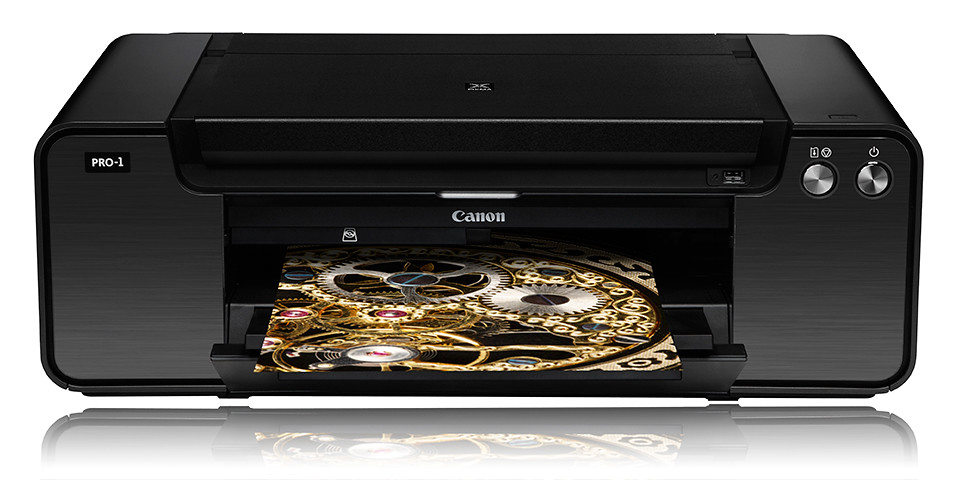
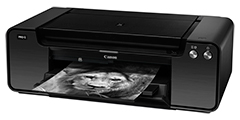
The PIXMA PRO-1 professional grade inkjet photo printer from Canon will be available at S$1,399 from mid February.
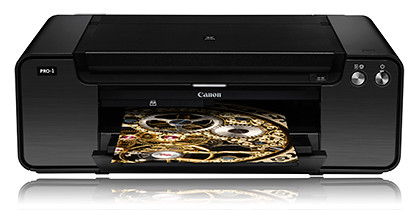
Canon PIXMA PRO-1 professional grade inkjet photo printer (S$1,399)

Canon PIXMA PRO-1 professional grade inkjet photo printer (S$1,399)

Print your own photo GALLERY with the world’s first 12-ink A3+ photo printer from Canon which combines accuracy with speed to produce quality color and monochrome prints.

“We have seen a lot more people taking up photography using DSLRs, and spending more time on image and photo editing,” says Andrew Koh, Senior Director and General Manager of Consumer Imaging & Information Group, Canon Singapore. “With professional print quality for both colour and monochrome images, the PIXMA PRO-1 is the next logical step in showcasing these great efforts.”Five of the 12 individual ink tanks are monochrome inks dedicated to producing professional quality black and white prints.

LUCIA pigment inks produces accurate colours while a Full-Photolithographic Inkjet Nozzle Engineering (FINE) print head provides the highest possible print resolution.

The PIXMA PRO-1 marks the addition of professional photographic solutions to Canon’s range of lifestyle printer products.

True-to-Life Prints

The PIXMA PRO-1 professional inkjet printer delivers exhibition-quality prints with a new 12-tank individual ink system.
12-tank individual ink system

12-tank individual ink system

This comprises 6 colour inks (Cyan, Magenta, Yellow, Red, Photo Cyan, Photo Magenta), 5 monochrome inks (Photo Black, Matte Black, Dark Gray, Gray and Light Gray) and 1 Chroma Optimizer.

The inks provide an exceptional range of colours for improved skin tones and accuracy in monochrome prints, and allow for seamless switching between various types of print media.

The Chroma Optimizer completes the 12-ink system by smoothening out stray ink droplets that cause uneven reflection, adding glossiness with anti-bronzing, and allowing users to show off gallery quality images.

Accuracy meets Efficiency

The PIXMA PRO-1 features three colour modes – colour, monochrome, and the new photo colour print mode which reproduces blues and greens to match visual memory of colours.
High print resolution of up to 4,800 x 2,400dpi

High print resolution of up to 4,800 x 2,400dpi

Its new Optimum Image Generating (OIG) system analyses colours in an image file and calculates the optimum ink combination and volume of ink droplets needed.

This enhances colour reproduction to bring out fine tonal gradations and ensures uniform glossiness across all print modes and media types, producing realistic print quality.

The PIXMA PRO-1’s FINE print head brings out detailed quality in prints, with a high print resolution of up to 4,800 x 2,400dpi.

Coupled with a printing depth of 16-bits per channel, the printer promises smooth tonal gradations in both colour and monochrome prints.

At the same time, print speed has been improved by increasing the number of nozzles to 12,288 nozzles (1,024 nozzles x 12 colors).

The new machine comes with larger ink tanks for longer print periods and offers a dual paper feeding system for both semi-gloss media and fine art media.

Front opening panels enable easy access to the ink tanks on either side of the main printer body, while the rear tray accommodates up to 20 sheets of photo paper, and the manual feed slot accepts photo paper up to 356mm (14”) wide and heavier fine art paper.

This feeding system helps to ensure paper is accurately fed, thus eliminating skewed prints, improving efficiency and minimizing wastage of ink, paper and time.

Network Connectivity
Ethernet network capable

Ethernet network capable

The new PIXMA PRO-1 professional inkjet printer can be connected to a network via Ethernet, allowing multiple user access to the printer.

This is especially useful for imaging professionals working together within a single location.

Make your photos pay for your lenses

Wednesday, January 18th, 2012

If you’re passionate about photography, why not submit your pictures to a stock photo agency? It might just make you enough money to pay for your next big lens.

iStockphoto workshop at the Canon Imaging Academy

iStockphoto workshop at the Canon Imaging Academy

Rather than let your photos collect dust in an old shoe box get lost and forgotten in the hard disk, try submitting them to a photo microstock agency.

The average contributor’s income may not be astounding, but it could be pocket money for that extra drink at the bar.

Canon Imaging Academy at Habour Front Place

Canon Imaging Academy at Habour Front Place

I attended a workshop by Jumpei Matsuoka from iStockphoto last weekend at the Canon Imaging Academy (CIA) at Harbour Front Place.

CIA conducts photography courses, organises local outings and overseas trips, and provides free product training for photographers.

The 1-hour session was over-subscribed and the space had to be extended to accommodate almost forty photographers eager to find out how they could put their photos to work.

Jumpei Matsuoka, GM iStockphoto Japan

Jumpei Matsuoka, GM iStockphoto Japan

Matsuoka is the general manager for Japan and South Korea at iStockphoto.

He talked about how photography buffs can sign up as contributors on iStockphoto and make money from their passion for photography.

He also shared tips on what are the top selling images, the trends in the microstock industry, and how contributors can market themselves to potential customers.

iStockphoto is the world’s original source for user-generated, royalty-free stock images, media and design elements.

Its community of more than 7 million members enjoys access to a content collection approaching 10 million photographs, vector illustrations, flash, audio and video files on the site.

iStockphoto pays out US$1.9 million each week in royalty to its contributing artists.More than 50,000 files are approved each week from the site’s rapidly growing group of more than 125,000 contributing artists, with 5,500 submitting exclusively to iStockphoto.

Many iStockphoto artists earn a full-time living from iStockphoto, and many formerly traditional stock artists see micropayment stock imagery as an additional revenue channel.

I had a chat with Matsuoka after the session. The amicable fellow photographer conveyed a strong passion for photography and emphasised that a contributor should first and foremost possess this passion for photography.

iStockphoto is the world's original source for user-generated, royalty-free stock images, media and design elements.With that as the backdrop, whatever income the contributor earns from submitting photos to a photo stock agency becomes an added bonus for the passion. On top of that, the contributor  actually enjoys the work.

My own feel from speaking with Matsuoka is that if you’re thinking of becoming a contributing photographer, don’t quit your day job just yet.

Start off small by submitting your shots to get a feel of the kind of income you can expect from the endeavour, and whether you have the eye to take photos that the agency will likely approve.

Photographers should know that the emphasis of stock photo agencies is to get photos that their paying subscribers can use – be it for business brochures or other publications.

It’s not so much the usual photo competition where there’s more emphasis on the artistic aspect of photography.

You would have heard wonderful success stories of a handful of contributors who earn big bucks from going full-time as stock photographers. But for the rest of us mere mortals, do test the waters first.

I have included some soundbites from Matsuoka about his perspectives on different aspects of stock photography. Check them out.

So dust out your old photos dig out those photos scattered all over your hard disks, and start shooting, you may just discover your ideal full-time job!

Compact camera winners at the XXI TIPA 2011 awards

Saturday, April 30th, 2011
Compact digital cameras took up seven out of 40 categories evaluated by the 29-member magazines of the Technical Image Press Association (TIPA) this year. Winners include Nikon, Canon, Olympus, Samsung, Fujifilm and Panasonic.

Compared to the four categories for DSLR cameras, there were seven categories for compact digital cameras.

Founded in 1991, the Technical Image Press Association (TIPA) comprises 29 independent photo & imaging magazines from nine European countries plus Australia, Canada, China, USA and South Africa.

This is the 21st installment of the annual awards.

The winners for the seven compact digital camera categories are tabulated below.

Category / Winner TIPA citation
Best General Compact Camera 

Best DSLR Entry: Canon EOS 600D / Rebel T3i / Kiss X5

Nikon
COOLPIX P300

The Nikon COOLPIX P300 is a stylish compact camera with a remarkably powerful f/1.8 lens, starting at 24mm (35mm equivalent) with 4.2x optical zoom. High Refraction Index glass further ensures sharp images with high contrast. Combined with its powerful 12.2 Megapixel back-illuminated CMOS sensor, this camera gives excellent image quality even in dim lighting conditions. The P300 can film in Full HD (1080p), but also in slow motion with a recording speed of up to 120fps.
Best Expert Compact Camera 

Best DSLR Advanced: Nikon D7000

Olympus
XZ-1

The Olympus XZ-1 has one of the fastest zoom lenses in its class, the iZuiko f1.8-2.5 6.0-24mm (28-112mm equivalent angle of view in 35mm cameras.) Rather than succumb to the continuing Megapixel race, the light-reception area of each pixel of the 1/1.63-inch, 10 Megapixel CCD has been doubled. The XZ-1’s AF illuminator, Dual Image Stabilisation, Low-Light mode that automatically adjusts the ISO sensitivity up to ISO 3200 and the compact size all add up to an exciting “candid” camera that also offers advanced manual controls.
Best Premium Camera 

Best DSLR Expert: Olympus E-5

Fujifilm
FinePix X100

Fujifilm’s FinePix X100 offers unrivalled image quality for a compact camera, thanks to its APS-C format CMOS sensor and Fujinon 23mm f/2.0 lens. The Hybrid Viewfinder uniquely combines the ‘bright frame’ window-type optical viewfinder found in high-end film cameras, and the electronic viewfinder system of fixed single lens or digital compact system cameras, offering the user ‘the best of both worlds’. Added to the package is a newly-developed EXR Processor, which combines all the latest Fujifilm image processing technology.
Best Compact System Camera
Entry Level 

Best DSLR Professional: Pentax 645D

Samsung
NX100

The Samsung NX100’s new body design drastically revises the ‘DSLR look-alike’ concept found in other compact interchangeable lens cameras, and is a bold step from the company’s previous NX10/11 designs. This brings it into direct competition with other Compact System Cameras. Impressive features include a vivid 3-inch AMOLED screen, an APS-C size sensor and a line of high-tech iFunction lenses. This promising new series of optics blazes new viewing and camera control paths by allowing the user to program numerous functions right from the lens.
Best Compact System Camera
Expert 

Best DSLR Professional: Pentax 645D

Panasonic
Lumix DMC-GH2

The Panasonic Lumix DMC-GH2 is a true ‘hybrid’ photo and video camera, where video is no longer just an additional function. The DMC-GH2 features full HD 1920×1080, 60i (NTSC) / 50i (PAL) smooth, high quality video recording with 60p (NTSC) / 50p (PAL) output in addition to the high quality photo, a world’s first for cameras in this category. The DMC-GH2 can be operated through an intuitive touch control screen. For example, just tapping a subject on the screen will make the camera focus with a speed that rivals the best DSLR’s on the market.
Best Superzoom Camera 

Best DSLR Professional: Pentax 645D

Canon
PowerShot
SX230 HS

The Canon PowerShot SX230 HS features a 12.1-Megapixel HS System with high-sensitivity CMOS sensor, and a 14x optical zoom (28-392mm equivalent) with optical image stabilisation. A 3-inch LCD screen, with 100% frame coverage, makes for easy viewing and menu control. TIPA members were impressed with features such as Full HD 1080p video with Dynamic Image Stabilizer, a new GPS function (including supplied Map Utility software) and a high-sensitivity CMOS sensor coupled with Canon’s DIGIC 4 processor that reduces noise levels even at the higher ranges (up to ISO 3200).
Best Rugged Compact Camera 

Best DSLR Professional: Pentax 645D

Panasonic
Lumix DMC-FT3 / DMC-TS3

The Panasonic Lumix DMC-TS3/FT3 is waterproof to a depth of 12m and dust-proof equivalent to the IPX8 and IP6X standard. It has an integrated GPS function, ideal for photographers who want to shoot in the great outdoors and record their exact position during that shoot. The camera has a built-in compass, altimeter and barometer to show and record altitude, barometric pressure and orientation data. The barometer also works as indicator for depth underwater. Thanks to its location awareness, the internal clock of the camera is automatically adjusted to the local time.

DSLR winners at the XXI TIPA 2011 awards.

Sunday, April 24th, 2011

The four categories for DSLRs were won by Canon, Nikon, Olympus and Pentax at this year’s TIPA awards.

Founded in 1991, the Technical Image Press Association (TIPA) comprises 29 independent photo & imaging magazines from nine European countries plus Australia, Canada, China, USA and South Africa.

This is the 21st installment of the annual awards.

Out of 40 categories of photo and imaging products for this year’s TIPA awards, four were for DSLRs. The winners for the four DSLR categories are tabulated below.

Category / Winner TIPA citation
Best DSLR
Entry LevelBest DSLR Entry: Canon EOS 600D / Rebel T3i / Kiss X5 

Canon
EOS 600D

The EOS 600D continues the legacy of easy operation and high functionality. TIPA members were very impressed with the features such as the 18.0 Megapixel CMOS image sensor, full HD video recording, Live View shooting, Wireless flash photography and a Vari-angle 3-inch LCD monitor. Offering 3.7 frames-per-second shooting rate, a top 1/4000 second shutter speed and up to 6400 ISO sensitivity (plus 12,800 H), the camera allows for the full DSLR experience with ease of operation that makes for a great first camera for those seeking to ‘step up’ from compact cameras.
Best DSLR
AdvancedBest DSLR Advanced: Nikon D7000 

Nikon
D7000

The Nikon D7000 impressed us as the definition of a state-of-the-art DX-format DSLR (APS-C size) with a 16.2 MP CMOS sensor, six frames-per-second framing rate for up to 100 shots and full 1080p HD movies with full-time AF. With twin SD card slots, a 100% viewfinder and bright 3-inch LCD for Live View operation, the camera is extremely versatile in the field. The magnesium alloy top and rear covers, special weather and dust seals plus 150,000 cycle-rated shutter system give it a pro feel.
Best DSLR
ExpertBest DSLR Expert: Olympus E-5 

Olympus
E-5

For a very reasonable price, the Olympus E-5 provides benefits that rival those found in some professional SLRs: complete weather-sealing, comprehensive functions, excellent responsiveness, 100% viewfinder, good noise control, dual CF/SD slots, built-in image stabilisation, all in a rugged magnesium-alloy body. Add to this Olympus’ Dust Reduction System, which has proven to be among the most effective solutions in the market. The 12.3 Megapixel Live MOS sensor, combined with the ‘TruePic V+’ image engine produces images that rival competitors with substantially higher pixel counts.
Best DSLR
ProfessionalBest DSLR Professional: Pentax 645D 

PENTAX
645D

TIPA members appreciated the design, build and feature specs of this 40 Megapixel medium format digital camera. The magnesium alloy body is fully weather-sealed, making it a great choice for outdoor and location photographers, plus the all-glass trapezoid pentaprism finder makes for a dazzling capture experience. Perhaps most impressive is lens compatibility, which encompasses both the new D FA autofocus lenses as well as older 645 lenses.

Japan disaster recovery: Canon restarts two plants

Thursday, March 24th, 2011

As the dust settles on the aftermath of the massive 9.0 earthquake, 10 metre tsunami and nuclear accident, more positive news are trickling out for the recovery of supply lines for companies around the world.

Canon restarts two plants after Japan disastersCanon has resumed partial production at two plants last week. It is the biggest camera-maker in the world.

Gota Fumoto, a spokesman for Canon, told Bloomberg by phone that the two plants are at Ami and Toride.  The company has closed a factory at Miyazaki prefecture, that makes compact digital cameras.

Sony aims for 15% market share for interchangeable lens cameras

Wednesday, February 23rd, 2011
Sony wants to increase its market share from 11% of global SLR camera sales in 2009, to at least 15% market share by March 2011.

Sony aims to increase its market share for Interchangeable Lens Cameras

Sony may control about 15 percent of the global market for single-lens-reflex cameras by the end of March, Masashi Imamura, president of the Personal Imaging & Sound Business Group told Bloomberg in an interview in Tokyo yesterday.

Interchangeable lens cameras is the fastest growing segment of digital imaging devices last year. Sales of SLR cameras increased 30% in the past year, more than twice the 13% growth by compact cameras, according to the Camera & Imaging Products Association, a Tokyo-based industry group.

In a report from research company IDC in April last year, leading the race was Canon which sold 45% of the world’s SLR cameras, followed by Nikon which sold 34%. Sony was in third place, accounting for 11% of the 9.77 million units sold in 2009. In the previous four years that it has been in the segment, Sony has garnered about 10% of the market share.

It bought the high-end camera business of Konica Minolta Holdings in 2006 when Konica ended its 130-year-old camera business to focus on printers.

Sony, which also manufactures the Cyber-shot compact cameras, has been aggressively introducing new models in its pursuit to grab market share from the two leaders.

The maker of alpha-series DSLR cameras introduced its NEX cameras (NEX-3 and NEX-5) in June 2010. These cameras feature the large sensors of traditional DSLRs, do away with the use of the reflex mirror and optical viewfinder, while allowing the camera lens to be changeable.

Like the Micro Four Thirds mirrorless cameras from Olympus and Panasonic, the NEX cameras offer the image quality of traditional DSLRs, the flexibility of using different lens for different shooting situations, yet enjoy a reduced bulk.

Sony also launched a slew of new models in its existing Alpha line in September. These include the SLT A55 and A33, which replace the traditional reflex mirror between the lens and the sensor with a stationary translucent mirror. This also makes the camera smaller and improves the auto-focus performance of the camera.

C.J.P.C. Camera Grand Prix 2010 Award Winners

Thursday, May 20th, 2010
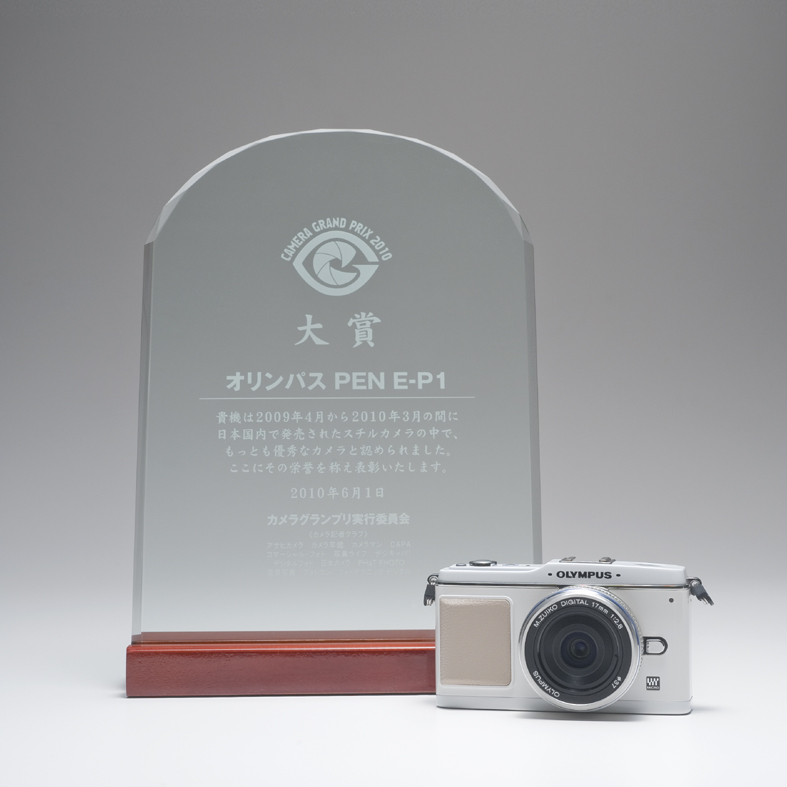
Olympus PEN E-P1: CJPC 2010 "Camera of the Year" & "Readers Award"

Olympus PEN E-P1: CJPC 2010 "Camera of the Year" & "Readers Award"

The winners of the annual C.J.P.C. (Camera Journal Press Club) awards have been released. The Olympus PEN E-P1 has won both the top awards of “Camera of the Year” as well as “Readers Award”. The “Editors Award” went to the Canon EF 100mm F2.8L Macro IS USM and Sony back-illuminated CMOS Sensor “Exmor R”.

Olympus PEN E-P1: CJPC 2010 "Camera of the Year" & "Readers Award"

Olympus PEN E-P1: CJPC 2010 "Camera of the Year" & "Readers Award"

The Olympus PEN E-P1 was selected from a shortlist of 199 cameras introduced in Japan between 1 April, 2009 and 31 March, 2010. This is the first Olympus camera to receive the Japan Camera Journal Press Club’s highest honor since the inception of the Japan Camera Grand Prix awards in 1984. Previous “Camera of the Year” winners include the Canon EOS 5D Mark II in 2009 and the Nikon D3 in 2008.

(more…)