Archive for the ‘Tech news’ Category

Samsung GALAXY S III hits the shelf in Singapore

Wednesday, May 30th, 2012

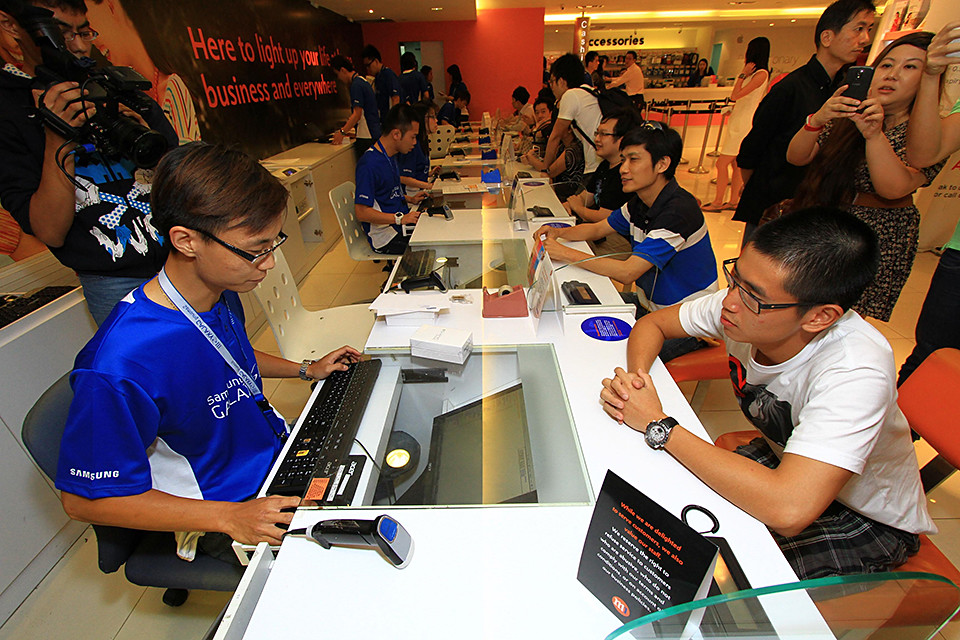
The Marble White version of the Samsung GALAXY S III (S$998 incl GST, no line) goes on sale in Singapore today. Queues were already forming at the respective launch locations of the three mobile operators last night.

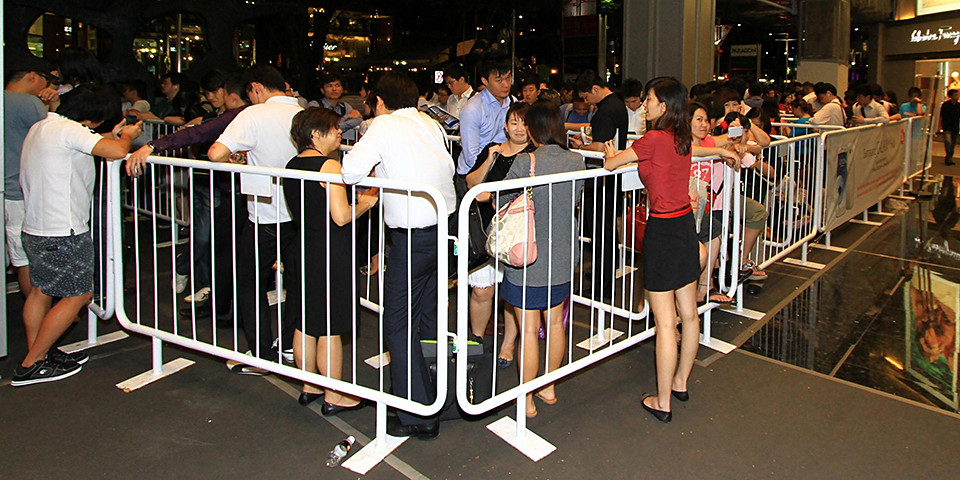
Crowd forming up at the M1 launch event at Paragon last night.

Crowd forming up at the M1 launch event at Paragon last night.

The Pebble Blue version of the 4.8-inch, Android 4.0 smartphone will be available at a later date.

The first customer in the queue at Paragon making purchase.

The first customer in the queue at Paragon making purchase.

The third generation GALAXY S smartphone features an 8-megapixel main camera and 1.9-megapixel front camera that shoots HD video, and is powered by Android 4.0, Ice Cream Sandwich.

Chelsea FC in Singapore today

Saturday, May 12th, 2012

Samsung-Chelsea FC Youth Football Camp was held for the first time in Singapore today. 173 children aged from nine to 13 years old were trained by youth football coaches of Chelsea FC.

Chelsea FC youth coach explaining to aspiring young footballers in Singapore.

Chelsea FC youth coach explaining to aspiring young footballers in Singapore.

Held at Sports Planet East Coast, the Football Camp was led by Chelsea FC youth football coaches Robert Udberg, Andy Ottley, Steve Shipp and James Lambdon.

Words of football wisdom and experience.

Words of football wisdom and experience.

Under the renowned “Chelsea Way” football programme, the children were put through their paces with skill stations and circuits designed to help refine control, shooting, dribbling, heading and passing skills.

Started in 2007, the ‘Samsung-Chelsea FC Youth Football Camp’ is part of Samsung’s support for developing football at the grassroots level.

It is an important component of its Corporate Social Responsibility (CSR) programme to give back to the communities, and provide sporting initiatives that encourage youth to pursue their dreams and nurture their sporting talents.

The football camp is open to the public, but 40 underprivileged children from the Salvation Army and Methodist Welfare Services’ Daybreak Student Care Centre were specially given the once-in-a-lifetime opportunity to join the camp.

Avid young footballers giving it a go.

Avid young footballers giving it a go.

Singapore is one of nine countries that the Samsung – Chelsea FC Youth Football Camp will visit this year.

The other participating countries are Australia, Ghana, India, Ivory Coast, Malaysia, Qatar, UAE and Vietnam.

Singapore’s participants will join the family of over 1,650 children from around the world who have undergone the football camp.

Demand for Raspberry Pi goes through the roof

Wednesday, May 9th, 2012

From hundreds or thousands of units to hundreds OF thousands – that’s how demand for the Raspberry Pi has grown. The first 700 has shipped, with another 7,000 shipping within the next few weeks.

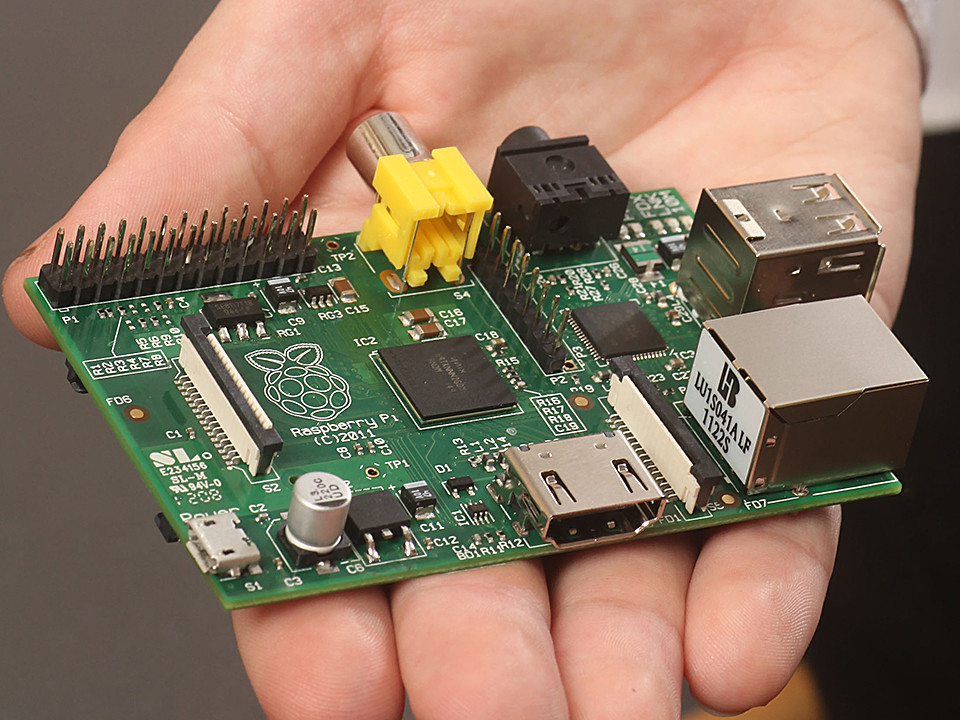
The Raspberry Pi is the size of a credit card and runs on an ARM11 chip with Fedora Linux off an SD card.

The Raspberry Pi is the size of a credit card and runs on an ARM11 chip with Fedora Linux off an SD card.

Raspberry Pi Foundation, the developers of the credit-card sized computer board, had expected sales going into hundreds – at most a few thousands if the product caught on.

So they were understandably surprised when a queue of some 280,000 worldwide signed up on their website to express interest in purchasing the Raspberry Pi once shipping commenced.

RS Components, one of two distributors for the single-board computer, estimates the first 75,000 of these orders to ship by July or August this year, while the rest of the 280,000 (and still counting) will have to wait even longer.

Model Price Configuration
Model A US$25 1x USB port, no Ethernet port
Model B US$35 2x USB ports, 1x Ethernet port

The bottleneck for the supply chain is the ARM chip from Broadcom, which, takes up nearly 60% of the material cost of the Raspberry Pi which is manufactured in Taiwan and China.

The Raspberry Pi is designed by the Raspberry Pi Foundation.Raspberry Pi designers already have ideas about Version 2 of the ultra-budget computer but they are not in a hurry to start work on that.

The current specs for the Raspberry Pi is more than enough to last a long time for the tasks it is designed for: computer programming, game playing, and watching HD movies.

Eben Upton, one of the designers of Raspberry Pi, has managed to play Quake 3 off the Raspberry Pi.

Upton, together with his colleagues at the University of Cambridge’s Computer Laboratory, had conceived the idea of making a tiny and cheap computer for kids back in 2006.

They were concerned with the declining numbers and skills levels of A-Level students applying to read Computer Science at the prestigious university.

They wanted to make possible and available an affordable device that kids could play with to explore and experience computer programming.

Main technical specifications are listed below.

(more…)

The Disaster Recovery Survey 2012: Asia Pacific and Japan

Tuesday, May 8th, 2012

81% of businesses in the Asia Pacific and Japan might NOT be able to recover lost data and systems in the event of a disaster. New independent research sponsored by EMC points to outdated backup and recovery infrastructure.

EMC Research: "The Disaster Recovery Survey 2012: Asia Pacific and Japan"

The survey also found that 71% of all organizations had lost data or suffered systems downtime in the last 12 months.

These findings highlight the need for backup transformation from antiquated technologies that are not suited for today’s data growth or availability expectations.

A move to next-generation backup and recovery solutions ensure continued business operations in the event of a natural disaster, malicious activity or more routine and common disruptions to IT systems.

In fact, the research showed that the causes of systems downtime are often the commonplace disruptions to IT, such as hardware failure or data corruption, rather than natural disasters or other major incidents.

Other key findings are summarised below:

  • Hardware failure (60%), data corruption (49%) and loss of power (44%) were cited as the primary causes of data loss and downtime.
  • 42% of organizations cite loss of employee productivity as the most likely consequence of data loss and downtime.
  • 44% of organizations who store a backup copy offsite for disaster recovery still use tape for recovery, and 37% still use CD ROM (although 62% now use disk-based storage).
  • 83% of these organizations want to replace tape all together, highlighting the need for next generation backup and recovery.

Commissioned by EMC and conducted by independent research company Vanson Bourne, ‘The Disaster Recovery Survey 2012: Asia Pacific and Japan’ looks at the state of backup and disaster recovery in the region to understand how well companies are prepared for data loss and systems downtime.

For the full report, visit EMC’s website here.

Samsung finally unveils the GALAXY S III

Friday, May 4th, 2012

After much anticipation, Samsung has officially announced the third generation GALAXY S. The GALAXY S III will be available in Singapore from Q2 2012 in Pebble Blue and Marble White. Prices to be announced later.

Update (23 May 2012): RRP (without contract but incl. GST) in Singapore has been announced at S$998. Availability to be announced later.

Latest update (25 May 2012): Marble White Samsung GALAXY S III will go on sale in Singapore on 30 May. Collection of pre-orders begin 29 May. Pebble Blue version will be available at a later date. Stay tuned!

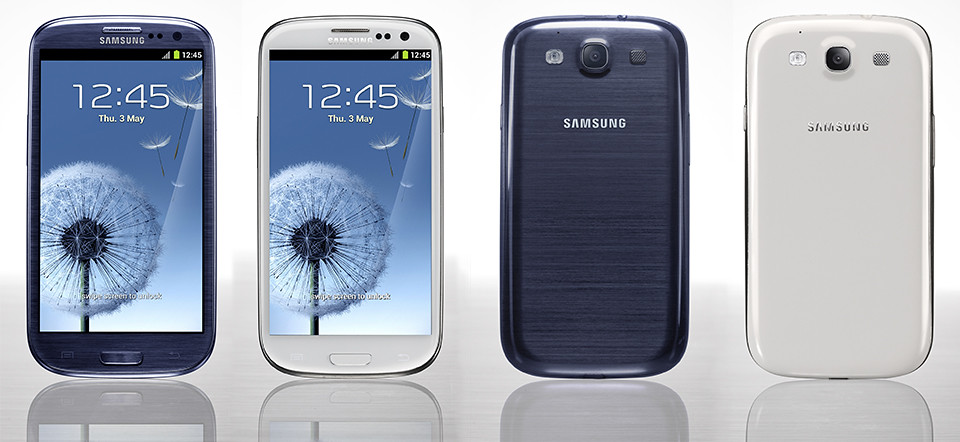
The Samsung GALAXY S III will come in Pebble Blue and Marble White.

The Samsung GALAXY S III will come in Pebble Blue and Marble White.

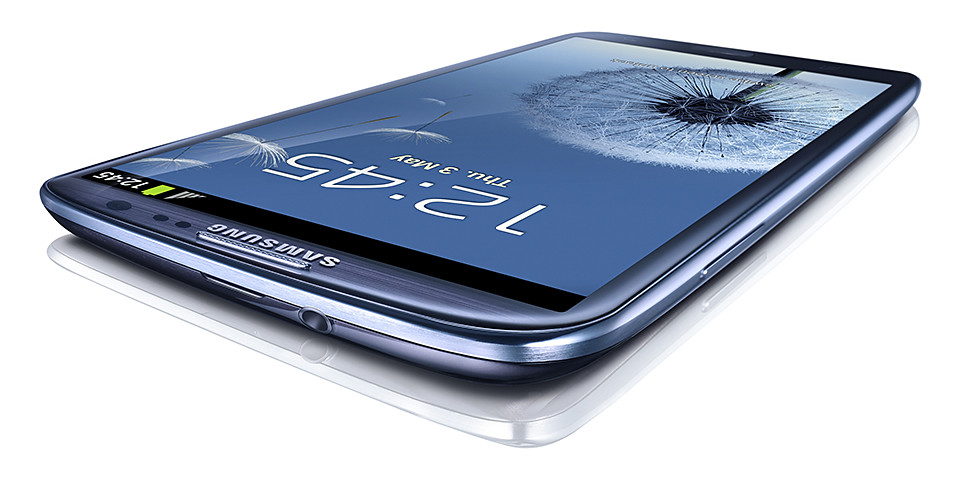
The Samsung GALAXY S III has a 4.8-inch HD Super AMOLED display, an 8-megapixel main camera and 1.9-megapixel FRONT camera that shoots HD video, and is powered by Android 4.0, Ice Cream Sandwich.

“… it enables one of the most seamless, natural and human-centric mobile experiences …,” said JK Shin, President and Head of IT & Mobile Communications Division at Samsung.The GALAXY S III offers WiFi Channel Bonding which doubles the WiFi bandwidth.

For those who are tired of wires, a separate wireless charging kit allows you to charge the phone without plugging it to the socket.

Samsung boasts that the smartphone has been “designed for humans” – by making the phone recognise the user’s voice, understand more human gestures, and by making it easier to share moments on social networks.

Human-centric interface

Samsung GALAXY S III has a 4.8-inch HD Super AMOLED display, an 8-megapixel main camera and 1.9-megapixel front camera, and is powered by Android 4.0, Ice Cream Sandwich.A “Smart-stay” feature senses and recognises how you are using the smartphone.

For instance, when reading an e-book or browsing the web, the front camera detects the eyes and maintains a bright display on the phone for continual reading.

“S Voice” is Samsung’s advanced natural language user interface that listens and responds to voice commands. Does “S Voice” stand for Samsung Voice – its response to Siri?

For example, you can TELL the GALAXY S III to “snooze” when the alarm goes off, or to play songs, reduce/increase the volume, send text messages and emails, organise your schedules, or launch the camera to take a photo.

Samsung GALAXY S III will be available in Singapore from Q2 2012.Easy sharing

The new “S Beam” expands on Android Beam by allowing a 1GB movie file to be shared within three minutes and a 10MB music file within two seconds by simply touching another GALAXY S III phone, even without a Wi-Fi or cellular signal.

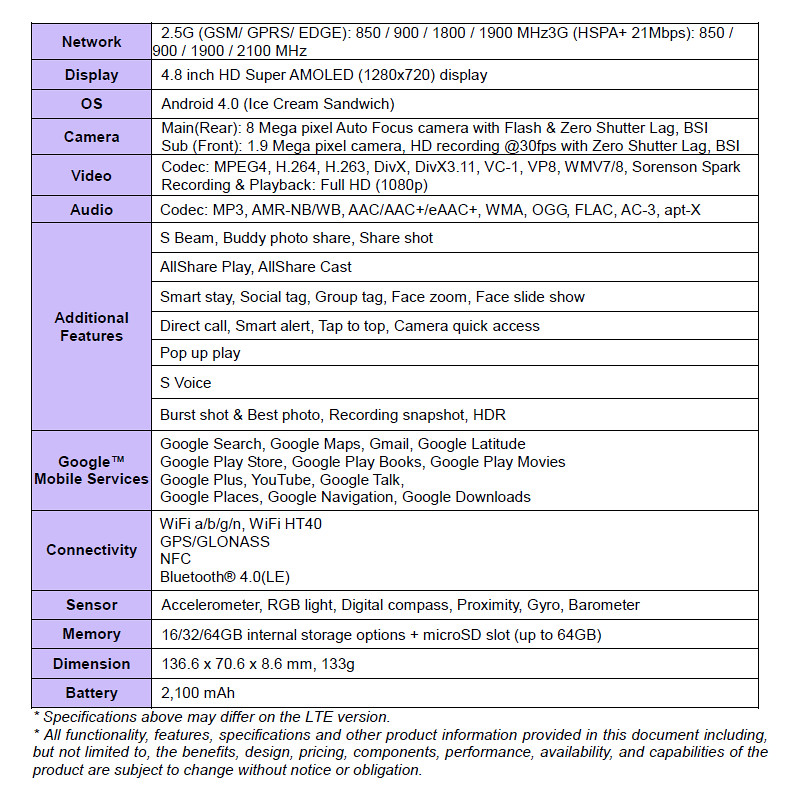
Click to display enlarged view of the tech specs.

Click to display enlarged view of the tech specs.

“Buddy photo share” function allows photos to be easily and simultaneously shared with the friends pictured in an image directly from the camera or the photo gallery.

“AllShare Cast” allows wireless display of the smartphone’s content onto a larger display.

“AllShare Play” shares files between the GALAXY S III and a tablet, PC or television, regardless of the distance between the devices.

“Group Cast” shares the smartphone’s screen among multiple friends on the same WiFi network.

“Pop up Play” allows a video to continue playing on one part of the screen while other apps and tasks continue simultaneously.
Experian says you are overloaded by marketers

Thursday, May 3rd, 2012

An independent research conducted by Experian finds that Singapore consumers are suffering from information overload and no longer respond to blanket marketing.

44% of respondents from Singapore interact with only three or fewer brands.

An independent research conducted by Experian in Singapore.

An independent research conducted by Experian in Singapore.

This is the result of poorly targeted communications from multi-channel marketer.

In addition, 30% of participants said they now IGNORE the emails, direct mail and social media messages they receive from brands because of information overload.

78% of consumers cited that they are very SELECTIVE about what opt-ins, newsletters or updates they sign up for to ensure they are only receiving messages that are relevant to their particular interests.

SG consumers agree that a COMPANY’S WEBSITE is the most valuable source of information they use to look for information about a brand, with 91% stating that it is a relevant or very relevant source.

While 36% of consumers believe the ideal frequency of brand communications is once a month, a quarter of consumers (25%) did not have frequency preferences as long as the communication is RELEVANT.

Giveaways and incentives (65%) is the number one way for brands to engage the SG consumer. Any surprises here?!

The research also shows a clear DISCONNECT between the communications consumers want from brands and the way they are being targeted by marketers.

For example, although MARKETERS listed print media as one of the least important tools for connecting with consumers – 86% of CONSUMER respondents rated it as the second most valued communication medium.

The State of the Internet 4Q 2011 report from Akamai

Monday, April 30th, 2012

China is now the top source of observed attack traffic. South Korea boasts both highest average connection speed and highest average peak connection speed.

Fourth Quarter, 2011 State of the Internet report released by Akamai Technologies.

Fourth Quarter, 2011 State of the Internet report released by Akamai Technologies.

China, at 13 percent, generated the most attack traffic observed by Akamai. The United States (10%) and Indonesia (7.6%) rounded out the top three.

The findings were in the Fourth Quarter, 2011 State of the Internet report released by Akamai Technologies.

Going into its fifth year, the report incorporates four-year’s worth of trending data, illustrating how Internet connectivity has improved over time.

Based on data gathered from the Akamai Intelligent Platform, the report provides insight into key global statistics such as Internet penetration, mobile traffic and data consumption, origins of attack traffic, IPv6 adoption and global and regional connection speeds.

In the fourth quarter of 2011, more than 628 million unique IP addresses from 236 countries and regions connected to the Akamai Intelligent Platform. This represents 2.1 percent more IP addresses than connected in the third quarter of 2011, and an increase of 13 percent compared to the same quarter a year ago.

The Fourth Quarter, 2011 State of the Internet report includes a new section that will appear annually going forward and that tracks trends since the report’s inception in 2008.

Speed

Cities in the Asia Pacific region enjoy the fastest connection speeds in the world. Out of the 100 fastest cities worldwide, 69 cities were from the region, with 61 in Japan, six in South Korea, as well as Australia and Hong Kong.

24 cities in North America ranked among the top 100, including two in Canada and 22 in the United States.

Seven cities in Europe – including three in Sweden, two in Switzerland and one each in Romania and Latvia – made up the balance.

Globally, high broadband (>5 Mbps) adoption maintained at 27%.

South Korea took the top spot in high broadband adoption, with 83% of the country’s connections to Akamai > 5 Mbps.

Netherlands was second with 67%. US was twelfth (44%) while Singapore languished at 21st (32%).

Support Team Singapore for 2012 London Olympics

Friday, April 27th, 2012

SingTel has just unveiled a 7.5m tall sculpture – the “SingTel Flame of Support”, in bustling Orchard Road to garner moral support for Team Singapore in the upcoming 2012 London Olympic Games (27 July to 12 August).

Singaporeans can express their support of Team Singapore by pressing the button that lights up a portion of the sculpture.

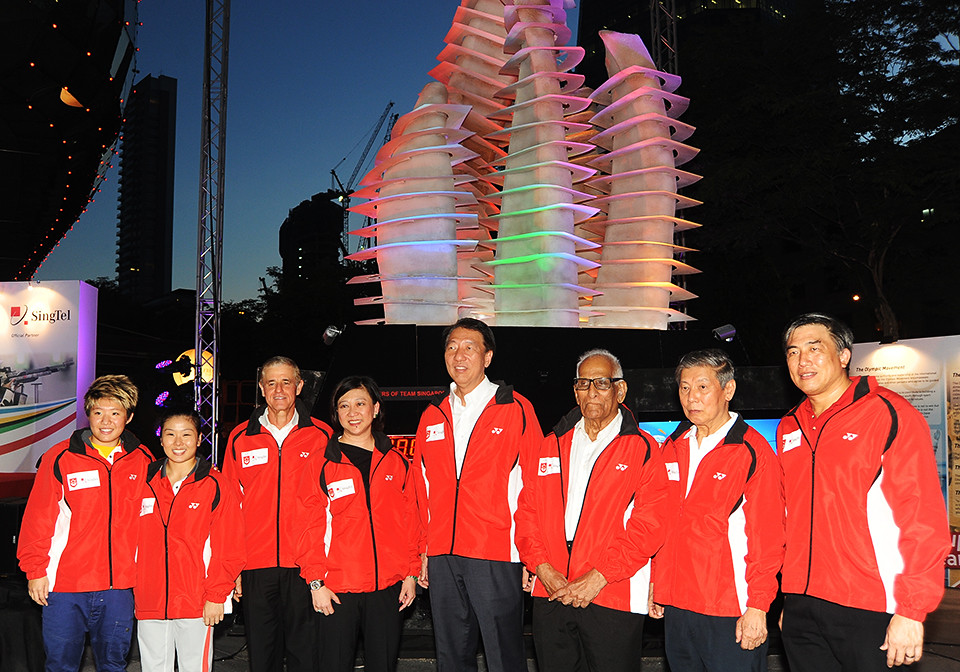
Deputy Prime Minister Teo Chee Hean (Minister for Home Affairs, Coordinating Minister for National Security and President of the Singapore National Olympic Council); Chua Sock Koong, Group Chief Executive Officer, SingTel; athletes Tao Li and Lim Heem Wei; as well as SNOC officials in from of the sculpture.

Deputy Prime Minister Teo Chee Hean (Minister for Home Affairs, Coordinating Minister for National Security and President of the Singapore National Olympic Council); Chua Sock Koong, Group Chief Executive Officer, SingTel; athletes Tao Li and Lim Heem Wei; as well as SNOC officials in from of the sculpture.

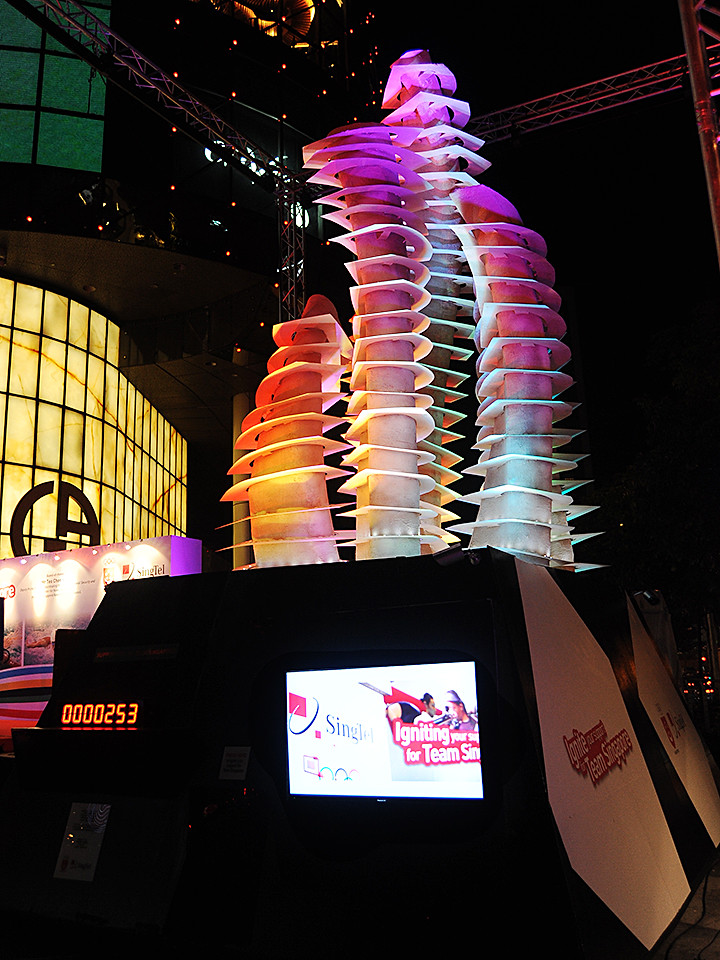
The 7.5m sculpture is located outside ION Orchard. It weighs 1,500 kg and consists of more than 3,300 LED lights.

SingTel Flame of Support

SingTel Flame of Support

Designed by Jon Griffin of Brandspeed and the main contractor Light10 Industries, the iconic sculpture comprises of five wave-like structures designed to resemble exuberant flames, each representing one of the five Olympic Rings.

The interactive structure aims to ignite the nation’s passion in a collective declaration of support for Team Singapore.

If there are 200,000 presses of the button, the entire Flame will become fully lit.

The unveiling of the statue by Deputy Prime Minister Teo Chee Hean (Minister for Home Affairs, Coordinating Minister for National Security and President of the Singapore National Olympic Council) kicks off the 90-day countdown to the Games.

Hopefully, we can garner the 200,000 pledges of support by the Opening Ceremony of the Games on 27 July.

(more…)

Brands should leverage on mobile to engage consumers

Wednesday, April 25th, 2012

Mobile creates engagement at every point in the purchasing funnel for the tech-equipped digitally-savvy consumer of the future. Day 2 of the MMAF beckoned brands to create the “aha!” moment for consumers.

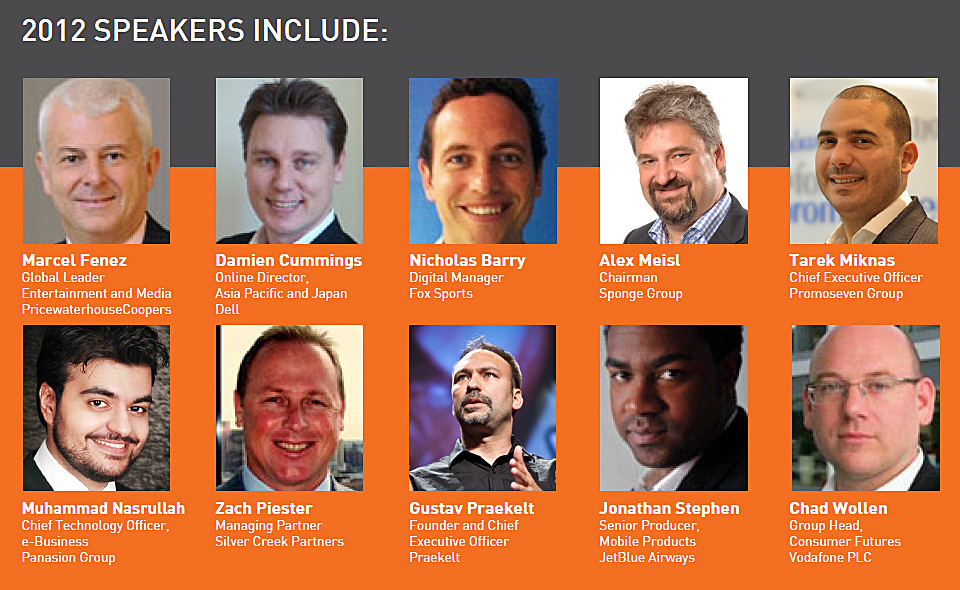
Speakers at the Mobile Marketing Association Forum Singapore 2012

Speakers at the Mobile Marketing Association Forum Singapore 2012

Day two of the annual Mobile Marketing Association Forum Singapore 2012 (MMAF) called for creativity on the part of marketers as mobile takes on a new role in the larger media landscape.

This year’s forum is the fourth time it is being held at the Grand Hyatt in Singapore.

“There is a need to reimagine mobile, creatively and otherwise,” highlighted Barney Loehnis, Head, Digital, Asia Pacific for Ogilvy & Mather.Ashutosh Srivastav, CEO, Mindshare Asia reminded the audience to look at mobile as a central touchpoint, not as a separate platform.

This central position occupied by mobile was reinforced by Michael Bayle, Senior Vice President and General Manager, Mobile, ESPN, who called mobile the bridge that connected fans to all media.

“Integration of other media around mobile helps to create a level of engagement that has always been lacking, letting consumers move effortlessly from online to offline to online,” Loehnis added.The MMAF was sponsored by Amobee, BuzzCity, The Coca-Cola Company, Gemalto, Google Inc., mediba Inc., Microsoft Advertising, Millennial Media, m-Stars, Nokia, Poynt Corp.

It was supported by Infocomm Development Authority of Singapore (IDA), Media Development Authority of Singapore (MDA) and Singapore infocomm Technology Federation (SiTF).

Mobile Marketing Association Forum Singapore 2012

Tuesday, April 24th, 2012

The tech-equipped digitally-savvy consumer of the future is the key to a smarter tomorrow, found delegates to the MMAF on the first day of the two-day seminar from 24-25 April 2012.

Mobile Marketing Association Forum Singapore 2012

Mobile Marketing Association Forum Singapore 2012

Some 300 delegates and speakers gained new understanding of the importance of mobile, the central position of the consumer, and the use of mobile for brand-building.

“Consumers will be less concerned about the distinctions between mobile and digital and Internet, but will simply operate within a converged space,” said Guest-of-Honour, Mr Michael Yap when he delivered his Keynote Address. Mr Michael Yap is Deputy CEO, Media Development Authority of Singapore (MDA).The future of mobile marketing were discussed against the changing digital media landscape of today.

Closely focused on evolving consumer behaviour in the current technological environment and how brands and marketers can engage, inform and influence them, the first day of MMAF offered industry the chance to identify market trends that will shape a smarter future.

Industry and media leaders such as PricewaterhouseCoopers, Google and Nokia presented topics themed around “A Smarter Tomorrow” at the Grand Hyatt in Singapore.

The presentations highlighted how the development of the mobile marketing and advertising industry is contingent on a deeper understanding of tech-equipped digitally-aware consumers, who have come to understand and shape the new emerging media.

“There may be low-end devices, but there are no low-end consumers,” said Srikanth Raju, Head, Ecosystem, APAC, Nokia, referring to how all consumers want compelling experiences, regardless of the device. The next talk was by Marcel Fenez, Global Leader Entertainment & Media, PricewaterhouseCoopers, who eschewed a discussion of technology in favour of talking about what consumers want in terms of content and how they behave.

Against the backdrop of an informative video that included candid comments from consumers from all over the world, Fenez explained that consumers take technology as a given, and that they are more interested in content than in channels.