Posts Tagged ‘Olympus’

Olympus launches PEN E-P3, E-PL3 and E-PM1

Thursday, June 30th, 2011

Olympus has just launched, worldwide, its slew of new cameras, lenses and accessories. The three new camera models include updates to the PEN E-P2 and E-PL2, as well as the new E-PM1 with a similar form factor (for the body) as the Olympus XZ-1. New and repackaged lenses are also being launched.

The new Truepic VI engine and sensor promise enhanced image quality and, together with the new auto-focusing system, deliver much faster auto-focus  on these new cameras.
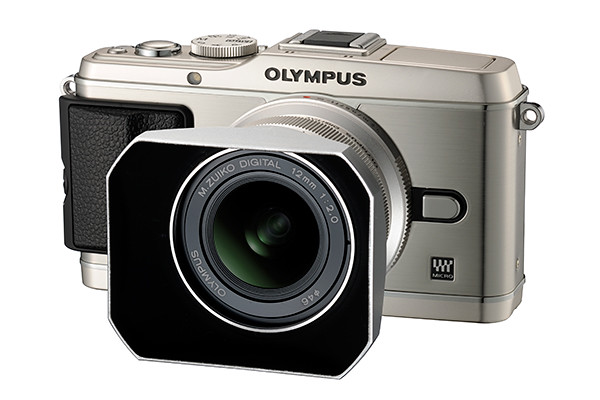
Olympus PEN E-P3, with the 12 mm, f/2.0 lens.

Olympus PEN E-P3, with the 12 mm, f/2.0 lens.

Olympus PEN E-PL3, with the 40-150 mm II R kit lens and retro lens hood.
Olympus PEN E-PL3, with the 40-150 mm II R kit lens and retro lens hood.

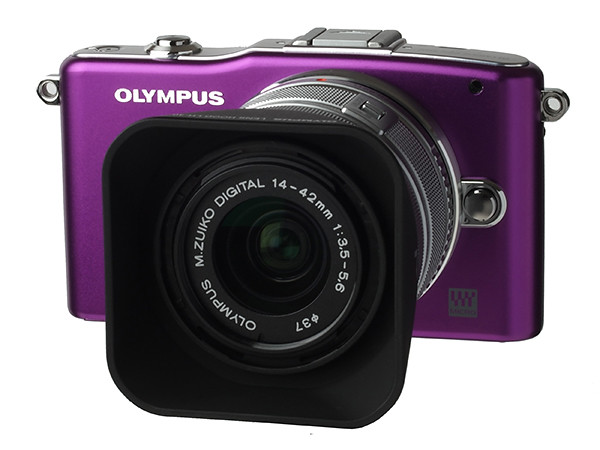
Olympus PEN E-PM1, with the 14-42 mm II R kit lens and retro lens hood.

Olympus PEN E-PM1, with the 14-42 mm II R kit lens and retro lens hood.

The Olympus PEN E-P3 is here. And some of its new powerful features have also been made available to its “Lite” and “Mini” cousins: the E-PL3 and E-PM1 respectively.

Two new lenses – a 12 mm f/2.0 lens and a 45 mm f/1.8 lens – have also been introduced together with the new cameras. At the same time, two existing kit lenses has been repackaged into the 14-42 mm II R and the 40-150 mm II R to match the design of the new cameras, although the functionality remains unchanged. A new external wireless-capable flash – FL300R – was also unveiled.

The PEN E-P3 and the 12 mm f/2.0 lens is scheduled for release in Singapore on July 22, 2011, while the other camera models and lenses will only be available later. As of today’s launch, only the E-P3 was ready for shooting, while the E-PL3 was not ready to be powered on. For the E-PM1, only a mock-up was viewable in a display case.

Prices in Singapore are yet to be determined, although Adorama is taking preorders online for the PEN E-P3 (US$899 with kit lens), the 12 mm f/2.0 lens (US$799) and the 45 mm f/1.8 lens (US$399).

The launch in Singapore at the National Geographic Store in VivoCity is one of 6 venues worldwide holding the event at the same time.

“The much faster autofocus speed is achieved through the combination of four components making up the FAST <Frequency Acceleration Sensor Technology> autofocus system introduced in these new cameras,” Terada Toshiyuki (寺田 利之), Group Leader of the Product and Marketing Planning Group in Olympus told me.

The long awaited worldwide product launch from Olympus.“This includes a new LiveMOS sensor which is driven twice as fast as current sensors, faster calculation of the contrast detection autofocus, faster communications between the camera and the lens, and reduction of the lag in activating autofocus when the shutter release button is pressed,” elaborated the Tokyo-Shinjuku based guest.

Trying out the E-P3 unit myself, I found the auto-focus almost instantaneous – even in low-light. It certainly feels much faster than the previous incarnations of cameras in the PEN series.

I found the touch-screen really addictive and easy to use – simply point at the subject you want to focus on, and the camera focuses quickly on it and takes the snapshot. No more fiddling with buttons and menu systems just to select from a limited number of focus points.

You can also use the touch screen to pre-focus in prefocus mode – simply tap the main screen where the main subject is and the camera focuses but does not release the shutter. Press the regular shutter release button to take the snapshot.

The previous PEN cameras came with auto-tracking of subjects. This works with the touch-screen as well.

Olympus claims that image quality has also been improved with the new sensor and Truepic VI engine. More realistic colour reproduction and selective brightening of back-lit subjects without the addition of noise are some of the advanced features touted.

Olympus set for major product launch tomorrow

Wednesday, June 29th, 2011

Olympus will announce a slew of new products tomorrow (Thursday June 30th) at 6 am London time (1 pm Singapore time). Expect the E-P3, E-PL3, E-PM1 and a slew of new and repackaged lens that leverage a new Truepic VI engine and faster electronic connections to provide faster auto-focus.

Is this what the new Olympus E-P3 looks like?

Is this what the new Olympus E-P3 looks like? Photo from www.43rumors.com

Olympus has been gearing up towards tomorrow’s launch event at multiple venues worldwide. There is much speculation as to what will be launched. Here are some sneak peeks. Check back for the actual specs tomorrow.

Is this what the new Olympus E-PM1 looks like?

Is this what the new Olympus E-PM1 looks like? Photo from www.43rumors.com

The new Truepic VI engine promises to improve the auto-focus speed tremendously, compared to existing Olympus PEN cameras.

New camera models

  • E-P3. New 12 megapixel sensor with dual-processor  Truepic VI engine. ISO 100 to 12,800.
  • E-PL3. Same sensor and af speed as the E-P3.
  • E-PM1. Similar compactness as the Olympus XZ-1 but without any tilt screen nor built-in flash.

New lenses

  • 12 mm f/2.0 lens. Micro Four Thirds High Grade lens made in Japan. Full metal construction with distance scale. Filter size 46 mm with minimum focusing distance at 20 cm.
  • 45 mm f/1.8 lens. No macro.

Reworked lenses

  • 14-42 mm II R. Same price and optical performance as the current 14-42mm lens but with a much faster autofocus performance.
  • 40-150 mm II R. Same price and optical performance as the current 40-150mm lens but with a much faster autofocus performance.

Accessories

  • FL-300R
  • External EVF

Schriesheim and Ladenburg near Weinheim

Sunday, June 12th, 2011

On a more relaxed pace, we drove and visited two beautiful towns near where we were staying in Weinheim.

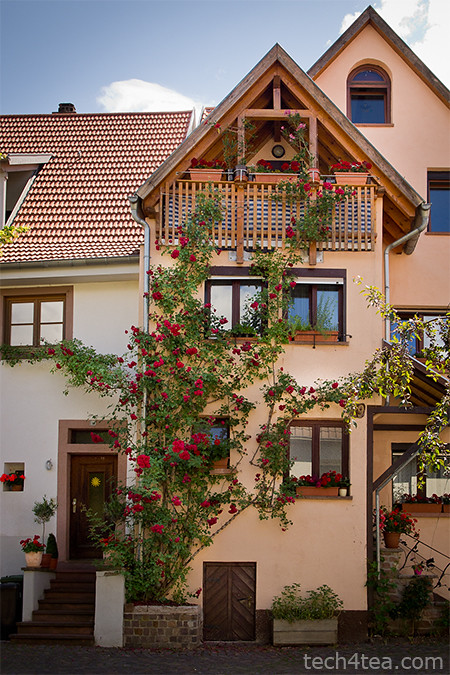
Beautiful rose covered house in Schriesheim

Beautiful rose covered house in Schriesheim. Roses are so plentiful and beautiful in Germany.

After the hectic pace of the first day of sightseeing, we decided to take it easy and adopt a more relaxed pace. We drove to Schriesheim and had pastry and tea for breakfast at Riegler in Schriesheim. It was a small town, and the pace of life was slow on a weekend morning. We strolled through the beautiful streets and stumbled upon a charming house covered in roses. It was absolutely beautiful.

German roses. Olympus E5 at f/4, 108mm (35mm equiv), 14-54 mm lens

German roses. Olympus E5 at f/4, 108mm (35mm equiv), 14-54 mm lens

We then drove over to Ladenburg, only some 10 minutes away. This was a bigger town. There was a Mercedes-Benz vintage car festival by the river on and we headed in looking for that elusive bratwurst stand. We’d thought German towns would be sporting bratwurst stands and restaurants around every street corner so imagine our surprise when we didn’t encounter any during the first day in Mannheim, Schwetzingen and Heidelberg. We finally had our beer and Bratwurst lunch at the festival, ogling at the sexy vintage Benzs on display.

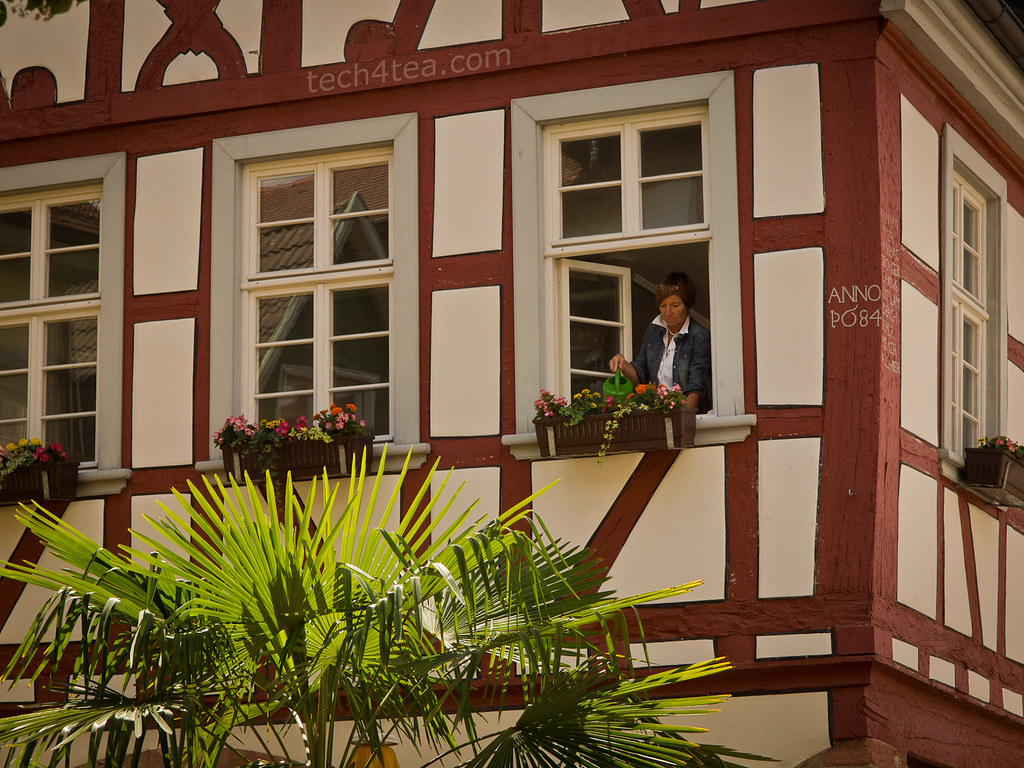
The Germans really love to garden, even on a window sill. There were roses and flowers all along the roadsides and houses along the roads.

The Germans really love to garden, even on a window sill. There were roses and flowers all along the roadsides and houses along the roads.

After lunch, we headed into the old town centre and came across a mini beer festival in a back alley as well as a wedding at the local church.

Sexy Benzs all splayed out at Ladenburg under the fantastic sunny weather.

Sexy Benzs all splayed out at Ladenburg under the fantastic sunny weather.

When we got back to where we had parked the car, we found that the festival organisers had cordoned off the road for the obstacle race for the vintage cars. We tarried to watch the interesting display but realised that it was going to last till evening. Fortunately, the organisers were kind enough to lift the cordon to let us drive our car out since it was parked just inside of the white tape.

Charming timbered houses at Ladenburg under the summer sky.

Charming timbered houses at Ladenburg under the summer sky.

Back at the hotel, we took a nap before heading out to the old town quarters of Weinheim. The good thing about long summer days in Europe is that you get long daylight hours to do the sightseeing. The flip side is you’ve got to get up real early or stay up real late to see a sunrise or sunset. Daylight here in southern Germany is from 4:30 am to 9:30 pm.

Weinheim Rathaus (Town Hall) in twilight. Taken with an Olympus E5 DSLR.

Weinheim Rathaus (Town Hall) in twilight. Taken handheld with an Olympus E5 DSLR.

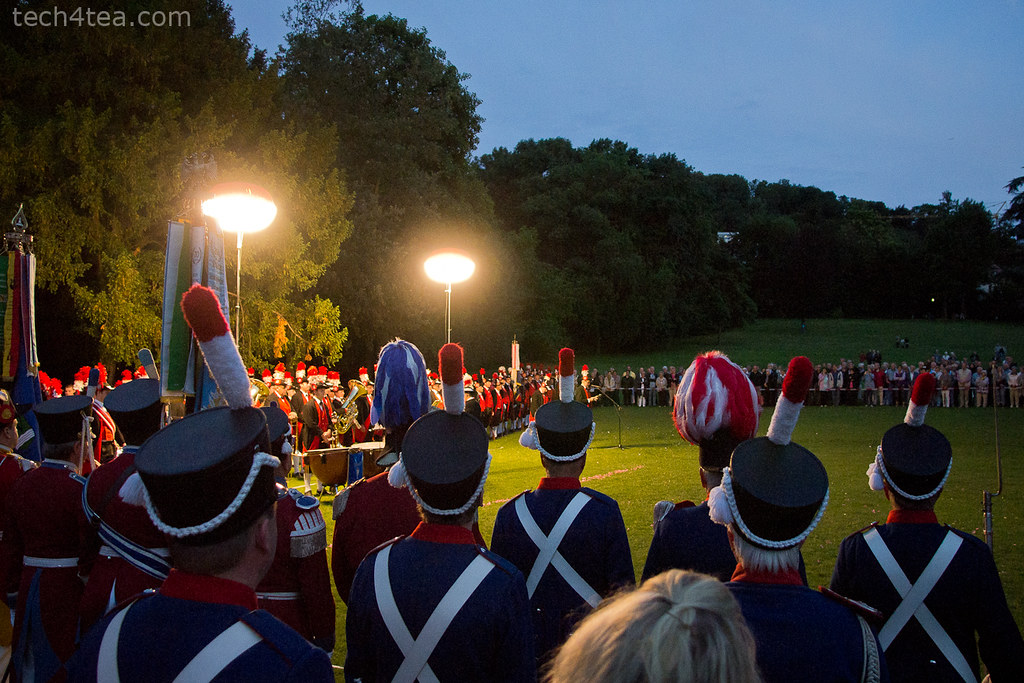
The old quarters of Weinheim sits at the top of the hill. There was some memorial service in the park with people wearing 18th century uniforms and guskets, after which they marched into the charming town square.

It was rather crowded and I had to lift the camera above their heads to get some snapshots. The articulated LCD screen of the Olympus E5 came in really useful here, because it allowed me to frame the shot on the LCD panel which I folded downwards so I could look at it in live-view mode even though the camera was held high up.

Twilight memorial at Weinheim Schlosspark. Taken with an Olympus E5 DSLR.

Twilight memorial at Weinheim Schlosspark. Taken handheld with an Olympus E5 DSLR.

By now, it was getting dark. The night-shot capability of the E5 also excelled. Focus was fast even in live-view and the picture quality, even at ISO 1600 was really good – sharp and with little noise.

Compact camera winners at the XXI TIPA 2011 awards

Saturday, April 30th, 2011
Compact digital cameras took up seven out of 40 categories evaluated by the 29-member magazines of the Technical Image Press Association (TIPA) this year. Winners include Nikon, Canon, Olympus, Samsung, Fujifilm and Panasonic.

Compared to the four categories for DSLR cameras, there were seven categories for compact digital cameras.

Founded in 1991, the Technical Image Press Association (TIPA) comprises 29 independent photo & imaging magazines from nine European countries plus Australia, Canada, China, USA and South Africa.

This is the 21st installment of the annual awards.

The winners for the seven compact digital camera categories are tabulated below.

Category / Winner TIPA citation
Best General Compact Camera 

Best DSLR Entry: Canon EOS 600D / Rebel T3i / Kiss X5

Nikon
COOLPIX P300

The Nikon COOLPIX P300 is a stylish compact camera with a remarkably powerful f/1.8 lens, starting at 24mm (35mm equivalent) with 4.2x optical zoom. High Refraction Index glass further ensures sharp images with high contrast. Combined with its powerful 12.2 Megapixel back-illuminated CMOS sensor, this camera gives excellent image quality even in dim lighting conditions. The P300 can film in Full HD (1080p), but also in slow motion with a recording speed of up to 120fps.
Best Expert Compact Camera 

Best DSLR Advanced: Nikon D7000

Olympus
XZ-1

The Olympus XZ-1 has one of the fastest zoom lenses in its class, the iZuiko f1.8-2.5 6.0-24mm (28-112mm equivalent angle of view in 35mm cameras.) Rather than succumb to the continuing Megapixel race, the light-reception area of each pixel of the 1/1.63-inch, 10 Megapixel CCD has been doubled. The XZ-1’s AF illuminator, Dual Image Stabilisation, Low-Light mode that automatically adjusts the ISO sensitivity up to ISO 3200 and the compact size all add up to an exciting “candid” camera that also offers advanced manual controls.
Best Premium Camera 

Best DSLR Expert: Olympus E-5

Fujifilm
FinePix X100

Fujifilm’s FinePix X100 offers unrivalled image quality for a compact camera, thanks to its APS-C format CMOS sensor and Fujinon 23mm f/2.0 lens. The Hybrid Viewfinder uniquely combines the ‘bright frame’ window-type optical viewfinder found in high-end film cameras, and the electronic viewfinder system of fixed single lens or digital compact system cameras, offering the user ‘the best of both worlds’. Added to the package is a newly-developed EXR Processor, which combines all the latest Fujifilm image processing technology.
Best Compact System Camera
Entry Level 

Best DSLR Professional: Pentax 645D

Samsung
NX100

The Samsung NX100’s new body design drastically revises the ‘DSLR look-alike’ concept found in other compact interchangeable lens cameras, and is a bold step from the company’s previous NX10/11 designs. This brings it into direct competition with other Compact System Cameras. Impressive features include a vivid 3-inch AMOLED screen, an APS-C size sensor and a line of high-tech iFunction lenses. This promising new series of optics blazes new viewing and camera control paths by allowing the user to program numerous functions right from the lens.
Best Compact System Camera
Expert 

Best DSLR Professional: Pentax 645D

Panasonic
Lumix DMC-GH2

The Panasonic Lumix DMC-GH2 is a true ‘hybrid’ photo and video camera, where video is no longer just an additional function. The DMC-GH2 features full HD 1920×1080, 60i (NTSC) / 50i (PAL) smooth, high quality video recording with 60p (NTSC) / 50p (PAL) output in addition to the high quality photo, a world’s first for cameras in this category. The DMC-GH2 can be operated through an intuitive touch control screen. For example, just tapping a subject on the screen will make the camera focus with a speed that rivals the best DSLR’s on the market.
Best Superzoom Camera 

Best DSLR Professional: Pentax 645D

Canon
PowerShot
SX230 HS

The Canon PowerShot SX230 HS features a 12.1-Megapixel HS System with high-sensitivity CMOS sensor, and a 14x optical zoom (28-392mm equivalent) with optical image stabilisation. A 3-inch LCD screen, with 100% frame coverage, makes for easy viewing and menu control. TIPA members were impressed with features such as Full HD 1080p video with Dynamic Image Stabilizer, a new GPS function (including supplied Map Utility software) and a high-sensitivity CMOS sensor coupled with Canon’s DIGIC 4 processor that reduces noise levels even at the higher ranges (up to ISO 3200).
Best Rugged Compact Camera 

Best DSLR Professional: Pentax 645D

Panasonic
Lumix DMC-FT3 / DMC-TS3

The Panasonic Lumix DMC-TS3/FT3 is waterproof to a depth of 12m and dust-proof equivalent to the IPX8 and IP6X standard. It has an integrated GPS function, ideal for photographers who want to shoot in the great outdoors and record their exact position during that shoot. The camera has a built-in compass, altimeter and barometer to show and record altitude, barometric pressure and orientation data. The barometer also works as indicator for depth underwater. Thanks to its location awareness, the internal clock of the camera is automatically adjusted to the local time.

Olympus XZ-1 wins TIPA 2011 award for Best Expert Compact Camera

Monday, April 25th, 2011
The flagship compact digital camera from Olympus has won the Best Expert Compact Camera award at the annual XXI TIPA 2011 awards.

Technical Image Press Association - XXI TIPA Awards 2011The 29 member magazines of the Technical Image Press Association (TIPA) awarded the award for the “Best Expert Compact Camera” category to the Olympus XZ-1.

Olympus XZ-1 - Best Expert Compact CameraInto its twenty-first year, the annual awards recognised the best photo and imaging products in 2011 in 40 categories. TIPA has member magazines from nine European countries plus Australia, Canada, China, USA and South Africa.
In its citation, it lauded the XZ-1 for its fast lens, as well its larger sensor area for each pixel – which translates to greater sensitivity, lower noise and better image quality.
“The Olympus XZ-1 has one of the fastest zoom lenses in its class, the iZuiko f1.8-2.5 6.0-24mm (28-112mm equivalent angle of view in 35mm cameras). Rather than succumb to the continuing Megapixel race, the light-reception area of each pixel of the 1/1.63-inch, 10 Megapixel CCD has been doubled. The XZ-1’s AF illuminator, Dual Image Stabilisation, Low-Light mode that automatically adjusts the ISO sensitivity up to ISO 3200 and the compact size all add up to an exciting “candid” camera that also offers advanced manual controls.” – Citation for XXI TIPA Awards for “Best Expert Compact Camera”

In Singapore, the Olympus XZ-1 is available at a suggested retail price of S$748 (incl GST & bundled with a 8GB SD Card).

Listed here are some earlier write-ups on the Olympus XZ-1:
Photo review | Full reviewSpecsSelling pointsDiorama movie

DSLR winners at the XXI TIPA 2011 awards.

Sunday, April 24th, 2011

The four categories for DSLRs were won by Canon, Nikon, Olympus and Pentax at this year’s TIPA awards.

Founded in 1991, the Technical Image Press Association (TIPA) comprises 29 independent photo & imaging magazines from nine European countries plus Australia, Canada, China, USA and South Africa.

This is the 21st installment of the annual awards.

Out of 40 categories of photo and imaging products for this year’s TIPA awards, four were for DSLRs. The winners for the four DSLR categories are tabulated below.

Category / Winner TIPA citation
Best DSLR
Entry LevelBest DSLR Entry: Canon EOS 600D / Rebel T3i / Kiss X5 

Canon
EOS 600D

The EOS 600D continues the legacy of easy operation and high functionality. TIPA members were very impressed with the features such as the 18.0 Megapixel CMOS image sensor, full HD video recording, Live View shooting, Wireless flash photography and a Vari-angle 3-inch LCD monitor. Offering 3.7 frames-per-second shooting rate, a top 1/4000 second shutter speed and up to 6400 ISO sensitivity (plus 12,800 H), the camera allows for the full DSLR experience with ease of operation that makes for a great first camera for those seeking to ‘step up’ from compact cameras.
Best DSLR
AdvancedBest DSLR Advanced: Nikon D7000 

Nikon
D7000

The Nikon D7000 impressed us as the definition of a state-of-the-art DX-format DSLR (APS-C size) with a 16.2 MP CMOS sensor, six frames-per-second framing rate for up to 100 shots and full 1080p HD movies with full-time AF. With twin SD card slots, a 100% viewfinder and bright 3-inch LCD for Live View operation, the camera is extremely versatile in the field. The magnesium alloy top and rear covers, special weather and dust seals plus 150,000 cycle-rated shutter system give it a pro feel.
Best DSLR
ExpertBest DSLR Expert: Olympus E-5 

Olympus
E-5

For a very reasonable price, the Olympus E-5 provides benefits that rival those found in some professional SLRs: complete weather-sealing, comprehensive functions, excellent responsiveness, 100% viewfinder, good noise control, dual CF/SD slots, built-in image stabilisation, all in a rugged magnesium-alloy body. Add to this Olympus’ Dust Reduction System, which has proven to be among the most effective solutions in the market. The 12.3 Megapixel Live MOS sensor, combined with the ‘TruePic V+’ image engine produces images that rival competitors with substantially higher pixel counts.
Best DSLR
ProfessionalBest DSLR Professional: Pentax 645D 

PENTAX
645D

TIPA members appreciated the design, build and feature specs of this 40 Megapixel medium format digital camera. The magnesium alloy body is fully weather-sealed, making it a great choice for outdoor and location photographers, plus the all-glass trapezoid pentaprism finder makes for a dazzling capture experience. Perhaps most impressive is lens compatibility, which encompasses both the new D FA autofocus lenses as well as older 645 lenses.

Olympus announces 3 new digital compact cameras.

Monday, March 7th, 2011
Olympus has unveiled 3 new digital compacts. This continues its 2011 trend of releasing new cameras at the beginning of every month.
16M backlit CMOS, 12.5x, 24 - 300 mm

Olympus SZ-20

altText

Olympus SZ-30MR

14M CCD, 5x, 28 - 140 mm

Olympus TG-810


Having launched seven cameras on 6 January and four on 8 February, Olympus has announced another 3 new models on 2 March. The three models are: TG-810, SZ-20, SZ-30MR.

The TG-810 will be available in Singapore in March but availability of the two new SZ series models have yet to be ascertained.

The three models and their main highlights are listed below:

Model
Date available
Estimated price
Colours
Highlights
TG-810
March 2011
S$540 

Colours:
Black
Silver
Blue
Red
– 14 megapixels CCD.
– 5x optical zoom from 28 to 140 mm (35mm equiv).
– 3” 920k dots TFT LCD display.
– HD movie (MPEG-4 AVC/H.264) at 1280 x 720 pixels with dedicated REC button. 

Battle-hardened for the rugged adventurer, this jock is:

– waterproof to a depth of 10m
– shockproof against falls from 2m
– crushproof against loads of up to 100kgf
– dustproof, freezeproof; basically abuse-proof.
– equipped with GPS and electronic compass

SZ-20
Avail: TBD
Price: TBD 

Colours:
Black
Silver

– 16 megapixels backlit CMOS.
– 12.5x optical zoom from 24 to 300 mm (35mm equiv).
– 3” 460k dots LCD display.
– HD movie (MPEG-4 AVC/H.264) at 1920 x 1080 pixels with dedicated REC button. 

For the avid traveller and sports fan, this compact has large zoom, high sensitivity sensor and good for high-speed continuous shooting. Additional features include:

– Hand-held starlight mode combines 4 exposures to eliminate blur and noise in low light.
– Smart Panorama captures up to 360-degrees.
– High-speed continuous shooting of 7 (full-size) or 15 (5 megapixels) photos per second.

SZ-30MR
Avail: TBD
Price: TBD 

Colours:
Black
Silver

– 16 megapixels backlit CMOS.
– 24x optical zoom lens from wide angle of 25 to 600 mm (35mm equiv).
– 3” 460k dots LCD display.
– HD movie (MPEG-4 AVC/H.264) at 1920 x 1080 pixels with dedicated REC button. 

Has everything the SZ-20 has, and more. Zooms twice as far. Multi recording shoots 1080p HD movies and full resolution photos simultaneously.

Common features Features that the 3 new cameras share (and together with many other recent Olympus models) include: 

– 8 Magic Filters for in-camera special effects for stills.
– 6 of them available in movie recording.
– 3D photo shooting.
– Multi Picture format for 3D photos.
– Pet mode for auto-detecting dogs and cats.
– Auto Release when dog/cat faces the camera.
– Eye-Fi card compatible.

Interesting movie effect using Diorama mode

Friday, March 4th, 2011

The Diorama Art Filter mode in Olympus cameras gives an interesting fast-forward effect, like those you see in documentaries where a flower blooms from bud to full-bloom in seconds, or of clouds racing across the sky.

I shot the video below using the Olympus XZ-1 compact digital camera, shooting it as an HD movie while in Diorama mode.

The Diorama mode is one of six Art Filters included in the camera to add special effects in-camera to photos taken. The Diorama mode imposes an extremely shallow depth of field to simulate photos taken of miniature models.

In newer Olympus cameras, these Art Filters can also be used when shooting videos, although the frame rate or size might be different from the basic normal movie shooting mode.

In the video below, you can see only part of the track is in focus while the rest are blurred. Also, although the snippet is only 12 sec long, the actual sequence lasted more than half a minute.

Photo review of the Olympus XZ-1

Wednesday, March 2nd, 2011

The XZ-1 is the flagship compact digital camera from Olympus. It stays compact despite packing in the image quality and manual control of entry level DSLRs, plus a host of other nifty features.

Olympus XZ-1The XZ-1 is a 10-megapixel high-end compact with 4x optical zoom from 28mm to 112mm (35mm equivalent). It records HD movies, has a 610k dots OLED display and features 6 Art Filters that can be applied to movies recorded. The camera comes in black or white and retails at S$748 (incl GST).
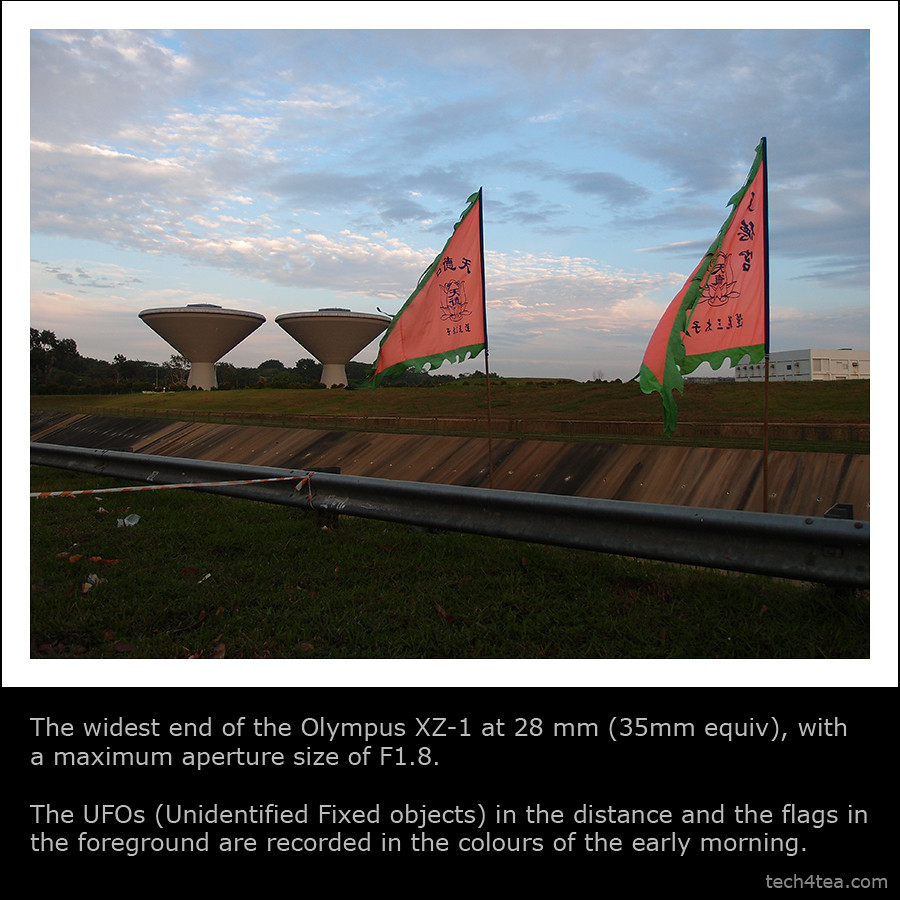
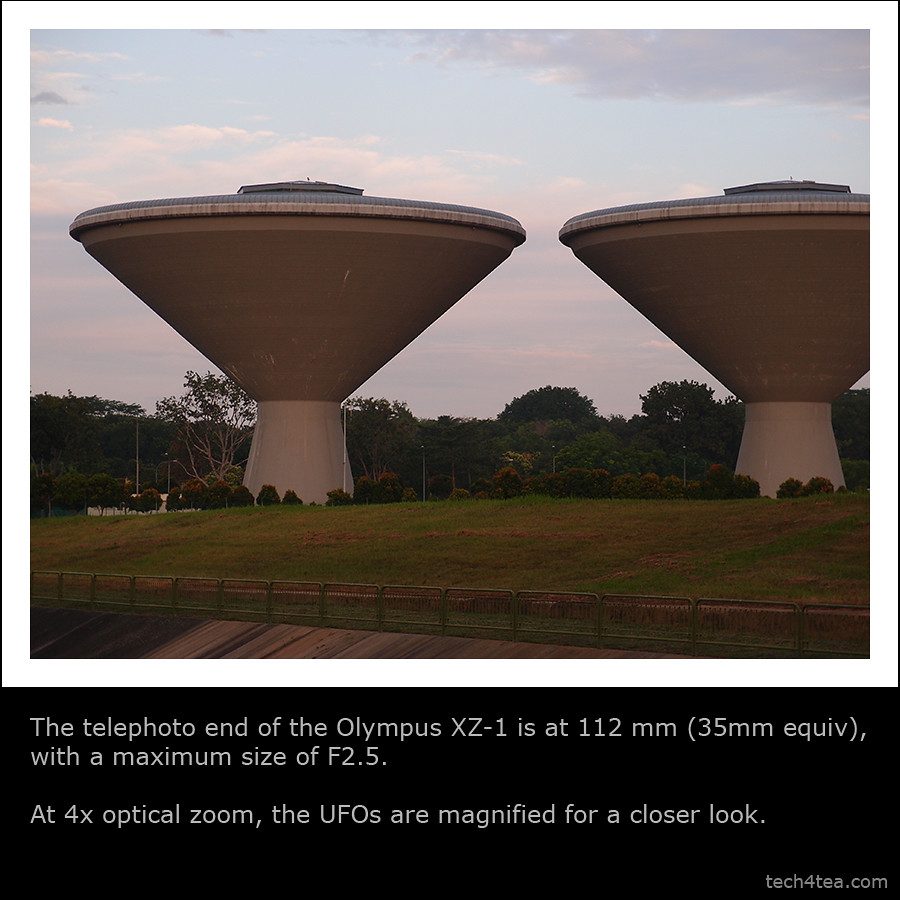
Hopefully these photos will provide a better idea of what the camera can and cannot do.

Listed here are some earlier write-ups on the Olympus XZ-1:
Full review | Detailed specs | Main selling points | Diorama movie

Photo review of the Olympus XZ-1

Wide angle at 28mm

Telephoto end at 112mm (35mm equiv)

F1.8 for low light

(more…)

Review of Olympus XZ-1

Tuesday, March 1st, 2011

This flagship compact digital camera from Olympus is ideal for those looking for a shooter which is compact yet provides image quality and control that rivals entry-level DSLRs.

I’ve played with the Olympus XZ-1 for the past two weeks. It is an impressive bridge camera that is compact, yet packs in a punch in terms of image quality and a whole range of nifty features.

If you’re using a compact digital now and wants to move on to manual controls and better image quality, without the hassle of changing lens, this camera is for you. It is also suitable as a second camera for those already using DSLRs because of its compactness.

Olympus XZ-1

You can see its detailed specs here and the main selling points here. Check out the photo review of the XZ-1 here.

Basically, it is a 10-megapixel high-end compact with 4x optical zoom from 28mm to 112mm (35mm equivalent). It records HD movies, has a 610k dots OLED display and features 6 Art Filters that can be applied to both stills and recorded movies. The camera comes in black or white and retails for S$748 (incl GST).

In terms of size, it is small enough to slip into a jacket pocket and carried everywhere you go, especially when travelling light on vacation.

Mode dial on the Olympus XZ-1For complete beginners, there is the usual everything-automatic mode (iAuto) that takes care of all shooting settings for you. There are also 18 scene modes with pre-canned settings catered for specific photographic situations from the usual portrait and landscape modes to more unusual modes like e-Portrait, Underwater (Macro or Wide), Multi-Exposure, Cuisine, Pet etc.

Its Live Guide interface in iAuto mode allows even novices to exercise some amount of control to deviate from the camera’s recommendations. The onscreen menu allows users to intuitive control how the photo should be captured by changing the colour, brightness and background blur without knowing anything about specifics like aperture, shutter speed, white balance etc.

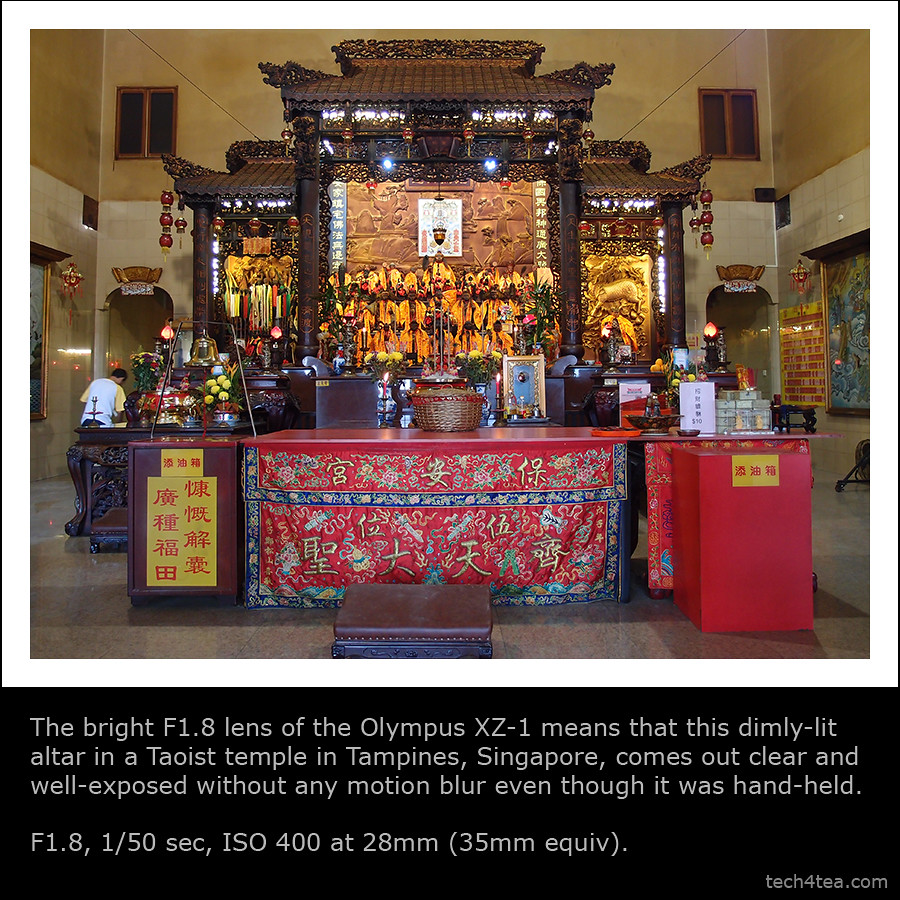
The much touted F1.8 maximum aperture at its widest angle of 28mm (35mm equivalent) works as advertised. What is less noticed but nevertheless impressive is that even at the long end at 112mm, the maximum aperture is only 2.5.

The fast lens means that for low-light photography, you can still take pretty good exposures with fast shutter speeds so that photos remain sharp even when the camera is hand-held.

No need for tripods that add bulk to your travel bag, flash that kills the ambience, high ISO that introduces noise and loses detail, or motion blur due camera shake duing long exposure.

Large sensor for a compactTogether with its relatively large 1/1.63” sensor, it provides image quality and depth of field that I found comparable to some entry-level DSLRs that I’ve used in the past. The image processing engine – TruePic V – is the same one used in the Pen series of cameras.

And together with its Auto-tracking feature, I used it to capture moving children and pets rather successfully.

The camera comes with 6 Art Effects, which includes the new Dramatic Tone filter introduced with the E-5, the flagship DSLR from Olympus. I like the special effects applied in-camera. No need to wait till the photos are uploaded to the PC before using a photo-editor to add those effects.

The Soft Focus filter looks much improved from those I’ve seen in earlier cameras from Olympus, with skin textured nicely smoothed out without blurring the eyes excessively.

Dedicated button for one-touch recording of movies.Shooting HD video is a cinch with a dedicated record button. No need to fumble through complicated on-screen menus. Recording movies using Diorama mode is pretty cool, like a video on fast-forward.

I found the panorama mode easy to use and the stitching of the triple exposures seamless.

The 610k dots OLED monitor is bright and can be seen quite clearly even under sunlight and has a wide angle of viewing.

The tactile control ring around the lens.The control ring around the lens is a pleasure to use. It is tactile and responsive and provides immediate adjustments to the main setting for each shooting mode (eg. aperture setting in Aperture Priority mode).

For those who wants to get the most from their photos, the camera records 12-bit RAW and/or JPEG. You should get a lot more data from RAW for creative tweaking, even though the JPEG rendering from the TruePic V engine already does an excellent job.

I also like the built-in ND filter that lets in less light to allow the use of slower shutter speeds and/or wider apertures for creative effect.

The wheel control at the rear panel.Areas to improve? I wished there is a more direct way to access ISO and White Balance settings, rather than using the menu. I also found the wheel controller (around the arrow navigation keys on the rear panel) too slow when making large adjustments, say of the shutter speed. But this is highly subjective and I suspect it’s because I’m spoilt by the more tactile lens ring.



Overall, the Olympus XZ-1 is a compelling all-rounder – compact, yet delivers great image quality and allows manual control.