Archive for the ‘Specifications’ Category

New superzoom camera: Olympus SZ-31MR

Thursday, February 9th, 2012

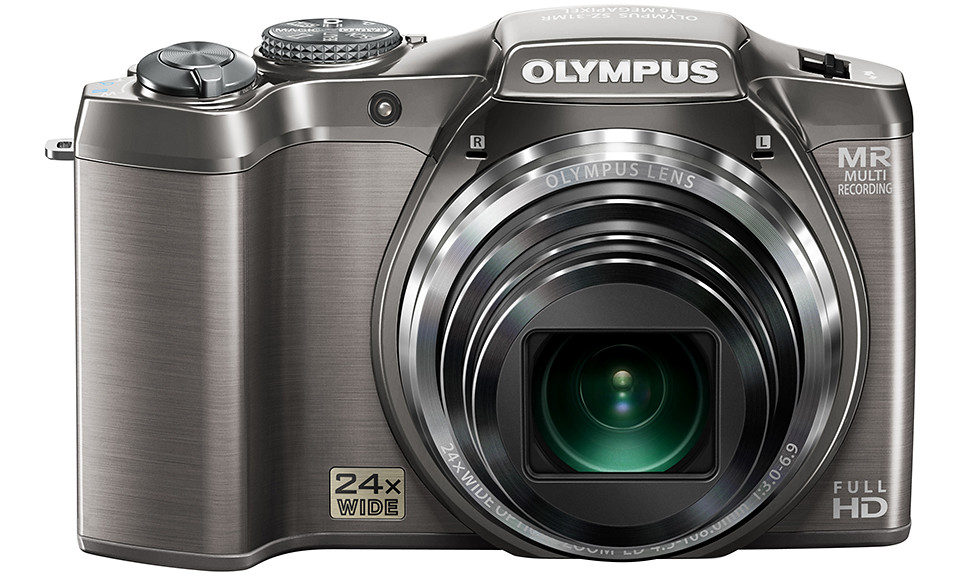
The 16-megapixel SZ-31MR has 24x zoom, shoots Full HD movie, gets iHS and high-res touch LCD. It’ll be available in May 2012 in either black or silver.

The Olympus SZ-31MR comes in either black or silver

The Olympus SZ-31MR comes in either black or silver

Olympus claims that the new SZ-31MR has the lightest, smallest (and cutest) body of any compact with a 20-plus optical zoom.
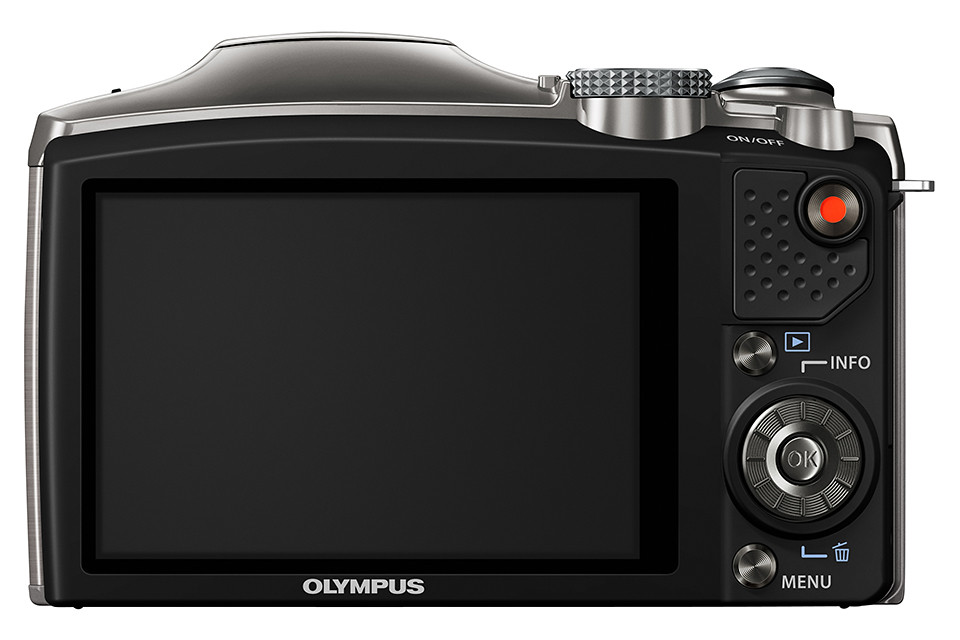
Olympus SZ-31MR

Olympus SZ-31MR

The SZ Traveller range is the first to capture 1080 Full HD movies and 16-megapixel stills simultaneously, using Olympus’ Multi Recording (MR) technology.

The AF is faster, the LCD is brighter and – thanks to the new touch interface – features like Multi Framing and Live Guide are even easier to use.

The SZ-31MR can now record movies and stills at high frame rates, and play back photo slideshows with music and transition effects.

Olympus SZ-31MR has 24x optical zoom

Olympus SZ-31MR has 24x optical zoom

The SZ-31MR is an extraordinary compact, despite its 24x wide optical zoom lens from 25-600mm (35mm equivalent).

The new iHS (Intelligence, High Sensitivity and High Speed) technologies make it possible to capture good blur-free images in the most challenging conditions, for example in low light or with backlight.

iHS draws on Olympus’ 16-megapixel backlit CMOS sensor and two separate TruePic V image processors (originally developed for D-SLR cameras) to dramatically improve low-light performance, speed up camera response and enhance scene and subject recognition.

Olympus SZ-31MR has16 megapixels

Olympus SZ-31MR has16 megapixels

Combined with high-speed sequential shooting and high-speed autofocus, iHS cuts down picture noise and enhances resolution and colour gradation with fast-moving subjects, night scenes and other tricky shots.

Multi motion Movie IS and Dual Image Stabilisation all but eliminate blur, even when you are walking and shooting at the same time.

IS is crucial with macros or close-ups of inaccessible subjects, when even the slightest wobble might otherwise ruin stand-out shots that regular lightweight compacts, with their weaker zoom lenses, simply can’t deliver.

Olympus SZ-31MR shoots Full HD

Olympus SZ-31MR shoots Full HD

When time is tight, Multi Recording and Multi Framing give another big advantage: You never have to choose between capturing one-off scenes as a 1080 Full HD movie or still photo – nor as a close-up or broader shot.

The SZ-31MR lets you do both.

A simple tap on the bright 3-inch 920,000-dot LCD takes a photo while you are filming.
Olympus SZ-31MR

Olympus SZ-31MR

Or resets the point of focus, shutter speed and zoom factor – all without interrupting your movie recording.

The touch-sensitive screen also gives you direct access to Live Guide, which in i-Auto mode displays a sliding scale that you can move with your finger to adjust key parameters such as brightness and depth of field.

You can check the effect of your changes in real time before you capture the scene.

Main features for the SZ-31MR:

(more…)

Company byte: Belkin rebranded

Thursday, February 9th, 2012

Belkin is a maker of network connectivity hardware, as well as accessories for consumer devices such as iPods and iPads. 

Belkin makes wireless routers, iPod accessories, iPad cases and energy saving devices.

Belkin makes wireless routers, iPod accessories, iPad cases and energy saving devices.

Belkin was founded in 1983 by Chet Pipkin and is headquartered in Playa Vista, Los Angeles, California, USA.

The rebranded Belkin logo.

The rebranded Belkin logo.

The company rebranded itself with a change in corporate logo during CES 2012, and a refocus onto developing “People-Inspired Products”.

Founder Pipkin, now President and CEO of the company, initiated the rebranding.

“The new Belkin logo, also known as PIP for ‘People-Inspired Products’, is an image made of dots configured to create a universal symbol of a person. It symbolises Belkin’s commitment in enhancing technology experiences for people, inspired by people,” said Alan Sparks, Vice President of Belkin, Asia Pacific.To achieve the promise of delivering People-Inspired Products, Belkin will put the emphasis on listening to the voices of their customers and partners.

These voices are to be integral to the development of Belkin’s products in their effort to improve and anticipate the evolving needs in our daily lives.

In conjunction with the rebranding, Belkin also announced its range of new products.

A list of these products is included in the press release below.

(more…)

New MIL camera: Olympus OM-D E-M5

Wednesday, February 8th, 2012

It’s confirmed! The Olympus E-M5 (from the new OM-D series) has been launched in Singapore in sync with the launch in Japan. The Micro Four Thirds mirrorless interchangeable lens (MIL) camera will be available in late March. Price TBC.

Retro-looking Olympus OM-D E-M5 launched today some 40 years after the original OM film SLR. Photo taken with PEN E-P3.

Retro-looking Olympus OM-D E-M5 launched today some 40 years after the original OM film SLR. Photo taken with PEN E-P3.

Most of the speculation prior to the actual launch turned out to be spot-on. The camera will be launched in Kuala Lumpur tomorrow.

“The four-thirds traditional DSLR like the E-5 is not dead. Even now, the staff at Tokyo HQ are discussing what the successor to the E-5 should be like,” Toshiyuki Terada, Group Leader of Product and Marketing Planning Group.The launch will then be held in Amsterdam for the European countries next week.

The key question everybody is asking is whether the four-thirds DSLR, viz the E-5, E-30, E620 line of traditional DSLRs is dead.

Many in the industry that I’ve spoken to thinks so.

So I posed the question to Toshiyuki Terada, Group Leader of Product and Marketing Planning Group.

Toshiyuki Terada san, holding an E-M5 doused in water.

Toshiyuki Terada san, holding an E-M5 doused in water.

Terada-san said that the four-thirds DSLR are not dead.

According to him – even now, the Tokyo staff is discussing what the successor to the E-5 will be like.

E-5 is the flagship four-thirds traditional DSLR in Olympus’ four-thirds line.

Terada acknowledges that the higher end professional photographers will, for the moment, prefer the E-5 as the primary camera.

But the micro four-thirds mirrorless cameras are gaining very rapidly in popularity (especially with the younger generation) and capability.

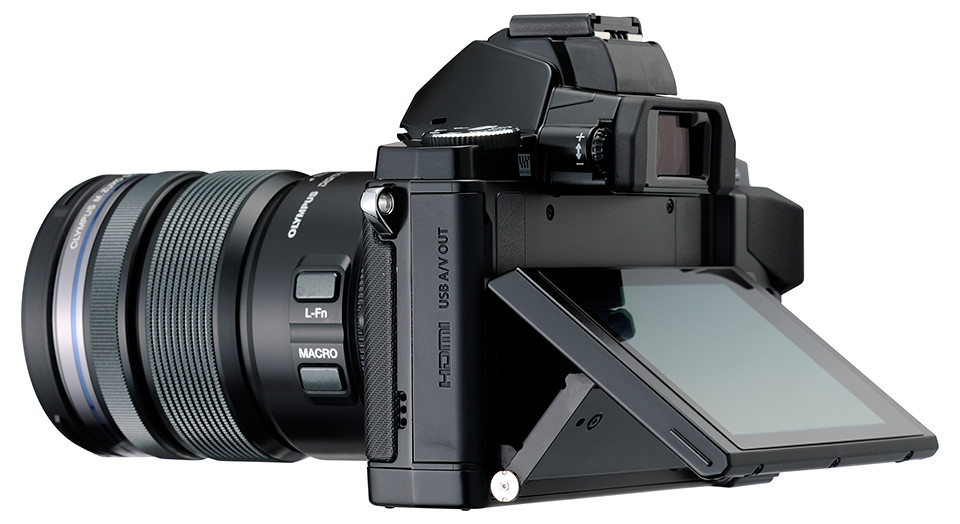
The Olympus OM-D E-M5 Micro Four Thirds mirrorless interchangeable lens camera.

The Olympus OM-D E-M5 Micro Four Thirds mirrorless interchangeable lens camera.

Looking at the OM-D E-M5, it does look like a “bridge” between the PEN E-P3 and the E-5.

Newly unveiled Olympus OM-D E-M5

Newly unveiled Olympus OM-D E-M5

Main improvements in plugging that gap is the increased auto-focus speed and the built-in electronic viewfinder, together with a host of other sweeteners.

Probably due to physics, it is still not possible for the OM-D to be a replacement for the E-5.

Only time will tell if the traditional DSLR will follow the way of the film cameras, or will the MIL cameras themselves be eventually replaced by higher performing prosumer compacts.

The camera will come with an M.Zuiko Digital ED 12-55mm f3.5-6.3 EZ kit lens.

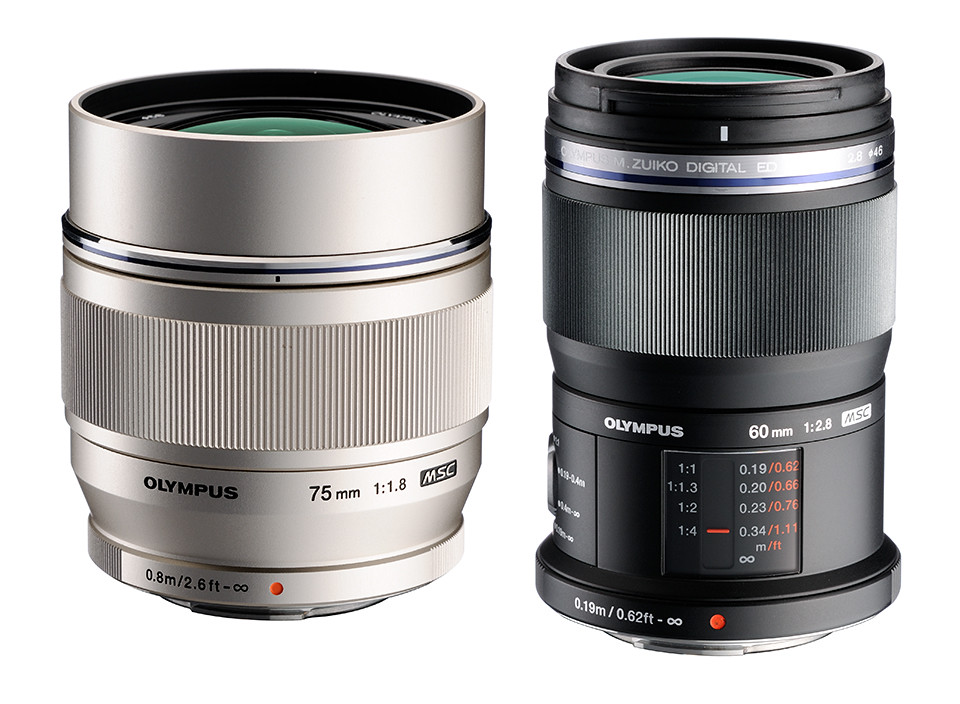
In addition, two new micro four thirds lenses – ED 75mm f/1.8 and ED 60mm f/2.8 macro lenses – were also unveiled to be under development.

Two new Micro Four Thirds lenses under development - ED 75mm f/1.8 and ED 60mm f/2.8 macro lenses.

Two new Micro Four Thirds lenses under development - ED 75mm f/1.8 and ED 60mm f/2.8 macro lenses.

The design mock-up of these lenses will be exhibited at CP+ in Yokohama, Japan from 9-12 February, 2012.

Olympus OM-D E-M5 comes in black or silver but kit lens only comes in black.

Olympus OM-D E-M5 comes in black or silver but kit lens only comes in black.

Main specifications of the OM-D E-M5

  • 16 megapixel Live MOS sensor
  • TruePic VI image processing engine
  • 5-axis (instead of 2) image stabilisation
  • ISO range of 200 to 25,600
  • 3-inch 610k-dot OLED-based touch-screen
  • Built-in 1.44-megapixel electronic viewfinder.
  • Fast auto-focus (20% faster than PEN E-P3)
  • 3D tracking
  • New “Key Line” Art Filter
  • New “Cross Process II” & “Dramatic Tone II” Art Filter variations
  • Dust/splash proof
  • Echo special effect for video
  • Burst shooting of 4.2-9.2fps
  • Shutter speeds from 60 to 1/4000th second.
  • 121mm x 89.6mm x 41.9mm (4.8 x 3.5 x 1.7 inches)
  • 425 g with battery and memory card
  • Hot-shoe for external flash

Rumour: Olympus OM-D/E-M5

Wednesday, February 8th, 2012

After much speculation and buzz over the past few weeks, Olympus will be launching, worldwide, their new micro four-thirds camera today. It is believed to be the new OM-D/E-M5 (speculated price: SGD1,600 or JPY100,000).

The widely anticipated Olympus launch event

The widely anticipated Olympus launch event

I’ll be attending the Singapore launch later on today. For now, this is what the rumour mills out there speculate. We’ll see how close to the truth later on today.

Front view of the anticipated Olympus OM-D E-M5 (Photo: 43Rumors)

Front view of the anticipated Olympus OM-D E-M5 (Photo: 43Rumors)

The OM-D/E-M5 is believed to be a micro four thirds mirrorless interchangeable lens camera based in design on the retro OM-series of film SLRs from Olympus.

The camera is expected to have a 16 megapixel sensor, five-axis image stabilisation, an ISO range of 200 to 25,600, a hot-shoe for external flash, and a 3-inch 610k-dot OLED-based touch-screen, as well as a built-in 1.44-megapixel electronic viewfinder.

It’s supposed to have superfast auto-focus and 3D tracking, burst shooting of four frames per second, shutter speeds between 60 and 1/4000th of a second.

Rear view of the OM-D E-M5 (Photo:43Rumors)

Rear view of the OM-D E-M5 (Photo:43Rumors)

Body dimensions could be 122mm x 89mm x 43mm (4.8 x 3.5 x 1.7 inches), weighing 369 grams (about 0.8 pounds).

Two photos of the camera were leaked and withdrawn on Amazon Japan, but not before 43Rumors downloaded them and posted them. The pictures show the camera with a battery grip.

Lens-wise, two new micro four thirds lenses – 75mm f/1.8 and 60mm f/2.8 macro lenses – may be launched in conjunction with the camera.

Some believe it’s a higher end PEN E-P3 in the class of E-5.

New DSLR: Nikon D800 and D800E

Tuesday, February 7th, 2012

Nikon has launched, worldwide, the successor to the D700. The 36.3-megapixel D800 (approx. S$3,750) will be available in March, while the D800E (approx. 10% more at S$4,100) will be available in April.

Update (22 March 2012):

D4 (S$9,799) and D800 (S$4,488) go on sale in Singapore on 22 Mar.

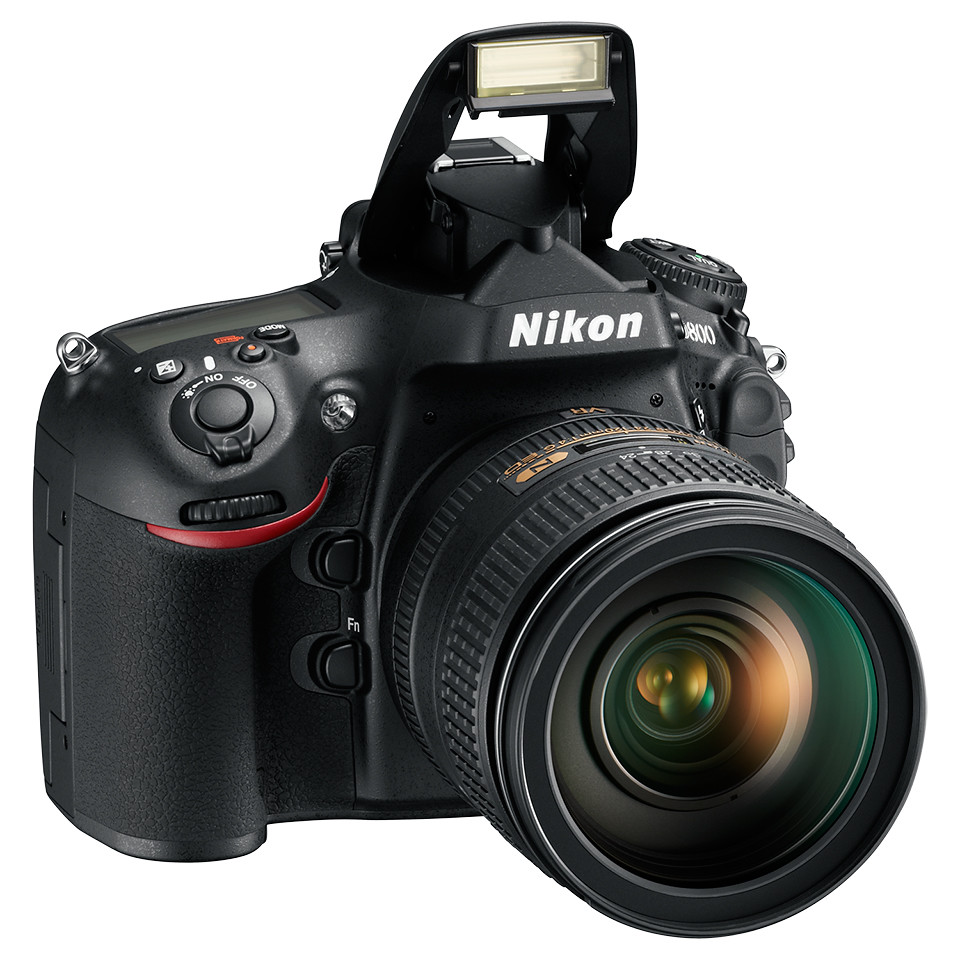
Nikon launched the D800 and D800E DSLRs worldwide today.

Nikon launched the D800 and D800E DSLRs worldwide today.

The 36.3 megapixel, FX-format DSLRs boast the highest effective pixel count in the world.

In Singapore, Nikon launched the D800 and D800E in the Pan Pacific Hotel, together with the slew of 12 COOLPIX cameras that it had announced one week ago.

Expected to be less than half the price of Nikon’s recently released flagship D4, the D800/800E promises tremendous value for money for enthusiasts looking for a similar level of video recording performance as the D4, but who do not need the professional-oriented features for shooting stills in the D4.

But the star of the event was undoubtedly the D800 and D800E.

Main features

Nikon D800 with 36.3 million pixelsBoth have a powerful new EXPEED 3 image processing engine, 36.3-megapixel CMOS sensor, and 91k-pixel RGB sensor (for Advanced Scene Recognition) inside a light, single-piece magnesium body that is water and dust resistant.

They are capable of shooting broadcast quality video with high-fidelity audio recording.

The cinematographer will love the versatility of being able to shoot 1080p Full HD in both FX and DX based formats.

ISO ranges from 100 – 6400 (extensible to ISO 50 – 25,600)

The D800E offers even greater detail resolution

Nikon D800E with a battery grip

Nikon D800E with a battery grip

The D800E disables the aliasing and moiré pattern reduction operation performed by the optical low-pass filter in the D800 and most DSLRs, that result in a slight blurring of details.

By doing so, light passing through a NIKKOR lens is able to strike photodiodes directly for greater resolution in details.

This model is optimal for landscape and artistic photography, which demand higher detail resolution and clear definition.

Apart from this, the D800E possesses the same characteristics as the D800.

The detailed brochure for the two cameras can be viewed here.

(more…)

Review: Nikon 1 V1 and J1 MIL camera

Monday, February 6th, 2012

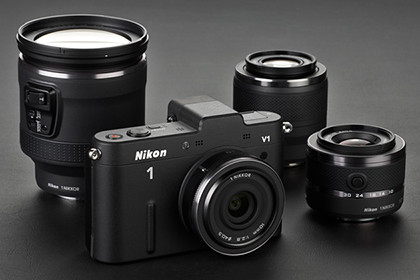
I tried out the Nikon 1 V1 (and Nikon 1 J1) mirrorless interchangeable lens (MIL) digital camera over the Chinese New Year.

Here’s what I like and dislike about Nikon’s debut into this relatively new segment of digital cameras.

This is a joint review in partnership with Tech65.org. Check out their video review of the Nikon 1 V1 and J1.

This is a joint review in partnership with Tech65.org. Check out their video review of the Nikon 1 V1 and J1.

Both the Nikon 1 V1 and J1 comes with a choice of 3 lenses. Their bundled prices are tabulated below.

Nikkor Lens kit Nikon 1 V1 Nikon 1 J1
10mm S$1,269 S$969
VR 10-30mm S$1,199 S$899
10mm + VR 10-30mm S$1,399 S$1,099
VR 10-30mm + VR 30-110mm S$1,449 S$1,149

The Nikon 1 has a crop factor of 2.7, so the 10, 30 and 110 mm focal lengths of the Nikon 1 lenses are equivalent (35mm format) to 27, 81 and 297 mm respectively.

If you’re looking for a compact and stylish camera that focuses fast, shoots good quality images in auto mode, offers the flexibility of changing lenses; and you’re not into rolling up your sleeves to interfere with exposure controls – this camera is for you.

Likes

I like the simplicity and clean design of the camera. It’s as simple to use (actually simpler) as a digital compact, and yet it’s only slightly heftier than a compact, but with faster focusing and better image quality.

The new CX format 1-inch 10.1 megapixel CMOS sensor is larger than those in compact cameras but smaller than other MIL cameras. It has a crop factor of 2.7 and allows lenses to be compact.

The new CX format 1-inch 10.1 megapixel CMOS sensor is larger than those in compact cameras but smaller than other MIL cameras. It has a crop factor of 2.7 and allows lenses to be compact.

With a bigger sensor than most compacts, the image quality was noticeably better. Focusing was also very fast with its hybrid Contrast and Phase detection auto-focus.

So on those days that I just want a point-and-shoot that I can leave on auto and snap away at those precious spontaneous moments, this would be an ideal choice.

Such as when people come and go over the Chinese New Year period to “拜年” and you just want to shoot stills and videos of the kids spewing their well-wishing lines to earn their ang pows.

No need to frighten the kids with this gigantic and obstructive DSLR getting in the way. Besides, the design is retro and nice, very similar to the Olympus PEN, whose design I also like.

And the white design of the Nikon 1 V1 that I used was the conversation topic drawing oohs and aahs from the subjects.

(That is invariably followed by more oohs and aahs when they hear the price of the camera).

On the main mode dial, you can see the four main shooting modes for using the camera. The usual Still shooting mode and Movie recording mode, as well as two interesting new modes: Motion Snapshot and Smart Photo Selector.

Motion Snapshot

The first time I shot with Motion Snapshot mode I really liked the effect. What happens is that when you half-press the shutter release button, the camera begins to record video in its buffer.

(more…)

New printer: Canon PIXMA PRO-1

Friday, February 3rd, 2012

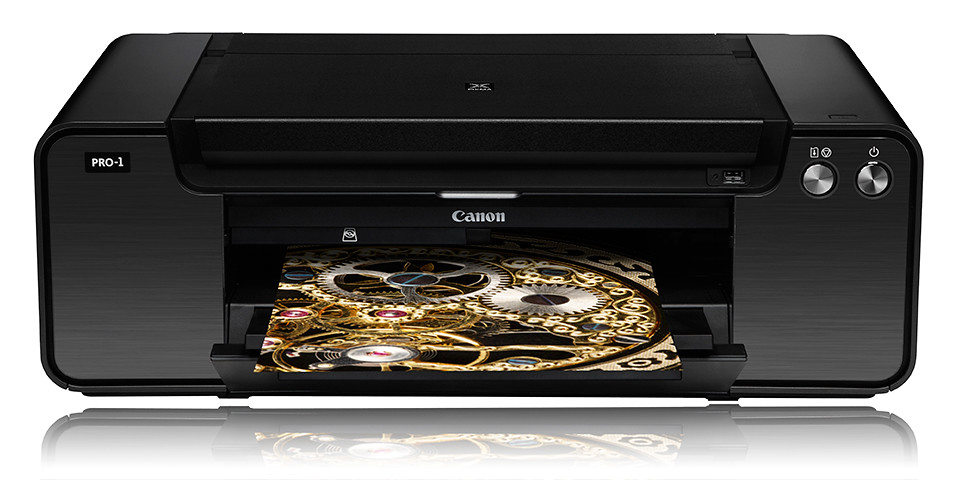
The PIXMA PRO-1 professional grade inkjet photo printer from Canon will be available at S$1,399 from mid February.

Canon PIXMA PRO-1 professional grade inkjet photo printer (S$1,399)

Canon PIXMA PRO-1 professional grade inkjet photo printer (S$1,399)

Print your own photo GALLERY with the world’s first 12-ink A3+ photo printer from Canon which combines accuracy with speed to produce quality color and monochrome prints.

“We have seen a lot more people taking up photography using DSLRs, and spending more time on image and photo editing,” says Andrew Koh, Senior Director and General Manager of Consumer Imaging & Information Group, Canon Singapore. “With professional print quality for both colour and monochrome images, the PIXMA PRO-1 is the next logical step in showcasing these great efforts.”Five of the 12 individual ink tanks are monochrome inks dedicated to producing professional quality black and white prints.

LUCIA pigment inks produces accurate colours while a Full-Photolithographic Inkjet Nozzle Engineering (FINE) print head provides the highest possible print resolution.

The PIXMA PRO-1 marks the addition of professional photographic solutions to Canon’s range of lifestyle printer products.

True-to-Life Prints

The PIXMA PRO-1 professional inkjet printer delivers exhibition-quality prints with a new 12-tank individual ink system.

12-tank individual ink system

12-tank individual ink system

This comprises 6 colour inks (Cyan, Magenta, Yellow, Red, Photo Cyan, Photo Magenta), 5 monochrome inks (Photo Black, Matte Black, Dark Gray, Gray and Light Gray) and 1 Chroma Optimizer.

The inks provide an exceptional range of colours for improved skin tones and accuracy in monochrome prints, and allow for seamless switching between various types of print media.

The Chroma Optimizer completes the 12-ink system by smoothening out stray ink droplets that cause uneven reflection, adding glossiness with anti-bronzing, and allowing users to show off gallery quality images.

Accuracy meets Efficiency

The PIXMA PRO-1 features three colour modes – colour, monochrome, and the new photo colour print mode which reproduces blues and greens to match visual memory of colours.

High print resolution of up to 4,800 x 2,400dpi

High print resolution of up to 4,800 x 2,400dpi

Its new Optimum Image Generating (OIG) system analyses colours in an image file and calculates the optimum ink combination and volume of ink droplets needed.

This enhances colour reproduction to bring out fine tonal gradations and ensures uniform glossiness across all print modes and media types, producing realistic print quality.

The PIXMA PRO-1’s FINE print head brings out detailed quality in prints, with a high print resolution of up to 4,800 x 2,400dpi.

Coupled with a printing depth of 16-bits per channel, the printer promises smooth tonal gradations in both colour and monochrome prints.

At the same time, print speed has been improved by increasing the number of nozzles to 12,288 nozzles (1,024 nozzles x 12 colors).

The new machine comes with larger ink tanks for longer print periods and offers a dual paper feeding system for both semi-gloss media and fine art media.

Front opening panels enable easy access to the ink tanks on either side of the main printer body, while the rear tray accommodates up to 20 sheets of photo paper, and the manual feed slot accepts photo paper up to 356mm (14”) wide and heavier fine art paper.

This feeding system helps to ensure paper is accurately fed, thus eliminating skewed prints, improving efficiency and minimizing wastage of ink, paper and time.

Network Connectivity

Ethernet network capable

Ethernet network capable

The new PIXMA PRO-1 professional inkjet printer can be connected to a network via Ethernet, allowing multiple user access to the printer.

This is especially useful for imaging professionals working together within a single location.

Nikon launches 14 new COOLPIX compact cameras worldwide

Wednesday, February 1st, 2012

The 14 COOLPIX cameras comprises 4 from the L (Lifestyle) series, 2 from the P (Performance) series, and 8 from the S (Style) series. Availability and prices will be announced at a later date.

(Update: Prices have been inserted as they became available).

Click on the pictures to get to Nikon’s detailed listing of features, technical specifications and colours available for each model.

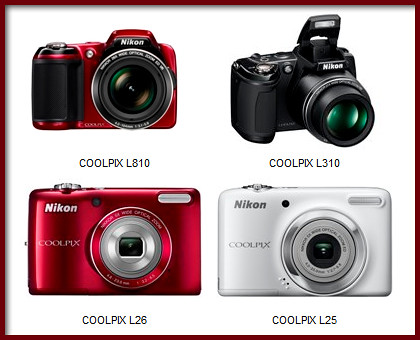
COOLPIX L810, L310, L26 and L25 from the Nikon COOLPIX L (Lifestyle) series.

COOLPIX L810, L310, L26 (S$159) and L25 (S$129) from the Nikon COOLPIX L (Lifestyle) series.

4 new L-series COOLPIX cameras

The four new L-series cameras allow users to capture photos with the press of a button.

The compact L810 is small but powerful with its 26x high-power optical zoom lens. The L310 (S$339) is packed with a powerful 21x optical zoom.

The entry-level L26 (S$159) and L25 (S$129) offer a 5x optical zoom and automatic shooting functions that make taking dazzling pictures easy.


COOLPIX P310 and P510 from the P (Performance) series offer superior performance and image quality.

COOLPIX P310 and P510 from the P (Performance) series offer superior performance and image quality.

2 new P-series COOLPIX cameras

The COOLPIX P310 and COOLPIX P510 are multi-function, high-performance compact digital cameras with full-scale photographic capabilities

Features Nikon’s built-in lens-shift vibration reduction (VR) function and an effective 16.1-million pixel count.

S9300, S9200, S4300, S3300 from the Nikon COOLPIX S (Style) series. The S4200 and S3200 are not available in Singapore.

S9300, S9200, S4300 (S$279), S3300 (S$219) from the Nikon COOLPIX S (Style) series. The S4200 and S3200 are not available in Singapore.

6 new S-series COOLPIX cameras

COOLPIX S9200 (S$509) and S9300 (S$549) has built-in GPS function, a high-power 18x optical zoom NIKKOR lenses that utilises thin optics, backside illumination CMOS image sensor, and a lens-shift VR system.

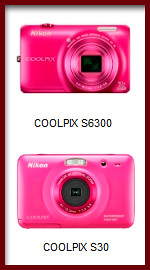
Nikon COOLPIX S6300 and S30

Nikon COOLPIX S6300 (S$349) and S30

The COOLPIX S4300 (S$279) and S3300 (S$219) are slimmer than their predecessors despite improved zoom function and built-in VR. The S4200and S3200 will not be sold in Singapore.

The COOLPIX S6300 (S$349) offers a balance between still image and movie recording functions.

It is compact despite a built-in 10x optical zoom NIKKOR lens; has a lens-shift vibration reduction (VR) function; and full-HD compatible movie function,

The COOLPIX S30 is a compact camera for the family. The camera is dust resistant; waterproof to a depth of three-metres; shock resistant, able to withstand falls from heights of up to 80 cm; can apply frames to still images; and has a slide show function that incorporates background music and animation.

Apple updates Final Cut Pro X

Tuesday, January 31st, 2012

Apple today released Final Cut Pro X v10.0.3, a significant update to its professional video editing application. The free update is available from the Mac App Store.

Apple updates Final Cut Pro X to v10.0.3

Apple updates Final Cut Pro X to v10.0.3

Final Cut Pro X v10.0.3 is available from the Mac App Store for SGD$299.99 (incl. GST) to new users, or as a free update for existing Final Cut Pro X customers.

The update introduces the following main features:

  • Multicam editing that automatically syncs up to 64 angles of video and photos.
  • Advanced chroma keying for handling complex adjustments right in the app.
  • Enhanced XML for a richer interchange with third party apps and plug-ins that support the fast growing Final Cut Pro X ecosystem.
  • Beta of broadcast monitoring that supports Thunderbolt devices as well as PCIe cards.

(more…)

Technical specifications: Olympus M.ZUIKO DIGITAL ED 12-50mm f3.5-6.3 EZ

Thursday, January 26th, 2012

Here are the main tech specs for the new S$698 (incl GST) Micro Four Thirds lens from Olympus.

12-50mm, 4.2x zoom, 3-speed motorised zoom mechanism, MSC mechanism for foast, quiet AF, stop focus and macro magnification at 0.72x (35mm equiv), dust/splash proof.

12-50mm, 4.2x zoom, 3-speed motorised zoom mechanism, MSC mechanism for foast, quiet AF, stop focus and macro magnification at 0.72x (35mm equiv), dust/splash proof.

The main technical specifications are tabulated at the end of this article.

Focal range from 12-50mm (35mm equiv: 24-100mm)

To enable a wide 84-degree angle of view to be captured at 24mm wide-angle, this zoom lens uses a Dual Super Aspherical (DSA) element that requires high-precision manufacturing because of the extremely large ratio between the thickness of the lens center and periphery; as well as double-sided aspherical elements located at an intermediate position between the lenses to correct spherical and chromatic aberrations that can accompany changes in the zoom ratio.

Olympus M.ZUIKO DIGITAL ED 12-50mm f3.5-6.3 EZ Micro Four Thirds lens

Olympus M.ZUIKO DIGITAL ED 12-50mm f3.5-6.3 EZ Micro Four Thirds lens

In addition, an HR (High Refractive index) element and ED (Extra-low Dispersion) element are combined for optimum correction of color aberrations.

Extensive use of special glass materials in the 9-group, 10-element lens construction of the zoom lens ensures high imaging performance throughout the zooming range.

In addition, all lens surfaces are multi-coated to ensure high transmittance and clear imaging performance even under unfavourable conditions such as shooting against light.

The use of an inner zooming system means that there is no variation in overall lens length during zooming, ensuring that stability can be maintained during handheld shooting.

(more…)