Archive for the ‘Panasonic’ Category

Panasonic camcorders: Spring/Summer 2012 line-up

Friday, March 16th, 2012

For camcorders, Panasonic has a line-up of 9 new models that will hit the shelves in April. These comprise the HC-X900 & HC-X900M, HC-V700, HC-V500 & HC-V500M, HC-V100, HC-V10, HX-WA20, and HX-DC2.

Panasonic's Summer/Spring line-up of camcorder ranges from the compact HC-V10 to the flagship HC-X900M.

Panasonic's Summer/Spring line-up of camcorder ranges from the compact HC-V10 to the flagship HC-X900M.

Panasonic’s nine new camcorders for Spring/Summer 2012 features advanced lenses; high sensitivity sensors; sophisticated Optical Image Stabilizer (O.I.S.) capabilities; and powerful image-enhancing engines.

HD Writer video editing software is included with all models.

Flagship HC-X900 and HC-X900M
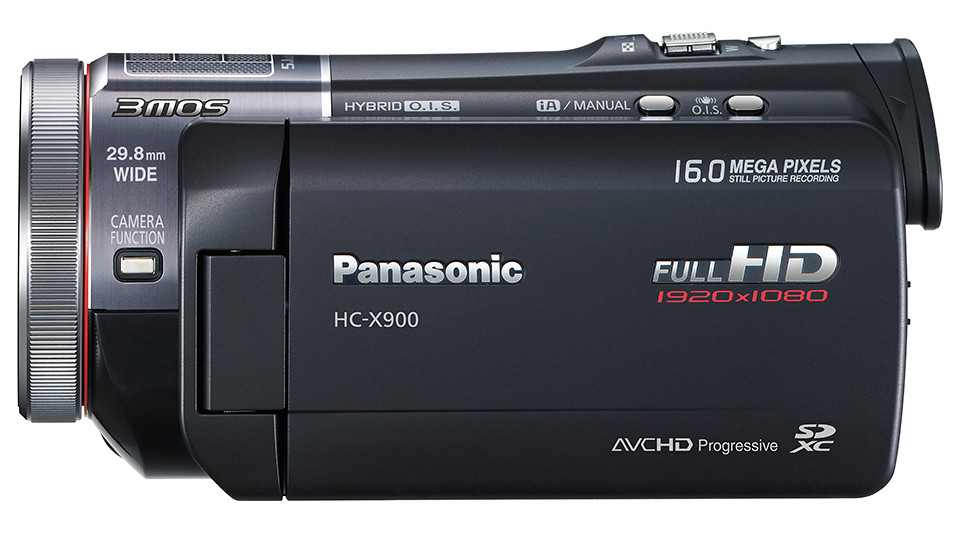
Panasonic HC-X900

Panasonic HC-X900

The re-engineered F1.5 LEICA Dicomar lens of the flagship HC-X900 and HC-X900M enables bright image rendering, high corner-to-corner resolution and Nano Surface Coating Technology to significantly reduce ghosting and flaring, which minimises distortion and degradation of contrast.

The advanced 3MOS Sensor is capable of high-speed processing of massive number of pixels – approximately equivalent to four times the pixel count of Full-HD – using pixel shift technology with submicron accuracy, to produce high-detailed images with excellent colour reproduction.

Panasonic HC-X900M

Panasonic HC-X900M

The newly-developed, ultra-high speed Crystal Engine Pro II can also dramatically reduce noise by 40% compared to the previous models to record clear, stunningly beautiful images even in dim lighting.

The new Hybrid O.I.S.+ corrects horizontal, vertical, yawing and pitching movements made by the hand during recording; while its five-axis correction capability takes care of any rolling motions resulting from walking.

3D shooting is enabled by the 3D Conversion Lens, creating the realistic depth, texture and dimensionality of 3D.

HC-V700

Panasonic HC-V700

Panasonic HC-V700

The HC-V700 features a 28mm wide angle for recording in tight spaces such as indoors.

The 46x Intelligent Zoom extends ultra-telephoto shooting beyond the range of the 21x optical zoom; while the HYBRID O.I.S.+ suppresses blurring across an entire zoom range even for handheld zoom shots in high magnification, to ensure crisp and beautiful images..

Images taken in 2D can also be converted to 3D with the new 2D to 3D Conversion Function.

HC-V500 and HC-V500M

Intelligent Zoom is up to 50x, using the LSI “Crystal Engine PRO” image processing engine.
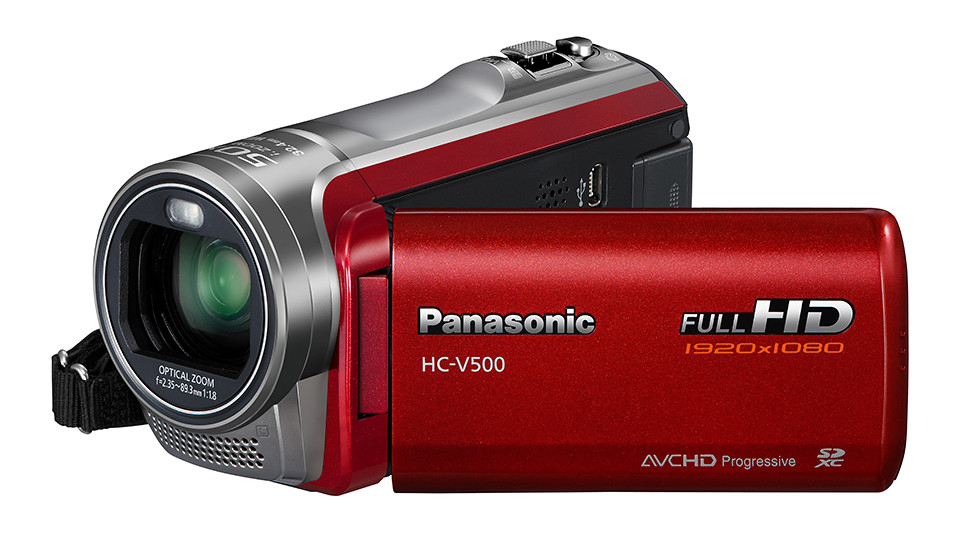
Panasonic HC-V500 & HC-V500M

Panasonic HC-V500 & HC-V500M

Hybrid O.I.S.+ and five-axis correction are also available.

Advanced Highlight Playback function enables quick viewing of recorded images. The Intelligent Index System detects zooming, panning, scene changes and faces in recorded images as “highlights” and then automatically plays back the detected highlight scenes – and scenes that the user has personally selected – according to a set time interval.

HC-V100 and HC-V10
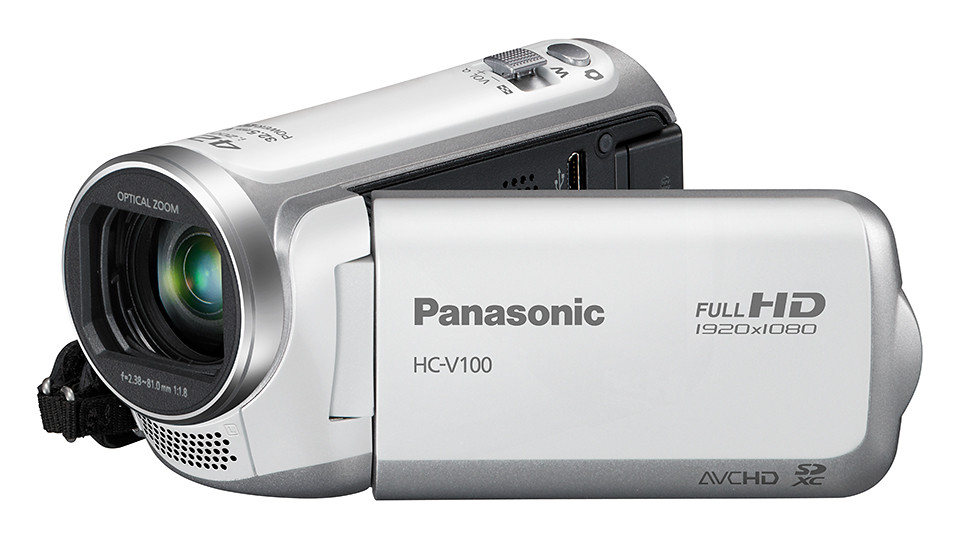
Panasonic HC-V100

Panasonic HC-V100

Both models are compact and lightweight, and feature high optical zooms stabilised by the POWER O.I.S.

The HC-V100 has an 42x Intelligent Zoom, as well as Power O.I.S., with a continuous recording time of up to 165 minutes on a fully charged battery; while the HC-V10 has an even more powerful 63x optical zoom lens that can be “enhanced” to 70x.
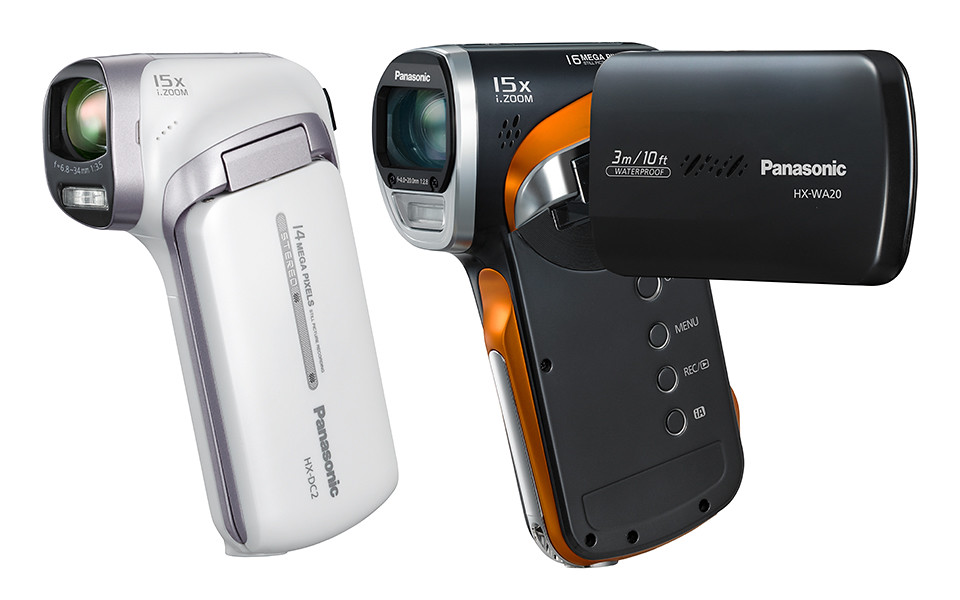
HX-DC2 (monitor folded in) & HX-WA20

HX-DC2 (monitor folded in) & HX-WA20

HX-WA20 and HX-DC2

For active outdoor use, check out the new waterproof (up to 3m) and dustproof HX-WA20.

It can record fast moving sports motion at 240 fps (640×360 px) or 480 fps (320×180 px) for 15 seconds, and then playback in slow-motion at 60 fps at ¼ or ⅛ of the original speed, allowing analysis of golf swings etc.

Both the HX-WA20 (16.4 MP) and HX-DC2 (14.4) shoot Full-HD, HDR stills and 5x optical zoom.

Lumix compact cameras: Spring/Summer 2012 line-up

Thursday, March 15th, 2012

Panasonic has a line-up of 10 new Lumix compacts comprising 4 from the High Zoom series, 2 from the Tough and Active series, and 4 from the Stylish Casual series. Prices are yet to be announced but they will be available in April.

Panasonic LUMIX DMC-TZ30 pays a visit to the Mont Saint-Michel.

Panasonic LUMIX DMC-TZ30 pays a visit to the Mont Saint-Michel.

The slew of 10 new models features optical zoom LEICA DC lens starting from ultra wide angles, ultra-thin aspherical lens system. as well as nano surface coating technology for superior image quality.

Panasonic LUMIX DMC-SZ1, SZ7, TZ25 and TZ30 from the High Zoom series.

Panasonic LUMIX DMC-SZ1, SZ7, TZ25 and TZ30 from the High Zoom series.

4 new High Zoom LUMIX cameras

The four new travel companions comprises the LUMIX DMC-TZ30 (14.1 MP) and TZ25 (12.1 MP), as well as the slimmer LUMIX DMC-SZ1 (16.1 MP) and SZ7 (14.1 MP).

The TZ30 comes with a powerful 20x optical zoom and an upgraded built-in Global Positioning System (GPS) for the avid traveller.

Starting from a wide angle of 24mm to the maximum zoom at 480mm, the TZ30 sports a 20x optical zoom LEICA DC lens, up from 16x in its predecessor.

The GPS allows geo-tagging for photos taken in 203 countries.

The DMC-SZ7 has a 14.1-megapixel MOS sensor with full-HD video recording while the DMC-SZ1 has a 16.1-megapixel CCD sensor and HD?? video recording.

The more modest 10x optical zoom starts from a wide angle of 25mm and zooms to 250mm.

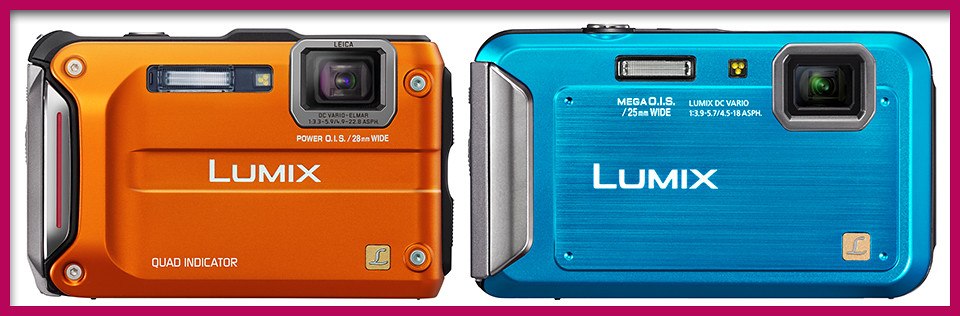
Panasonic LUMIX DMC-FT4 and FT20 from the Tough and Active series.

Panasonic LUMIX DMC-FT4 and FT20 from the Tough and Active series.

2 new Tough and Active LUMIX cameras

For the more adventurous photographers with a more active lifestyle, there is the LUMIX DMC-FT4 (12.1 MP) and FT20 (16.1 MP).

The all-weather DMC-FT4 is fully protected against water immersion (up to 12m), dust and sand, as it is strengthened with inner rubber padding and reinforced glass.

It is also freeze-proof, enduring temperatures down to -10 degree Celsius.

With shock-resistant material on the exterior and folded optics and supplementary dampener to protect its lens unit, the FT4 is dust-proof up to a height of 2 metres

The FT4 is also equipped with a built-in GPS.

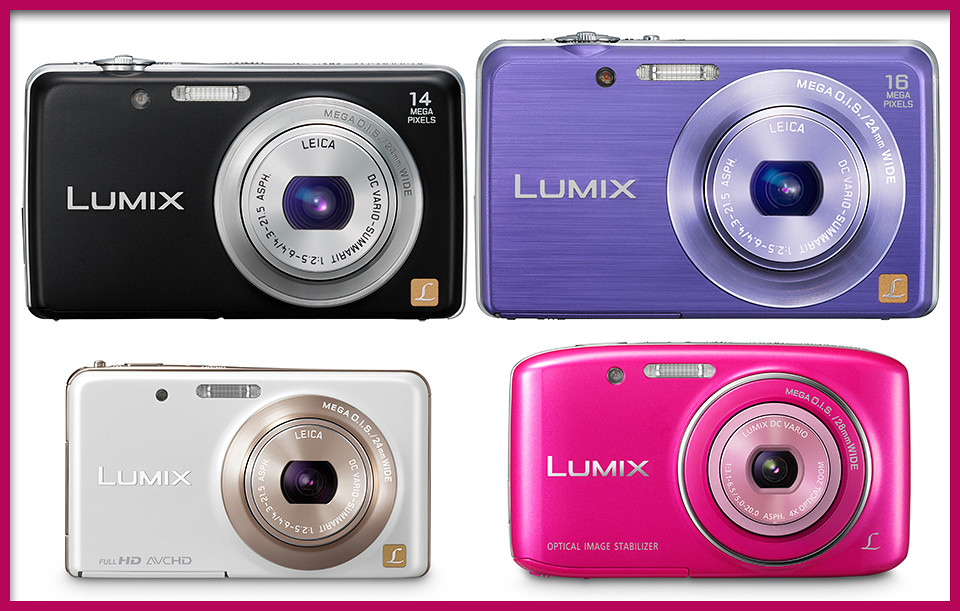
Panasonic LUMIX DMC-FH6, FH8, FX80 and S2 from the Stylish Casual series.

Panasonic LUMIX DMC-FH6, FH8, FX80 and S2 from the Stylish Casual series.

4 new Stylish Casual LUMIX cameras

For casual users looking for a stylish and compact shooter, there is the LUMIX DMC-FH6 (14.1 MP), FH8 (16.1 MP), FX80 (12.1 MP) and S2 (14.1 MP).

The DMC-FX80, DMC-FH8 and DMC-FH6 are all slim, because of the LEICA DC Vario-Summarit lens rated at F2.5.

The 5x optical zoom ranges from 24mm ultra wide-angle to 120mm.

The DMC-FH8, DMC-FH6, and DMC-S2 are capable of recording dynamic HD video in 1280 x 720 p at a smooth 25p (PAL) in MP4 (FH8) or Motion JPEG (FH6).

The DMC-FX80 is capable of full-HD recording at 1920 x 1080 50i (PAL) videos in AVCHD (MPEG-4/H.264) format.

Thematic shopping with Digital Style

Friday, September 16th, 2011

Newstead Technologies has opened a new multi-brand IT concept store in Funan DigitaLife Mall today. “Digital Style” is organised into six thematic zones, based on the needs of the modern IT consumer.

This is in keeping with the times – since consumers today have different purchasing habits and approaches.
This is the first of a chain of such stores. Eventually, there will likely be four to five such stores geographically distributed around Singapore, according to Evelyn Chua, Business Development and Marketing Manager of Newstead Technologies.
The 2,647 square feet store is located at #03-32 of the mall and opens from 11 am to 8 pm from Tuesdays to Sundays, and 11 am to 7 pm on Mondays.

The six themes are Entertainment & Media, Gaming, Home Computing, Mobile Communications, Office & Professional, and Ultra Mobile & Business.

The focus is on allowing shoppers to try out, for themselves, different products in the themes they are interested in.

For instance, in the gaming kiosk, the whole spectrum of gaming related gadgets and peripherals – from consoles, laptops, speakers and controllers – are displayed, for shoppers to mix-and-match and plug-and-play the various components together at one-stop.

The store is organised into six themes.Across the various themes, products are featured from all the major brands, including Acer, Asus, BlackBerry, Dell, Fujitsu, HP, HTC, Lenovo, Logitech, Microsoft, Motorola, Panasonic, Samsung, Toshiba and others.


Apple related products are absent, so you’ll have to visit authorised Apple resellers, such as Nubox, which is also under Newstead Technologies.

I noticed that digital cameras and video cameras are not sold at the shop.

Update (24 February, 2012): Newstead Technologies has opened its second and bigger Digital Style store in Jurong Point. The next will be at The Star Vista towards the end of 2012.

“Bid to Give” On-Site Auction of Notebooks for Charity

Friday, May 6th, 2011
Spanking new notebooks were auctioned off on last evening with proceeds going to the Straits Times School Pocket Money Fund (SPMF).

Another 13 notebooks will be auctioned off tonight at the Funan DigitaLife Mall. These are part of a two-week campaign by the consumer electronics retailer, Newstead Technologies, and its partners.

 FM91.3 DJ Jeremy Ratnam as one of two host auctioneers

FM91.3 DJ Jeremy Ratnam as one of two host auctioneers.

Bidding for the notebooksDay 1 of the “Bid to Give” charity auction was held on Thursday evening. With starting bids of only S$199, all 14 notebooks were snapped up within the hour by warm-hearted contributors who attended the charity drive at the Main Atrium of Funan DigitaLife Mall.
Partners of Newstead Technologies who sponsored the notebooks include Microsoft Singapore, Acer, Asus, Dell, Fujitsu, Hewlett-Packard, Lenovo, Panasonic, Samsung, Toshiba, AMD, Blackberry, Brightpoint, ECS, HTC, Huawei, Ingram Micro and Jos Distribution.

There will be another 13 notebooks up for auction tonight at 6pm at the same venue so you can still show up and contribute your share for charity.

Tay Hong Kuan with his Panasonic notebook with the night's highest bid of $1,349

Tay Hong Kuan with his Panasonic notebook with the night's highest bid of S$1,349.

The Straits Times School Pocket Money Fund is an annual community project that provides pocket money to children from low-income families to help them through school. The children can use this money to buy a meal during recess, pay for their bus fares or use it to meet their other schooling needs.

In addition to Bid to Give, Newstead Technologies will also be donating $10 for every notebook sold and another $5 for every Microsoft Office 2010 purchased at its roadshow from May 5 to May 8 and at Newstead Technologies’ outlets at IMM #02-06, City Square Mall #04-20, Suntec City (e-life) #02-002/A and nex Mall #04-55 from May 9 to May 15. Newstead Technologies hopes to raise a total of $17,000 from the charity auction and sale of notebooks during this period.

Compact camera winners at the XXI TIPA 2011 awards

Saturday, April 30th, 2011
Compact digital cameras took up seven out of 40 categories evaluated by the 29-member magazines of the Technical Image Press Association (TIPA) this year. Winners include Nikon, Canon, Olympus, Samsung, Fujifilm and Panasonic.

Compared to the four categories for DSLR cameras, there were seven categories for compact digital cameras.

Founded in 1991, the Technical Image Press Association (TIPA) comprises 29 independent photo & imaging magazines from nine European countries plus Australia, Canada, China, USA and South Africa.

This is the 21st installment of the annual awards.

The winners for the seven compact digital camera categories are tabulated below.

Category / Winner TIPA citation
Best General Compact Camera 

Best DSLR Entry: Canon EOS 600D / Rebel T3i / Kiss X5

Nikon
COOLPIX P300

The Nikon COOLPIX P300 is a stylish compact camera with a remarkably powerful f/1.8 lens, starting at 24mm (35mm equivalent) with 4.2x optical zoom. High Refraction Index glass further ensures sharp images with high contrast. Combined with its powerful 12.2 Megapixel back-illuminated CMOS sensor, this camera gives excellent image quality even in dim lighting conditions. The P300 can film in Full HD (1080p), but also in slow motion with a recording speed of up to 120fps.
Best Expert Compact Camera 

Best DSLR Advanced: Nikon D7000

Olympus
XZ-1

The Olympus XZ-1 has one of the fastest zoom lenses in its class, the iZuiko f1.8-2.5 6.0-24mm (28-112mm equivalent angle of view in 35mm cameras.) Rather than succumb to the continuing Megapixel race, the light-reception area of each pixel of the 1/1.63-inch, 10 Megapixel CCD has been doubled. The XZ-1’s AF illuminator, Dual Image Stabilisation, Low-Light mode that automatically adjusts the ISO sensitivity up to ISO 3200 and the compact size all add up to an exciting “candid” camera that also offers advanced manual controls.
Best Premium Camera 

Best DSLR Expert: Olympus E-5

Fujifilm
FinePix X100

Fujifilm’s FinePix X100 offers unrivalled image quality for a compact camera, thanks to its APS-C format CMOS sensor and Fujinon 23mm f/2.0 lens. The Hybrid Viewfinder uniquely combines the ‘bright frame’ window-type optical viewfinder found in high-end film cameras, and the electronic viewfinder system of fixed single lens or digital compact system cameras, offering the user ‘the best of both worlds’. Added to the package is a newly-developed EXR Processor, which combines all the latest Fujifilm image processing technology.
Best Compact System Camera
Entry Level 

Best DSLR Professional: Pentax 645D

Samsung
NX100

The Samsung NX100’s new body design drastically revises the ‘DSLR look-alike’ concept found in other compact interchangeable lens cameras, and is a bold step from the company’s previous NX10/11 designs. This brings it into direct competition with other Compact System Cameras. Impressive features include a vivid 3-inch AMOLED screen, an APS-C size sensor and a line of high-tech iFunction lenses. This promising new series of optics blazes new viewing and camera control paths by allowing the user to program numerous functions right from the lens.
Best Compact System Camera
Expert 

Best DSLR Professional: Pentax 645D

Panasonic
Lumix DMC-GH2

The Panasonic Lumix DMC-GH2 is a true ‘hybrid’ photo and video camera, where video is no longer just an additional function. The DMC-GH2 features full HD 1920×1080, 60i (NTSC) / 50i (PAL) smooth, high quality video recording with 60p (NTSC) / 50p (PAL) output in addition to the high quality photo, a world’s first for cameras in this category. The DMC-GH2 can be operated through an intuitive touch control screen. For example, just tapping a subject on the screen will make the camera focus with a speed that rivals the best DSLR’s on the market.
Best Superzoom Camera 

Best DSLR Professional: Pentax 645D

Canon
PowerShot
SX230 HS

The Canon PowerShot SX230 HS features a 12.1-Megapixel HS System with high-sensitivity CMOS sensor, and a 14x optical zoom (28-392mm equivalent) with optical image stabilisation. A 3-inch LCD screen, with 100% frame coverage, makes for easy viewing and menu control. TIPA members were impressed with features such as Full HD 1080p video with Dynamic Image Stabilizer, a new GPS function (including supplied Map Utility software) and a high-sensitivity CMOS sensor coupled with Canon’s DIGIC 4 processor that reduces noise levels even at the higher ranges (up to ISO 3200).
Best Rugged Compact Camera 

Best DSLR Professional: Pentax 645D

Panasonic
Lumix DMC-FT3 / DMC-TS3

The Panasonic Lumix DMC-TS3/FT3 is waterproof to a depth of 12m and dust-proof equivalent to the IPX8 and IP6X standard. It has an integrated GPS function, ideal for photographers who want to shoot in the great outdoors and record their exact position during that shoot. The camera has a built-in compass, altimeter and barometer to show and record altitude, barometric pressure and orientation data. The barometer also works as indicator for depth underwater. Thanks to its location awareness, the internal clock of the camera is automatically adjusted to the local time.

Japan disaster fallout: Supply chains affected by factory closures

Wednesday, March 23rd, 2011

Parts shortages has severely disrupted the supply chain in Japan and for major IT manufacturers around the world. The magnitude-9 earthquake, followed by the Tsunami and accident at the nuclear plant, has led to closures of factories around Japan.

Bloomberg reports that Sony has shut five more plants while Toyota Motor has extended production halts, 11 days after the worst earthquake in Japan on record.

Sony shuts five more plantsSony is Japan’s biggest exporter of consumer electronics. The five plants in the central and southern regions will stop work until March 31.It said that the plants produce LCD TVs, broadcasting equipment, headphones, camcorders, cameras, and mobile phones. Sony now has 12 plants where operations have been halted. The factories halted earlier manufacture products like Blu-ray discs and semiconductor lasers.It said that some production may be shifted overseas if the parts and materials shortage continue.
Toyota extends production halts
Toyota is the world’s biggest carmaker. All of its domestic car assembly will halt until March 26. It has lost production of 140,000 thousand vehicles, because of the shortage of electronic parts, plastics and rubber, the spokeswoman for Toyota said.

Honda has also extended the closure of three of its plants until at least March 27.

Canon has closed a factory in Nagasaki, some 680 miles from Fukushima until tomorrow, citing component shortage. It is the largest camera maker in the world.

Toshiba said that a factory makig small LCD panels may remain closed for a month. It has shut two plants so far.

Some Panasonic plants have been halted because of the disastersSome Hitachi factories have been halted because of the disastersOther manufacturers whose plants have been halted include Fujitsu, Panasonic, Hitachi, Hino Motors, Isuzu Motors, Mitsubishi Motors, Japan Tobacco and Kikkoman. None of them have decided when they will resume full production at the factories affected by the disaster.

Reopening of factories

On a brighter note, some factories that have been halted earlier due to the disaster are being reopened.

Nissan Motor, Japan’s second-largest carmaker said that operations at six factories are restarting while some vehicle assembly will also resume.

Canon resumes partial production at three northern Japan factoriesCanon resumed partial production at three factories in northern Japan, while Denso said that all of its plants has partially resumed. It is Japan’s largest auto-parts maker.

Sony has also restarted partial operations at a battery factory in Tochigi prefecture. It is the company’s third to resume production after the disasters.

Carl Zeiss joins the Micro Four Thirds Standard

Monday, February 7th, 2011
Another high-end lens maker, Carl Zeiss, has joined the Micro Four Thirds System Standard Group. More choice for users of Panasonic or Olympus Micro Four Thirds digital cameras.

Logo of Carl Zeiss Carl Zeiss has joined the “Micro Four Thirds System Standard Group”, announced Olympus in its press release.

Logo of Micro Four Thirds

Initiated by Olympus and Panasonic in 2008, the Micro Four Thirds (MFT) is a standard for lens mounts that is tailored to digital system cameras. The standard defines the sensor size, the lens mount together with the communication protocol, the aspect ratio and the flange back distance, as well as the optical requirements for production and construction.

Distagon lens from Carl Zeiss
The renowned lens-maker will make lenses designed specifically for MFT cameras, providing direct compatibility for MFT users, instead of depending on lens-mount adapters.

Carl Zeiss AG is a 165 year-old manufacturer of optical systems, based in Germany and founded in 1846 by Carl Zeiss.

Micro Four Thirds vs Four Thirds

Saturday, February 5th, 2011
Ever wondered what’s the difference between Four Thirds and the newer Micro Four thirds? Here’s a really quick comparison.

Flangeback distance: MFT only 50% of FT

The Four Thirds system is a standard created by Olympus and Kodak in 2001 for digital single-lens reflex camera (DSLR) design and development. Unlike older SLR systems, Four Thirds has been designed from the ground up to be entirely digital.

The Micro Four Thirds system was developed in 2008 by Olympus and Panasonic.

The Four Thirds System standard offers the benefits of compact, lightweight performance, and the new Micro Four Thirds System standard takes this still further to enable development of new ultra-compact interchangeable lens type digital camera systems.

The image sensor diagonal dimensions are the same for both Four Thirds System and Micro Four Thirds System standards.

Mount electrical contacts: MFT(11) vs FT(9)

The Micro Four Thirds System standard enables users to enjoy the same high image quality of the Four Thirds System’s 4/3-type image sensor in a much more compact body, and also take advantage of significantly more compact lenses, particularly in the wide-angle and high-power zoom range.

The new Micro Four Thirds System standard also incorporates a greater number of lens-mount electrical contacts (increased from 9 to 11) for the support of new features and expanded system functionality in the future.

Lens mount diameter: MFT is 6mm smaller than FT

Other primary distinguishing features of the Micro Four Thirds System standard (when compared to the Four Thirds System standard) are:

Approximately 50% shorter flangeback distance (mount-to-sensor distance).

Lens mount outer diameter approximately 6mm smaller.

Schneider Kreuznach joins the Micro Four Thirds Standard

Friday, February 4th, 2011
Users of Panasonic or Olympus Micro Four Thirds digital cameras can now look forward to new lens options from Schneider-Kreuznach, the German maker of high performance lenses.
Logo of Schneider Kreuznach
Schneider-Kreuznach has joined the “Micro Four Thirds System Standard Group”.

Logo of Micro Four Thirds Developed by Olympus and Panasonic, “Micro Four Thirds” is a standard for lens mounts that is tailored to digital system cameras. The standard defines the sensor size, the lens mount together with the communication protocol, the aspect ratio and the flange back distance, as well as the optical requirements for production and construction.

Any member in the consortium of companies in the Group can make and distribute accessories for the system that meet the standard. Users can therefore use and combine components from different manufacturers.

Lens from Schneider Kreuznach The Schneider Group specializes in developing and producing high-performance photographic lenses, cinema projection lenses, as well as industrial optics and precision mechanics.



The group was founded in Bad Kreuznach (Germany) in 1913 with subsidiaries in Göttingen, Dresden, New York, Los Angeles, Seoul, Hong Kong and Shenzhen. It has around 620 employees worldwide, with 330 based in its German headquarters.