The Single Edition allows freelance designers and small design firms to publish interactive content created with Adobe InDesign CS5.5 software on the Apple iPad for US$395 per application.
Adobe Publishing Suite, Single Edition at US$395 per iPad application.
Single Edition allows designers to publish a single-issue application for sale or distribution through the Apple App Store, without writing any code, focusing on creative design.
The Professional Edition of the Adobe Digital Publishing Suite was released in May for publishing houses, business publishers, and education institutions that require an off-the-shelf tablet publishing solution.
Single Edition allows users to publish single-issue content such as a brochure, highly-visual book, annual report or personal design portfolio as an application for the iPad.
The Digital Publishing Suite family which now includes Single Edition is used to publish content beyond traditional magazines and newspapers. These include sales tools, brand and customer engagement materials, merchandising deliverables, employee communications and corporate collateral published to tablets.
Pricing and Availability
Single Edition for iPad is expected to be available for purchase online at the end of November 2011. From InDesign CS5.5, users can publish through Single Edition to the iPad for US$395 per application. Single Edition will support additional tablet platforms later in 2012.
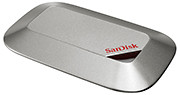
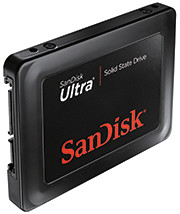
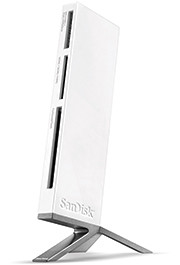
SanDisk launched seven new memory storage devices today, targeted mainly at consumers who are photographers/videographers, smartphone/tablet and general computer users.
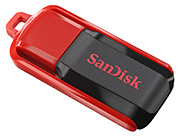
The new products feature higher capacities and higher speeds and include SDXC SD and micro SDXC cards, USB thumbdrives, a USB 3.0 card reader, and two SSD drives for daily and long term storage.
Note that the SDXC memory cards will require SDXC compatible devices to use their full capacity beyond 32GB. They can be used for non-SDXC devices but can only be formatted to a maximum capacity of 32GB for SDHC devices.
The new devices are tabulated below.
Memory device
Price & Description
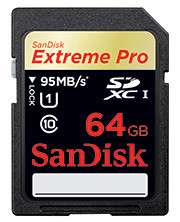
64GB SanDisk Extreme Pro SDXC UHS-I Card
(S$529)
Double the performance and capacity, targeted at photo/video pros.
Up to 90 MB/s write speed and 95 MB/s read speed.
Good for Full HD videos and burst mode photography recording to RAW + JPEG.
8GB – 64GB: S$69 – S$529
Available Q4 2011
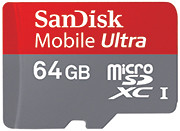
64GB SanDisk Mobile Ultra microSDXC Card
(S$285)
Double the capacity of smartphones and tablets
Up to 30 MB/s transfer speeds.
Good for Full HD videos
Available Q4 2011
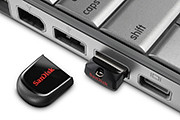
Cruzer Fit USB Flash Drive
(4 GB – 16 GB: S$12 – S$36)
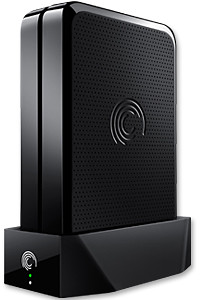
GoFlex Home is a consumer network attached storage (NAS) hard drive for the home. Easy to set up and use, it allows the access, sharing, streaming, and backup of files and media for computers, network TVs, media players and game consoles connected to the home wireless network.
The Seagate GoFlex Home comprises a drive dock and a hard drive.
Secure access can also be opened to computers and iOS/Android tablets and smartphones over the Internet.
Over the weekend, I helped my friend set up an NAS drive for his desktop, netbook, two laptops, iPhone and Android tablet. He had bought the Seagate GoFlex Home 3 TB storage drive during the recent COMEX 2011 but hadn’t had the time to set it up yet.
I helped by using eye-power because he decided to give it a go himself and actually got the thing working in less than 15 minutes. That was the reason why I recommended the drive in the first place, it works with most consumer home Wi-Fi routers with little set-up or configuration needed.
The GoFlex Home comes with two cables and an software installation CD. The following steps were all that was needed to get the personal storage cloud going:
1. Connect the GoFlex Home drive dock to the Wi-Fi router by using the provided Ethernet cable.
2. Pop the GoFlex hard drive into the GoFlex drive dock and plug the power supply into the drive dock and the wall outlet. Switch on the GoFlex Home by pressing the Power button on the drive dock.
3. Pop the CD (or download from Seagate’s website) into the computer (can be a Mac or Windows PC) to install the software needed to access the hard drive. Simply select a language, key in the product information found on the drive, give the drive a name and register it. The name has to be unique globally since it will be used to identify the drive should you access it from the Internet.
4. Install the software on other computers that require access to the shared drive. Up to 5 people/computers on the home network can access the GoFlex Home. By paying to subscribe to the Seagate Share Pro, you get access for an unlimited number of people/computers to the GoFlex Home.
There are three ways to access the drive. One is to use the installed Seagate Dashboard software (on Windows PCs), which allows all features of the drive to be configured and managed. You can add computers and user accounts, backup, access and share files as well.
Use Seagate Dashboard software to configure and manage GoFelx Home
The other way is to use a browser-based Seagate Share either for a computer in the home network or out in the Internet.
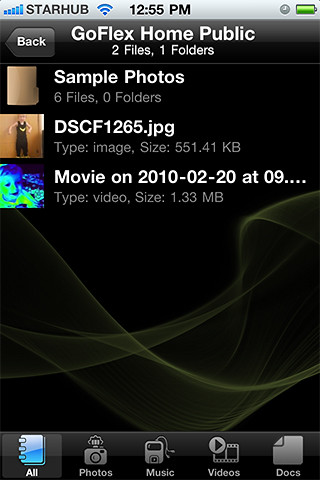
Free iOS/Android app
Both are easy to use with a simple interface, using drag-and-drop or standard dialog boxes we’re familar with.
The third method is via the appropriate free app on a iOS/Android smartphone or tablet, also over the Internet.
The GoFlex Home comes with a USB port which is very useful. You can connect an additional external hard drive to expand the capacity of the original GoFlex hard drive. You can also connect a USB hub for connecting more than one USB device.
In my friend’s case, he connected his printer to the USB port and all his computers on the Wi-Fi network got to share that printer. No more plugging/unplugging the old printer from one computer to another.
The included backup software allows up to three connected computers to be automatically backed up to the GoFlex Home. Upgrade to Premium Backup ($49.95) to back up an unlimited number of computers on the GoFlex Home network. You can upgrade at the Application Store that can be accessed through the Seagate Dashboard software.
For each user account set up on the GoFlex Home, three folders are created – a Public, Personal, and Backup folder. The Public folder holds files that can be stored and accessed by everyone on your home network. The Personal and Backup folders can only be accessed by the the user.
What I like about the sharing is the granular control available for the files shared. You can specify who you want to share files with, choose to share just certain files or entire folders, set passwords, and set expiry dates for the shares. Administration is intuitive and easy to pick up. You can send a URL of a shared file via email.
Stream media to other computers and media players on the home wireless network.
Music, photos and video can also be shared and streamed to media players, game consoles or network TVs that support UPnP-AV, DLNA or Windows Media Connect. A wide range of file types are supported.
The GoFlex Home is available in 1TB (S$179), 2TB (S$239) and 3TB (S$339) capacities.
The Formula 1 comes to Singapore this weekend. Check out the F1 apps for the BlackBerry tablet or smartphones – both free on BlackBerry App World.
Formula1.com 2011 app for BlackBerry smartphones.
For BlackBerry smartphone users (device software 4.2.0 or higher), check out the Formula1.com 2011 app from the organisers of Formula 1 itself. Users can access information such as race results, championship standings, timetables, calendars, circuit data etc.
The app streams real-time data directly from Formula One Management’s Technical Centre at the racetrack displaying the same information supplied to the teams from every session, putting you right at the heart of the action. The app also sends you push notifications and keeps you updated even when the app is closed.
Maxis F1 2011 for BlackBerry PlayBook
For BlackBerry PlayBook users, check out the Maxis F1 2011 for BlackBerry PlayBook app from Infindo Technology. Users can get detailed information for all the races with exclusive live commentary, top stories, results, schedule, standings, drivers/teams/circuit info etc.
Both apps are free and valid for the entire 2011 F1 season.
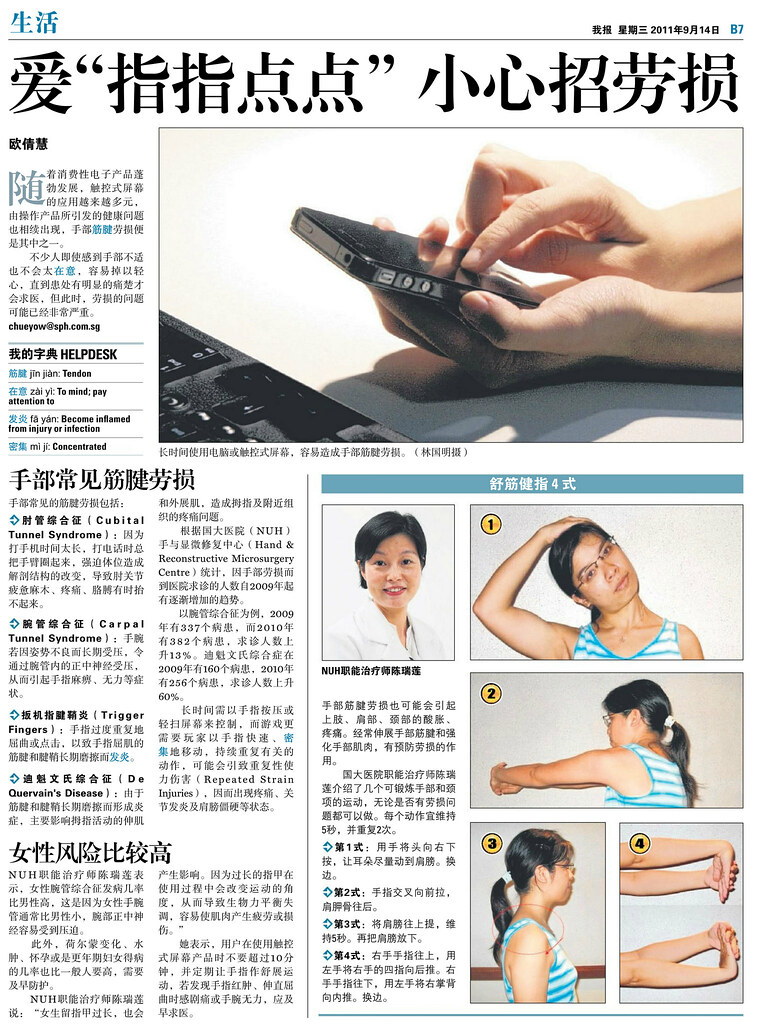
“my paper” listed a number of common hand ailments arising from prolonged usage of touch-screen devices such as tablets and smartphones, as well as a number of preventive exercises.
Some common hand ailments that my paper listed in its 14 Sep story included:
Common RSI and hand ailments and preventive exercises from my paper.
Cubital Tunnel Syndrome
Carpal Tunnel Syndrome
Trigger Fingers
DeQuervain’s Disease
According to the Hand & Reconstructive Microsurgery Centre at the National University Hospital (NUH), the number of people seeking treatment from the hospital for hand fatigue/injury has been on the rise since 2009.
For Carpal Tunnel Syndrome, the number of cases has increased 13% from 337 in 2009 to 382 in 2010. For DeQuervain’s Disease, the number has increased 60% from 160 in 2009 to 256 in 2010.
my paper also quoted a therapist from NUH as observing that ladies have a greater tendency to suffer from Repetitive Strain Injuries (RSI) compared to men. This was due to the smaller size of their wrists and other gender-related reasons, such as hormonal changes, pregnancy and menopause.
The article also featured four simple preventive exercises. Each could be done in sets of three repetitions, lasting about 5 seconds for each repetition.
Four months ago, I mused about how my chiropractor was laughing to the bank with the increasing number of patients he was seeing because of the proliferation of tablet computers and touch-screen devices. That anecdotal episode has now been substantiated by “my paper”.
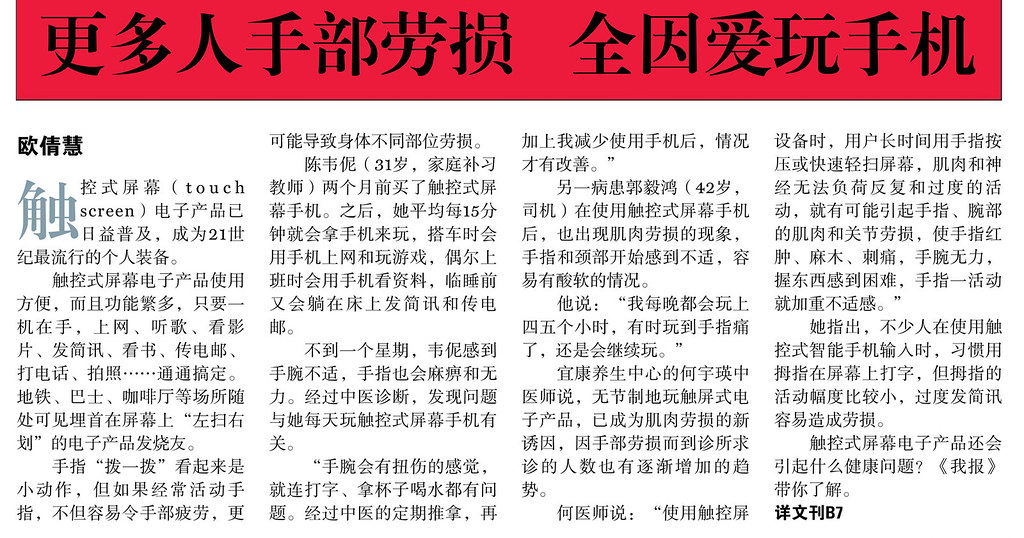
Front page feature in the Chinese section of my paper on 14 September 2011.
In the front page feature in the Chinese section of my paper on Wednesday (14 September 2011), my paper reported that the number of people suffering from hand injuries has risen because of the popularity of handheld devices.
It reports that although individual touch screen gestures seem like slight movements on their own, overly frequent use would result in arm fatigue, as well as malaise in different parts of the body.
The feature related how a new touch-screen smartphone owner suffered – within a week – discomfort in her wrists, and numbness cum loss of strength in the fingers. Her Traditional Chinese Medicine (TCM) doctor diagnosed that her affliction was related to the daily usage of her touch-screen device.
What was her usage profile like? She played with the phone every 15 minutes, played games and surfed the net when she rode on the bus, occasionally used it at work to check for information, and sent SMS and email while lying in bed prior to falling asleep.
Does it sound like your usage profile?
The 31-year-old tutor related how her wrists felt bruised, and how she had problems typing and holding drinking cups. Her conditions only improved after regular “Tui Na” (a form of TCM massage) and cutting down on her usage.
Another new touch-screen device user also experienced signs of muscle fatigue and discomfort to the fingers and neck. This 42-year-old chauffeur spends four to five hours every night playing games on the device, sometimes persisting even when his fingers ached.
Use of touch screen devices leads to more hand fatigue and injuries.
A TCM doctor from Income Healthcare observed that the unrestrained usage of touch-screen devices has become the leading cause of muscle fatigue and injury, and the number of patients seeking treatment from clinics for such symptoms has increased gradually.
Because the muscles and nerves cannot withstand the prolonged and repeated typing and gesturing of the fingers necessitated by the use of touch-screen devices, fatigue and injuries to the fingers, wrists, muscles and joints occur, the TCM doctor told my paper.
Perhaps it’s time to examine our own usage of touch-screen devices that are increasingly encroaching into our digital lifestyle.
Newstead Technologies has opened a new multi-brand IT concept store in Funan DigitaLife Mall today. “Digital Style” is organised into six thematic zones, based on the needs of the modern IT consumer.
This is in keeping with the times – since consumers today have different purchasing habits and approaches. This is the first of a chain of such stores. Eventually, there will likely be four to five such stores geographically distributed around Singapore, according to Evelyn Chua, Business Development and Marketing Manager of Newstead Technologies.
The 2,647 square feet store is located at #03-32 of the mall and opens from 11 am to 8 pm from Tuesdays to Sundays, and 11 am to 7 pm on Mondays.
The six themes are Entertainment & Media, Gaming, Home Computing, Mobile Communications, Office & Professional, and Ultra Mobile & Business.
The focus is on allowing shoppers to try out, for themselves, different products in the themes they are interested in.
For instance, in the gaming kiosk, the whole spectrum of gaming related gadgets and peripherals – from consoles, laptops, speakers and controllers – are displayed, for shoppers to mix-and-match and plug-and-play the various components together at one-stop.
Across the various themes, products are featured from all the major brands, including Acer, Asus, BlackBerry, Dell, Fujitsu, HP, HTC, Lenovo, Logitech, Microsoft, Motorola, Panasonic, Samsung, Toshiba and others.
Apple related products are absent, so you’ll have to visit authorised Apple resellers, such as Nubox, which is also under Newstead Technologies.
I noticed that digital cameras and video cameras are not sold at the shop.
Update (24 February, 2012): Newstead Technologies has opened its second and bigger Digital Style store in Jurong Point. The next will be at The Star Vista towards the end of 2012.
Here are some screenshots from the Windows 8 developer preview during the ongoing BUILD conference (13-16 September 2011) in the Anaheim Convention Centre.
Windows 8 will be Microsoft’s attempt to wrest market share in the fast growing tablet market from market leading iPads from Apple and the whole slew of tablets based on Google’s Android.
Click on the images for a larger view. These screenshots have been provided by Microsoft.
The personalized lock screen shows unread emails and other app notifications.
See apps and content at a glance on the start screen.
Pick the files you want to send or share from one place.
Touch browsing seems fast, fluid and intuitive.
Large buttons for typing on the touch keyboard.
The thumb keyboard to avoid having to reach into the centre of the screen.
At the developer-focused BUILD conference, Microsoft has showcased a detailed preview of the next major release of Windows, code-named “Windows 8”, including new tools for developers to write applications for the new operating system.
The ongoing BUILD conference (13-16 September 2011) is being held in the Anaheim Convention Center. Here are some screenshots of the preview. Windows 8 is not expected to be come out of beta until at least the second half of 2012.
Main features
The user interface (UI) is centred around a touch interface, although it works with a mouse and keyboard too. Microsoft calls the UI “Metro” style – displaying important information first, whilst emphasising simplicity and user control. Internet Explorer 10 aims to provide a fast and fluid touch-browsing experience.
On the start screen, apps form the focal point, the Apps “tiles” fill the entire screen. The apps work together and communicate with each other in Windows 8. For example, photos can be selected and shared from different apps via email, Facebook, Flickr or the hard drive.
The ongoing BUILD conference (13-16 September 2011) is being held in the Anaheim Convention Center.
If you use multiple devices, Live roams all the content from the cloud services you use most — photos, email, calendar and contacts — keeping them up-to-date on your devices, be it a desktop, laptop, netbook, tablet or smartphone. With SkyDrive, you can access your files, photos and documents from virtually anywhere with any browser or with Metro style apps in Windows 8.
Windows 8 is an enhanced Windows 7 with lower memory footprint, and runs even on low-end hardware. For PC users, Windows 8 features an enhanced Task Manager and Windows Explorer and new, flexible options for multimonitor setups.
For developers, the Windows Store will allow developers to sell their apps anywhere Windows is sold worldwide, whether they’re creating new games or familiar productivity tools. For games developers, DirectX 11 gaming power underlies Windows 8, allowing the easy creation of full-screen games with smooth, flicker-free action.
Hardware wise, Windows 8 supports ARM-based chipsets, x86 (including x32 and x64) devices, and sensors. It promises instant-on and long battery life for ultrathin PCs and tablets, and is backward compatible with software/devices that run on Windows 7.
The new operating system will run on tablets, desktop and laptop computers via a touch screen, mouse or keyboard. It will also be backward compatible to existing Windows software.
Windows 8 represents Microsoft’s hope of wrestling market share for tablet computers from Apple iPads and Android tablets.
Microsoft will unveil the next iteration of their Windows operating system software today at a developers conference in Anaheim, California. A preview of the design was first released in June this year.
Tough days for PC makers
Windows sales have missed analysts’ estimates for three straight quarters and personal-computer sales have stalled as consumers favor tablets over notebook computers running the software, reported Bloomberg.
Of the 9.3 million iPads sold in the quarter that ended in June, about 20 percent of them went to customers who would have otherwise bought a Windows PC, estimated Colin Gillis, an analyst at BGC Partners LP in New York.
This will be the first time that a Windows operating system is capable of running on chip technology from ARM. Microsoft aims to make Windows 8 capable of running smaller, thinner tablet computers with battery life that can rival that of the market leader – Apple’s iPad.
Out of 60 million media tablets expected to be shipped 2011, 74 percent will be Apple’s iPads, according to an August forecast by IHS. The global market is forecasted to rise to 275.3 million units in 2015, with Apple expected to account for 43.6 percent of the market.
Windows 8 design
The user interface for Windows 8 resembles Microsoft’s Windows Phone 7 smartphone operating system – it uses digital tiles instead of icons to help users navigate between programs. The tiles are on the computer’s home screen can display updated information from inside applications, so that users can see the info at a glance without having to fire up those apps.



 No more plugging/unplugging the old printer from one computer to another.
 number of computers on the GoFlex Home network. You can upgrade at the Application Store that can be accessed through the Seagate Dashboard software.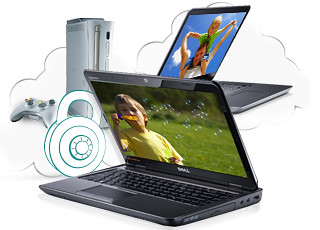




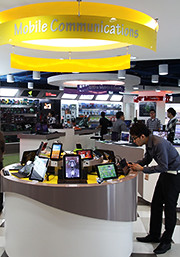 Across the various themes, products are featured from all the major brands, including Acer, Asus, BlackBerry, Dell, Fujitsu, HP, HTC, Lenovo, Logitech, Microsoft, Motorola, Panasonic, Samsung, Toshiba and others.