Archive for the ‘Cameras’ Category

Gigapixel image for London 2012 Olympics Opening Ceremony

Thursday, July 26th, 2012

Super high-resolution image will capture each of the 70,000 spectators in detail. The 20-Gigapixel photograph will be uploaded and spectators will be able to zoom in, locate and tag themselves.

Getty Images is the official Photographic Agency for the London 2012 Olympic Games which opens tomorrow.

Getty Images is the official Photographic Agency for the London 2012 Olympic Games which opens tomorrow.

Ahead of tomorrow’s Olympics Opening Ceremony in London, Getty Images and Fujitsu have announced that they will be snapping a gigapixel photograph of the event, enabling spectators – all 70,000 of them! – to zoom in, find and tag themselves.

This is the camera set up that Getty Images’ gigapixel photographer Henry Stuart will be using at London 2012 Olympics. It’s a Nikon D800. (Photo credit: Henry Stuart)

This is the camera set up that Getty Images’ gigapixel photographer Henry Stuart will be using at London 2012 Olympics. It’s a Nikon D800. (Photo credit: Henry Stuart)

Images of such a high resolution usually take days to upload but thanks to leading-edge speed and performance of the Fujitsu CELSIUS R920 workstation, the image will be available to view on www.gettyimages.com overnight – up to 12 times faster than previously possible.

This will be the 13th consecutive Olympics for which Getty Images has been appointed as the Official Photographic Agency to the International Olympic Committee (IOC).

Live Event: “The Arrival of a New Milestone” – Canon launches the EOS M

Monday, July 23rd, 2012

After much anticipation and speculation, Canon has finally launched its first mirrorless interchangeable lens camera – the EOS M (79,800 yen including the EF-M 22mm f/2.0 STM lens).

It is the last of the major camera makers to join in the fray. The camera will be available in early October.

Canon's first mirrorless interchangeable lens camera, the EOS M. Available in four colours.

Canon’s first mirrorless interchangeable lens camera, the EOS M. Available in four colours. Looks like a typical compact camera?

14:00 The launch has ended. This marks the end of the Livecast. I’ll be adding photos and press releases of the EOS M as they become available.

Canon EOS M

Red Canon EOS M

13:50 The EOS M records Full HD video. Able to shoot at high maximum ISO of 6,400, and has Movie Servo AF (like in the EOS 650D) which enables continuous auto-focus during movie shooting.

Also comes with Video Snapshots feature (common in Canon LEGRIA camcorders), which records short video snippets of 2, 4 or 8 seconds, before stitching all of them sequentially into video snapshot albums.

13:40 Seven built-in creative filters: Graniny Black & White, Soft Focus, Toy Camera, Miniature, Art Bold, Water Paintin,g and Fish-eye filters.

White Canon EOS M, with 18.1MP APS-C CMOS sensor. To sell in Japan for 79,800 yen (S$1,280 including the EF-M 22mm f/2.0 STM lens).

White Canon EOS M, with 18.1MP APS-C CMOS sensor. To sell in Japan for 79,800 yen (S$1,280 including the EF-M 22mm f/2.0 STM lens).

13:30 Multi Shot Noise Reduction takes four consecutive shots, then merge and align into single shot (in-camera) for cleaner final image.

Black Canon EOS M, with an EF-M 22mm f/2.0 STM lens.

Black Canon EOS M, with an EF-M 22mm f/2.0 STM lens.

13:20 HDR Backlight Compensation brackets three shots and merges in-camera.

13:10 Multi FlexiZone AF divides the scene into 31 AF zones. Single FlexiZone allow users to move the AF point via the LCD touchscreen.

13:00 Hybrid CMOS AF system combines Phase-difference AF and Contrast AF. Face Tracking tracks moving objects by switching AF points.

12:50 The Speedlite 90EX is a compact and lightweight flashgun equipped with wireless master function via optical transmission.

Silver Canon EOS M with EF-M 18-55mm f/3.5/5.6 IS STM lens.

Silver Canon EOS M with EF-M 18-55mm f/3.5/5.6 IS STM lens.

12:40 Lenses launched together with the EOS M are the EF-M 18-55mm f3.5/5.6 IS STM and the EF-M 22mm f/2.0 STM. These lenses have been specially designed for this camera.

12:30 The Canon EOS M will be available in early October, local prices will be announced later, but the camera will go on sale in Japan from 79,800 yen (S$1,280 including the EF-M 22mm f/2.0 STM lens).

12:20 Weight 265 g. Dimensions: 108.6 x 66.5 x 32.3 mm. 3-inch Touch screen. Four colours available – black, red, silver and white.

12:10 18.1-megapixel APS-C CMOS sensor, DIGIC 5 imaging processor, ISO 12,800 (expandable up to ISO 25,600), 4 fps continuous shooting. Full compatibility with existing Canon EF/EF-S lenses with adapter (EF-EOS M) without any impact to FOV etc. Update: Canon tells Bloomberg that the adapter will cost about 12,000 yen – that’s about S$195.

12:00 Andrew fishes out the Canon EOS M from his pocket!

Andrew Koh fishes out the EOS M from his pocket. Koh is the Senior Director and General Manager of the Consumer Imaging and Information Products Group, Canon Singapore.

Andrew Koh fishes out the EOS M from his pocket. Koh is the Senior Director and General Manager of the Consumer Imaging and Information Products Group, Canon Singapore.

11:45 MC Gene Danker giving a run down of Canon history. Andrew Koh is going to make THE announcement now.

MC Gene Danker giving a run down of Canon history.

MC Gene Danker giving a run down of Canon history.

11:30 Lunch has started. Canon still tight-lipped about the product. But my sources tell me it’s a mirrorless indeed. I believe it’ll be able to leverage on the current system of Canon lenses.

11:25 Going up to Level 62 now to Stellar, 1-Altitude on top of OUB Centre.

11.00: Heading out to Canon’s event at Raffles Place, Singapore.

Event forecast: Canon launch on 23 July 2012

Sunday, July 22nd, 2012

Canon will be having a launch event tomorrow titled: “The Arrival of a New Milestone”. Many are speculating that Canon will finally be launching its first mirrorless interchangeable lens camera.

Update (23 July, 2012):

Okay, so I was both right and wrong. Canon has indeed launched its first mirrorless interchangeable lens camera – the EOS M. But it looks nowhere like the Hansa – it doesn’t even look retro.

1:1.4 scale model of the beautiful Hansa Canon.

1:1.4 scale model of the beautiful Hansa Canon.

But as a consolation, Canon did give each attendee a nice Hanso scale model (1:1.4).

To find out the details of the EOS M, check out the Livecast for the launch event here.

I’m purely speculating but I believe if Canon is launching an MIL camera, it will have a retro design inspired by the Hansa - Canon’s first commercial camera. Canon has been touting the camera as part of the camera’s 75th anniversary celebration.

I’m purely speculating but I believe if Canon is launching an MIL camera, it will have a retro design inspired by the Hansa – Canon’s first commercial camera. Canon has been touting the camera as part of the camera’s 75th anniversary celebration.

I received Canon’s invitation to tomorrow’s event some two weeks back.

It said simply, “Technological innovation has always formed the core of Canon’s pursuits. Come 23 July, Canon once again reaches a new milestone. On behalf of Canon Singapore, we cordially invite you to join us in this special occasion. ”

Stay tuned and check back tomorrow to find out.

Nikon to release 800mm super-telephoto lens

Thursday, July 12th, 2012

Nikon has announced that it will be introducing a new fixed focal length, super-telephoto 800mm NIKKOR lens. The lens will have a maximum aperture of f/5.6 and be compatible with Nikon FX-format cameras.

Schematic from a Nikon patent for the new lens.

Schematic from a Nikon patent for the new lens.

This lens will be on display at Photokina 2012 – one of the world’s largest photo and imaging exhibitions – which will be held in Cologne, Germany from September 18–23, 2012.

The discontinued Nikkor 800mm f/5.6 IF-ED.

The discontinued Nikkor 800mm f/5.6 IF-ED.

The patent for this new lens was filed in March 2010 and released October last year.

At the moment, the longest telephoto lens from Nikon is the AF-S NIKKOR 600mm f/4G ED VR.

Previously, there was the Nikkor 800mm f/5.6 IF-ED which was announced in September 1986 but discontinued in December 2005.

Game-changing technology: wearable unified displays with scalable imagery

Sunday, July 8th, 2012

In a time when new technology and gadgets are launched everyday, and every one of their makers proclaim them to be game-changers, it is truly heartening to see products showcasing technology that has genuine potential to become a game changer in the near future.

Wearable video displays are an example. The Epson Moverio and Google Glass are examples of such gadgets.

Wearable unified displays can be used everywhere and for any purpose in the future, here an aircraft engineer has his hands free while referencing his technical manual through an Epson Moverio.

Wearable unified displays can be used everywhere and for any purpose in the future. Here an aircraft engineer can have his hands free (if he clips the controller to his overalls) while referencing his technical manual through an Epson Moverio.

In my humble opinion, there are two main constraints in consumer devices that represent frontiers in product developments for gadget makers.

Google Glass was showed off by co-founder Sergey Brin (not in this picture) at the Google I/O conference in June.

Google Glass was showed off by co-founder Sergey Brin (not in this picture) at the Google I/O conference in June.

These are display technology and device input.

What defines a smartphone and a tablet, laptop and a laptop, or even a television and even the cinema?

It is the size and form factor of the device.

Apart from the backend processor and performance, a large determinant of their category is simply their screen size.

If it’s a 3-5 inch device (with 3G connectivity), it’s a smartphone. 7-10 inch flat screen (with or without 3G), it’s a tablet (used to be netbook not too long ago).

Beyond that, you have the 13-17 inch notebook computer, and still beyond that – the desktops with even bigger screens.

Sony HMZ T1 Personal 3D Viewer

Sony HMZ T1 Personal 3D Viewer

Need we go into the numerous sizes for TVs, projectors and erm – cinemas?

A large determinant of device portability and usability – which often run counter to each other – is the size of the display.

Greater portability results in more squinting, whereas nice expansive viewing pleasure means bigger heavier screens.

A viewer/display device that allows the user to divorce display size from processing hardware will free the user from having to own multiple devices with different form factors.

Imagine the ability to make calls, read ebooks, play games, work on documents or edit images/video, watch the equivalent of large-screen movies on a single viewer/display.

Wanna look like an X-men? Try the Cyclops look.

Wanna look like an X-men? Try the Cyclops look.

No need to purchase separate bulky devices with their own different-sized displays.

You’d still need to have the little black-boxes containing the different processing hardware and device input.

But imagine sharing the same viewer/display amongst all these devices.

All of them “plug” into the same viewer/display.

There’s no more difference between a smartphone and a 3G-capable tablet computer.

Cameras and camcorders could also pair up wirelessly.

Although the device closest to bringing this to reality is the mounted-visor display/viewer, I’m sure there’ll be other physical means and ways to achieve this “unified display”.

Olympus has just announced its wearable display prototype - MEG4.0.

Olympus has just announced its wearable display prototype – MEG4.0.

Eventually, I can envisage (pun intended) displays embedded in contact lenses or even implanted into the cornea of the eyes.

In fact, patents have already been filed for such designs.

I haven’t seen any patents that bypass the eyes and inject vision signals directly into the brain though.

In a way, nature already unifies human vision through our eyes. We do not put on a different set of eyes to see different things.

The Olympus MEG 4.0 promises to connect to devices via Bluetooth.

The Olympus MEG 4.0 promises to connect to devices via Bluetooth.

Everything we see are through the same pair of eyes.

Why should we require a different screen to view the contents of different devices?

Now this single unified display may not be good news to device makers, although it surely should be the dream of consumers – even if we may not realise it yet.

Surely it’s better to be able to sell a single user multiple devices with different screen sizes if his/her needs forces him/her to do so.

Many users today own separate tablets and smartphones.

Sony HMZ T1 Personal 3D Viewer

Sony HMZ T1 Personal 3D Viewer

Apple, for instance, would rather sell you an iPhone AND an iPad, than only a single mobile device that “throws” its display into a single viewer with a “scalable” image size.

Google Glass with augmented reality.

Google Glass with augmented reality.

I’m sure it isn’t even news to the makers.

It’s a bit akin to traditional airlines offering budget flights.

Why introduce new budget services – even though it would benefit customers – that will change the game and threaten their erstwhile profitable business?

Fortunately, we have entrepreneurs who have broken the ranks to offer such choice to budget travellers.

A closer analogy would be the way netbooks had cannibalised the mainstream laptop market.

Sony HMZ T1 Personal 3D Viewer

Sony HMZ T1 Personal 3D Viewer

We have Asus to thank for “creating” the netbook niche to bring affordable and no-frills portable computing to the masses.

The Epson Moverio and Google Glass are not the first such device on the market, and in their current form are not mature enough for mass adoption by consumers yet – in terms of usability and feature-set, as well as content and consumer readiness.

But hopefully it precipitates more momentum to force makers to get on the bandwagon.

The other frontier

The other “physical constraint” to device form-factor is input interaction, a large part of which is text-input.

The size of screen again comes into the picture again if an on-screen keyboard is used.

And if a physical keyboard is used – be it a BlackBerry style keypad or a bigger portable keyboard – it translates into the overall form factor of the device.

Voice-input represents a means to free a device from a physical or on-screen keyboard, and even provide interactivity – through voice commands and voice search.

It’s also still early days and much development is needed before we can enjoy keyboardless devices

But as consumers and end-users, we can always dream on.

* Photos and illustrations used in this article belong to Epson, Google, Sony, and Olympus.

窥探一下未来的显示浏览器。如今已有一些头目。譬如:Epson Moverio BT-100, Google Glass, Sony HMZ T1 Personal 3D Viewer, Olympus MEG4.0。希望有朝一日,能够只凭一个显示机利用多种电子设备器材。

Seminar: Canon Cinema EOS System in TV Production by Alexander Buono from Saturday Night Live

Saturday, July 7th, 2012

Thanks to Canon’s invitation, I got to attend this interesting talk by the Director of Photography for Saturday Night Live Film Unit.

Alexander Buono shared his insights and experiences from his tight weekly schedule and workflow for shooting the longest running series in American TV.

* All photos taken with a handheld smartphone.

Alexander Buono from Saturday Night Live on TV production using Canon Cinema EOS.

Alexander Buono from Saturday Night Live on TV production using Canon Cinema EOS.

At the Lido Cineplex in Singapore, Buono gave some very down to earth and pragmatic tips and shared the setups and settings that he uses with his Canon equipment.

One of Alex Bruno's setups.

One of Alex Bruno’s setups.

Buono related how he began shooting for the popular Saturday Night Live (SNL) program in 1999 using film.

In 2009, he began using the Canon EOS 5D Mk II, before including the EOS 7D and Cinema EOS C300 in his digital video inventory.

Some interesting nuggets from his presentation and Q&A below.

To better understand and play with what the settings on the Canon EOS C300, check out the C300 Menu Simulator which emulates the menu system on the camera.

Alex Buono's rig

Alex Buono’s rig

If you’re into shooting video, here are some people to follow on Twitter.

The Hobbit was shot in 5k 3D video at 48fps, while James Cameron’s next installment of Avatar is being shot in 5k 3D video at 60fps.

These will likely look hyper-realistic, departing from the more surrealistic feel of film.

Buono recommends shooting at 24fps for the film look, even though videos for TV are typically shot at 30fps.

Another of Buono's setups

Another of Buono’s setups

Buono recommends keeping the shutter speed constant throughout a shoot. A good setting would be the reciprocal of twice the frame rate for the shoot.

So for a video shot at 24fps, a good shutter speed to use would be 1/48 second.

Overall, it was an interesting session for the attendees who packed Hall 5 of the cinema in which the workshop was held.

Alex Buono attended the School of Cinematic Arts under the University of Southern California, majoring in film production and still photography.

Alex Buono, Director of Photography for Saturday Night Live Film Unit.

Alex Buono, Director of Photography for Saturday Night Live Film Unit.

He spent his early post-college years as camera crew for studio films including Twister, Conspiracy Theory and Armageddon, learning from top ASC cinematographers and personal mentors like Don Burgess and John Schwartzman.

He soon became Director of Photography of the Saturday Night Live Film Unit.

Adventurer Khoo Swee Chiow to climb K2

Monday, June 25th, 2012

Singaporean adventurer and motivational speaker Khoo Swee Chiow will attempt to scale the summit of K2, the world’s second highest mountain, with the support of title sponsor Seagate Technology.

Khoo Swee Chiow will climb K2, one of the most notorious mountains in the world. Photo by Kevin Mayea.

Khoo Swee Chiow will climb K2, one of the most notorious mountains in the world. Photo by Kevin Mayea.

The Seagate K2 2012 expedition, from 20 June to 20 August, will see Khoo Swee Chiow join an international team of 13 climbers from China, South Korea, USA, Turkey, Macedonia, Serbia, Spain, Nepal and Singapore.

“Swee Chiow has shown incredible tenacity and determination in realizing his dreams. His expeditions have made it possible for him to instill confidence, leadership and excellence in thousands of people through motivational talks,” said BanSeng Teh, senior vice president and managing director for Asia Pacific & Japan, Seagate Technology.Khoo Swee Chiow and his team will be climbing the mountain along the Abruzzi Ridge, otherwise known as the Southeast Ridge, from the Pakistani border.

On this climb, Khoo Swee Chiow is taking Seagate Backup Plus hard drives to store and backup his photos, videos and journal files for him to share his story when he returns.

Seagate’s newly designed external storage – Backup Plus hard drives – deliver easy setup, one-click backup and the ability to save and share content on Facebook and Flickr.

In addition to Seagate Technology, they will be supported by other sponsors including Microsoft, Canon, Millet, Adventure21, Iridium, Energizer, Oakley, Touch&Print, Banana Boat, Powertraveller, GoPro and Meteorological Service Singapore.

“K2 will be the hardest climb of my life, much harder than Everest. After more than 20 years of climbing, I feel the time has come for me to give it a go,” said Khoo Swee Chiow, who first climbed Everest in 1998.Standing at an elevation of 8,611 metres above sea level, K2 is known for its high level of difficulty and notoriously high casualty rate.

It has a daunting death rate of 26 percent per ascent, six times higher than that of the world’s tallest mountain, Mount Everest.

To date, only 302 climbers have successfully reached K2’s peak, a number that pales in comparison to Everest’s 3,500.

TODAY! Canon EOS-1D X available in Singapore

Friday, June 22nd, 2012

Canon’s flagship DSLR is now available in Singapore at S$9,299 (body only).

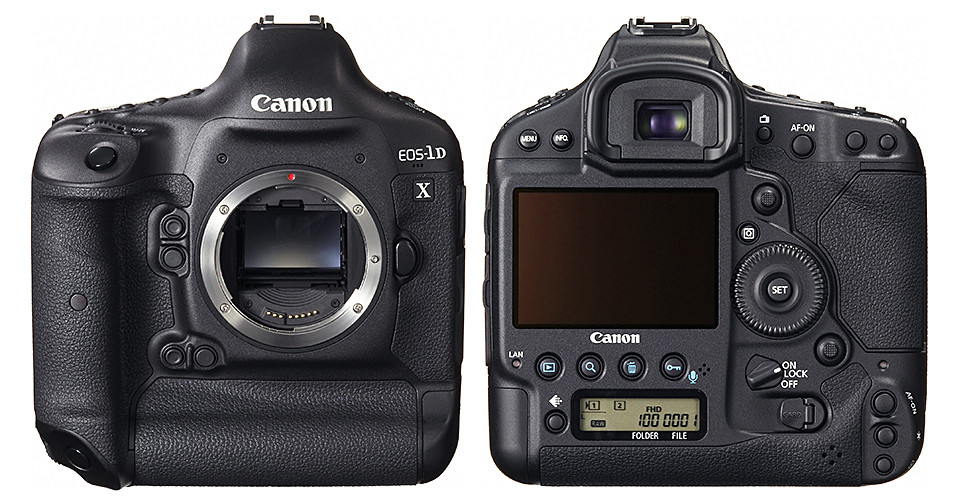
Canon EOS-1D X is available in Singapore from today at S$9,299 (body only).

Canon EOS-1D X is available in Singapore from today at S$9,299 (body only).

First announced in October last year, the Canon EOS-1D X is now available in Singapore from today.

Key features include:

  • Record-breaking continuous shooting speed of 12 frames-per-second, making it the world’s fastest full-frame DSLR
  • New Dual DIGIC 5+ image processor
  • 18.1MP full-frame (35mm) sensor
  • Image noise control improved by 2 stops
  • Next generation high-density reticular 61-point AF system

Find out more about the Canon EOS-1D X here.

Happy Father’s Day

Sunday, June 17th, 2012

Yay, it’s Father’s Day today! To all fellow fathers out there – Happy Father’s Day!

DIY ice-cream for Father’s Day. Photo taken with Panasonic Lumix DMC-GF5 using “Cute Dessert” Scene Mode.

DIY ice-cream for Father’s Day. Photo taken with Panasonic Lumix DMC-GF5 using “Cute Dessert” Scene Mode.

And for those looking to do something different for your father or the father of your children, here’s something you can try – especially if he’s allergic to dairy products or diabetic.

Delicious & healthy! No post-processing on the photo except cropping and resizing. I’m impressed with the sharp focus (despite being hand-held) and vibrant colours.

Delicious & healthy! No post-processing on the photo except cropping and resizing. I’m impressed with the sharp focus (despite being hand-held) and vibrant colours.

Thankfully I’m neither of these but it was fabulous to be served with a big dollop of this home-made ice-cream first thing in the morning of Father’s Day.

So here’s the how-to, courtesy of mamatimes.wordpress.com.

Keep a couple of bananas until the skin turns slightly black cos some netizens say they have to be really ripe. Slice them up and put them in the freezer.

You can add other fruits, like strawberries. Just toss them into the freezer. Once frozen, throw the lot into a food processor and you’re done.

What’s left is the dressing up and topping. You can add rainbow candies, grounded peanut or chocolate chips or powder. Enjoy!

New NIKKOR lenses: Nikon 24-85 lens and 18-300mm lenses

Thursday, June 14th, 2012

Nikon has announced, worldwide, two new NIKKOR lenses: AF-S NIKKOR 24-85mm F/3.5-4.5G ED and AF-S DX NIKKOR 18-300mm f/3.5-5.6G ED VR. Pricing & availability TBA.

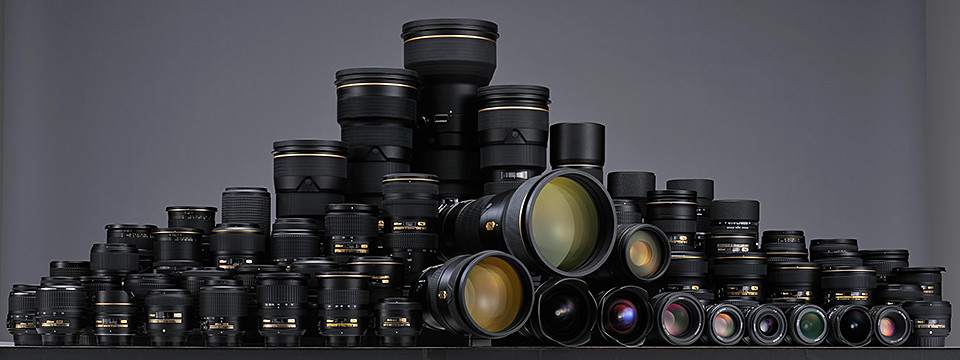
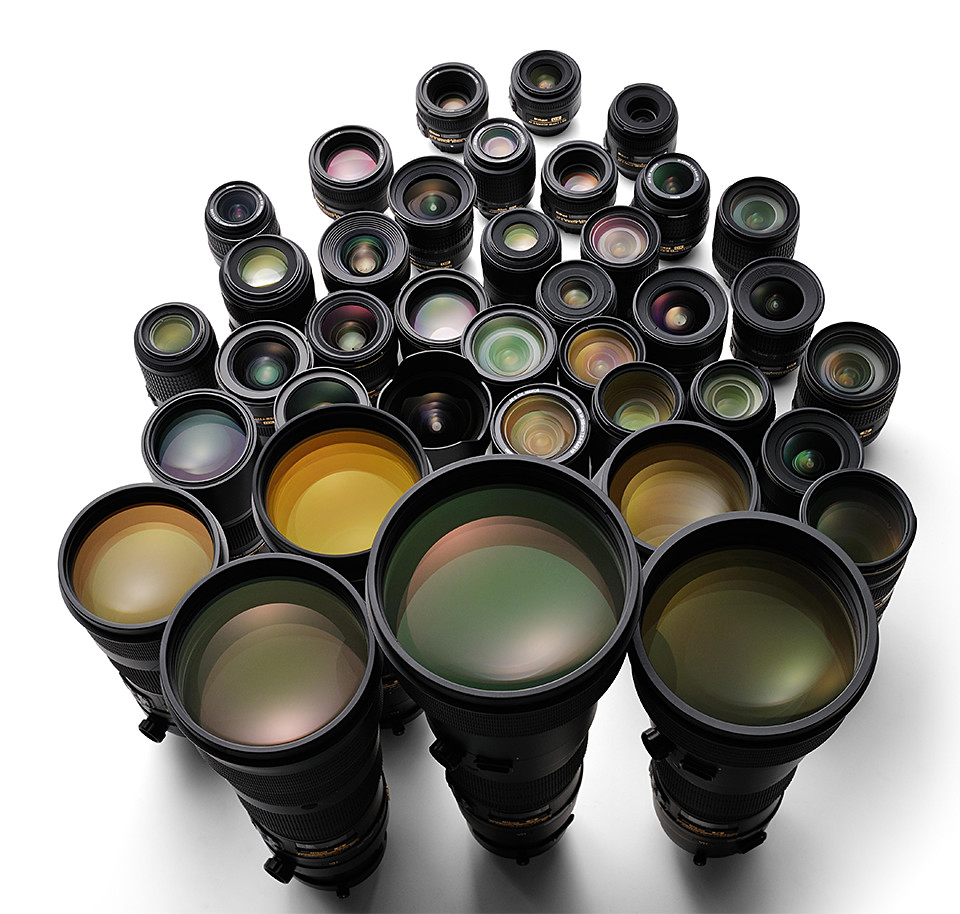
Nikon has more than 70 lenses in its NIKKOR range.

Nikon has more than 70 lenses in its NIKKOR range.

The AF-S NIKKOR 24-85mm F/3.5-4.5G ED is a compact, lightweight Nikon FX-format standard zoom lens suitable for a variety of shooting situations.

Nikon has produced more than 70 million NIKKOR lenses to date.

Nikon has produced more than 70 million NIKKOR lenses to date.

The AF-S DX NIKKOR 18-300mm f/3.5-5.6G ED VR has the world’s highest 16.7x zoom ratio for an interchangeable zoom lens for DSLR cameras.

The total production of NIKKOR lenses for Nikon interchangeable lens cameras has reached 70 million at the end of May 2012.

The current NIKKOR brand offers a broad lineup of more than 70 lenses, including fisheye lenses, super wide-angle to super telephoto lenses, zoom lenses, Micro lenses, and PC-E lenses.

Read more about the two new lenses below.

(more…)