Archive for the ‘Lens’ Category

Three Nikon COOLPIX compact cameras and one lens available today

Thursday, February 16th, 2012

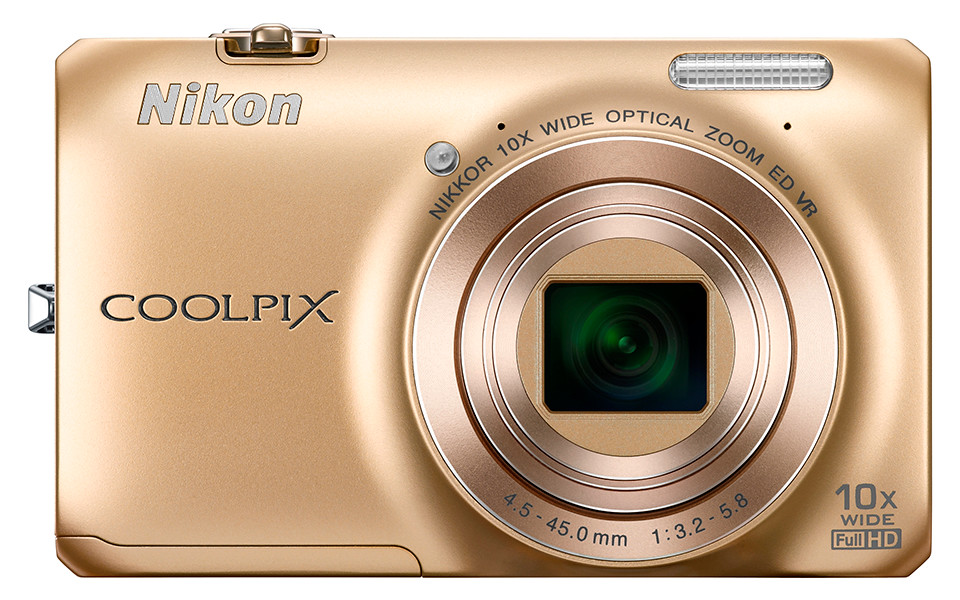
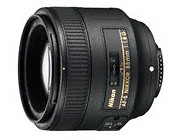
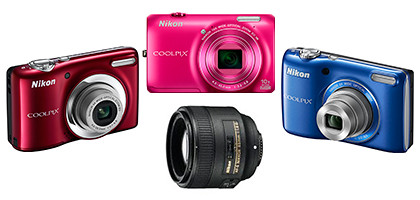
The Nikon COOLPIX L25 (S$129), L26 (S$159) and S6300 (S$349) compact cameras are available from today. So is the NIKKOR Lens AF-S 85mm f/1.8G (S$729).

The Nikon COOLPIX L25, L26 and S6300, together with the NIKKOR Lens AF-S 85mm f/1.8G.

The Nikon COOLPIX L25, L26 and S6300, together with the NIKKOR Lens AF-S 85mm f/1.8G.

The three COOLPIX compact cameras were first unveiled on 1 February as part of Nikon’s COOLPIX Spring 2012 collection of 14 camera models.

The NIKKOR lens was initially announced on 6 January 2012.

Below are the details:

Nikon COOLPIX L25, S$129 COOLPIX L25

S$129

  • Silver
  • Black
  • Red
  • White
  • 5x Optical Zoom NIKKOR Lens for super image quality
  • Equipped with a CCD image sensor and a 5x optical zoom NIKKOR lens
  • 10.1 megapixels
  • Wide-angle of 28 mm (equivalent in 35 mm [135] format)
  • Large And Clear 3-Inch TFT LCD Monitor
  • Dedicated Movie-Record Button
Nikon COOLPIX L26, S$159 COOLPIX L26

S$159

  • Silver
  • Black
  • Red
  • Blue
  • 5x Optical Zoom NIKKOR Lens for super image quality
  • Equipped with a CCD image sensor and a 5x optical zoom NIKKOR lens
  • 16.1 megapixels
  • Wide-angle of 26 mm (equivalent in 35 mm [135] format)
  • Large And Clear 3-Inch TFT LCD Monitor
  • Dedicated Movie-Record Button
Nikon COOLPIX S6300, S$349 COOLPIX S6300

S$349

  • Silver
  • Black
  • Red
  • Blue
  • Gold
  • Pink
  • Wide-Angle Multi-Focal Length 10× Optical Zoom NIKKOR Lens
  • 16.0 megapixels
  • Slim And Stylish Body
  • Full-HD Movies utilising the newly integrated movie-record button
  • Numerous Shooting and Editing Functions – 3D Photography, Special Effects, Filter Effects, and Easy Panorama
Nikon AF-S NIKKOR 85mm f/1.8G, S$729 AF-S NIKKOR 85mm f/1.8G

S$729

  • Black
  • A fast, medium-telephoto fixed focal length lens with a focal length of 85 mm and a maximum aperture of f/1.8 compatible with the Nikon FX-format
  • An all new optical design that enables maximum utilization of digital-SLR camera capabilities in shooting high quality images
  • Enables shooting of portraits with pleasing background blur characteristics only possible with a fast, medium-telephoto fixed focal length lens
  • Very lightweight at approximately 350 g, even with the large aperture
  • Equipped with a Silent Wave Motor (SWM) for extremely quiet autofocusing.  Autofocus shooting is also possible when the lens is used with entry-level Nikon DX-format digital-SLR cameras such as the D5100 and D3100, which are not equipped with an autofocus drive motor.
  • Equipped with two focus modes, M/A (autofocus with manual override) and M (manual)

Rumour: Olympus OM-D/E-M5

Wednesday, February 8th, 2012

After much speculation and buzz over the past few weeks, Olympus will be launching, worldwide, their new micro four-thirds camera today. It is believed to be the new OM-D/E-M5 (speculated price: SGD1,600 or JPY100,000).

The widely anticipated Olympus launch event

The widely anticipated Olympus launch event

I’ll be attending the Singapore launch later on today. For now, this is what the rumour mills out there speculate. We’ll see how close to the truth later on today.

Front view of the anticipated Olympus OM-D E-M5 (Photo: 43Rumors)

Front view of the anticipated Olympus OM-D E-M5 (Photo: 43Rumors)

The OM-D/E-M5 is believed to be a micro four thirds mirrorless interchangeable lens camera based in design on the retro OM-series of film SLRs from Olympus.

The camera is expected to have a 16 megapixel sensor, five-axis image stabilisation, an ISO range of 200 to 25,600, a hot-shoe for external flash, and a 3-inch 610k-dot OLED-based touch-screen, as well as a built-in 1.44-megapixel electronic viewfinder.

It’s supposed to have superfast auto-focus and 3D tracking, burst shooting of four frames per second, shutter speeds between 60 and 1/4000th of a second.

Rear view of the OM-D E-M5 (Photo:43Rumors)

Rear view of the OM-D E-M5 (Photo:43Rumors)

Body dimensions could be 122mm x 89mm x 43mm (4.8 x 3.5 x 1.7 inches), weighing 369 grams (about 0.8 pounds).

Two photos of the camera were leaked and withdrawn on Amazon Japan, but not before 43Rumors downloaded them and posted them. The pictures show the camera with a battery grip.

Lens-wise, two new micro four thirds lenses – 75mm f/1.8 and 60mm f/2.8 macro lenses – may be launched in conjunction with the camera.

Some believe it’s a higher end PEN E-P3 in the class of E-5.

Technical specifications: Olympus M.ZUIKO DIGITAL ED 12-50mm f3.5-6.3 EZ

Thursday, January 26th, 2012

Here are the main tech specs for the new S$698 (incl GST) Micro Four Thirds lens from Olympus.

12-50mm, 4.2x zoom, 3-speed motorised zoom mechanism, MSC mechanism for foast, quiet AF, stop focus and macro magnification at 0.72x (35mm equiv), dust/splash proof.

12-50mm, 4.2x zoom, 3-speed motorised zoom mechanism, MSC mechanism for foast, quiet AF, stop focus and macro magnification at 0.72x (35mm equiv), dust/splash proof.

The main technical specifications are tabulated at the end of this article.

Focal range from 12-50mm (35mm equiv: 24-100mm)

To enable a wide 84-degree angle of view to be captured at 24mm wide-angle, this zoom lens uses a Dual Super Aspherical (DSA) element that requires high-precision manufacturing because of the extremely large ratio between the thickness of the lens center and periphery; as well as double-sided aspherical elements located at an intermediate position between the lenses to correct spherical and chromatic aberrations that can accompany changes in the zoom ratio.

Olympus M.ZUIKO DIGITAL ED 12-50mm f3.5-6.3 EZ Micro Four Thirds lens

Olympus M.ZUIKO DIGITAL ED 12-50mm f3.5-6.3 EZ Micro Four Thirds lens

In addition, an HR (High Refractive index) element and ED (Extra-low Dispersion) element are combined for optimum correction of color aberrations.

Extensive use of special glass materials in the 9-group, 10-element lens construction of the zoom lens ensures high imaging performance throughout the zooming range.

In addition, all lens surfaces are multi-coated to ensure high transmittance and clear imaging performance even under unfavourable conditions such as shooting against light.

The use of an inner zooming system means that there is no variation in overall lens length during zooming, ensuring that stability can be maintained during handheld shooting.

(more…)

New Micro Four Thirds lens: Olympus M.ZUIKO DIGITAL ED 12-50mm f3.5-6.3 EZ

Thursday, January 26th, 2012

This new lens is a Micro Four Thirds System standard-compliant zoom lens featuring a motorised zoom mechanism with zoom ratio of 4.2X starting from a wide angle of 24mm to 100mm (35mm camera equivalent).

Now available at Olympus authorised retailers for S$698 (incl GST).

Olympus M.ZUIKO DIGITAL ED 12-50mm f3.5-6.3 EZ Micro Four Thirds lens

Olympus M.ZUIKO DIGITAL ED 12-50mm f3.5-6.3 EZ Micro Four Thirds lens

This is a versatile zoom lens usable in the toughest conditions and capable of everything from close-up wide angle shooting to medium range telephoto shooting of both still images and movies.

Main features of the new lens are:

  1. 4.2X (approx.) zoom starting from a wide angle of 24mm to 100mm (35mm camera equivalent).
  2. Motorised zoom mechanism for stable zooming at a constant rate (3 selectable speeds).
  3. MSC mechanism enhanced by linear motor drive for faster, quieter AF control.
  4. Convenient features including macro mode for close-up shooting at 0.72X magnification (35mm camera equivalent) and the L-Fn (Lens Function) button with focus stop function.
  5. Dust/splash-proof mechanism.

The zoom lens has a zoom ratio of approximately 4.2X, covering a range that extends from a wide angle of 24mm (35mm camera equivalent) – ideal for taking wide shots even indoors – to a medium telephoto focal length of 100mm (35mm camera equivalent), which is optimal for portraits.

Motorised zoom mechanism with zoom ratio of 4.2X from 24-100mm (35mm camera equiv).

Motorised zoom mechanism with zoom ratio of 4.2X from 24-100mm (35mm camera equiv).

It is the first Olympus interchangeable lens to incorporate a motorised zoom mechanism, which is especially useful in movie shooting, thanks to the smooth, quiet zooming.

The AF system is based on the MSC (Movie & Still Compatible) mechanism enhanced by a newly developed linear motor drive that enables faster, quieter focusing.

To assure the best possible image quality, this sophisticated lens comprises 9 lens groups with 10 elements, including three aspherical elements.

Special glass materials are used extensively to correct various aberrations and all lens surfaces are multi-coated to ensure high transmittance and clear imaging performance.

The lens also features a macro mode for close-up shooting with a closest focusing distance of 0.2 meters and maximum image magnification of 0.72X (35mm camera equivalent).

In addition, an L-Fn (Lens Function) button is also provided to allow the user to stop autofocusing temporarily.

This new lens employs the dust-/splash-proof mechanism originally featured in the ZUIKO DIGITAL SHG (Super High Grade) series lenses.

Here are the main tech specs for the new lens.

Travel: From Kota Kinabalu to Sandakan

Wednesday, November 30th, 2011

I checked out more markets in KK before boarding the flight to Sandakan.
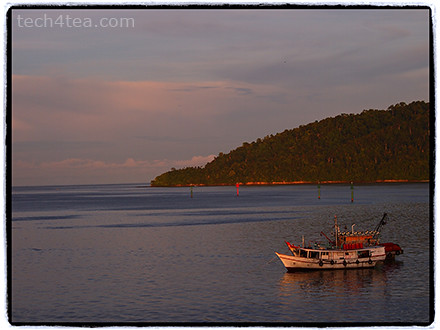
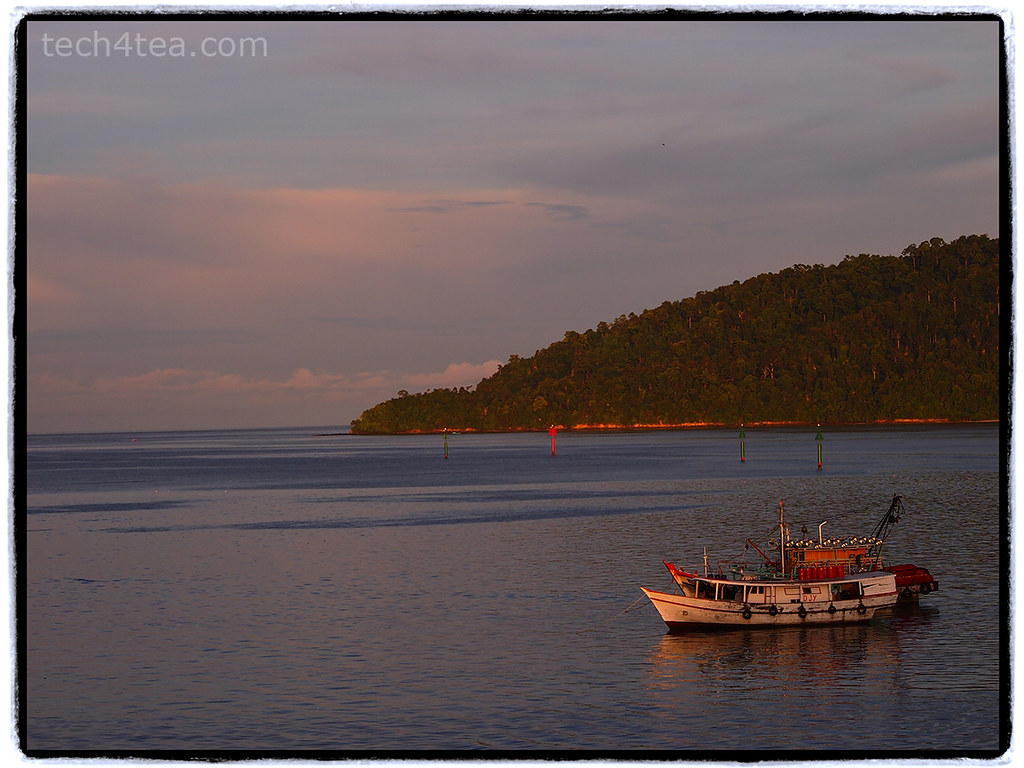
Sunrise at Kota Kinabalu. Taken with Olympus PEN E-P3 with 40-150mm kit lens using Frame effect.

Sunrise at Kota Kinabalu. Taken with Olympus PEN E-P3 with 40-150mm kit lens using Frame effect.

Night falls earlier in Sabah than in West Malaysia.

Fishing boats at the dock.

Fishing boats at the dock.

This is because their time zones were standardized in 1982 even though East and West Malaysia are really from different time zones in terms of geographical latitude.

Sunrise is also much earlier.

So photographers wanting to catch the golden hours to capture the sunrise/sunset over the South China Sea in Sabah would be well advised that the two timings are around 5:30 am and 6:00 pm local time respectively – lest they gear up and venture out only to discover that the show’s all but over.

The vegetable market starts early at dawn by the seaside of Kota Kinabalu.

The vegetable market starts early at dawn by the seaside of Kota Kinabalu.

A Sabahan I spoke with mused rather pensively that when he was in Kuala Lumpur, the sunrise was always late and he had to wait so hard for daylight to come.

A local fish seller waving Selamat Pagi.

A local fish seller waving Selamat Pagi

This morning, I visited the early vegetable market across the hotel by the sea, followed by the fish market by the pier before hitting the Central market.

It was really interesting observing the locals do their marketing since these markets are really meant for them.

Upon returning, we headed for breakfast after a short visit to the gym, and returned to pack for check out.

At 11am, the guy from the car rental company swung by to send us to the airport.

Fish market in KK kicks off at the crack of dawn. Taken with Pop Art effect on a Olympus PEN E-P3 with 12mm lens which captured a wide FOV at the crowded local market.

The fish market in KK kicks off at the crack of dawn. Taken with Pop Art effect on a Olympus PEN E-P3 with 12mm lens which captured a wide FOV at the crowded local market.

Steven had offered to do so FOC when he turned up at the hotel to pick up the car on Monday night and observed that the fuel tank was still three-quarters full even though we were only required to return it with an empty tank.

Freshly sliced fish. Taken with Olympus PEN E-P3 with 12mm lens right in front of the crowded stall.

Freshly sliced fish. Taken with Olympus PEN E-P3 with 12mm lens right in front of the crowded stall.

The rental company worked on a “pick up empty tank – return empty tank” principle.

A vegetables stall in Central market

A vegetables stall in Central market

The guy at the counter had advised me to fill up the tank for a drive from Kota Kinabalu to Mt Kinabalu and back.

It turned out I needed only one-third that amount.

Anyway, Steven took time out and picked a large clean car in order to send us to the airport, and refused to take any payment for his favour.

The guy from Kudat – some two hours drive from KK, at the tip of the dog’s ear – gave me a lasting good impression of an indigenous Sabahan.

The 45-minute flight to Sandakan on board the Air Asia Airbus A320-200 was uneventful. No more pigging out this time.

Another vegetable stall at Central market. Taken with Olympus PEN E-P3 with 12mm lens and Pop Art effect.

Another vegetable stall at Central market. Taken with Olympus PEN E-P3 with 12mm lens and Pop Art effect.

For the next three nights, we’ll be staying at a nice house in a gated estate that is so new that the optical fibre for Internet services has yet to be laid.

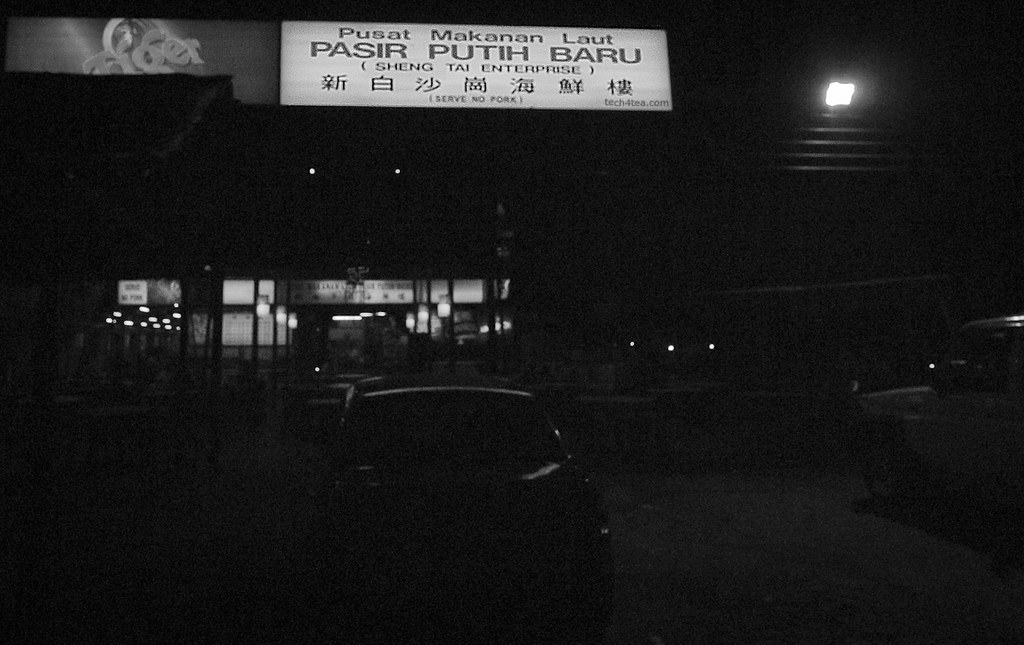
Seaside restaurant in Sandakan to which connoiseurs from West Malaysia specially fly to just to enjoy its fresh seafood.

Seaside restaurant in Sandakan to which connoiseurs from West Malaysia specially fly to just to enjoy its fresh seafood.

Our friend depends on his BlackBerry service for messaging and communication. Anyway, the plan was for us to immerse ourselves in nature.

Prawns, clams, crabs and fish are the order of the day.

Prawns, clams, crabs and fish are the order of the day.

So it’s time to check out what Internet withdrawal symptoms are like – and the fabulous seafood that everyone in KK recommended up in Sandakan.
Leica Camera increases Asia sales by 56%

Friday, November 18th, 2011

Leica Camera sales from first half of this year (April 1 to September 30, 2011) increased by a double digit 56% compared to the corresponding period last year (April 1 to September 30, 2010).

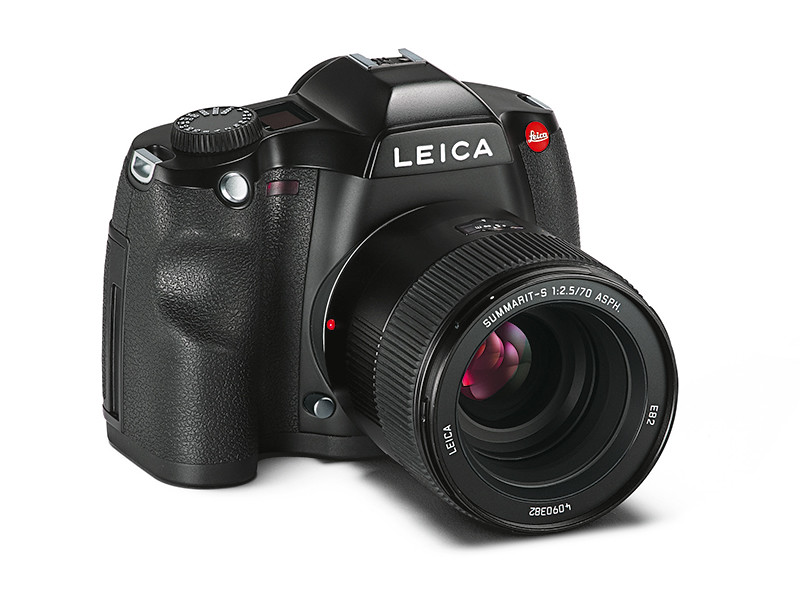
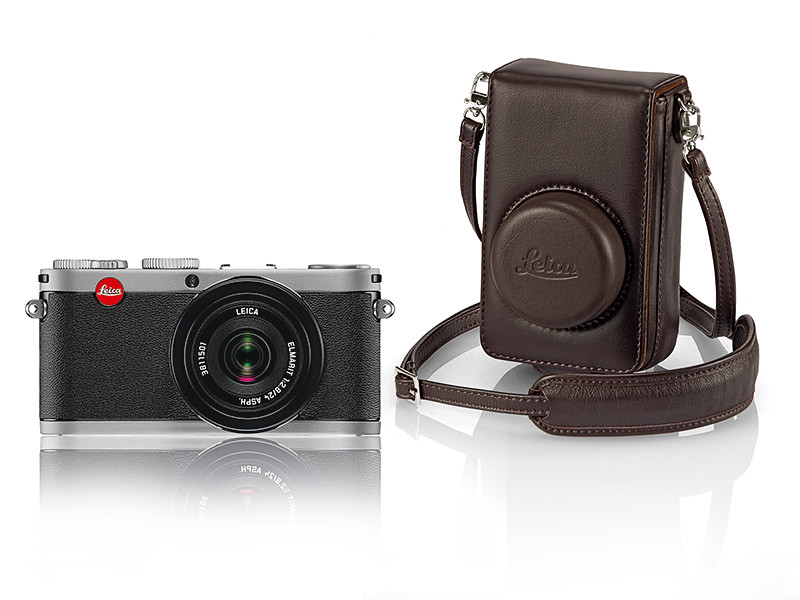
Leica S2 Leica X1

Sales in Asia contributed to 23.7% of Leica’s global sales.

The Company’s success drivers were the Leica M9 rangefinder camera, the S2 professional system, as well as the Leica X1 compact camera.

“I am glad to witness the increase in demand for our cameras, sport optics and accessories in Asia,” said Sunil Kaul, Managing Director of Leica Camera Asia Pacific.Sunil Kaul, Managing Director of Leica Camera Asia Pacific

The Leica compact camera models V-Lux 20, V-Lux 2 and D-Lux 5 also made essential contributions to the positive overall development.

Leica M9-P Leica Silverline

Further success drivers are the Rangemaster and Televid product lines in the Leica Sport optics product group.

Company byte: Leica Camera

Sunday, June 26th, 2011

Leica Camera is a German optics company that has a long heritage of over 162 years in quality German engineering. Leica makes cameras, high quality lenses and sport optic tools.

Leica Camera AGThe company has been in the forefront of photojournalism and related activities – having been bestowed the Oskar Barnack Award for high quality reportage photography.

Leica Camera has presented photographs taken by international photographers through its galleries offering access to life’s hidden stories.

Follow articles related to Leica on tech4tea.com.