Archive for the ‘Enterprise IT’ Category

SingTel partners HP on Singapore Government’s G-Cloud

Monday, July 9th, 2012

SingTel today announced that it has chosen HP as its strategic partner for the G-Cloud five-year tender award by the IDA. G-Cloud will be the first extensive private cloud for all government agencies in Singapore.

SingTel and HP will partner to build "Innovum" which will power the Singapore Government G-Cloud.

SingTel and HP will partner to build “Innovum” which will power the Singapore Government G-Cloud.

SingTel and HP will implement a private cloud computing infrastructure on a whole-of-government basis.

The SingTel-HP partnership is known as ‘Innovum’ – formed by the words ‘Innovation’ and ‘Continuum’ – and is aligned with SingTel-HP’s vision to drive continuous innovations for cloud services in the Government sector.

(more…)

Dell offers end-users power to do more

Wednesday, July 4th, 2012

Dell tackles current trends of workforce mobility and consumerisation of IT by offering a complete end-to-end ecosystem of end-point devices, solutions and services – to bestow maximum productivity to end-users in our fast-paced environment.

Chue Chee Wei, Marketing Director, South Asia and Korea Marketing for Dell.

Chue Chee Wei, Marketing Director, South Asia and Korea Marketing for Dell.

I was invited by Dell to listen to how the computer maker envisages the technology landscape and how it plans to cater to different end-users with very different needs.

Slide 1: Changing technology landscape and end-user profile.

Slide 1: Changing technology landscape and end-user profile.

Chue Chee Wei, Marketing Director, South Asia and Korea Marketing for Dell, gave a quick rundown of how the technology landscape and user profile are trending (see Slide 1).

Slide 2: Transformation of computing

Slide 2: Transformation of computing.

As a result of the changing landscape, work computing is undergoing transformation from the traditional highly-controlled and rigid framework – to one in which employees are given much more flexibility in terms of the devices they can use, the level of access, and the ability to access corporate IT anytime, anywhere (see Slide 2).

The organisational challenges to change and adapt current entrenched enterprise IT frameworks and practices are giving many a CIOs sleepless nights, worrying about potential security compromises on the road to recent phenomenons such as BYOD (Bring Your Own Devices).

Organisational challenges facing the CIO.

Slide 3: Organisational challenges facing the CIO.

Chue sees two main tracks in tackling these organisational challenges – managing technology and managing people (see Slide 3).

Chue’s vision for Dell end-user computing

“End-user computing is about delivering open, capable and affordable solutions for an evolving workforce,” says Chue Chee Wei, Marketing Director, South Asia and Korea Marketing for Dell.

To help enterprises and end-uses surmount these challenges, Dell is also placing much emphasis in enabling this transformation.

The company has taken on a customer-inspired design approach across a complete portfolio of systems, services and solutions.

It strives to ensure a seamless experience across multiple devices, operating systems and applications.

And it aims to provide tailored solutions optimised for management, security and productivity.

Simplify technology & people management, improve productivity.

Slide 4: Simplify technology & people management, improve productivity.

As a result, technology and people management are simplified while productivity is improved (see Slide 4).

Chue emphasised that Dell does a lot more than making computers.

Dell’s solution continuum.

Slide 5: Dell’s solution continuum.

It delivers a solution continuum that spans desktop virtualisation, mobility & collaboration, management, security and cloud, service and support (see Slide 5).

Some of these are provided by companies that were – leaders in their areas of expertise – that Dell has acquired over the years.

Dell’s updated line-up.

Slide 6: Dell’s updated line-up.

Dell’s updated computing line-up

Dell also set up and briefed on its updated line-up of computers (see Slide 6). These comprises a whole range of notebooks and desktops that cater to the computing needs of different end-users.

Of note is that Dell is positioning its high-end XPS ultrabooks – which has traditionally been targeted towards consumers – to attract corporate users looking to use their personal high-spec’ed notebooks for work as well.

This is indeed a shrewd cross-over move by Dell to exploit the BYOD phenomenon.

(Slides provided by Dell. Click to enlarge.)

Microsoft showcases a New World of Work

Monday, July 2nd, 2012

I call it N Wow! Microsoft Singapore demonstrated how it has transited from a traditional fixed-room-and-desk office layout, to a Starbucks-style working environment where employees can work at ANY available desk in its six floors of office space at One Marina Boulevard in Singapore.

No more assigned desks. Click to enlarge to see more of the new way of work.

No more assigned desks. Click to enlarge to see more of the new way of work.

What happens to the personal paraphernalia that adorn the typical office cubicle or room?

Well each employee, including Managing Director Jessica Tan, gets a locker to store their personal effects.

Plenty of collaboration spaces.

Plenty of collaboration spaces.

Each desk comes with power-sockets, a wireless mouse and keyboard, and a Samsung monitor that comes with a privacy screen.

Nothing else – not even a phone.

A single cable from the monitor plugs into the employee’s laptop.

In addition to connecting the display to the monitor, the same cable also provides Internet connection to the laptop, as well as control over the wireless mouse and keyboard.

Every floor has a "landing area" at the entrance - a convenient rendezvous point.

Every floor has a “landing area” at the entrance – a convenient rendezvous point.

Why isn’t there a phone?

Employees rely on Microsoft’s Lync telephony and collaboration solution which allows them to communicate using the Internet.

It is now as easy to work from home as it is to work in the office.

Yet more employees prefer to come physically to the office than to work from home – because of the more open and spontaneous collaborative environment the revamp has facilitated.

For a start, there’re no walls and cubicles between employees.

Workers can choose a private booth to dock-in if they really need to work on or discuss about something really confidential.

But by-and-large, most work in the open, at one of the docking desks.

Overview of rooms and workstations. Reminiscent of Metro UI?

Overview of rooms and workstations. Reminiscent of Metro UI?

Microsoft Singapore invited the regional media to walk around their operational offices to see this concept live.

I suppose this is Microsoft’s way of demonstrating how their technology can help enterprises and businesses adapt to the latest trends of work, where people tend to collaborate more in the course of work.

Instead of a concept demo, Microsoft is showing how they walk the talk – in fact, they’ve been working this concept in Amsterdam for the past five years..

And it was an impressive walkabout – to see what many organisations have only talked or dreamed about.

Samsung SUR40Pixelsense. Seen at Microsoft Technology Centre at One Marina Boulevard in Singapore.

Putting the mobile Internet to the test

Tuesday, June 26th, 2012

During CommunicAsia2012, I had the chance to speak with Nigel V. Wright and Gene Zhang of Spirent Communications about the face of things to come as countries in Asia begin rolling out 4G LTE networks.

Spirent is a multinational telecommunications and network testing company headquartered in the United Kingdom.

Spirent is a multinational telecommunications and network testing company headquartered in the United Kingdom.

Wright is the Vice President for Wireless Product Marketing & Corporate Marketing at Spirent, while Zhang is the VP & General Manager for Asia Pacific at the company.

Spirent is a global provider of performance analysis and service assurance solutions that enable the development and deployment of next-generation networking technologies.With LTE rollouts in Asia-Pacific now progressing at an aggressive pace, and the region set to surpass 120 million LTE connections by 2015, operators are competing to become the first to offer 4G services in this high-growth subscriber market.

SingTel, for instance, had just officially launched its 4G LTE services in Singapore this month.

Wright delivered a presentation during CommunicAsia2012 about the future of LTE in Asia, providing insights on:

  • The major concerns that operators face in implementing LTE.
  • The potential pitfalls in IMS/VoLTE deployment.
  • The challenges and solutions in deploying VoLTE.
  • How mobile devices can be designed to ensure that costly, inconvenient fixes are not required after device deployment.

New laser printer: Canon imageCLASS LBP6680x

Monday, June 11th, 2012

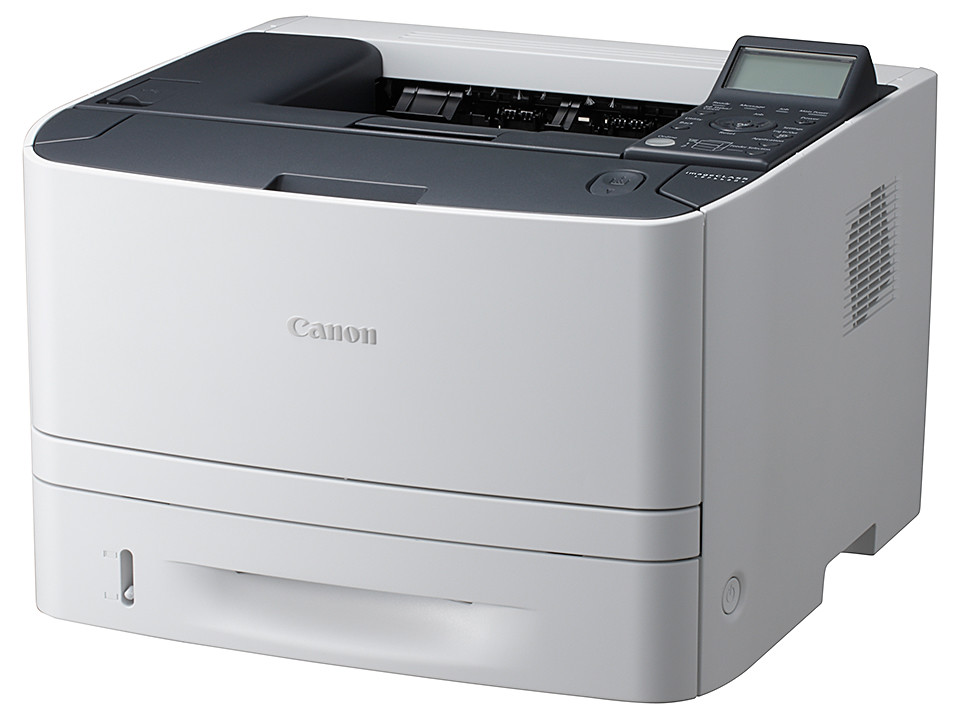
Canon has launched the imageCLASS LBP6680x, a compact monochrome laser printer for Small Office/Home Offices (SOHOs) and Small and Medium-Sized businesses (SMBs).

Available in July for S$799.

Canon imageCLASS LBP6680x - available in July for S$799.

Canon imageCLASS LBP6680x - available in July for S$799.

The Canon  imageCLASS LBP6680x offers the following advanced printing capabilities.

  • Cost-accounting and server-based secure printing via Canon uniFLOW
  • Server-less solutions for Home Offices and SMBs
  • Reliable, Productive and High-Quality Printing
  • Cost- and Energy-Efficiency
  • Ease of Use and Maintenance

(more…)

Infographic: Tata Communications global network

Monday, May 21st, 2012

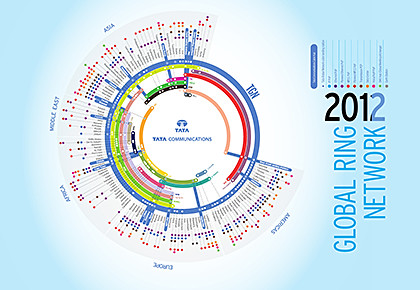
In March, Tata Communications announced that it had completed the world’s first wholly owned cable network ring around the world. Here’s a sundial schematic that charts the global network of Tata Communications circumnavigating the globe.

The infographic shows the locations of earth stations, cable landing stations, points of presence and Global Meeting Exchange hubs. (click to view/download enlarged chart)

This infographic shows the locations of earth stations, cable landing stations, points of presence and Global Meeting Exchange hubs. (click to view/download enlarged chart)

The global fibre optic network seamlessly links markets across Asia, Middle East, the U.S. and Europe to meet the rising demand for 24/7 commerce.

It is part of the Tata Global Network (TGN), which comprises one of the most advanced and largest submarine cable networks, a Tier-1 IP network, with connectivity to more than 200 countries across 400 PoPs, and nearly 1 million square feet of data centre and collocation space worldwide.

Affordable cloud backup for small and medium businesses

Tuesday, May 15th, 2012

Kronicles has launched, in Singapore, a new Backup-as-a-Service solution for small and medium businesses (SMB).

The solution includes both on-site and off-site backup and promises enterprise-class reliability and fast recovery at affordable subscription-based pricing starting from S$5,000 per month (before government subsidy).

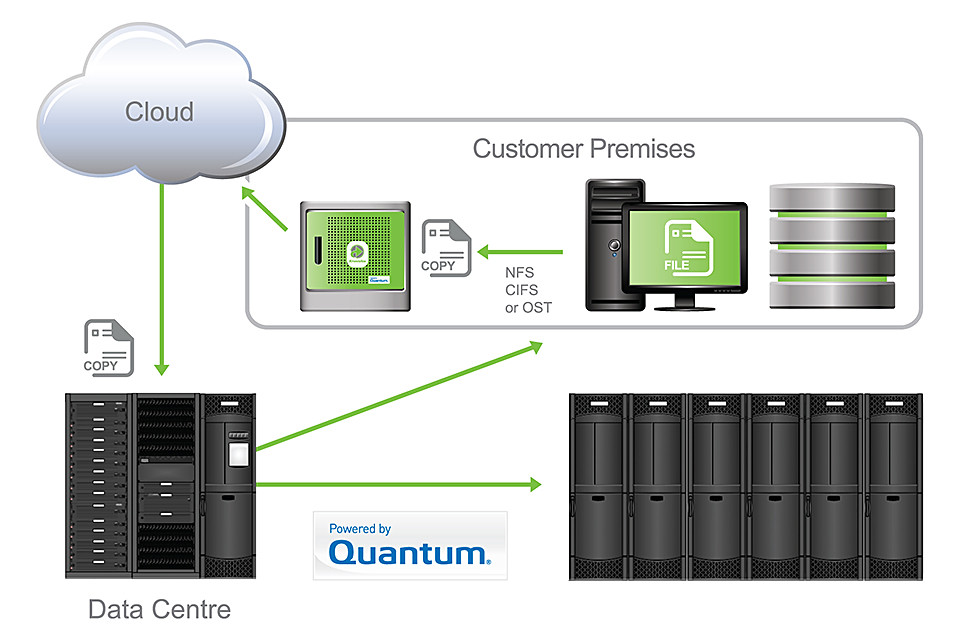
Kronicles BaaS includes both on-site and off-site backup.

Kronicles BaaS includes both on-site and off-site backup.

Only last week, I wrote about EMC’s “Disaster Recovery Survey 2012” which found that “81% of businesses in the Asia Pacific and Japan might NOT be able to recover lost data and systems in the event of a disaster”.

“71% of all organizations had lost data or suffered systems downtime in the last 12 months” – Vanson Bourne interview of 2,500 IT decision-makers.The results point to outdated backup and recovery infrastructure in businesses in Japan and the Asia Pacific.

Kronicles has come to the rescue with their new “Backup-as-a-Service” (BaaS), powered by technology from Quantum.

In the customer’s office, a POD (Periphery Onsite Device) backs up 30-days worth of data from a customer’s email and application servers.

The POD provides on-site backup for quick recovery.

The POD provides on-site backup for quick recovery.

The POD provides quick recovery of files over the local network, which is typically faster than an Internet connection.

Every day, during off-peak hours, data is copied over a dedicated link to Kronicles’ secure data facility for off-site protection.

In Singapore the data resides in-country within Starhub’s Tier 3 data center.

At the end of each month, Kronicles provides a copy of the data on an LTO tape, which can either be returned to the user or stored at a secure third=party location that can be returned on demand.

At any one time, there is a local copy of data for everyday operations, one stored on Kronicles’ cloud for business continuity, and one copy on tape for long-term archival.

Following today’s launch in Singapore, the service will be launched next in The Philippines and Malaysia.

Pricing

Three price packages are available. The basic Gold package – at S$5,000 per month – includes 200GB to 1TB of data backup, support for three to 10 Windows servers, up to 30-day history.

The Platinum package – at S$8,000 per month – includes 1TB to 2TB of data, three to 10 Windows servers, and up to 60-day history.

Customers with even more stringent requirements can discuss the Platinum Plus package with Kronicles.

Is the data secured? “Yes, data is encrypted with up to 256bit encryption when the data is ‘in flight’. At the data center itself, the data is not encrypted but protected,” says Pramotedham. The data on the back-up tapes are also not encrypted.A War Room for DR and BCP

Piti Pramotedham, Group CEO of Kronicles, described something that caught my attention during his presentation.

He described how a “War Room” can be set up in StarHub’s Media Centre should a customer’s premises be gutted by, say, a fire.

The customer, together with its partners, can set up shop in the War Room while their IT servers are re-constituted from the backup servers.

Is the data of one customer physically compartmentalised from that of another customer? “Yes, at the data center, it’s like a bank vault – so you see a whole wall of storage dedicated to one customer, separate from that of other customers,” say Piti.This can be completed in a matter of hours, after which, the customer and its partners can resume “business as usual”.

The aim is to suffer minimal disruption in times of disaster.

Pramotedham says that Kronicles insists that customers practise this once a year to ensure everything is well-rehearsed.

For SMBs that doesn’t yet have any Disaster Recovery (DR) and Business Continuity Plans (BCP), this is like having DR and BCP thrown in together with the BaaS.

The Disaster Recovery Survey 2012: Asia Pacific and Japan

Tuesday, May 8th, 2012

81% of businesses in the Asia Pacific and Japan might NOT be able to recover lost data and systems in the event of a disaster. New independent research sponsored by EMC points to outdated backup and recovery infrastructure.

EMC Research: "The Disaster Recovery Survey 2012: Asia Pacific and Japan"

The survey also found that 71% of all organizations had lost data or suffered systems downtime in the last 12 months.

These findings highlight the need for backup transformation from antiquated technologies that are not suited for today’s data growth or availability expectations.

A move to next-generation backup and recovery solutions ensure continued business operations in the event of a natural disaster, malicious activity or more routine and common disruptions to IT systems.

In fact, the research showed that the causes of systems downtime are often the commonplace disruptions to IT, such as hardware failure or data corruption, rather than natural disasters or other major incidents.

Other key findings are summarised below:

  • Hardware failure (60%), data corruption (49%) and loss of power (44%) were cited as the primary causes of data loss and downtime.
  • 42% of organizations cite loss of employee productivity as the most likely consequence of data loss and downtime.
  • 44% of organizations who store a backup copy offsite for disaster recovery still use tape for recovery, and 37% still use CD ROM (although 62% now use disk-based storage).
  • 83% of these organizations want to replace tape all together, highlighting the need for next generation backup and recovery.

Commissioned by EMC and conducted by independent research company Vanson Bourne, ‘The Disaster Recovery Survey 2012: Asia Pacific and Japan’ looks at the state of backup and disaster recovery in the region to understand how well companies are prepared for data loss and systems downtime.

For the full report, visit EMC’s website here.

Company Byte: Spirent Communications

Monday, May 7th, 2012

Spirent Communications is a multinational telecommunications and network testing company headquartered in the United Kingdom.

Spirent is a multinational telecommunications and network testing company headquartered in the United Kingdom.

With annual sales of US$528 million (US$160 million in APAC), it had a market capitalisation of US$1.7 billion as of May 2012.

Spirent Communications

Spirent Communications

Spirent is a global provider of performance analysis and service assurance solutions that enable the development and deployment of next-generation networking technologies.

It pioneered testing of Ethernet networks, IP Telephony and VoIP, VPNs, TriplePlay, CDMA applications and Location Based Services.

Today, the company is helping to test the first deployments of the next generation Internet or IPv6 networks in Asia, Europe and North America.

Experian says you are overloaded by marketers

Thursday, May 3rd, 2012

An independent research conducted by Experian finds that Singapore consumers are suffering from information overload and no longer respond to blanket marketing.

44% of respondents from Singapore interact with only three or fewer brands.

An independent research conducted by Experian in Singapore.

An independent research conducted by Experian in Singapore.

This is the result of poorly targeted communications from multi-channel marketer.

In addition, 30% of participants said they now IGNORE the emails, direct mail and social media messages they receive from brands because of information overload.

78% of consumers cited that they are very SELECTIVE about what opt-ins, newsletters or updates they sign up for to ensure they are only receiving messages that are relevant to their particular interests.

SG consumers agree that a COMPANY’S WEBSITE is the most valuable source of information they use to look for information about a brand, with 91% stating that it is a relevant or very relevant source.

While 36% of consumers believe the ideal frequency of brand communications is once a month, a quarter of consumers (25%) did not have frequency preferences as long as the communication is RELEVANT.

Giveaways and incentives (65%) is the number one way for brands to engage the SG consumer. Any surprises here?!

The research also shows a clear DISCONNECT between the communications consumers want from brands and the way they are being targeted by marketers.

For example, although MARKETERS listed print media as one of the least important tools for connecting with consumers – 86% of CONSUMER respondents rated it as the second most valued communication medium.