What are the YouTube community videos that netizens in Singaporeans love most in 2011? Yes, other than that remix of Singaporean General Election sensation Yam Ah Mee. Ryan Higa’s “Nice Guys” tops the list.
In Singapore, the most-watched YouTube community videos of 2011 were:
The GALAXY Note (S$998, 16GB) will be available in Singapore in November 2011, and the GALAXY Nexus (S$948) in January 2012.
Samsung and Google has jointly launched the GALAXY Nexus, the world’s first smartphone running Android 4.0 or Ice Cream Sandwich, the latest release of the Android platform.
GALAXY Nexus features a 4.65” HD Super AMOLED touch screen display with 1280×720 pixels and a 1.2 GHz dual core processor with 1GB RAM.
It also sports a 5-megapixel rear camera and a 1.3-megapixel front camera; and comes with 16GB or 32GB of onboard memory.
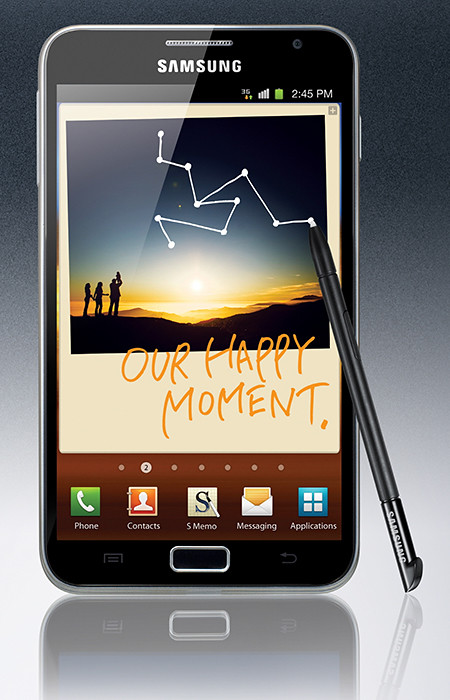
Samsung has also announced the launch of the GALAXY Note, a device that tries to combine the larger screen size of tablets with the portability of smart phones.
The 9.65mm thick GALAXY Note features the world’s first and largest 5.3” HD Super AMOLED touch screen display at WXGA (1280×800, 285ppi) resolution. It works with pen-input technology using a stylus called the S Pen.
Powered by a 1.4 GHz dual-core processor, the gadget runs on Android 2.3 (Gingerbread) and comes with 16GB onboard storage, with a microSD slot that supports up to 32GB.
GALAXY Note comes with an 8-megapixel rear camera and a 2-megapixel front camera.
Having just launched the new e-mail app earlier in the day, Google has withdrawn it new Gmail app from iPhone, iPad and iPod Touch devices after users started getting error messages.
“Unfortunately, it contained a bug which broke notifications and caused users to see an error message when first opening the app,” the company said in a blog. “We’ve removed the app while we correct the problem.”The newly-launched app is the first Gmail app for Apple’s iOS devices.
Google is now fixing the software bug and will release a new version. In the meantime, users who have already installed the app can continue using it, despite the bug.
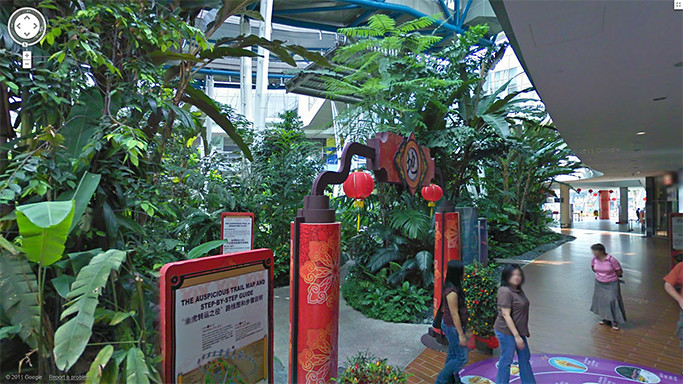
Google has launched, today, a new set of 360-degree panoramic views of Singapore’s most iconic sites, including the Singapore Flyer, Hwa Par Villa, and Fort Canning Park.
At some locations, like in public parks and the Singapore Flyer here, Google Street View brings you right into the place.
These sites were chosen by Singaporeans in a poll jointly organised with the Singapore Tourism Board, of which spots they wanted to see on Street View.
Street View provides 360-degree street-level images in Google Maps to allow users to view and navigate through historic buildings, parks and gardens.
In areas where Street View is available, you can see the images on Google Maps (on a PC or an Internet-enabled mobile) by zooming into the lowest level, or by dragging the orange “Pegman” icon on the left-hand side of the map onto a blue highlighted street.
Google first launched Street View in Singapore in 2008, and since then new places have been added while images have been regularly updated.
Google says it has gone to lengths to safeguard privacy.
Street View only contains imagery that is already visible from public roads. And in the case of the partner program collections, it has permission from the landmark to drive and collect imagery.
Street View also uses technology that blurs both faces and licence plates. In addition, any user can easily flag images for removal that he or she considers inappropriate by clicking on “Report a problem.”
The new images, collected by a Street View trike, allow a viewer to intimately explore the nooks and crannies of popular Singaporean spots. The trike is a mechanical masterpiece comprising three bicycle wheels, a mounted Street View camera, and a specially decorated box containing image-collecting gadgetry.
It has the same capability as the Street View cars for collecting street-level imagery but is specially designed to help Google go to places less accessible by cars, such as historic landmarks and coastal paths.
Street View first launched in 2007 and is currently available in more than 30 countries and 100 metropolitan areas worldwide, including large areas of the U.S., Australia, Japan, France, Italy and Spain.
The new images feature the following Singaporean favorites:
It’s been a busy few days of earnings results from IT bigwigs. Here’s a quick sum-up of the state of the IT industry:
Yahoo! did well with profits beating estimates – could it be because expectations were low?
Conversely, Apple didn’t do so good, missing analysts’ predictions for the first time in at least six years – but that’s probably because expectations were so high!
Google’s doing real well with sales and profit beating estimates – from search advertising growth as usual.
Microsoft is patting itself on its back – for not having bought Yahoo! back in 2008. And taking a swipe at Google’s Android – Steve Balmer says you need to be a computer scientist to use an Android smart phone, unlike Windows Phone 7.
RIM’s still trying to find its way forward by taking a step backward – trying to bridge new QNX with “old” BlackBerry OS 7 – hope that works out.
Amazon is being sued for screwing up the career of an actress by revealing her real age against her will in IMDb.
On the corporate IT front, industry bell weather IBM missed analysts’ estimates on slowing revenue growth at its software, hardware and services businesses.
An overseas friend uses the Viber app on her iPhone for free VOIP international voice calls and text messages on her smartphone. I installed the free app on my Android phone and tested it. Setup was swift and quality was superb.
I was at the petrol station and the attendant was filling up an almost empty tank with petrol. While waiting, I whipped out my Android phone, searched the Android Market for Viber and installed it. Before the attendant had finished filling up the tank, I was already chatting with my friend in Kuala Lumpur on her iPhone – for free.
Set up was really simple on the Android phone. Once it was downloaded and installed, it gets your permission to access your contacts and sends you a 4-digit access code to activate your account. After that, you’re set to go!
Viber is free and works on the iPhone and Android phones.
The interface looks similar to the usual numeric dialpad with tabs to access recent calls, contacts, messages and more activities such as inviting friends, sharing on Facebook, tweeting etc.
Basically, Viber emulates the usual phone calling and sms usage – everything is based on your regualr phone number.
Viber dialpad on Android phone
Your account id is your phone number. If the party you’re calling has Viber installed on her Android or iPhone, you just dial her usual number, complete with international dialing code, to get connected. Viber is currently only available on the iPhone and Android phones. A BlackBerry version is in the pipeline.
Quality was good. Voice quality was loud and clear, although there was just a split-second lag, which didn’t affect the flow of the conversation in the slightest bit.
If the other party does not have Viber installed yet, the app gives you the option to place a regular call through your carrier.
Conclusion: Fast and easy to set-up and use, call quality is fantastic. The free app is compatible with iPhone 3GS (and later) and Android phones.
Microsoft is offering for the first time a full Internet-based version of Office 2010, in an attempt to counter Google’s Apps for Business – the latter’s equivalent office productivity software online.
Available today in 40 markets, the cloud-based Office 365 suite of programs will cost small businesses $6 per user per month for software that includes Office Web Apps and Exchange e-mail software. For an additional $12 a month, companies can add a full version of Office, including Word and Excel programs, reports Dina Bass in Seattle for Bloomberg. The full online version of Office is a follow-up to last year’s release of the more basic Office Web Apps.
Google charges companies an annual fee $50 per user for its office-productivity software – Apps for Business, and offers a free version for consumers.
Both Microsoft and Google are going after users who want to work on applications hosted on the Internet, rather than software installed on a local hard drive.
Microsoft claims that it has almost 50 million users for its consumer version of Office Web Apps, which are scaled-down versions of the Office applications. Google claims 30 million active users for it Google Apps. This includes some 3 million corporations and other organizations that use its Apps business software.
Work on your documents anytime, anywhere. Microsoft Office 365.
This update represents the first time Microsoft will sell a full version of Office through an Internet-based cloud service, and also marks the first time companies can license the programs on a per-user, per-month basis, said Wes Miller, an analyst at Directions on Microsoft in Kirkland, Washington.
For larger businesses, $2 is enough for just basic e-mail, whereas $24 a month will get a full copy of Office and other programs like social networking and videoconferencing. These software services are an update to an earlier product called Business Productivity Online Suite, or BPOS.
“Microsoft released Office 2010 a year ago, and said earlier this month that it’s being adopted by business customers five times faster than the previous version. Sales in the business division, which is mainly revenue from Office, rose to $5.27 billion last quarter, exceeding the $4.9 billion average of analysts’ estimates compiled by Bloomberg. The unit is Microsoft’s biggest in terms of revenue,” reports Bass.
Akamai has announced that it will provide a real-time data visualization of IPv6 Web traffic served from its global platform on World IPv6 Day on 8 June 2011. The visualization will show the pattern of traffic served during the 24-hour period.
Hundreds of websites and Internet service providers around the world are joining Facebook, Google, Yahoo, Akamai, and Limelight Networks as participants in World IPv6 Day for the first global-scale trial of the new Internet Protocol, IPv6, being organized by the Internet Society.
The need for IPv6
IPv4 has approximately four billion IP addresses (the sequence of numbers assigned to each Internet-connected device). The explosion in the number of people, devices and web services on the Internet means that IPv4 is running out of space.
IPv6, the next-generation Internet protocol, which provides over four billion times more space, will connect the billions of people not connected today and will help ensure the Internet can continue its current growth rate.
During World IPv6 Day on 8 June 2011, more than 225 participating organizations from every part of the globe will enable IPv6 on their main services for 24 hours. With IPv4 addresses running out this year, the industry must act quickly to accelerate full IPv6 adoption or risk increased costs and limited functionality online for Internet users everywhere.
World IPv6 Day participants are coming together to help motivate organizations across the industry—Internet service providers, hardware manufacturers, operating system vendors and other web companies—to prepare their services for the transition.
“We see this test flight as an important step towards ensuring the global Internet can continue to grow and evolve so that it can connect billions of new users and devices,” said Leslie Daigle, Chief Internet Technology Officer for the Internet Society.One of the goals of World IPv6 Day is to expose potential issues under controlled conditions and address them as soon as possible. Given the diversity of technology that powers the Internet, the global nature of the trial is crucial to identify unforeseen problems.
The vast majority of users should be able to access services as usual, but in rare cases, misconfigured or misbehaving network equipment, particularly in home networks, may impair access to participating websites during the trial. “We’ve been working to make Google services publicly accessible over IPv6 since 2008, because we believe it’s critical to the long-term prosperity of the open Internet,” said Erik Kline, IPv6 Software Engineer at Google.
Current estimates are that 99.95% of users will experience no problems connecting to web services on IPv6 Day, and participating organizations will be working together with operating system manufacturers, home router vendors and ISPs to minimize the number of users affected.
The Internet Society is supporting World IPv6 Day as part of its efforts to accelerate IPv6 deployment. IPv6, the successor to the protocol currently used on the Internet, was designed in the late 1990s but has not seen deployment on a global scale. With IPv4 address space running out, the industry cannot afford to wait much longer.
The 5-day annual trade show in Taipei will see more tablet models based on Google’s Android and a preview of Microsoft’s next Windows platform for tablets – one year after Apple’s game changing iPads grab the lion’s share of the tablet market.
COMPUTEX Taipei, or Taipei International Information Technology Show (台北國際電腦展), will be held from May 31 to June 4, 2011 in Taipei. Taiwan based Acer and Asustek had first showed off their low-cost but trend-setting netbooks at the Computex in 2007 and 2008.
Investors and analysts will be watching to see if new Android based tablets can challenge Apple’s iPad. Non-iPad tablet competitors are expected to halve Apple’s 100 percent dominance of the tablet market to 50 percent next year, iSuppli predicted on April 21. The iPad had cordoned off the entire tablet market when it was first launched in June last year because of the absence of competitors.
Computex Taipei 2011 from May 31 to June 4, 2011.
Both Google and Microsoft will send executives to the event to brief the media on their plans. Intel, the world’s largest chipmaker, and ARM, whose chip designs are licensed by Qualcomm and Nvidia to power tablets, will also be vying for tablet manufacturers to select their chips.
Global shipments of tablets will increase almost twelve times to 215 million units in 2015 from 17 million last year, Toni Sacconaghi, a New York-based analyst at Sanford C. Bernstein & Co., wrote in a May 26 report.
Computer sales growth will be reduced by 2 percent annually between 2010 and 2015, Sacconaghi wrote, because fifteen percent of all tablets will cannibalize the sale of consumer PCs.
Bloomberg reports that Microsoft will “preview its operating system designed for tablets this week, using hardware with ARM-based chips”. The current Windows 7 operating system from Microsoft is not compatible with the ARM chips used in tablets from manufacturers such as Samsung and Motorola.
Google has unveiled its first two Chrome-based notebooks from Acer and Samsung at the Google I/O conference in San Francisco. They will be available for order online from June 15.
Acer’s Wi-Fi only Chromebook will cost $349, while the Samsung Chromebook will cost $429 for the Wi-Fi only version and $499 for the 3G version.
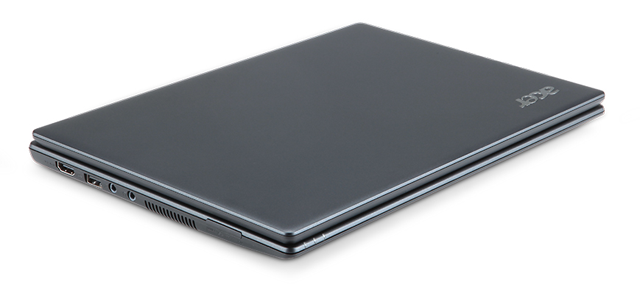
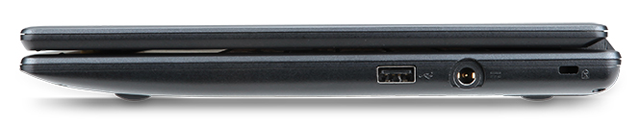
The Acer Chromebook is a netbook running Google’s Chrome OS. It has an 11.6 inch display, 1.66 GHz dual-core Intel Atom N570 processor, 16 GB SSD drive and 2 GB RAM, with 6 hours battery life. It is available in black.
Acer Chromebook
The price of $349 is for the Wi-Fi only version. 3G will be an additional optional configuration.
Chromebooks will be available online June 15 in the U.S., U.K., France, Germany, Netherlands, Italy and Spain. More countries will follow in the coming months. In the U.S., Chromebooks will be available from Amazon and Best Buy and internationally from leading retailers.
Here are the main specifications:
11.6″ HD (1,366×768) 16:9 Widescreen CineCrystalTM LED-backlit LCD
1.66 GHz dual-core Intel Atom N570 processor
2GB RAM
16GB SSD drive
6 to 8 hours battery life
stereo speakers
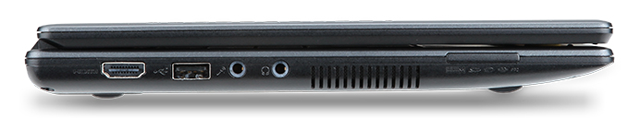
2 USB 2.0 ports
4-in-1 memory card slot
HDMI port
11.6 x 8.6 x 0.8 inches
2.95 lbs / 1.34 kg
A full-size keyboard
Multitouch touch pad
Built in dual-band 802.11 b/g/n Wi-Fi and World-mode 3G (optional)
1.3 megapixel HD Webcam with noise cancelling microphone
Instant-on from standby, and an 8-second boot time

 Yahoo! did well with profits beating estimates – could it be because expectations were low?
 Available today in 40 markets, the cloud-based Office 365 suite of programs will cost small businesses $6 per user per month for software that includes Office Web Apps and Exchange e-mail software. For an additional $12 a month, companies can add a full version of Office, including Word and Excel programs, reports Dina Bass in Seattle for Bloomberg. The full online version of Office is a follow-up to last year’s release of the more basic Office Web Apps.
 Hundreds of websites and Internet service providers around the world are joining Facebook, Google, Yahoo, Akamai, and Limelight Networks as participants in