Archive for the ‘Google’ Category
Wednesday, May 11th, 2011
Google has unveiled today its first Chrome-based notebooks from Acer and Samsung at the Google I/O conference in San Francisco. They will be available for order online from June 15.
The Samsung Chromebook will cost $429 for the Wi-Fi only version and $499 for the 3G version, while Acer’s Wi-Fi only Chromebook will cost $349.

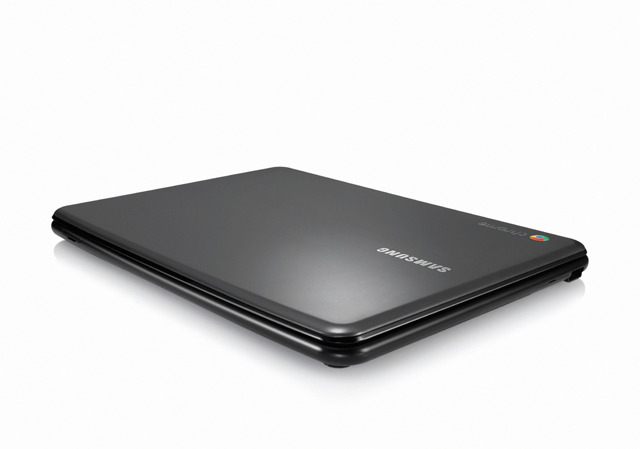
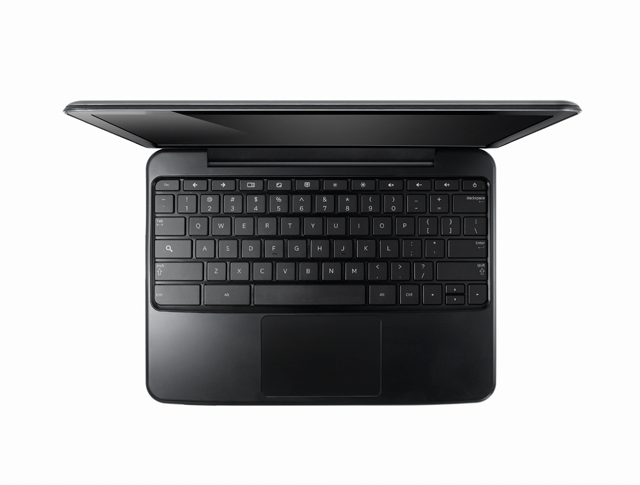
Samsung Series 5 Chromebook
The Samsung Series 5 Chromebook is a netbook running Google’s Chrome OS. It has a 12.1 inch display, 1.66 GHz dual-core Intel Atom N570 processor, 16 GB SSD drive and 2 GB RAM, with 8.5 hours battery life.
Looking similar to the CR-48 prototype, the Series 5 is available either in white or “Titan Silver”.
Chromebooks will be available online June 15 in the U.S., U.K., France, Germany, Netherlands, Italy and Spain. More countries will follow in the coming months. In the U.S., Chromebooks will be available from Amazon and Best Buy and internationally from leading retailers.
Here are the main specifications:
- A 12.1-inch (1280×800) SuperBright display at 300 nits, with a 16:10 aspect
- 1.66 GHz dual-core Intel Atom N570 processor
 2GB RAM
- 16GB SSD drive
- 8.5 hours battery life
- Stereo speakers
- Two USB 2.0 ports
- SD/SDHC/MMC/SDXC card slot
 Mini-VGA port
- 11.6 x 8.6 x 0.79 inches
- 3.26 lbs / 1.48 kg
- A full-size keyboard
- Multitouch touch pad
- Built-in dual-band Wi-Fi and World-mode 3G (optional)
- HD Webcam with noise cancelling microphone
- Instant-on from standby, and an 8-second boot time
Tags:Acer, Chrome, Chromebook, Google, netbooks, Samsung, Series 5
Posted in Acer, Chrome, Chrome OS, Events, Gadgets, Google, Launch, Notebooks, Operating Systems, Prices, Samsung, Specifications | 2 Comments »
Tuesday, May 10th, 2011
Google will reveal its first Chrome-based notebooks from Acer and Samsung at the Google I/O conference in San Francisco. They will be available for order online from June 15.
The Samsung Chromebook will cost $429 for the Wi-Fi only version and $499 for the 3G version, while Acer’s Wi-Fi only Chromebook will cost $349.
It’ll be interesting whether consumers will bite, considering that you can buy a decent Netbook or an iPad the $499 price-tag for the 3G Samsung Chromebook.

Acer Chromebook
Chromebooks will be available online June 15 in the U.S., U.K., France, Germany, Netherlands, Italy and Spain. More countries will follow in the coming months. In the U.S., Chromebooks will be available from Amazon and Best Buy and internationally from leading retailers.
Equipped with dual-core processors from Intel, the Chromebooks boast all-day battery life, and instant-on ability and built-in Net connectivity. Chromebooks will get updates and patches automatically every few weeks, like its browser cousin Chrome.
A special pricing is available for schools – Google will charge $20 a month for each Chromebook. The price will include hardware, administrative support, hardware upgrades, and warranty.
With this long awaited foray, Chromebooks will be taking on the tablet market dominated by Apple’s iPads, and the PC market dominated by both Microsoft and Apple.

Samsung Chromebook
The Chromebooks will run a new new bare-bones operating system that is basically a web browser that allows users to access applications like email, wordprocessors and spreadsheets directly on the web, instead of installing software such as Outlook or Office directly on the computer’s harddisks.
Users can also store their music and documents in the cloud for access from other computers as long as there is an Internet connection. Naturally, that means that a lot of the functionality may likely be unavailable or crippled offline.
Google has been touting Chrome as an alternative to Microsoft Windows for some two years now, but it has encountered delays producing computers designed to use the software.
Tags:Acer, Adobe, Chrome, Chromebook, Google, Microsoft, Samsung
Posted in Acer, Apple, Chrome, Events, Gadgets, Google, Launch, Microsoft, Notebooks, Operating Systems, Samsung, Tablets, Tech news, Technology | 2 Comments »
Saturday, April 2nd, 2011
Having had only 25,000 apps in BlackBerry App World, RIM’s PlayBook will tap the 150,000 apps in the Android Market to give it a headstart, while ramping up the number of PlayBook specific apps to stand against the staggering 350,000 apps in Apple’s App Store.
 RIM will be opening the PlayBook to Android apps to provide customers a wider choice of apps.
Software tools for making Android apps work on the PlayBook will be available this summer, Tyler Lessard, head of RIM’s developer relations told Bloomberg in an interview.
Android is the world’s fastest-growing smartphone platform and is also gaining market share for tablet computers, based on data on global shipments from Strategy Analytics below.
| Percentage of global shipments |
Android |
iPad |
| Oct to Dec 2010 |
22 % |
75% |
| Jul to Sep 2010 |
2.3 % |
95 % |
Although developers can port Android apps for the PlayBook, Lessard states that developers should still create programs specifically for the PlayBook to make the most of its multimedia performance and ensure their apps work as well as possible.
Bloomberg reports that “Dozens” of games for the PlayBook will be released this year through Unity Technologies’s Union game development tool.
Tags:Android, Apple, Apps, BlackBerry, Google, iPad, RIM
Posted in Android, Apple, Figures, Gadgets, Google, iOS, iPad, PlayBook, RIM, Tablets, Technology | No Comments »
Wednesday, March 30th, 2011
Amazon launches the service ahead of rivals Apple and Google who are both preparing to release similar services.
Amazon unveiled Cloud Player – its music streaming service that allows users to buy tracks, store them on the company’s servers and play them on Android smartphones and browsers on computers.
 Music libraries can be uploaded to Amazon’s new Cloud Drive, which provides 5 gigabytes of free memory space. Users who purchase an album from Amazon.com will have their Cloud Drive space upgraded to 20 gigabytes. This can can be used to store music, photos, videos and other digital files.
The service targets users who find it a hassle to download music to their work computer or phones because they find it hard to move music around to different devices.
It is unlikely that the service will win over existing customers of iTunes since Apple’s own music streaming service will likely be launched soon.
Observers believe Amazon’s sights are well beyond the music arena. It is hoping to capture market share of users storing their data online. They want to get – not just music – but the user’s entire hard drives on its cloud.
Tags:Amazon, Apple, Google, iTunes, music
Posted in Amazon, Android, Apple, Google | 1 Comment »
Friday, February 18th, 2011
Here’s a quick view of how the two newly announced subscription platforms from Apple and Google stack up against each other. Either way, it’s a good thing for consumers in terms of both choice and convenience.
| Platform |
Apple Subscriptions |
Google One Pass |
| Viewable on |
Web browsers: smartphones, tablets, computers. |
iOS: iPad, iPhone, iPod Touch
|
| Commission |
Apple keeps 30% |
Google keeps 10% |
| Billing system |
Apple App Store |
Google Checkout |
| Link to website subscription outside App |
Not allowed |
Yes |
| Share customer info with publishers |
Opt-in by subscribers |
Opt-out by subscribers |
| Subscribe from |
Almost global |
US, UK, Canada, Germany, France, Spain for customers, |
| Publish from |
Almost global |
Wherever Google Checkout is available |
| Content |
Magazines, newspapers, video, music etc. |
Magazines, newspapers. |
Tags:Apple, Apps, Google, One Pass, Subscriptions
Posted in Apple, Google, Tech news | No Comments »
Thursday, February 17th, 2011
A day after Apple unveiled its new Subscriptions billing system for content-based apps, Google announced its One Pass service for publishers to sell their content.
 Google takes 10% off the bill and lets publishers keep 90% of the subscription. This undercuts the 30% that Apple demands from publishers participating in Apple’s subscription platform.
Payment will use Google Checkout which will cover publishers’ e-commerce and payment processing requirements, removing any need to build a third-party payment system into publishers sites.
Google One Pass is currently intended for periodicals, such as news and magazines, but can be used for other types of content, according to its FAQ on the One Pass website.
Publishers decide the price and terms of the content they choose to sell through Google One Pass. They determine the duration and extent of access to their content. For instance, this may include setting a one-week or 30-day limit on the accessibility of a given article. Partners control what content is accessed through Google One Pass and what content is free to users.
Google One Pass will enable users to access content on connected, browser-enabled devices and from mobile apps where the mobile OS terms permit publishers to access the web via the app for Google One Pass transaction or authentication services.
Content purchased through One Pass will be accessible on smartphones, tablets and computers that are browser-enabled and connected to the Internet. Syncing between devices, will be via Google One Pass transaction or authentication services.
Publishers who have committed to One Pass include Axel Springer AG, Focus Online (Tomorrow Focus), Stern.de, Media General, NouvelObs, Bonnier’s Popular Science, Prisa and Rust Communications.
 One Pass is currently available in Canada, France, Germany, Spain, the U.K. and the United States.
However, publishers in any country where Google Checkout is available can implement Google One Pass.
Tags:Apple, Google
Posted in Google, Tech news | No Comments »