The new operating system will run on tablets, desktop and laptop computers via a touch screen, mouse or keyboard. It will also be backward compatible to existing Windows software.
Windows 8 represents Microsoft’s hope of wrestling market share for tablet computers from Apple iPads and Android tablets.
Microsoft will unveil the next iteration of their Windows operating system software today at a developers conference in Anaheim, California. A preview of the design was first released in June this year.
Tough days for PC makers
Windows sales have missed analysts’ estimates for three straight quarters and personal-computer sales have stalled as consumers favor tablets over notebook computers running the software, reported Bloomberg.
Of the 9.3 million iPads sold in the quarter that ended in June, about 20 percent of them went to customers who would have otherwise bought a Windows PC, estimated Colin Gillis, an analyst at BGC Partners LP in New York.
This will be the first time that a Windows operating system is capable of running on chip technology from ARM. Microsoft aims to make Windows 8 capable of running smaller, thinner tablet computers with battery life that can rival that of the market leader – Apple’s iPad.
Out of 60 million media tablets expected to be shipped 2011, 74 percent will be Apple’s iPads, according to an August forecast by IHS. The global market is forecasted to rise to 275.3 million units in 2015, with Apple expected to account for 43.6 percent of the market.
Windows 8 design
The user interface for Windows 8 resembles Microsoft’s Windows Phone 7 smartphone operating system – it uses digital tiles instead of icons to help users navigate between programs. The tiles are on the computer’s home screen can display updated information from inside applications, so that users can see the info at a glance without having to fire up those apps.
The 3G (16 GB) tablet is priced in Singapore at S$848 (incl GST) without contract.
Samsung Galaxy Tab 10.1
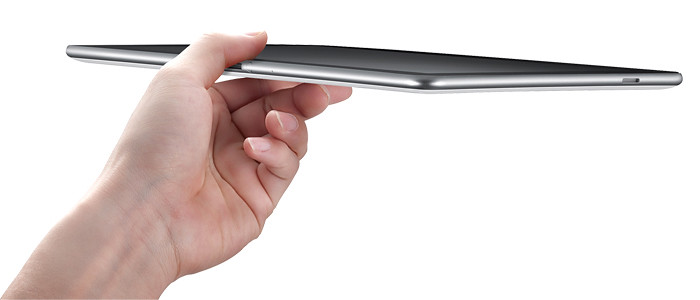
Samsung, the global leader in Android mobile devices, launched the Galaxy Tab 10.1 in Singapore today. The 10-inch tablet is the world’s thinnest tablet at only 8.6 mm thick and weighs only 560 g for the WiFi version and 565 g for the 3G version.
Powered by the Android 3.1 Honeycomb platform, the Galaxy Tab 10.1 features a 1GHz dual core application processor and HSPA+ network speeds of up to 21Mbps. Equipped with surround-sound stereo speakers, 1080p HD video, and support for Adobe® Flash® Player 10.3, the tablet computer has a three-megapixel rear camera and a two-megapixel front camera.
Galaxy Tab 10.1, only 8.6 mm thick.
It also offers multi-tasking and enhanced user interaction and navigation on Samsung’s own TouchWiz user interface. Designed with a Live Panel menu for users to customise and display a variety of content on the home screen including digital pictures, favourite Web sites and social network feeds, the interface also includes an application tray of commonly used features such as task manager, calendar and music player for easy access.
Samsung has agreed not to sell its latest Galaxy Tab 10.1 tablet computer in Australia until Apple’s patent lawsuit against it in Australia is resolved.
Apple told the Federal Court in Sydney yesterday that the Samsung Galaxy Tab 10.1 infringes ten Apple patents, including the “look and feel,” and touchscreen technology of the iPad.
The Cupertino, California-based company sought an Australian injunction to stop Samsung from selling the tablet in Australia because Samsung has had “announcements of an imminent launch of the Galaxy Tab 10.1 device ongoing since July 20,” Bloomberg quoted Apple’s lawyer, Steven Burley, as saying. It also wants to prevent Samsung from selling the tablet in other countries, although Burley did not name the countries.
Samsung has agreed to stop advertising the Galaxy Tab 10.1 in Australia and will not sell the device until it wins court approval or the lawsuit is resolved. The accord between lawyers from both companies were reached during a break in the hearing.
If Apple eventually loses its patent infringement lawsuit, it has agreed to pay Samsung unspecified damages.
Apple first sued Samsung in the U.S. claiming that the Galaxy tablets “slavishly” imitated the designs and technologies used for its iPad and iPhone. Samsung retaliated with lawsuits in South Korea, Japan, Germany and the U.S. The Suwon, South Korea based company supplies memory chips to Apple.
As part of the agreement submitted in court, Samsung will provide Apple three samples of the Australian version of the tablet computer at least seven days before any plans to launch it in Australia so Apple could review it, according to the agreement submitted in court. This was because Apple’s claim in Australia was based on a U.S. version of the Galaxy tablet, which is different, Neil Murray, the lawyer representing Samsung disclosed.
The Federal Court Justice Annabelle Bennett has scheduled a hearing for August 29 to review the status of the case and set a trial date if necessary.
Version 2 of the Facebook for BlackBerry Playbook app is now available in the BlackBerry App World storefront. The free app, produced by Research In Motion, include new features such as Facebook Places, viewing of Facebook Events, the ability to view “Likes”, and privacy control on status updates.
Facebook Places lets you share where you are, what you’re doing, and the people you’re with. If you grant permission, Facebook Places uses location-based technology on your BlackBerry PlayBook tablet to inform you about nearby Places.
Whenever you check in to a Place, you can tag a friend and post a comment. If your friends have also activated this feature, you can see where they’re are checking into. For nearby places, you can check out the Place’s page to see the people you know who has been there and the comments that they’ve posted.
Facebook Places is also integrated with Bing Maps so that you can view the location of a Facebook Place on a map and get directions by clicking on the map image.
Facebook Events allows you to view upcoming events and birthdays, and receive notifications of new invitations that have been generated through Facebook. You can view event details like time, place, guest list and RSVP or write on the event Wall, if those features have been enabled by the event organizer.
With the Facebook app, you can now see the names of friends that liked your post and tap those names to launch their profiles.
The app allows you to specify that people who can see each update you share. Simply click the lock icon in the lower-right corner of the status publisher to select who you want to make the status update visible to before posting it.
Two new tablets based on Android 3.1 will hit the shelves in the U.S. Lenovo, China’s largest maker of personal computers, will be launching the IdeaPad Tablet K1 (from $499) and the Thinkpad Tablet (from $479).
Lenovo IdeaPad Tablet K1 (from $499), orders from July 20, 2011; and the Lenovo ThinkPad Tablet (from $479), available from August 2.
Lenovo began sales of its LePad tablet in China in March. Its two new tablet devices will be competing in a tightly fought market dominated by Apple’s iPad.
Lenovo's IdeaPad Tablet P1, based on Windows 7, is coming this fall.
Hewlett-Packard, Dell and Lenovo, the world’s three biggest makers of PCs, are introducing new tablets as the popularity of Apple’s iPad eats into demand for desktop and notebook computers.
Gartner reports that global PC shipments rose 2.3 percent in the three months ended June – much less than the 6.7 percent increase predicted by the research house.
Although the two tablets uses the Android operating system from Google, Lenovo plans to launch a new tablet- the IdeaPad Tablet K1 – in the fourth quarter based on the Windows 7 operating system from Microsoft.
Research In Motion Limited (RIM) is a Canadian multinational telecommunications company that makes the BlackBerry PlayBook tablet computer, as well as BlackBerry smartphones.
Along with the launch of the new BlackBerry 10 platform, President & CEO Thorsten Heins has announced that the company will change its name from Research In Motion to BlackBerry.
RIM was founded in 1984 by Mike Lazaridis, who currently serves as its co-CEO along with Jim Balsillie.
The company designs, manufactures and markets wireless solutions for the worldwide mobile communications market. The introduction of the BlackBerry solution in 1999 provides platforms and solutions for access to information, including e-mail, voice, instant messaging, short message service (SMS), Internet and intranet-based applications and browsing.
Headquartered in Waterloo, Ontario in Canada, RIM operates offices in North America, Europe, Asia Pacific and Latin America. RIM is listed on the NASDAQ Stock Market (NASDAQ: RIMM) and the Toronto Stock Exchange (TSX: RIM).
Click here to follow articles related to RIM and BlackBerry news and products on tech4tea.com.
We had the chance to bring the freshly launched 10.1-inch Asus tablet with us to Germany and the Czech Republic.
It proved to be the favourite gadget for the kids, and a very useful gadget for the adults.
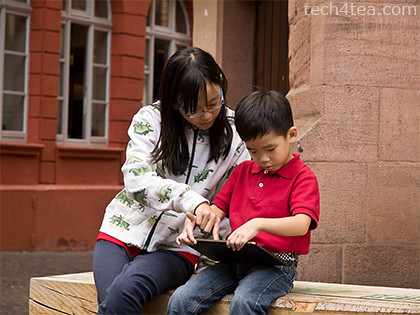
The kids on the Asus Eee Pad Transformer whilst taking a break from sight-seeing.
The Asus Eee Pad Transformer TF101 was launched in Singapore at the end of April. Here’s the nifty little device in action along the castle route from Frankfurt in Germany to Prague in the Czech Republic and back.
Using an Asus EeePad Transformer tablet instead of paper to do museum sketches
Erin loves visiting museums, and usually she sketches some of the exhibits that interests her on a paper notepad. This time, she was delighted to use the sketching app (Kids Doodle – Movie Kids Paint by Bejoy Mobile) on the Andoid tablet to do her sketches – in colour.
The app was in colour and could even reproduce the neon lighting effect of this exhibit!
How do you keep the kids occupied while waiting for tea to arrive? You guessed it, let them at the tablet. Erin used it to write her journal of what she’d seen while Justin plays the games on it.
Erin dressing up her electronic doll in a girly app (Maidens Avatar Creator by Magicsoft) while waiting for tea to be served.
We don’t allow games and books during meals, so waiting for the meal to arrive is often the time to catch a breather and relax.
Afternoon tea at the Cafe in the cellar of Heidelberg Castle.
They love those quiz apps from the Android Market.
Anyone for maths quiz before pizza and kebab lunch at Weinheim?
As I said mealtimes are reserved for relishing the food, conversation and company.
Pizza and kebab anyone?
At the Frankfurt Zoo, Erin used the camera on the tablet to snap photos and record videos, which she then uploaded to the Internet, back at the hotel, to share with her friends. We also used it to surf the net check maps and to read up on the sights we planned to visit the next day.
The Frankfurt Zoo has a fabulous collection of primates.
Back at the hotel, the kids also used the tablet to read ebooks and worksheets in pdf format. It was a long vacation and we didn’t want the kids to totally lay off homework.
Almost every town we visited in Germany had an H&M. But the clothes just didn't suit us and we fell back on brands like Espirit and Benetton.
And finally shopping. No prizes for guessing how the Justin occupied himself while the rest of the family was busy shopping away.
This release from Research In Motion (RIM) adds new APIs and application functionality which developers can leverage to create WebWorks applications that deliver a richer, more interactive end-user experience.
The BlackBerry WebWorks SDK is the toolset that supports developers who wish to build applications using standard web technologies for the BlackBerry WebWorks Platform.
BlackBerry WebWorks is RIM’s open source, mobile web platform that enables developers to build standalone, integrated applications for BlackBerry devices.
RIM releases Version 2.1 of the BlackBerry WebWorks SDK for Tablet OS
The new APIs enables the following:
More Ways to Monetize
With support for the BlackBerry In App Payment API, developers can now include In App Payment Services as part of their applications. This enables them to sell digital goods directly from their BlackBerry PlayBook applications.
More Ways to Integrate
Developers can now further integrate their applications with the functionality of the Tablet OS for PlayBook and can create new BlackBerry experiences that leverage the PlayBook’s professional grade features. Among the new APIs that enable deeper integration are:
Camera API for taking pictures/video taping from within the WebWorks applications with the PlayBook’s powerful dual HD cameras
Microphone API which developers can use to activate the capability to record audiowith the PlayBook’s microphone
Identity API provides applications with the ability to retrieve information about the BlackBerry PlayBook PIN
File IO API which gives developers the possibility to read, copy and write files onto the Tablet OS file system.
More Development Choices
In addition to JavaScript many Tablet OS WebWorks APIs can now be called using AJAX which allows for increased development flexibility for developers who prefer a RESTful or URI implementation.
The new File Properties API, Home Screen Category and App Securities Permissions also enable deeper app integration with the BlackBerry PlayBook and expand development choices.
To help developers with a smooth transition to version 2.1 of the BlackBerry WebWorks SDK, RIM has also updated the API Reference Guide and included an additional mechanism to call some of the WebWorks APIs.
Three versions of the BlackBerry PlayBook from Research In Motion (RIM) will be available this Thursday, June 23, 2011, from SingTel, M1 and Starhub, as well as a number of nation-wide retail stores.
The recommended retail prices for the three Wi-Fi only versions are as follows (GST of 7% included):
16GB: $668SGD
32GB: $798SGD
64GB: $928SGD
Starting today, customers can place orders for the BlackBerry PlayBook. The full list of retailers offering customers the ability to preorder is available here.
Main BlackBerry PlayBook specifications are as follows:
7″ 1024×600 WSVGA capacitive LCD touch screen
0.9 lbs (425g) and 5.1” x 7.6” x 0.4” (130mm x 194mm x 10mm)
1 GHz dual-core processor
BlackBerry® Tablet OS with support for symmetric multiprocessing
MP3, AAC and WMA audio playback
Support for high resolution video playback (H.264, MPEG4, WMV)
1080p HDMI output
Dual 1080p HD cameras for video conferencing and video capture (3MP front and 5MP rear)
1 GB RAM memory
Up to 64 GB internal storage (16, 32 and 64 GB models)
Mannheim is the start of the castle route that originally extended to Kulmbach but it’s now been extended all the way to Prague. We also visited Schwetzingen and Heidelberg.
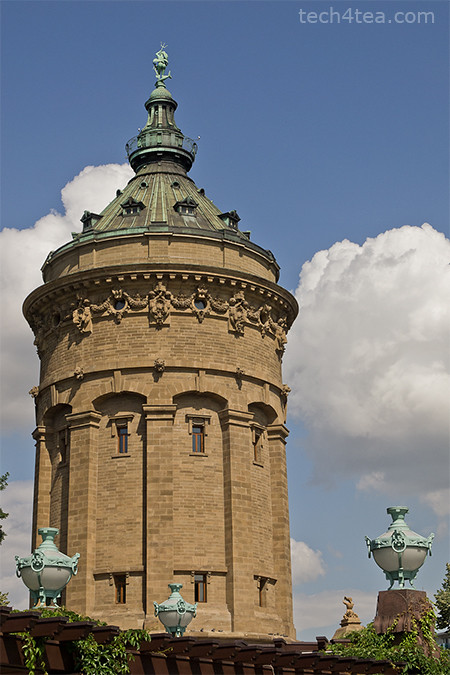
Wasserturm (Water Tower) at Friedrichsplatz in Mannheim. Taken with an Olympus E5 DSLR.
Mannheim was a small fishing hamlet as early as 766 AD. In the eleventh century, a fortress was built at the junction of the rivers Rhine and Neckar. The fishing hamlet grew into a trading settlement and eventually into a town.
The Kunsthalle museum in Mannheim. Taken with an Olympus E5.
The sleepy town is the second largest town in the region, with a Baroque palace replacing the former fortress in the eighteenth century. We visited the Wasserturm (Water Tower) and the Kunsthalle museum in Friedrichsplatz. The former is a symbol of Mannheim while the small museum featured many quirky installation art. One involved a room full of junk and fake logs to extoll the need to save the planet from environmental pollution.
Using an Asus EeePad Transformer tablet instead of paper to do museum sketches
The centrepiece for the day was a group of artists positioned around various paraphernalia of daily life. Before we could figure out what it was all about, we had to shuffle the kids out when one of the young nubile artists began to undress herself fully.
Using an Asus EeePad Transformer tablet instead of paper to do museum sketches
There were many German school children visiting, holding paper sketch pads to sketch the paintings and exhibits on display. Erin used her Asus EeePad Transformer tablet instead drawing curious looks from the locals. She was trying out this Android app called “Kids Doodle”.
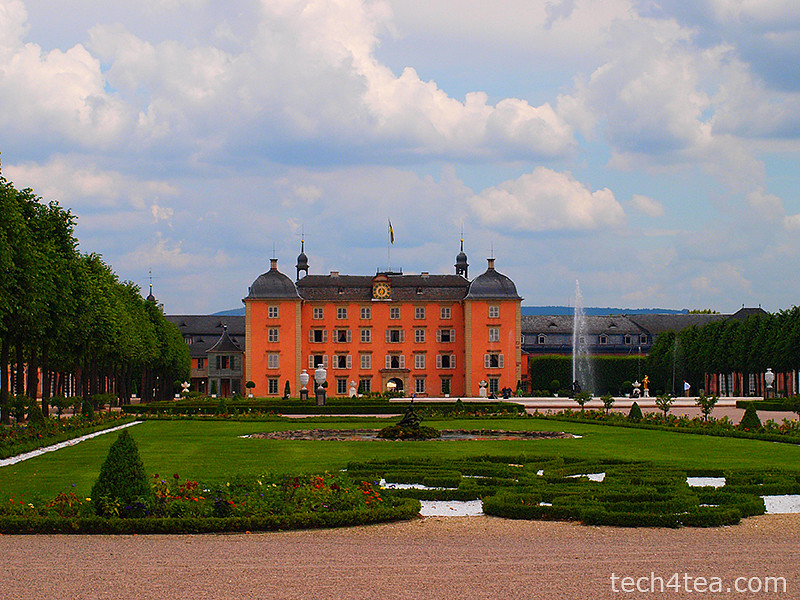
Schloss Schwetzingen. Olympus E450 with Pop-Art effect.
We decided to give the Baroque palace in Mannheim a miss since we were visiting the more reputed Schloss Schwetzingen. Located between Mannheim and Heidelberg in Schwetzingen, the Baroque-Renaissance palace was built as a summer residence on the site of a medieval castle. The original hunting lodge was converted into the main building with two curved side wings added. The palace garden was originally modeled after Versailles palace but converted into an English style garden.
It was a pleasant park visit and we had our picnic lunch by the lake.
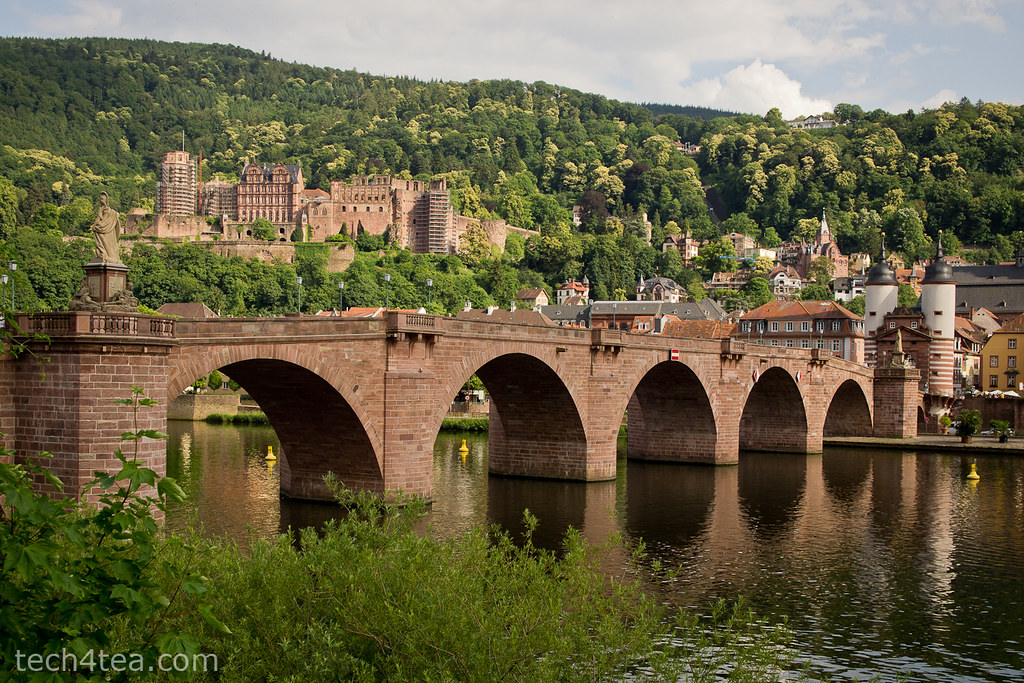
Partially scaffolded Heidelberg Castle overlooking the Neckar river.
After Schwetzingen, we headed for Heidelberg. Sitting right by the river Neckar, it is one of Germany’s most beautiful towns. Germany’s first university was established here in 1386, while the ruins of the castle sits on a hill overlooking the town. Originally a Gothic castle, it repeatedly extended between the 13th and 17th century. It was remodelled in the 16th century into a beautiful Renaissance residence, before being destroyed in the 17th century as a result of the Thirty Years’ Was and the 1689 war with France.


 The Cupertino, California-based company sought an Australian injunction to stop Samsung from selling the tablet in Australia because Samsung has had “announcements of an imminent launch of the


 The app allows you to specify that people who can see each update you share. Simply click the lock icon in the lower-right corner of the status publisher to select who you want to make the status update visible to before posting it.