Posts Tagged ‘tablets’

BlackBerry Mobile Fusion available in Singapore

Friday, July 20th, 2012

BlackBerry Mobile Fusion is RIM’s next-generation mobile device management solution for Government and Business Customers in Singapore.

It promises to be a secure, reliable, and scalable solution to easily manage BlackBerry, iOS and Android devices.

From left, Ian Gardner, Director, Enterprise Sales, RIM; and Charles Dufourcq, Director, Singapore, RIM sharing the advantages of BlackBerry Mobile Fusion

From left, Ian Gardner, Director, Enterprise Sales, RIM; and Charles Dufourcq, Director, Singapore, RIM sharing the advantages of BlackBerry Mobile Fusion

BlackBerry Mobile Fusion consolidates the management of smartphones and tablets running BlackBerry OS (which includes BlackBerry PlayBook and future BlackBerry 10 devices) as well as Android and iOS.

“For businesses and government, managing a mix of mobile devices on any scale is chaotic. Organizations face pressure to allow employees to bring their own devices into the workplace,” said Charles Dufourcq, Director for Singapore at Research In Motion.

BlackBerry Mobile Fusion provides a single, unified, web–based console to manage the wide range of mobile devices that the employees of an organisation may bring and use for work.

BlackBerry Mobile Fusion integrates the market-leading features and security architecture of BlackBerry Enterprise Server (version 5.0.3), providing advanced IT management and controls, a single outbound security connection (256-bit AES encrypted “BlackBerry VPN”), enforceable IT policies, support for BlackBerry Balance technology, and over-the-air app and software installation capabilities for the management of BlackBerry smartphones and PlayBook tablets (as well as future BlackBerry 10 devices).
(more…)

Game-changing technology: wearable unified displays with scalable imagery

Sunday, July 8th, 2012

In a time when new technology and gadgets are launched everyday, and every one of their makers proclaim them to be game-changers, it is truly heartening to see products showcasing technology that has genuine potential to become a game changer in the near future.

Wearable video displays are an example. The Epson Moverio and Google Glass are examples of such gadgets.

Wearable unified displays can be used everywhere and for any purpose in the future, here an aircraft engineer has his hands free while referencing his technical manual through an Epson Moverio.

Wearable unified displays can be used everywhere and for any purpose in the future. Here an aircraft engineer can have his hands free (if he clips the controller to his overalls) while referencing his technical manual through an Epson Moverio.

In my humble opinion, there are two main constraints in consumer devices that represent frontiers in product developments for gadget makers.

Google Glass was showed off by co-founder Sergey Brin (not in this picture) at the Google I/O conference in June.

Google Glass was showed off by co-founder Sergey Brin (not in this picture) at the Google I/O conference in June.

These are display technology and device input.

What defines a smartphone and a tablet, laptop and a laptop, or even a television and even the cinema?

It is the size and form factor of the device.

Apart from the backend processor and performance, a large determinant of their category is simply their screen size.

If it’s a 3-5 inch device (with 3G connectivity), it’s a smartphone. 7-10 inch flat screen (with or without 3G), it’s a tablet (used to be netbook not too long ago).

Beyond that, you have the 13-17 inch notebook computer, and still beyond that – the desktops with even bigger screens.

Sony HMZ T1 Personal 3D Viewer

Sony HMZ T1 Personal 3D Viewer

Need we go into the numerous sizes for TVs, projectors and erm – cinemas?

A large determinant of device portability and usability – which often run counter to each other – is the size of the display.

Greater portability results in more squinting, whereas nice expansive viewing pleasure means bigger heavier screens.

A viewer/display device that allows the user to divorce display size from processing hardware will free the user from having to own multiple devices with different form factors.

Imagine the ability to make calls, read ebooks, play games, work on documents or edit images/video, watch the equivalent of large-screen movies on a single viewer/display.

Wanna look like an X-men? Try the Cyclops look.

Wanna look like an X-men? Try the Cyclops look.

No need to purchase separate bulky devices with their own different-sized displays.

You’d still need to have the little black-boxes containing the different processing hardware and device input.

But imagine sharing the same viewer/display amongst all these devices.

All of them “plug” into the same viewer/display.

There’s no more difference between a smartphone and a 3G-capable tablet computer.

Cameras and camcorders could also pair up wirelessly.

Although the device closest to bringing this to reality is the mounted-visor display/viewer, I’m sure there’ll be other physical means and ways to achieve this “unified display”.

Olympus has just announced its wearable display prototype - MEG4.0.

Olympus has just announced its wearable display prototype – MEG4.0.

Eventually, I can envisage (pun intended) displays embedded in contact lenses or even implanted into the cornea of the eyes.

In fact, patents have already been filed for such designs.

I haven’t seen any patents that bypass the eyes and inject vision signals directly into the brain though.

In a way, nature already unifies human vision through our eyes. We do not put on a different set of eyes to see different things.

The Olympus MEG 4.0 promises to connect to devices via Bluetooth.

The Olympus MEG 4.0 promises to connect to devices via Bluetooth.

Everything we see are through the same pair of eyes.

Why should we require a different screen to view the contents of different devices?

Now this single unified display may not be good news to device makers, although it surely should be the dream of consumers – even if we may not realise it yet.

Surely it’s better to be able to sell a single user multiple devices with different screen sizes if his/her needs forces him/her to do so.

Many users today own separate tablets and smartphones.

Sony HMZ T1 Personal 3D Viewer

Sony HMZ T1 Personal 3D Viewer

Apple, for instance, would rather sell you an iPhone AND an iPad, than only a single mobile device that “throws” its display into a single viewer with a “scalable” image size.

Google Glass with augmented reality.

Google Glass with augmented reality.

I’m sure it isn’t even news to the makers.

It’s a bit akin to traditional airlines offering budget flights.

Why introduce new budget services – even though it would benefit customers – that will change the game and threaten their erstwhile profitable business?

Fortunately, we have entrepreneurs who have broken the ranks to offer such choice to budget travellers.

A closer analogy would be the way netbooks had cannibalised the mainstream laptop market.

Sony HMZ T1 Personal 3D Viewer

Sony HMZ T1 Personal 3D Viewer

We have Asus to thank for “creating” the netbook niche to bring affordable and no-frills portable computing to the masses.

The Epson Moverio and Google Glass are not the first such device on the market, and in their current form are not mature enough for mass adoption by consumers yet – in terms of usability and feature-set, as well as content and consumer readiness.

But hopefully it precipitates more momentum to force makers to get on the bandwagon.

The other frontier

The other “physical constraint” to device form-factor is input interaction, a large part of which is text-input.

The size of screen again comes into the picture again if an on-screen keyboard is used.

And if a physical keyboard is used – be it a BlackBerry style keypad or a bigger portable keyboard – it translates into the overall form factor of the device.

Voice-input represents a means to free a device from a physical or on-screen keyboard, and even provide interactivity – through voice commands and voice search.

It’s also still early days and much development is needed before we can enjoy keyboardless devices

But as consumers and end-users, we can always dream on.

* Photos and illustrations used in this article belong to Epson, Google, Sony, and Olympus.

窥探一下未来的显示浏览器。如今已有一些头目。譬如:Epson Moverio BT-100, Google Glass, Sony HMZ T1 Personal 3D Viewer, Olympus MEG4.0。希望有朝一日,能够只凭一个显示机利用多种电子设备器材。

Samsung rolls out locally developed edutainment apps

Tuesday, July 3rd, 2012

Samsung has rolled out more than 40 new interactive edutainment apps in partnership with Singapore developers. These apps will be available on Samsung smart mobile devices.

Overview of content strategy and edutainment apps by Winston Goh, Senior Product Marketing Manager, Mobile Communications, Samsung Asia

Overview of content strategy and edutainment apps by Winston Goh, Senior Product Marketing Manager, Mobile Communications, Samsung Asia

The 40 new apps are entertaining, intuitive, social and visual in nature and allows users to engage in self-learning experiences, whether at home or on-the-go.

The suite of edutainment apps includes:

  • Mandarin Speaking Skills for Kids: comprises speech interactive exercises to build Mandarin speaking skills for kids from Primary 1 to 6.
  • Zalairos Adventures: comprises 25 e-books for kids aged between 5-10 years old to improve vocabulary, reading and comprehension skills.
  • Skoolbo Core Skills: comprises more than 50,000 questions designed for kids aged between 4-10 years old to improve mathematics and language skills.
  • PREPTEST: standardized self-assessment modules and admission guidelines for GMAT (Graduate Management Admission Test), SAT (Scholastic Aptitude Test) and more.

Samsung is working with the developer community to promote the creation of interesting educational content.

The company commits the tools, resources, technical content and support that app developers require, to create rich applications optimised for its GALAXY range of tablets and smartphones, as well as the GALAXY Note.

The local app developers that Samsung is working with for this range of edutainment apps are B-Secure Technologies, Prep Zone, iQ-hub and Skoolbo.

Some of these apps, such as those developed by B-Secure Technologies and Prep Zone will be made exclusively available on Samsung mobile devices.

The launch was held at Samsung’s store at Vivocity.

I tried out some of the apps during the launch and it’s quite impressive what our local developers are capable of.

Also launched at the event were Samsung’s two new GALAXY smartphones.

These are the GALAXY beam (S$648) and the GALAXY Ace 2 (S$438).

Both are based on Android 2.3 (Gingerbread) and will be available this month.

The list of Edutainment Applications and their availability date are listed below.

(more…)

New tablets: Microsoft unveils two Surface tablets

Tuesday, June 19th, 2012

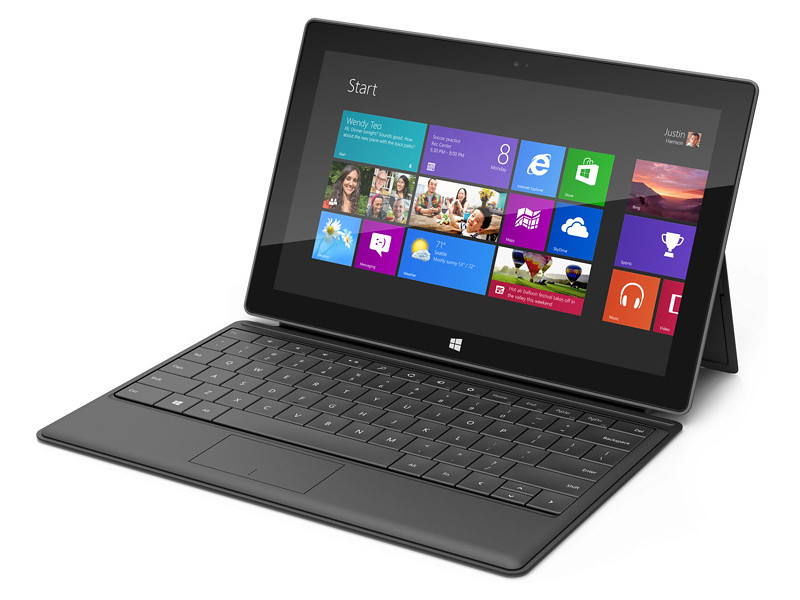
Microsoft has unveiled two 10.6-inch Windows tablets and accessories.

One model will run on Windows RT and will be released with the general availability of Windows 8. The other tablet will be available about 90 days after and feature Windows 8 Pro.

Update 2 (1 March, 2013):

Microsoft has announced that beginning late March the rollout of Surface will continue over the next few months.

Surface RT with Windows RT will reach Japan, Mexico, New Zealand, Russia, Singapore and Taiwan.

Surface Pro with Windows 8 Pro will hit Australia, China, France, Germany, Hong Kong, New Zealand and the United Kingdom.

Update 1 (18 July, 2012):

Microsoft’s Steven Sinofsky has just announced at its annual sales meeting that customers will be able to get Windows 8 on 26 October, 2012. This will be available both as an upgrade or on a new PC.

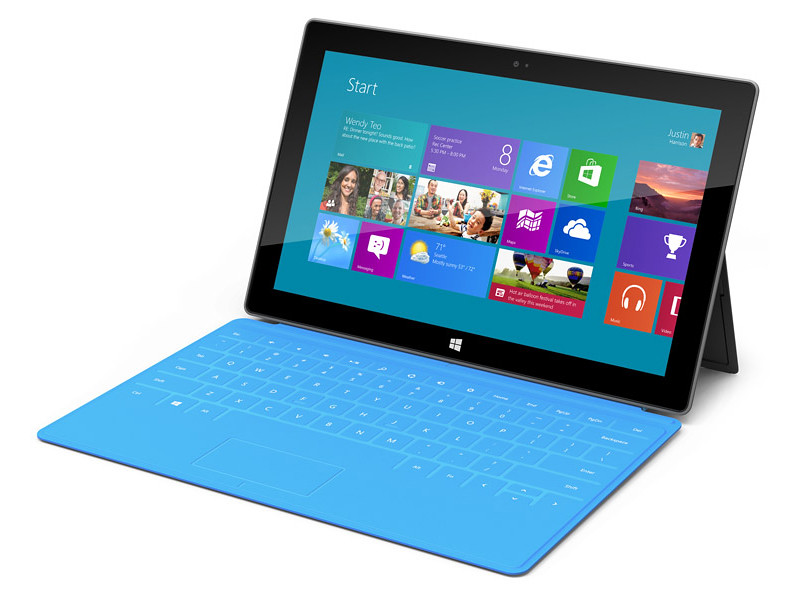
Microsoft finally joins the fray by unveiling its 10.6-inch Surface tablets.

Microsoft finally joins the fray by unveiling its 10.6-inch Surface tablets.

The Windows RT Surface tablet will run on an ARM processor, while the Windows 8 Pro version will have a third-generation Intel Core processor.

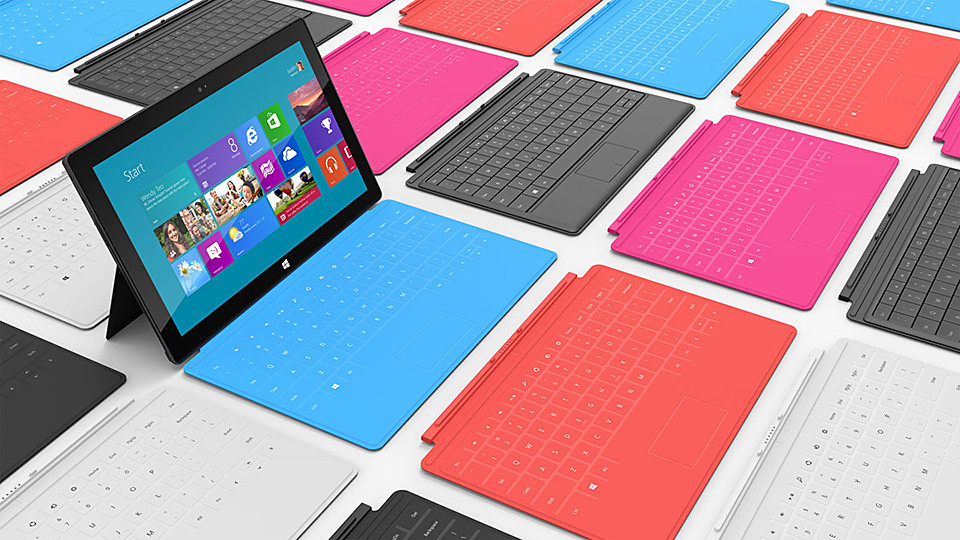
The Touch Cover and Type Cover double up as keyboards.

The Touch Cover and Type Cover double up as keyboards.

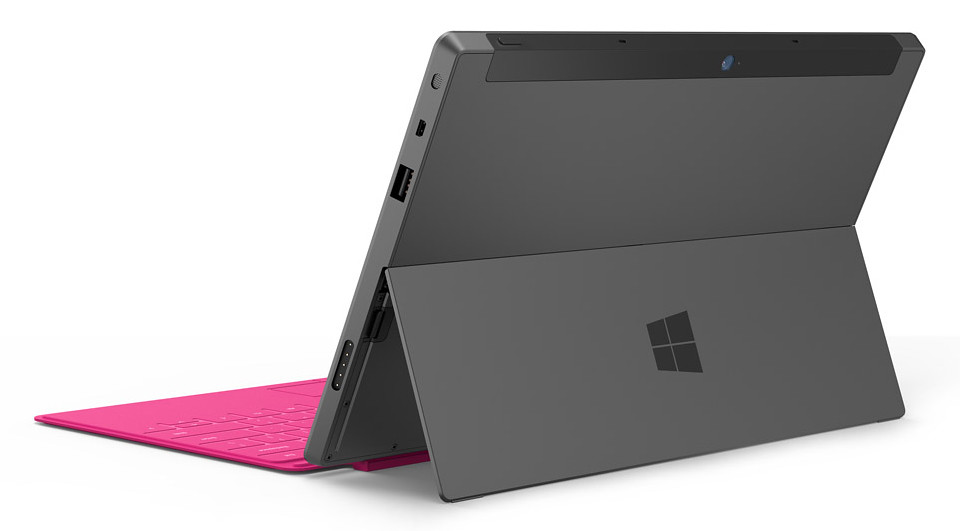
Each Surface tablet will have a full-sized USB port, a microSD slot, and a 16:9 aspect ratio; with edges angled at 22 degrees.

The casing of Surface is created using VaporMg (pronounced Vapor-Mag), where metal and deposit particles are molded to create a finish akin to luxury watches.

Starting with magnesium, parts can be molded as thin as .65 mm, thinner than the typical credit card, to create a product that is thin, light and rigid/strong.

The VaporMg materials and processes has enabled the thin and sleek design of the Surface tablets.

The VaporMg materials and processes has enabled the thin and sleek design of the Surface tablets.

This also enables an extremely thin built-in kickstand to prop the tablet up when watching movies or video conferencing with the HD front- or rear-facing video cameras.

The integrated, built-in kickstand removes the need for a separate accessory.

The integrated, built-in kickstand removes the need for a separate accessory.

I like the idea and design of this integrated kickstand.

To transform the tablet into a “notebook”, a 3 mm Touch Cover uses pressure-sensitive technology to sense keystrokes as gestures, allowing users to touch type significantly faster than on an on-screen keyboard.

The Touch Cover will be available in a selection of vibrant colors. It clicks into the Surface tablet via a built-in magnetic connector, forming a natural spine like you find on a book, and doubles up as a protective cover.

The Touch Cover and Type Cover comes in many vibrant colours.

The Touch Cover and Type Cover comes in many vibrant colours.

Alternatively, users can click in a 5 mm-thin Type Cover that adds moving keys for a more traditional typing feel.

Retail pricing will be announced closer to availability but is expected to be competitive with a comparable ARM tablet or Intel Ultrabook-class PC.

OEMs will have cost and feature parity on Windows 8 and Windows RT.

Oh and if you’re interested in a 40-inch tablet, check out the Samsung SUR40 for Microsoft Surface. (I haven’t heard anyone else calling THAT a tablet yet).

The main technical specifications of the two Surface tablets are tabulated below.

(more…)

PC Show 2012 promotions: Toshiba

Friday, June 8th, 2012

Toshiba will be at the PC Show 2012 at Suntec Singapore at Level 4, Hall 402, Booth A2006.

Toshiba's PC Show 2012 promotions for computers in all form factors.

Toshiba's PC Show 2012 promotions for computers in all form factors.

Here are four brochures for Toshiba’s PC Show 2012 promotions for notebooks, ultrabooks, tablets, all-in-one desktop computers and tablets.

PC Show 2012 promotions: StarHub

Thursday, June 7th, 2012

StarHub will be at the PC Show 2012 at Suntec Singapore at Level 6, Hall 603.

Check out StarHub's PC Show 2012 promotions for mobile and fibre broadband, smartphones and tablets, as well as cable TV.

Check out StarHub's PC Show 2012 promotions.

Here are the flyers for StarHub’s PC Show 2012 promotions for mobile and fibre broadband, smartphones and tablets, as well as cable TV.

PC Show 2012 promotions: Motorola

Thursday, June 7th, 2012

Motorola smartphones and accessories will be at the PC Show 2012 at Suntec Singapore.

Look for smartphones and tablets at the booths of SingTel (L6, B2003), StarHub (L6, B2009), and M1(L6, B2019).

The MotoACTV and accessories can be found at Newstead (L3, B303) and Nubox (L3, B312).

Motorola's PC Show 2012 promotions for the Defy XT, RAZR, and ATRIX 2 smartphones; XOOM 2 tablet; MotoACTV and accessories.

Motorola's PC Show 2012 promotions for the Defy XT, RAZR, and ATRIX 2 smartphones; XOOM 2 tablet; MotoACTV and accessories.

The Motorola Defy XT smartphone is debuting at this PC Show.

Here are two brochures for Motorola’s PC Show 2012 promotions smartphones & tablets and MotoACTV & accessories; as well as four product brochures for the Defy XT, RAZR, and ATRIX 2 smartphones and the XOOM 2 tablet.

Facebook to buy Instagram photo app for US$1 billion

Tuesday, April 10th, 2012

US$100 billion Facebook Inc has agreed to fork out US$1 billion in cash and stock to acquire the photo-sharing application for smartphones. The deal is expected to be completed this quarter.

Is Instagram worth one-hundredth of Facebook?

Is Instagram worth one-hundredth of Facebook?

Facebook is probably looking at attracting the users of mobile devices through its acquisition of Instagram – its biggest acquisition yet.

“Instagram, owned by San Francisco-based Burbn Inc, was valued at $500 million after raising about $60 million last week from investors,” Bloomberg was told.The idea is to attract the advertisers interested in reaching the mobile users.

Instagram started out as the top free photo-sharing app on Apple’s App Store with more than 30 million users.

Only last week, the company introduced the app for Android devices as well.

Instagram has only 13 employees so the offer works out to some US$76 million per employee, according to the Los Angeles Times.

“We need to be mindful about keeping and building on Instagram’s strengths and features rather than just trying to integrate everything into Facebook. That’s why we’re committed to building and growing Instagram independently,” – Zuckerberg wrote on his Facebook fanpage.Instagram was launched in October 2010 by Kevin Systrom and Mike Krieger with a seed funding of about US$500,000.

It subsequently raised US$7 million in 2011, when it had 1.75 million users, according to Bloomberg.

California-based Facebook is the biggest social-networking service today and intends to raise US$5 billion in its initial public offering (IPO) – which is to date the biggest IPO for an Internet company, valuing it at US$100 billion.

Facebook’s CEO, Mark Zuckerberg, said it plans to let Instagram retain its independence, in an effort to reassure Instagram users and potential advertisers.

I tried out Zinio on the BlackBerry PlayBook

Sunday, March 25th, 2012

The free Zinio app was released on BlackBerry App World on Tuesday, 20 March. I’ve tried it out for the past few days to read the two free magazines that came with the “magazine stand” app.

Zinio stocks over 5,000 titles in more than 30 languages.

Zinio stocks over 5,000 titles in more than 30 languages.

Installation was easy and fuss-free. Fire up App World on the PlayBook, search for Zinio, click the Download button.

The 1.8 MB app is downloaded and installed in a jiffy (depending on your bandwidth) and you’re set to go.

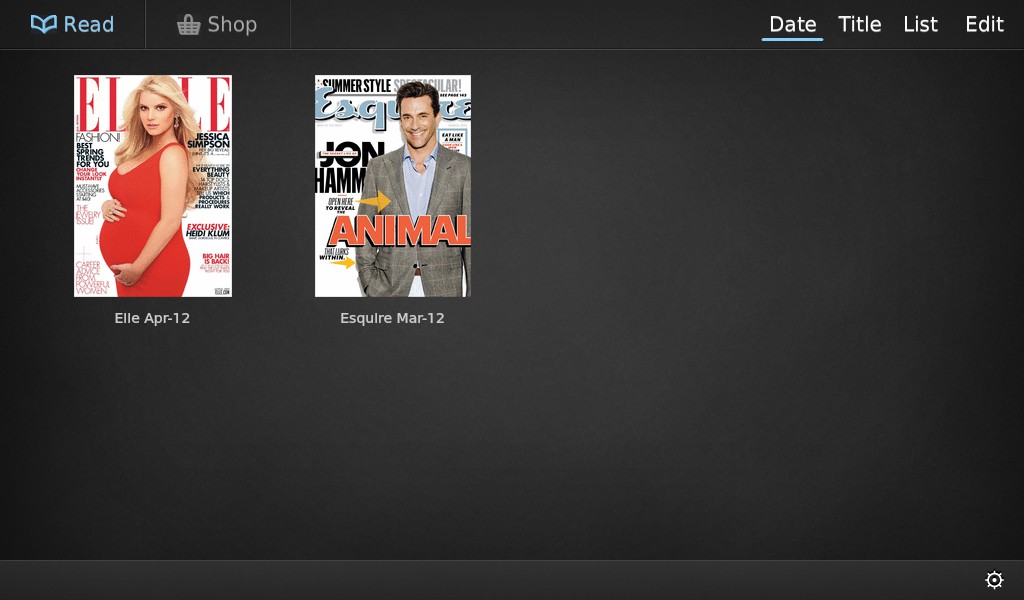
Zinio starts you off with two free magazines when you first install the app.

Zinio starts you off with two free magazines when you first install the app.

Starting up Zinio, you’re prompted to sign in if you have an existing account with Zinio (which is also available through a browser and via apps for iOS and Android tablets), or sign up for a new account.

All you need to sign up is an email and a password. Once logged in, you remain logged in on the PlayBook until you log out.

Once in, you get to the library with two free magazines for installing the app. At this point, you get the March 12 issue of Esquire and April 12 issue of Elle.

Click on the thumbnail to download the magazine. Once downloaded, you can read the magazine even when offline.

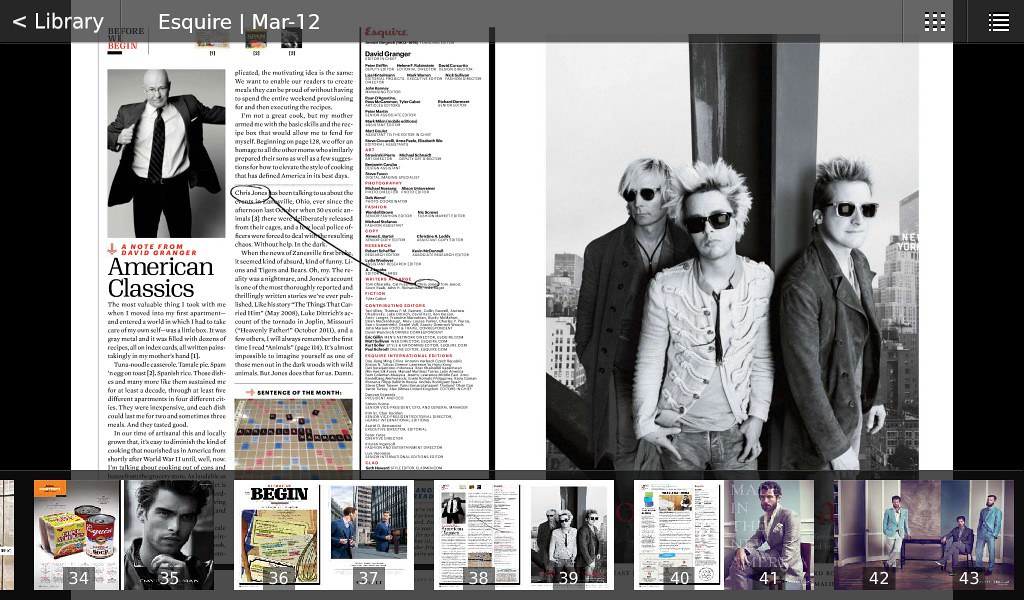
View two pages at a time in landscape mode, with navigation interface when you tap on the screen.

View two pages at a time in landscape mode, with navigation interface when you tap on the screen.

The user interface is simple and intuitive. In portrait mode, you view one page at a time. In landscape mode, you view two pages on the screen.

Pinch to zoom out and spread the fingers to zoom in.

View one page at a time when in portrait mode.

View one page at a time when in portrait mode. Shown with navigation thumbnails below and options above.

Double-tap to zoom-in quickly and single tap to display options, such as a row of scrollable thumbnail pages at the bottom for quick navigation.

Navigation was easy and smooth and the app has been stable in the few days that I’ve played with it.

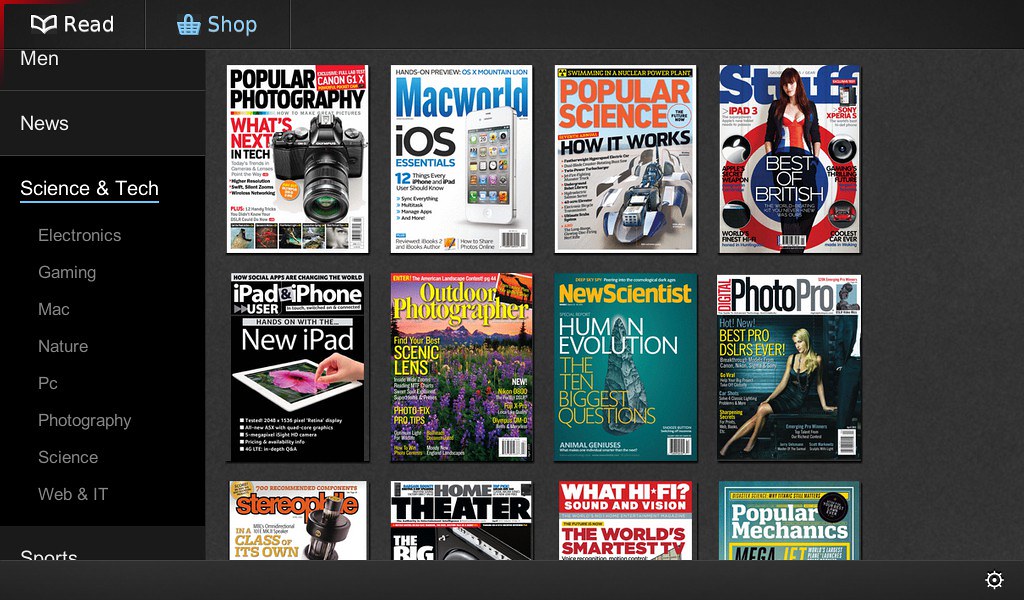
Want more magazines? Hit the online shop. The categories are listed to the left, and the magazine covers in the category listed to the right.

Selecting a magazine will bring you to the details page where you can choose to purchase either a single issue or subscribe for a number of issues.

After that, it’s the typical payment transactions, with entry and verification of credit card details.

Zinio has more than 5,000 titles (magazines and newspapers) in more than 30 languages from around the world.

Publications purchased or subscribed to can be perused on any compatible device as long as the user is logged in with the account used to make the purchase, and a version of the magazine compatible for the OS is available on Zinio.

Lifestyle concept demo by Sony

Tuesday, March 20th, 2012

Sony hosted a concept demonstration of how their slew of electronic products can connect easily and seamlessly together to cater to the digital lifestyle needs of the modern consumer.

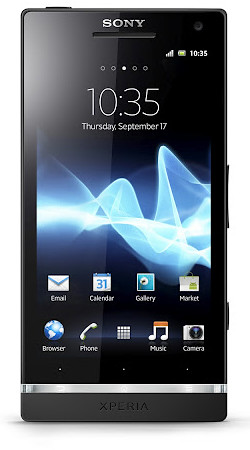
New Bravia TVs and Xperia smartphones were also launched at the event.

Sony connectivity demo at ONE°15 Marina Club in Sentosa.

Sony connectivity demo at ONE°15 Marina Club in Sentosa.

At ONE°15 Marina Club in Sentosa, tablets, VAIO notebooks, Xperia smartphones and Bravia TVs were interconnected with each other to The Xperia smartphones under Sony Mobile Communications (former Sony Ericsson) return to the Sony stable.demonstrate how media and content can be seamlessly networked and shared between the various devices.

The event is also an apt welcome of Sony Mobile Communications back to the fold of Sony Electronics.

Sony had recently acquired the other 50% of Sony Ericsson and the connectivity event serves to remind consumers of the connectivity and ecosystem that Xperia customers can expect to enjoy with other Sony devices.

The showcased Xperia smartphones are the first range of devices under Sony Mobile Communications.

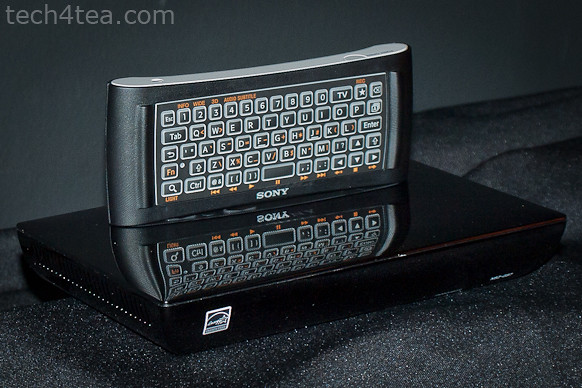
Sony's pre-release Google TV set-top box with remote control.

Sony's pre-release Google TV set-top box with remote control.

The new range of Bravia TVs that were first unveiled during CES 2012 in January, as well as a whole range of Xperia smartphones were also showcased.

The three new series of Bravia TVs include the flagship HX, high-end NX and the entry-to-mid-level EX.

Xperia smartphones that were exhibited included the Xperia S, P, U, and sola.

Sony media box

The 2-sided remote control reminds one of in-flight entertainment controllers.

The 2-sided remote control reminds one of in-flight entertainment controllers.

There was a sneak preview of an upcoming set-top box for the second generation Sony Google TV, that was also unveiled during CES 2012.

Sony did not dwell on this set-top box though, which was connected to the Google Play store.

The remote control for the media box comprised a keyboard on one side, with additional controls (D-pad, Menu, Home, Back buttons and a trackpad) on the other side.