Archive for the ‘3D’ Category

Game-changing technology: wearable unified displays with scalable imagery

Sunday, July 8th, 2012

In a time when new technology and gadgets are launched everyday, and every one of their makers proclaim them to be game-changers, it is truly heartening to see products showcasing technology that has genuine potential to become a game changer in the near future.

Wearable video displays are an example. The Epson Moverio and Google Glass are examples of such gadgets.

Wearable unified displays can be used everywhere and for any purpose in the future, here an aircraft engineer has his hands free while referencing his technical manual through an Epson Moverio.

Wearable unified displays can be used everywhere and for any purpose in the future. Here an aircraft engineer can have his hands free (if he clips the controller to his overalls) while referencing his technical manual through an Epson Moverio.

In my humble opinion, there are two main constraints in consumer devices that represent frontiers in product developments for gadget makers.

Google Glass was showed off by co-founder Sergey Brin (not in this picture) at the Google I/O conference in June.

Google Glass was showed off by co-founder Sergey Brin (not in this picture) at the Google I/O conference in June.

These are display technology and device input.

What defines a smartphone and a tablet, laptop and a laptop, or even a television and even the cinema?

It is the size and form factor of the device.

Apart from the backend processor and performance, a large determinant of their category is simply their screen size.

If it’s a 3-5 inch device (with 3G connectivity), it’s a smartphone. 7-10 inch flat screen (with or without 3G), it’s a tablet (used to be netbook not too long ago).

Beyond that, you have the 13-17 inch notebook computer, and still beyond that – the desktops with even bigger screens.

Sony HMZ T1 Personal 3D Viewer

Sony HMZ T1 Personal 3D Viewer

Need we go into the numerous sizes for TVs, projectors and erm – cinemas?

A large determinant of device portability and usability – which often run counter to each other – is the size of the display.

Greater portability results in more squinting, whereas nice expansive viewing pleasure means bigger heavier screens.

A viewer/display device that allows the user to divorce display size from processing hardware will free the user from having to own multiple devices with different form factors.

Imagine the ability to make calls, read ebooks, play games, work on documents or edit images/video, watch the equivalent of large-screen movies on a single viewer/display.

Wanna look like an X-men? Try the Cyclops look.

Wanna look like an X-men? Try the Cyclops look.

No need to purchase separate bulky devices with their own different-sized displays.

You’d still need to have the little black-boxes containing the different processing hardware and device input.

But imagine sharing the same viewer/display amongst all these devices.

All of them “plug” into the same viewer/display.

There’s no more difference between a smartphone and a 3G-capable tablet computer.

Cameras and camcorders could also pair up wirelessly.

Although the device closest to bringing this to reality is the mounted-visor display/viewer, I’m sure there’ll be other physical means and ways to achieve this “unified display”.

Olympus has just announced its wearable display prototype - MEG4.0.

Olympus has just announced its wearable display prototype – MEG4.0.

Eventually, I can envisage (pun intended) displays embedded in contact lenses or even implanted into the cornea of the eyes.

In fact, patents have already been filed for such designs.

I haven’t seen any patents that bypass the eyes and inject vision signals directly into the brain though.

In a way, nature already unifies human vision through our eyes. We do not put on a different set of eyes to see different things.

The Olympus MEG 4.0 promises to connect to devices via Bluetooth.

The Olympus MEG 4.0 promises to connect to devices via Bluetooth.

Everything we see are through the same pair of eyes.

Why should we require a different screen to view the contents of different devices?

Now this single unified display may not be good news to device makers, although it surely should be the dream of consumers – even if we may not realise it yet.

Surely it’s better to be able to sell a single user multiple devices with different screen sizes if his/her needs forces him/her to do so.

Many users today own separate tablets and smartphones.

Sony HMZ T1 Personal 3D Viewer

Sony HMZ T1 Personal 3D Viewer

Apple, for instance, would rather sell you an iPhone AND an iPad, than only a single mobile device that “throws” its display into a single viewer with a “scalable” image size.

Google Glass with augmented reality.

Google Glass with augmented reality.

I’m sure it isn’t even news to the makers.

It’s a bit akin to traditional airlines offering budget flights.

Why introduce new budget services – even though it would benefit customers – that will change the game and threaten their erstwhile profitable business?

Fortunately, we have entrepreneurs who have broken the ranks to offer such choice to budget travellers.

A closer analogy would be the way netbooks had cannibalised the mainstream laptop market.

Sony HMZ T1 Personal 3D Viewer

Sony HMZ T1 Personal 3D Viewer

We have Asus to thank for “creating” the netbook niche to bring affordable and no-frills portable computing to the masses.

The Epson Moverio and Google Glass are not the first such device on the market, and in their current form are not mature enough for mass adoption by consumers yet – in terms of usability and feature-set, as well as content and consumer readiness.

But hopefully it precipitates more momentum to force makers to get on the bandwagon.

The other frontier

The other “physical constraint” to device form-factor is input interaction, a large part of which is text-input.

The size of screen again comes into the picture again if an on-screen keyboard is used.

And if a physical keyboard is used – be it a BlackBerry style keypad or a bigger portable keyboard – it translates into the overall form factor of the device.

Voice-input represents a means to free a device from a physical or on-screen keyboard, and even provide interactivity – through voice commands and voice search.

It’s also still early days and much development is needed before we can enjoy keyboardless devices

But as consumers and end-users, we can always dream on.

* Photos and illustrations used in this article belong to Epson, Google, Sony, and Olympus.

窥探一下未来的显示浏览器。如今已有一些头目。譬如:Epson Moverio BT-100, Google Glass, Sony HMZ T1 Personal 3D Viewer, Olympus MEG4.0。希望有朝一日,能够只凭一个显示机利用多种电子设备器材。

New wearable video display: Epson Moverio BT-100

Friday, July 6th, 2012

Epson offers a peek into the future by launching its innovative personal display device – the Epson Moverio BT-100 see-through mobile viewer.

Available in Singapore from 23 July 2012 at S$999. Pre-orders from 9-22 July.

The Epson Moverio BT-100 is available from 23 July 2012 at S$999.

The Epson Moverio BT-100 is available from 23 July 2012 at S$999.

The Epson Moverio BT-100 comprises a headset and an Android-powered media player cum controller.

Bring your personal entertainment on the move.

Bring your personal entertainment on the move.

The device allows users to view streaming video, experience 3D content (in side-by-side format) and enjoy downloaded digital content on a large virtual 320-inch perceived screen projected from 20 meters away.

If you harbour ambitions to be part of the X-men, the headset makes you look like Cyclops.

It uses micro-projection technology to project the imagery onto the visor.

The media player cum controller operates on Google Android 2.2.

Built-in 802.11n wireless connectivity allows the user to browse the Web for content.

Alternatively, pre-downloaded content can be accessed via the device’s microSDHC card slot (4GB card included) and built-in 1GB of internal storage, especially when wireless network access is unavailable.

microSDHC card slot and built-in 1GB internal storage.

microSDHC card slot and built-in 1GB internal storage.

The viewer boasts nearly six hours of rechargeable battery life, supports Adobe Flash 11, and features Dolby Mobile surround sound.

If you have your own kick-a** Dr. Dre headphones or Monster headsets, there’s an audio out socket available.

There’s no video out though, since that defeats the raison d’etre of the Moverio.

If you wear glasses, you can wear the Moverio over them.

In fact, you need to, since there’s no diopter adjustment on the Moverio.

While wearing the Moverio, you can still see through them at the surroundings.

Available for pre-order from 9-22 July.

Available for pre-order from 9-22 July – the Moverio, that is.

You can choose to remove the shades to see the external world better but that makes it more difficult to watch the imagery inside the Moverio unless you’re facing a blank wall with a dark surface.

Although the Moverio runs on Android Froyo, it is not Google Play certified.

Epson said that when they approached Google, the latter felt the Moverio could neither be categorised as a smartphone or tablet.

So you’ll have to head to 3rd-party app-sites for Moverio apps.

And, for the moment, there’s no augmented reality.

Hands-on the Moverio BT-100

I tried out the Moverio for about 20 minutes during the launch event at ION Sky in Singapore.

Epson Moverio BT-100 see-through mobile viewer.

Epson Moverio BT-100 see-through mobile viewer.

Apart from image quality, I was curious whether the headset would be excessively heavy and whether prolonged viewing would cause dizziness and discomfort.

I found image quality to be excellent.

It did feel like watching a big screen.

The weight was okay for me although that seems to a major concern for many people, and something Epson is cognizant of.

I didn’t experience any dizziness although I’d tried it for a short 20 minutes. You’ll have to use it for a longer period of time to really tell.

Although the media player cum controller is an additional box to carry, it’s better than having to plug the headset to a living room set top player.

What I found terribly irritating was that the perceived screen moved every time you moved your head.

But since the display is in the headset itself, that seems pretty unavoidable.

I wonder if there’s any way to “stabilise” the display in the future.

Epson quotes studies in the US that advises against children below 12-years perusing such devices – because their eyesight has not fully developed yet.

Epson Moverio BT-100: Available exclusively at selected Best Denki stores in Singapore.

Epson Moverio BT-100 in a box

So this may not be an appropriate gift for a young child – despite its obvious drool factor.

At the moment, it’s targeted more at the early adopter.

I can see the Moverio coming in very handy for watching movies while riding in the MRT.

You can enjoy absolute privacy without the irritation of fellow passengers peering at your smartphone or tablet.

Just make sure you’re not sitting on a privileged seat with a feisty old woman staring down at your oblivious cyclops facade.

(more…)

TomTom expands mapping footprint in Asia Pacific region

Sunday, June 24th, 2012

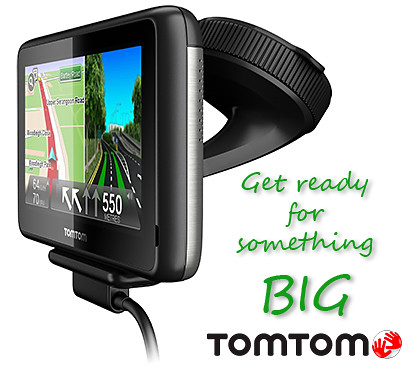
Here are some CommunicAsia2012 highlights of TomTom’s latest map products for the Asia Pacific region, which includes new coverage and features for automotive, enterprise and government customers.

TomTom expands mapping footprint in Asia Pacific region with map updates

TomTom expands mapping footprint in Asia Pacific region with map updates

But TomTom is gearing up for something big come July. And I mean BIG – literally! Check in on 5 July to find out more.

In the meantime, here are more details of TomTom’s latest map update release.

  • The introduction of Voice Maps in Thai and Bahasa Indonesian; the first Voice Maps product supporting tonal languages where different tones distinguish different meanings of a word.
  • Visualization enhanced with additional 3D Landmarks for important buildings, 2D building footprints and Junction Views for complex intersections throughout the region.
  • The debut of lane and signpost information added in inner-city areas of central Bangkok, enabling easier, more efficient and safer routing.
  • The street network in over 100 cities in India and nearly 83,000 km in China upgraded to full attribution, supporting the most demanding navigation applications.
  • Continuous coverage and content expansion and improvements in Malaysia, Indonesia, Philippines and Viet Nam.
  • The addition of nearly 1 million Address Points throughout the region to support accurate geocoding and navigation.

New Android smartphone: LG Optimus Max

Tuesday, May 29th, 2012

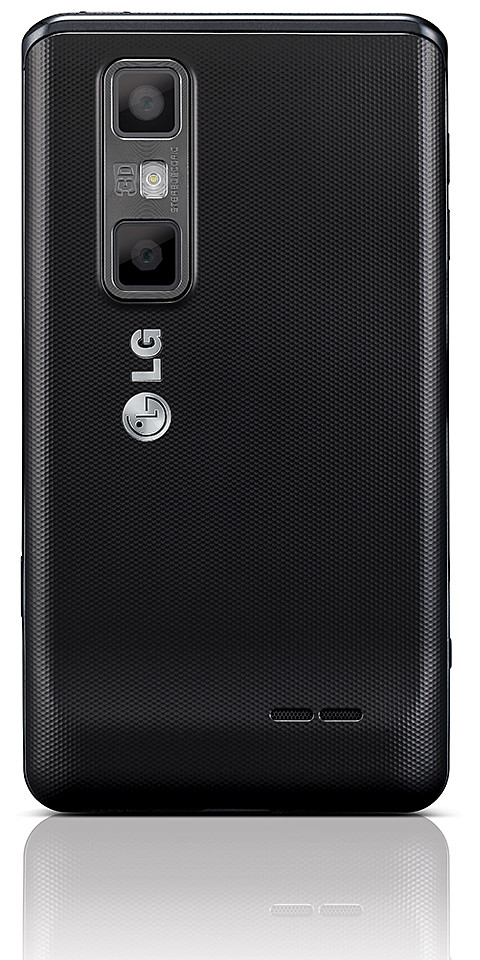
LG’s new Optimus Max boasts both glasses-free 3D features and smartphone performance. The smartphone is available at all StarHub and M1 stores at S$698.

LG Optimus Max, available from M1 and StarHub (S$698)

LG Optimus Max, available from M1 and StarHub (S$698)

Zoom in to examine the texture.

Following last year’s 3D smartphone, LG Electronics Singapore has introduced the Optimus Max, which is only 9.6 mm thin and weighs 148 grams.

The smartphone ships with Android 2.3 Gingerbread but will be upgraded to Android 4.0 Ice Cream Sandwich.

Its 3G network speed has been improved to HSPA+ 21Mbps.

Automatic setting changes create predefined tags that are customized to certain modes such as car-mode, office-mode or sleep-mode.

Depending on location, the predefined tags will automatically adjust various phone settings including Wi-Fi, bluetooth, GPS and sound volume.

Other features include:

  • HD Converter to offer HD quality on a TV connected through MHL (Mobile High-Definition Link), when transforming Open GL-based 2D games and applications to 3D and viewing Google Earth.
  • Range Finder which calculates the distance between the camera and the subject as well as the dimensions of an object through triangulation.
  • Out-focusing Shot which enhances camera quality beyond that of other smartphones through image processing using depth information.
  • Icon Customizer which allows the creation of personalized icons. Images can be selected from the gallery and can be used as icons or shortcuts for a personalized look.
  • Users can convert Google Earth, Google Maps and other road views into 3D using the enhanced 3D Converter.
  • 3D photos and videos captured by the Optimus Max can also be viewed in a single-screen mode in 2D, using the 3D Hot Key mounted on the side of the phone to easily toggle between 2D and 3D.

The main specifications are listed below.

(more…)

LG launches 3D World globally

Wednesday, April 18th, 2012

3D World is to improve access to high quality 3D content for LG customers and boost efforts to increase 3D content collaboration.

Content from 3D World will be available to LG’s CINEMA 3D Smart TV users in nearly 70 countries.

Content from 3D World will be available to LG’s CINEMA 3D Smart TV users in nearly 70 countries.

The newly launched 3D World is a premium content service that will be available to LG’s CINEMA 3D Smart TV users in nearly 70 countries.

“3D World is a critical part of LG’s long-term strategy which includes controlling more of the 3D ecosystem that CINEMA 3D owners experience,” said Havis Kwon, President and CEO of LG Home Entertainment Company.With DNA from LG’s original 3D Zone Smart TV app launched last year, 3D World gives LG customers access to an expansive selection of high quality 3D content via a “card” on the Home Dashboard

3D World allows customers the ability to search through high quality 3D content across a wide range of content categories, such as entertainment, sports, documentary, kids, and lifestyle.

“With the global roll-out of 3D World, LG is demonstrating its commitment to providing diverse, high quality 3D content,” added Kwon.In addition to the content, LG plans to pursue further collaborations with global 3D content providers in order to bring the most sought after 3D content to LG customers.

3D World will be offered in app-format for CINEMA 3D Smart TVs that were produced in 2011, while 2012 models will use the streamlined card system on the Home Dashboard.

TODAY! Nikon COOLPIX P310, P510, and L810 available in Singapore

Monday, March 26th, 2012

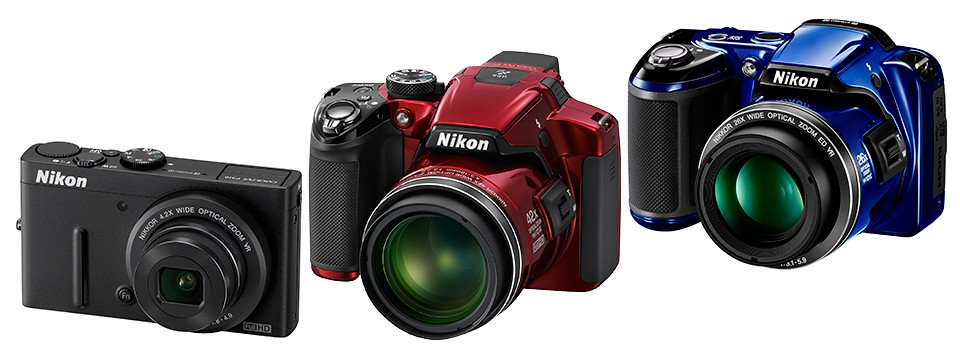
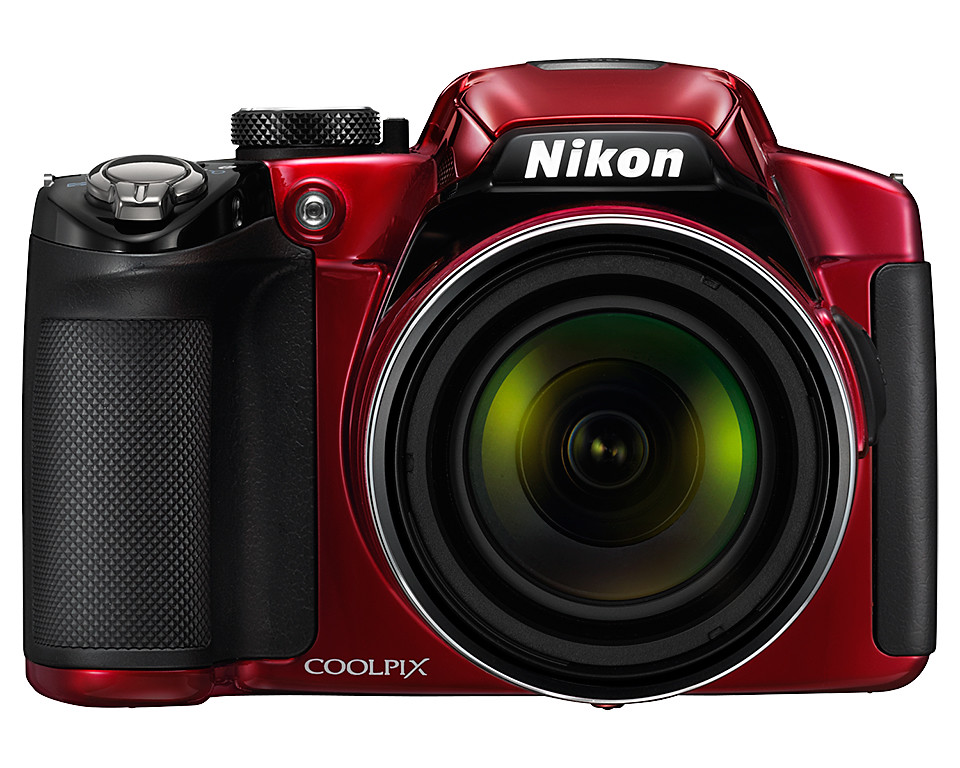
The Nikon COOLPIX P310 (S$549), P510 (S$739), and L810 (S$399) hit the shelves in Singapore today.

Nikon COOLPIX P310 (S$549), P510 (S$739), and L810 (S$399)

Nikon COOLPIX P310 (S$549), P510 (S$739), and L810 (S$399)

The three 16.1-megapixel COOLPIX compact cameras were first unveiled on 1 February as part of Nikon’s COOLPIX Spring 2012 collection of 14 camera models.

All three cameras features Nikon’s Lens-Shift Vibration Reduction (VR) function to produce sharper images with less motion blur.

Below are the details:

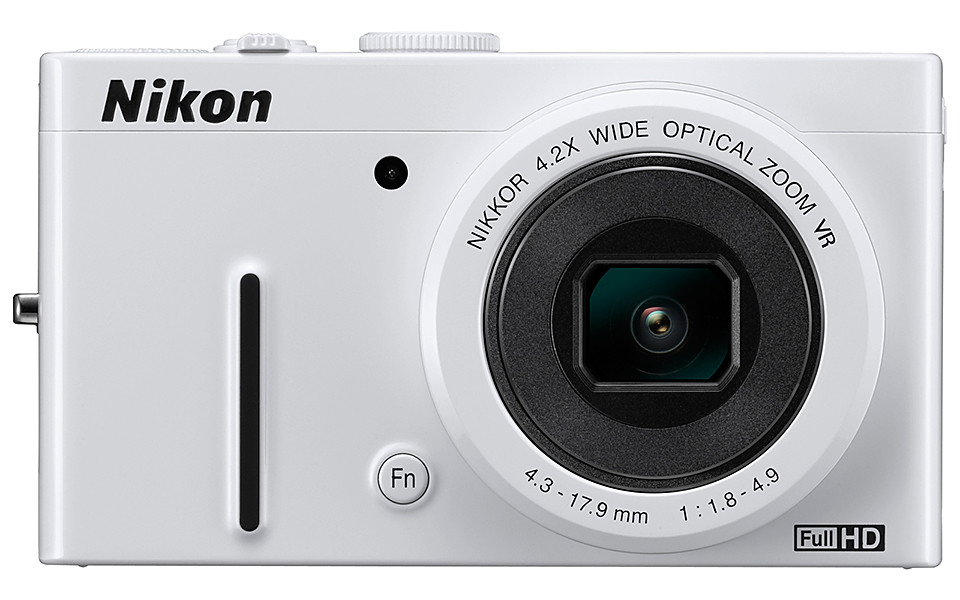
Nikon COOLPIX P310, S$549 Nikon COOLPIX P310

S$549

  • Black or White
  • 16.1-Million Pixel Backside Illumination CMOS Sensor
  • 4.2x Optical Zoom
  • Focal range from 24 to 100 mm (35 mm equiv.)
  • Lens-Shift Vibration Reduction (VR) Function
  • COOLPIX Picture Control – Optimising Images Prior To Shooting
  • Record Customisable Full-HD Movies With Optical Zoom
  • Bright And Ultra-Clear 3-inch, 921k-dot TFT LCD Monitor
Nikon COOLPIX P510, S$739 Nikon COOLPIX P510

S$739

  • Black
  • Red
  • Dark Silver
  • 16.1-Million Pixel Backside Illumination CMOS Sensor
  • 42x Optical Zoom
  • Focal range from 24 to 1000 mm (35 mm equiv.)
  • Lens-Shift Vibration Reduction (VR) Function
  • COOLPIX Picture Control – Optimising Images Prior To Shooting
  • Record Customisable Full-HD Movies With Optical Zoom
  • Bright And Ultra-Clear 3-inch, 921k-dot TFT LCD Monitor
Nikon COOLPIX L810, S$399 Nikon COOLPIX L810

S$399

  • Black
  • Red
  • Bronze
  • Blue
  • 16.1-Million Pixel Backside Illumination CMOS Sensor
  • 26x Optical Zoom NIKKOR Lens
  • Focal range from 22.5 to 585 mm (35 mm equiv.)
  • Lens-Shift Vibration Reduction (VR) Function
  • 19 optimised scene modes
  • 3-inch, 921k-dot TFT LCD Monitor
  • 3D Photography

Exhibition: 4 continents in 3D

Saturday, March 17th, 2012

Extremely realistic 3D imageries of people and places across 12 countries in 4 continents. I was amazed at the dimensionality of the imagery.

The free exhibition is from 14-29 March (10am to 7pm) at The Arts House.

Stefen Chow being interviewed at the launch of the exhibition.

Stefen Chow being interviewed at the launch of the exhibition.

The exhibition comprises a number of wall-mounted LG Cinema 3D TVs using battery-free glasses.

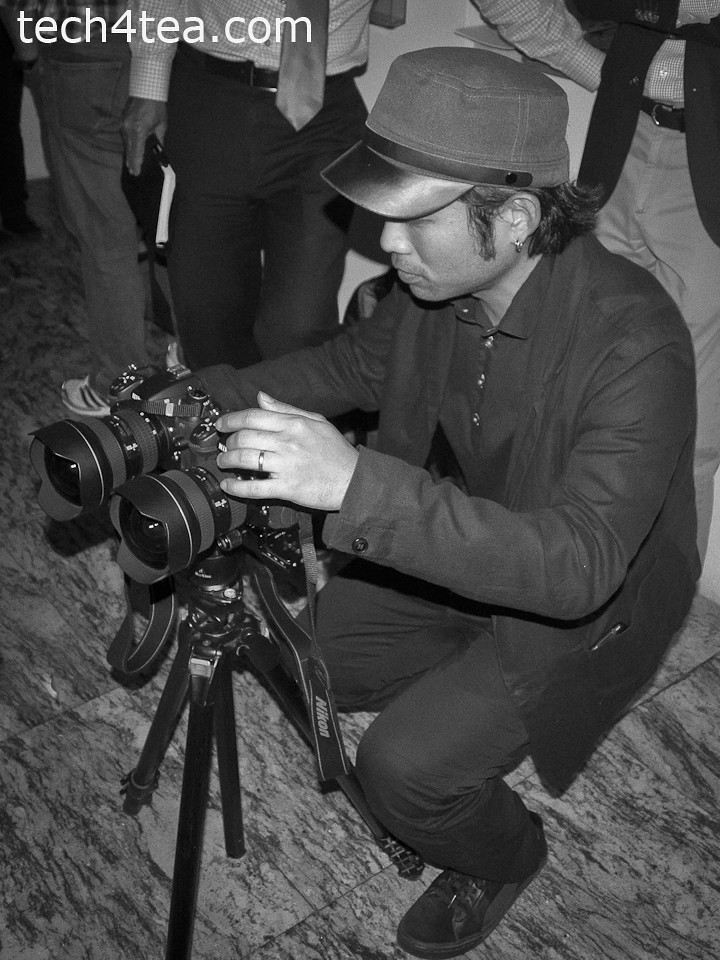
Each of the two cameras need to be aligned and adjusted manually for each shot.

Each of the two cameras need to be aligned and adjusted manually for each shot.

Each TV showcases a different set of imageries taken by award-winning Stefen Chow for the international Denis Group, a Singapore-headquartered company established in 1862 which is celebrating its 150th anniversary this year.

The stereoscopic imagery were taken using a pair of Nikon D7000 DSLRs mounted on a slider which allowed the distance between the two cameras to be varied whilst maintaining the carefully calibrated alignment between the two cameras.

The slider was in turn mounted on a tripod for stability.

The whole contraption was custom designed and built after a survey and evaluation by Chow found the quality of 3D pictures produced by consumer cameras inadequate for his liking.

Improvised twin-barreled 3D shooting rig.

Improvised twin-barreled 3D shooting rig.

He did not use the higher-end Nikon cameras because the minimum distance between the two lenses – when the two cameras were placed side-by-side – were bigger than that needed in certain shooting situations.

For each imagery, every setting (focus, white balance, exposure etc) had to be put on manual to ensure both cameras produced imageries with consistent focus and exposure – so that they could be merged into 3D imagery.

Chow told me that the time taken to set up the rig and prepare for the shot took at least 30 minutes. In all, he snapped more than 700GB of imagery for the project.

Who is Stefen Chow?

Stefen Chow, award winning photographer.Stefen Chow has been awarded in PDN, PX3 and was nominated for the PDN 30 and World Press Photo Masterclass.

Stefen has worked with Geo, Time Magazine, Wall Street Journal, Associated Press, Bloomberg News, Aurora Select, Cartier, Keppel Shipyard, Nikon and Shell International.

His works have been exhibited in cities including Los Angeles, Paris, Beijing and Singapore. He is an endorsed Nikon Professional with Nikon Singapore.

An accomplished adventurer, Stefen summitted Mount Everest, becoming one of the rare individuals to climb and photograph the mountain.

LG home theater systems for 2012

Tuesday, January 17th, 2012

LG integrates 3D Sound and Smart TV Technologies into four new 3D Sound home theater systems it introduced during CES 2012. The BH9420PW will hit Singapore stores from April 2012.

LG introduced four new home theatre systems for the year during CES 2012.

LG introduced four new home theatre systems for the year during CES 2012.

LG aims to draw synergy by combining its 3D Home Theater Systems with its CINEMA 3D Smart TVs.

The first of the four systems to launch, the BH9420PW incorporates LG’s own 3D Sound Zooming technology, which constantly synchronizes sound output with the location and movement of the on-screen 3D images on a CINEMA 3D Smart TV.

BH9420PW will hit Singapore stores from April 2012.

BH9420PW will hit Singapore stores from April 2012.

3D Sound Zooming is capable of generating variety of depth in sound based on a complex algorithm that analyzes the varying depth of numerous on-screen objects displayed on the 3D TV.

The immersive 3D sound is enhanced further by the BH9420PW’s 9.1 speaker system, which adds four Upright 3D Speakers to the 5.1 channels of a conventional home theater system.

The four Upright 3D Speakers pump sound upward, ensuring that the vertical space is completely filled with sound. Meanwhile, a 360º Reflector inside each of the Upright 3D Speakers reflects sound in all directions, creating acoustics as rich as those in a concert hall.

LG combines its 3D Home Theater Systems with its CINEMA 3D Smart TVs.

LG combines its 3D Home Theater Systems with its CINEMA 3D Smart TVs.

In addition, by applying LG’s unique 3D effect DSP algorithm, the Sound Field Expansion technology further expands the horizontal sound field, and works in harmony with the Upright 3D Speakers to create a truly immersive, 360º sound experience.

The audio “sweet spot” is further extended so viewers always feel as if they are right in the middle of the action, regardless of their location in a living room.

In order to provide viewers with a wide range of 3D experiences, the BH9420PW is equipped with a Smart TV function which provides access to LG’s Smart TV ecosystem – with a growing variety and quantity of 3D content through various premium content services and apps, such as LG’s 3D Zone.

LG unveils world’s largest 3D Ultra Definition TV at 84 inches

Sunday, January 15th, 2012

LG Electronics unveiled  the 84-inch 3D Ultra Definition TV at the International Consumer Electronics Show 2012. The TV is set to launch in Singapore in Q4 of 2012.

World's largest 3D Ultra Definition TV: LG's 84-inch 3D UD TV

World's largest 3D Ultra Definition TV: LG's 84-inch 3D UD TV

I had the chance to watch a few 3D movies on LG’s 47-inch 3D TV and was immensely impressed so I can only imagine what an 84-inch screen size would be like.

LG's 3D TVs come with some very stylish looking 3D glasses.

LG's 3D TVs come with some very stylish looking 3D glasses.

The 84-inch 3D Ultra Definition (UD) TV combines the Korean maker’s advanced 3D technology and Smart TV function with UD display technology, to break new ground in immersive 3D home entertainment.

LG’s 3D UD TV boasts superb picture quality with 8 million pixels, four times the resolution clarity (3840×2160) of existing Full HD TV panels.

Combined with LG’s Slim and Narrow Bezel Design, the 3D UD TV provides the most convincing 3D viewing experience currently available outside of a movie theatre.

3D Depth Control allows users to customize their viewing experience by controlling the amount of 3D effect, while 3D Sound Zooming provides users with 3D sound that rivals the output of home theater systems.

Via the display panel or LG’s new Magic Remote, users can access and navigate LG’s Smart TV ecosystem, which comprises over 1,200 apps and gives users access to a growing range of content services such as the 3D Zone where viewers can select from a wealth of 3D movies.

CES 2012 roundup: Sony gadgets for 2012

Saturday, January 14th, 2012

Here is a round-up of Sony’s electronic gadgets for 2012, as released during the Consumer Electronics Show (CES) 2012 in Nevada, Las Vegas, USA.

Sony's line-up for 2012 as announced during CES 2012.

Sony's line-up for 2012 as announced during CES 2012.

The CES is a chance for consumers to get a glimpse of the gadgets lining up to hit the market in the near to mid-term future.

Sony’s line-up for 2012 includes the new Handycam range; the Cyber-shot W-Series and S-Series; the NWZ-Z1000 series (Sony’s first ever Walkman powered by Android); and a new line-up of BRAVIA  televisions.

Here’s a list of these new products.

Handycam

Sony HDR-PJ760VE Full HD Flash Memory camcorder

Sony HDR-PJ760VE Full HD Flash Memory camcorder
  1. HDR-TD20VE Double Full HD 3D Flash Memory camcorder
  2. HDR-PJ760VE Full HD Flash Memory camcorder

New camcorder accessories

  • RDP-CA1 Portable Speaker
  • HVL-LE1 Battery Video Light
  • VCT-MP1 ‘Multipod’
  • 22MB/s SDHC Class 10 media cards
  • World’s first Balanced Optical SteadyShot for even more stable images while walking/zooming (HDR-PJ760VE)
  • Increased built-in projector models led by the HDR-PJ760VE capable of displaying 100-inch screen size (diagonal)
  • The world’s smallest and lightest 3D Handycam® (HDR-TD20VE)
  • Clearer dialogue with Auto Wind Noise Reduction and Closer Voice (both models)
  • By Pixel Super Resolution processing for high-resolution still images and Extended Zoom (both models

Cyber-shot

Cyber-shot compact digital cameras

Cyber-shot compact digital cameras
1. W-Series

  • W670
  • W650
  • W630
  • W620
  • W610

2. S-Series

  • S5000
  • All-round images with new 360 Sweep Panorama
  • SteadyShot image stabilisation for clearer handheld shots
  • Intelligent Auto mode recognises up to 33 scene settings for great results automatically
  • Picture Effect modes for easy in-camera effects

Walkman

Sony Walkman NWZ-Z1000 series

Sony Walkman NWZ-Z1000 series
NWZ-Z1000 series
  • First ever Walkman® powered by Android™
  • Unique ergonomic body design
  • Features the new S-Master MX digital amplifier which greatly reduces noise and distortion level in your music
  • A new distinctive W.BUTTON allows one to launch the unique W.Control app; allowing one to explore their music collection in an intuitive manner
  • Available in 8GB, 16GB and 32GB capacities

BRAVIA

Sony BRAVIA TV

SonyBRAVIA EX650-series LED LCD HDTV
  1. HX855-series LED LCD HDTV with 3D
  2. HX750-series LED LCD HDTV with 3D
  3. EX650-series LED LCD HDTV
  • Two distinct series –the flagship HX and the mid-level EX
  • Brilliant Full HD (1080p) picture quality with Dynamic Edge LED backlight
  • Picture qualities further enhanced with Sony’s X-Reality PRO and X-Reality digital video processors
  • They are Skype™ embedded, where users can enjoy free widescreen Skype-to-Skype video calls. Users can also make voice calls while simultaneously watching TV.
  • Sony’s HX855 carries forward Sony’s distinctive Monolithic design incorporating Gorilla® Glass by Corning®, allowing for thinner, lighter and stronger screen material.
  • Complete with X-Reality PRO and Motionflow XR 960, the HX850 is a fully Internet-connected television with built-in 3D, delivering a premium viewing experience when on, and a stunning addition to home décor even when off.