Posts Tagged ‘StarHub’

Maximising unused TV frequencies for wireless broadband communications

Saturday, August 11th, 2012

Utilising unused TV frequencies to provide wireless broadband connectivity increases the range and and penetration of coverage through foliage and reflective water surfaces that traditional Wi-Fi simply cannot penetrate.

Squeezing more more channels from the electromagnetic spectrum.

Squeezing more more channels from the electromagnetic spectrum.

Currently, the radio spectrum in the TV broadcast bands have been reserved for use by licensed broadcasters and are out-of-bounds for wireless broadband networks.

“Broadband connectivity is the ‘oxygen’ to today’s digital economy, and is fundamental to the wide adoption of cloud computing services that are already part of our daily lives, whether at work, home or play,” observed Jessica Tan, General Manager, Enterprise & Partner Group, Microsoft Asia Pacific.

However, much of these reserved radio spectrum remain unused and are called TV White Spaces (TVWS).

For instance, Singapore, Malaysia and Indonesia shares out the TV broadcast bands in the region and there are certain bands allocated to Malaysia and Indonesia that Singapore cannot use for TV broadcast.

If these TV White Spaces can be harnessed effectively for wireless broadband connectivity without interfering with the quality of TV broadcast, it will translate to better coverage, lower power consumption and reduced network costs.

“TVWS radio technology will create a new generation of wireless connectivity by unlocking these large, unused chunks of spectrum that will enable more ubiquitous and affordable wireless broadband for all,” said Tan.

The physical characteristics of the 700 MHz band (as compared to the higher-frequency 2.4 GHz and 5 GHz bands used by traditional Wi-Fi), for example, means that it can reach further, penetrate thick foliage, and transmit across reflective water surfaces with less interference.

In terms of bandwidth, however, both TVWS and Wi-Fi are capable of roughly 2Mbps per MHz. It is the penetrative and low-power attributes of the former that makes it an attractive supplement to the latter.

The spectrum as a precious commodity

Globally, explosive growth of wireless data traffic is putting a severe strain on today’s mobile and Wi-Fi network infrastructure, signalling the need for more efficient management of the spectrum, through policy and technology innovations.

The exploitation of TVWS turns unused TV broadcast frequency bands into premium wireless broadband delivery channels.

PC Show 2012 promotions: StarHub

Thursday, June 7th, 2012

StarHub will be at the PC Show 2012 at Suntec Singapore at Level 6, Hall 603.

Check out StarHub's PC Show 2012 promotions for mobile and fibre broadband, smartphones and tablets, as well as cable TV.

Check out StarHub's PC Show 2012 promotions.

Here are the flyers for StarHub’s PC Show 2012 promotions for mobile and fibre broadband, smartphones and tablets, as well as cable TV.

SingTel launches 4G service for smartphones

Monday, June 4th, 2012

SingTel officially launches Singapore’s first 4G service for smartphones and reins in data usage by reducing 12GB data limit.

Mr Yuen Kuan Moon, SingTel’s CEO Consumer Singapore briefing on the launch of the 4G services for smartphones.

Mr Yuen Kuan Moon, SingTel’s CEO Consumer Singapore briefing on the launch of the 4G services for smartphones.

SingTel is also introducing new Flexi and iFlexi plans with reduced data bundles from 1 July 2012.

From tomorrow (5 June 2012), customers who purchase a 4G-enabled handset with a SingTel Flexi and iFlexi plan will be able to enjoy the 4G service.

Three handsets will be available at launch: HTC One XL, LG Optimus LTE and Samsung Galaxy S2 LTE.

4G LTE network

SingTel’s 4G service will provide mobile Internet access that is up to five times faster than existing 3G-based smartphone services, with one-fifth of the network latency.

“We need to break away from the traditional one-size-fits-all approach, which is not sustainable in the long term. Today, 64 per cent of mobile data on our network is consumed by 10 per cent of our subscribers. This prevents the remaining 90 per cent from enjoying the full benefits of the network. With our tiered pricing model, subscribers will pay for what they use, and this ultimately allows us to keep prices for our plans the same over time despite rising network costs,” explained Yuen Kuan Moon, SingTel’s CEO Consumer Singapore.Users can enjoy theoretical download speeds of up to 75Mbps and typical download speeds between 3.4Mbps and 12Mbps.

SingTel will also introduce its Priority Pass traffic priority feature for the 4G service next year.

This will provide subscribers with priority for their data traffic when the network is loaded, thus ensuring smoother streaming and downloads.

Islandwide rollout of SingTel’s 4G network is expected to be completed in early 2013.

In areas where 4G has not yet been deployed, users will fallback to 3G connectivity with download speeds of up to 42Mbps.

Check the coverage diagrams at the end of this post to see when you will be enjoy LTE coverage.

Data bundle cutback

Data bundles for most of SingTel’s Flexi plans have been reduced drastically from 12GB to a range of 2GB to 12GB, although the number of bundled SMS has been increased.

“At the same time, heavy users will benefit from the significantly reduced excess usage rates. Data traffic on our mobile networks has been growing at 62 percent each year since 2010 due to the tremendous growth of smartphones, tablets and mobile content. By encouraging fair usage of the network, we will be able to deliver consistently high-quality services for our customers,” Yuen said.Charges for data usage beyond bundled allowances have been revised to $5.35 per gigabyte from 1 July to 31 December 2013, and subsequently to $10.70/GB from 1 January 2013.

Approximately 10 per cent of SingTel’s subscribers who are heavy SMS users will save from the new improved SMS bundles.

The plans will be available to all new and re-contracting customers from 1 July 2012, and will replace existing 3G Flexi and iFlexi plans.

So if you don’t want to relinquish the existing 12GB data bundle, you can let the existing contract run in perpetuity – but you’ll have to forego the handset subsidies that come with re-contracting.

Mr Yuen noted that based on current usage patterns, 90 per cent of subscribers should not incur higher charges, as their data consumption does not exceed the new bundles.

Read about StarHub’s response to SingTel’s launch below.

(more…)

New Android smartphone: LG Optimus Max

Tuesday, May 29th, 2012

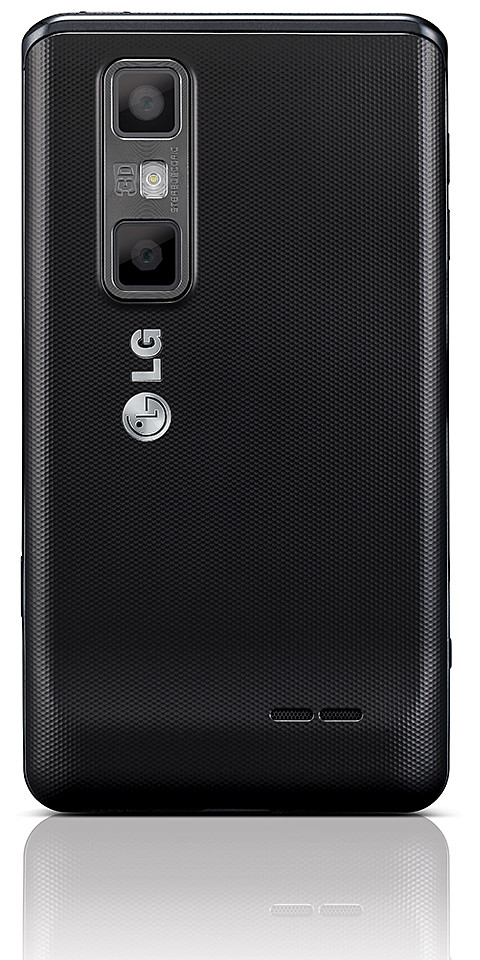
LG’s new Optimus Max boasts both glasses-free 3D features and smartphone performance. The smartphone is available at all StarHub and M1 stores at S$698.

LG Optimus Max, available from M1 and StarHub (S$698)

LG Optimus Max, available from M1 and StarHub (S$698)

Zoom in to examine the texture.

Following last year’s 3D smartphone, LG Electronics Singapore has introduced the Optimus Max, which is only 9.6 mm thin and weighs 148 grams.

The smartphone ships with Android 2.3 Gingerbread but will be upgraded to Android 4.0 Ice Cream Sandwich.

Its 3G network speed has been improved to HSPA+ 21Mbps.

Automatic setting changes create predefined tags that are customized to certain modes such as car-mode, office-mode or sleep-mode.

Depending on location, the predefined tags will automatically adjust various phone settings including Wi-Fi, bluetooth, GPS and sound volume.

Other features include:

  • HD Converter to offer HD quality on a TV connected through MHL (Mobile High-Definition Link), when transforming Open GL-based 2D games and applications to 3D and viewing Google Earth.
  • Range Finder which calculates the distance between the camera and the subject as well as the dimensions of an object through triangulation.
  • Out-focusing Shot which enhances camera quality beyond that of other smartphones through image processing using depth information.
  • Icon Customizer which allows the creation of personalized icons. Images can be selected from the gallery and can be used as icons or shortcuts for a personalized look.
  • Users can convert Google Earth, Google Maps and other road views into 3D using the enhanced 3D Converter.
  • 3D photos and videos captured by the Optimus Max can also be viewed in a single-screen mode in 2D, using the 3D Hot Key mounted on the side of the phone to easily toggle between 2D and 3D.

The main specifications are listed below.

(more…)

Affordable cloud backup for small and medium businesses

Tuesday, May 15th, 2012

Kronicles has launched, in Singapore, a new Backup-as-a-Service solution for small and medium businesses (SMB).

The solution includes both on-site and off-site backup and promises enterprise-class reliability and fast recovery at affordable subscription-based pricing starting from S$5,000 per month (before government subsidy).

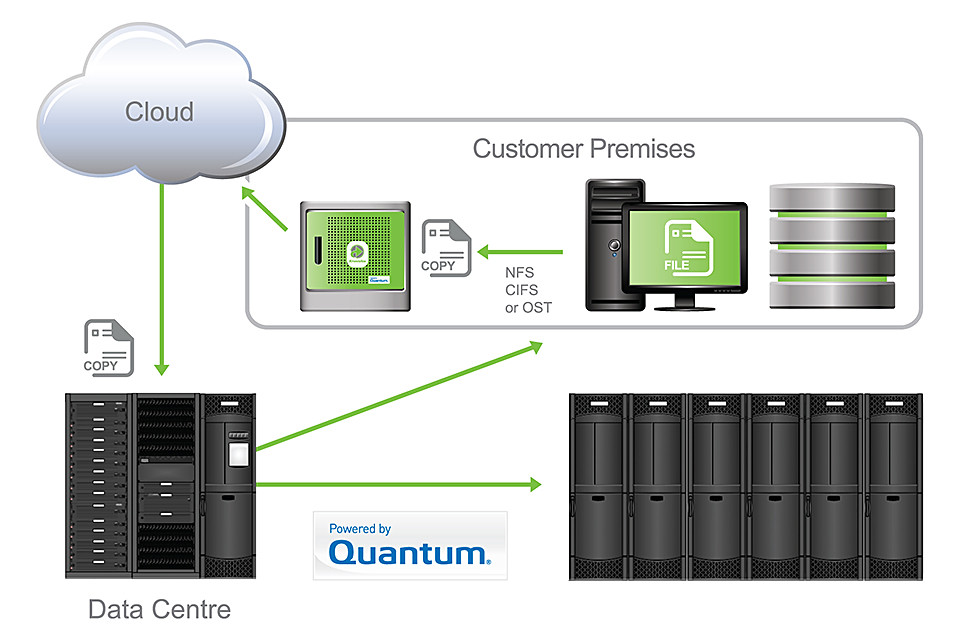
Kronicles BaaS includes both on-site and off-site backup.

Kronicles BaaS includes both on-site and off-site backup.

Only last week, I wrote about EMC’s “Disaster Recovery Survey 2012” which found that “81% of businesses in the Asia Pacific and Japan might NOT be able to recover lost data and systems in the event of a disaster”.

“71% of all organizations had lost data or suffered systems downtime in the last 12 months” – Vanson Bourne interview of 2,500 IT decision-makers.The results point to outdated backup and recovery infrastructure in businesses in Japan and the Asia Pacific.

Kronicles has come to the rescue with their new “Backup-as-a-Service” (BaaS), powered by technology from Quantum.

In the customer’s office, a POD (Periphery Onsite Device) backs up 30-days worth of data from a customer’s email and application servers.

The POD provides on-site backup for quick recovery.

The POD provides on-site backup for quick recovery.

The POD provides quick recovery of files over the local network, which is typically faster than an Internet connection.

Every day, during off-peak hours, data is copied over a dedicated link to Kronicles’ secure data facility for off-site protection.

In Singapore the data resides in-country within Starhub’s Tier 3 data center.

At the end of each month, Kronicles provides a copy of the data on an LTO tape, which can either be returned to the user or stored at a secure third=party location that can be returned on demand.

At any one time, there is a local copy of data for everyday operations, one stored on Kronicles’ cloud for business continuity, and one copy on tape for long-term archival.

Following today’s launch in Singapore, the service will be launched next in The Philippines and Malaysia.

Pricing

Three price packages are available. The basic Gold package – at S$5,000 per month – includes 200GB to 1TB of data backup, support for three to 10 Windows servers, up to 30-day history.

The Platinum package – at S$8,000 per month – includes 1TB to 2TB of data, three to 10 Windows servers, and up to 60-day history.

Customers with even more stringent requirements can discuss the Platinum Plus package with Kronicles.

Is the data secured? “Yes, data is encrypted with up to 256bit encryption when the data is ‘in flight’. At the data center itself, the data is not encrypted but protected,” says Pramotedham. The data on the back-up tapes are also not encrypted.A War Room for DR and BCP

Piti Pramotedham, Group CEO of Kronicles, described something that caught my attention during his presentation.

He described how a “War Room” can be set up in StarHub’s Media Centre should a customer’s premises be gutted by, say, a fire.

The customer, together with its partners, can set up shop in the War Room while their IT servers are re-constituted from the backup servers.

Is the data of one customer physically compartmentalised from that of another customer? “Yes, at the data center, it’s like a bank vault – so you see a whole wall of storage dedicated to one customer, separate from that of other customers,” say Piti.This can be completed in a matter of hours, after which, the customer and its partners can resume “business as usual”.

The aim is to suffer minimal disruption in times of disaster.

Pramotedham says that Kronicles insists that customers practise this once a year to ensure everything is well-rehearsed.

For SMBs that doesn’t yet have any Disaster Recovery (DR) and Business Continuity Plans (BCP), this is like having DR and BCP thrown in together with the BaaS.

4G network in Singapore as early as this year?

Monday, January 24th, 2011

Not so fast. In theory, it is possible to see 4G implemented in Singapore as early as this year. In reality, when we really see 4G take off in Singapore depends on many factors: roll-out by telcos, launch of smartphones and tablets by device makers, availability of compatible peripherals like dongles, and most important of all, applications to exploit the higher speed.

IDA announced its blueprint for the rollout of a 4G network in Singapore today. But don’t jump for joy yet – it is more a roadmap for early planning by the telcos to implement their versions of the network.

Logo of IDA4G refers to the fourth generation of wireless-mobile standards and can be five to 10 times faster than current 3G networks. Downloading a video will become real fast. Maybe you can play those mean bandwidth-hungry games on your smartphones too.



The two main announcements on the rollout of Singapore’s 4G network address the immediate term from now to 2015, and the subsequent landscape beyond 2015.

Between now and 2015

Today, five companies SingTel, StarHub, M1, QMax and PacketOne hold the rights to use the 2.3/2.5 Ghz spectrum for wireless broadband access. SingTel, StarHub and M1 also holds the rights to use the 900/1800MHz bands for 2G mobile services. In 2005, they had successfully bid for the right to use the spectrums until 2015.

IDA gave the go-ahead for these operators to offer 4G services using their eixsting radiofrequency spectrums. These Telcos can seek approval from IDA to do so and the approval could be completed in a matter of weeks.

IDA did not mention the 700MHz band although it is included in the 4G standard.

Beyond 2015

Beyond 2015, IDA is planning to re-allocate rights to the wireless broadband spectrum. IDA will hold an auction for six lots of 4G wireless spectrum rights next year.

“SingTel is exploring all options available and is working closely with network providers to ensure commercial LTE services can be introduced to our customers in good time,” said a SingTel spokesperson.Thus far, SingTel, StarHub and M1 have announced plans to roll out a 4G technology based on the Long Term Evolution (LTE) standard.

M1 has completed its LTE trials in April 2010 and will be upgrading its network to LTE in 2011.

A StarHub spokesperson said that StarHub is “currently conducting technical trials of LTE.”

4G networks have already been rolled out in the US and a few4G handsets have already been launched by some smartphone makers.

Use of the 4G network in Singapore will probably begin on laptops using dongles. 4G smartphones and tablets will only come later, probably in 2012, but more likely in 2013.

However, the main driving factor of WHEN a 4G network in Singapore will really take off depends on whether consumers or business users can find a compelling need to migrate from an already speedy 3G network to the new network, presumably at an increased cost.

The IDA has gotten off to a good start by laying down the blueprint early for all interested parties to plan their hardware and network investments, as well as to clarify the usage of the relevant spectrums.

The gauntlet is now thrown to the Telcos to work out the detailed standards and spectrum allocation, price plans and services to exploit the broader bandwidth.