Posts Tagged ‘Soccer’

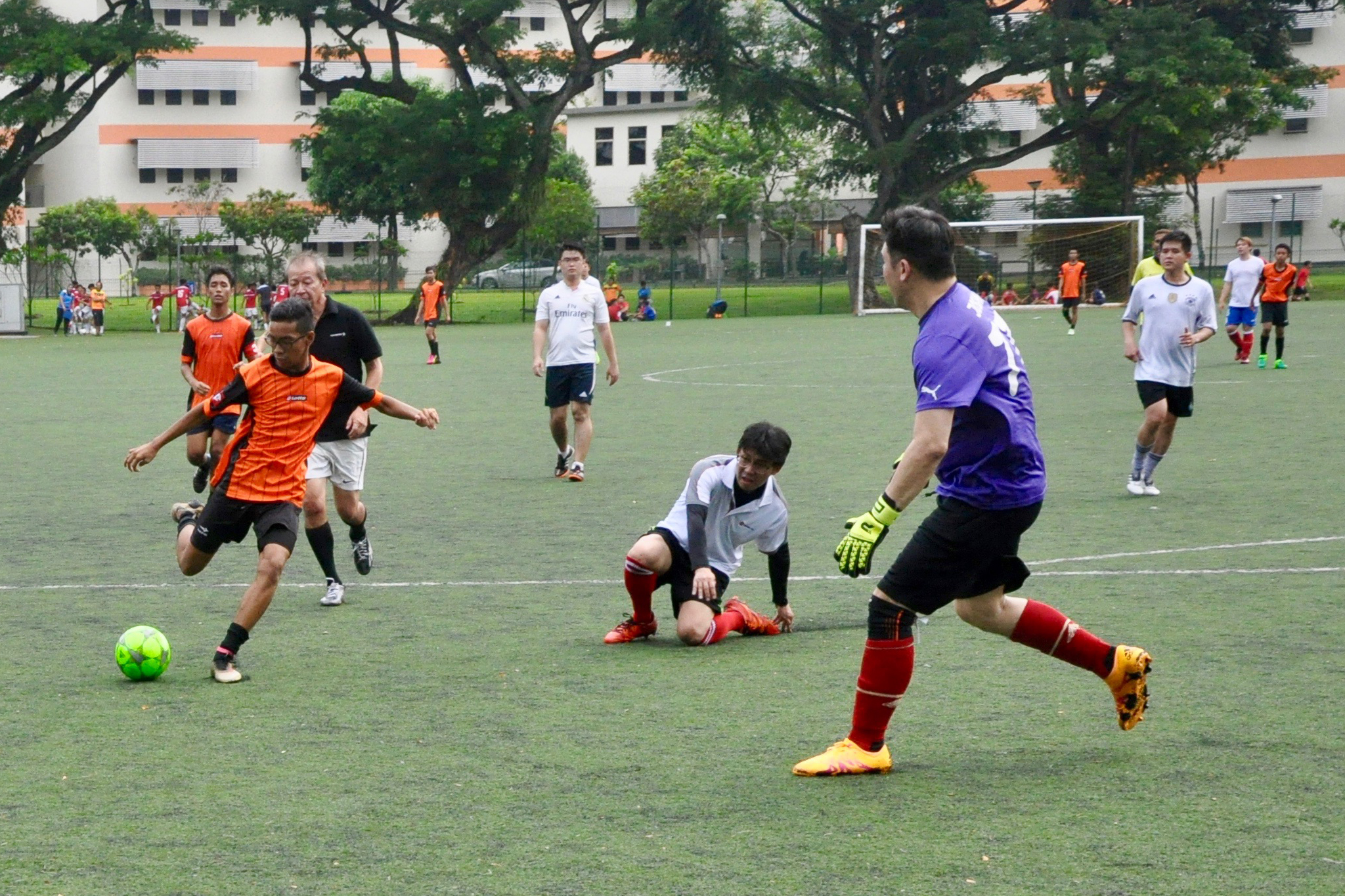
Fuji Xerox Singapore + Beyond Social Services charity soccer

Friday, September 15th, 2017

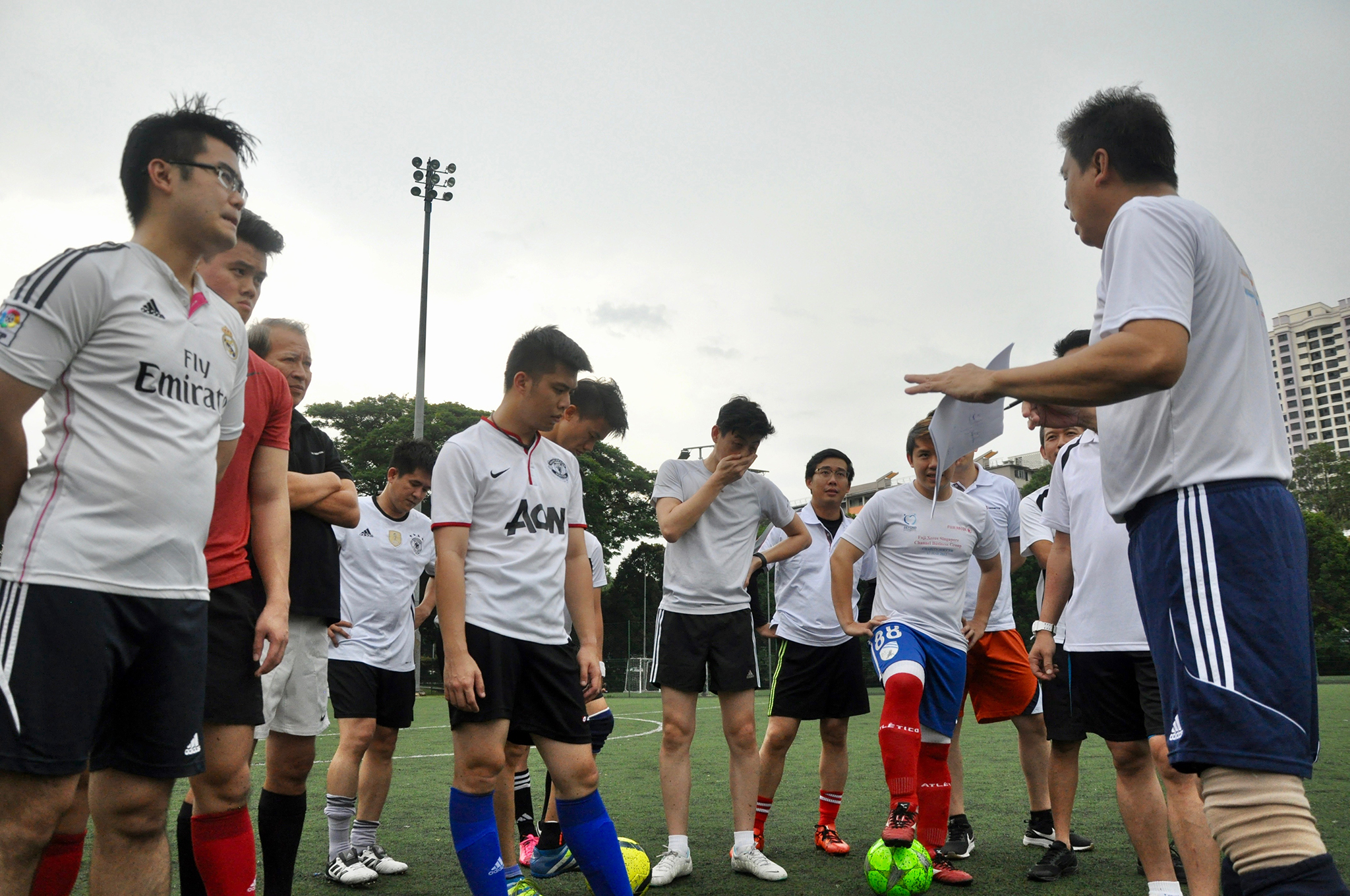
Fuji Xerox Singapore organised its annual Channel Business Group charity soccer event with its beneficiary, Beyond Social Services — a charity dedicated to helping children and youths from less privileged backgrounds.

Fuji Xerox staff vs a youths from Beyond Social Services.

Fuji Xerox staff vs a youths from Beyond Social Services.

The half-day event held at St Wildred’s Squash & Tennis Centre hosted a total of three teams, which are made up of both Fuji Xerox staff, and youths from the charity group.

With an air of light-hearted fun, the matches were not short of its own fiery competition from the participating youth teams vying for the winner’s place in a tournament style.

The team from Fuji Xerox staff.

The team from Fuji Xerox staff.

(more…)

Barclays Asia Trophy 2015: Online ticket sales from 13 May, 10am

Sunday, May 10th, 2015

Barclays Asia Trophy will be in Singapore for the first time in mid-July with two match days on 15 (Wed) and 18 (Sat) July. Arsenal, Everton, Stoke City and Singapore Select XI will be fielding their first team players for the tournament.

Update (18 July, 2015):

Arsenal has beaten Everton 3-1 in the finals of the Barclays Asia Trophy with goals from Theo Walcott, Santi Cazorla and Mesut Ozil.

Ross Barkley scored a consolation goal for Everton 15 minutes from the final whistle.

Legacy of the Barclays Asia Trophy 2015 - record crowds and funding for Singaporean football coaching. Premier League donates S$150,000 to Football Association of Singapore to fund second-stage Premier Skills programmes.

Legacy of the Barclays Asia Trophy 2015 – record crowds and funding for Singaporean football coaching. Premier League donates S$150,000 to Football Association of Singapore to fund second-stage Premier Skills programmes.

Petr Cech also made his debut for Arsenal after his 10million pound transfer from Chelsea.

In an earlier match, Stoke City clinched third place in the tournament by beating Singapore Select XI 2-0.

Update (15 July, 2015):

So Arsenal will be meeting Everton in the Finals on Saturday (18 July) while Stoke City will meet Singapore Select XI for the third-fourth placing on the same day.

Arsenal had beaten Singapore Select XI 4-0 in the opening match of the Barclays Asia Trophy 2015 while Everton edged out Stoke in the penalty shoot out after a goalless draw at the end of regulation time.

Arsenal’s 19-year-0ld striker Chuba Akpom scored a hat-trick while Jack Wilshere contributed with a goal from the spot.

Everton converted all of its five penalty shots while its goalkeeper Tin Howard managed to save the attempt from Stoke City’s Marco van Ginkel.

Ticket prices below.

Barclays Asia Trophy 2015, in Singapore Sports Hub on 15 and 18 July, 2015.

Barclays Asia Trophy 2015, in Singapore Sports Hub on 15 and 18 July, 2015.

The opening evening on Wednesday 15 July will see Singapore Select XI play Arsenal (6pm), and Everton versus Stoke City (8.30pm).

The third-fourth placing match (6pm) and Final (8.30pm) will be played on Saturday 18 July.

Tickets for 2 matches 15 July, Wednesday 18 July, Saturday
Category 1 S$145 S$155
Category 2 S$105 S$115
Category 3 S$60 S$70
Category 4 S$40 S$45
Category 4 (Child) S$25 S$28
  • Prices are inclusive of GST but subject to booking and delivery fees.
  • Children under the age of 3 do not require a ticket but cannot occupy a seat without a valid ticket.
  • Children’s tickets are available for those aged 3 to 12 years old and must be purchased in conjunction with an adult ticket.

Over 90,000 tickets will be available to the public to buy over the two match days and 70 percent of the tickets will be on sale for S$70 or less.

The cheapest adult ticket is S$40, while children’s tickets are available from S$25.

(more…)

SingTel mio TV launches mio TV GO app

Wednesday, July 31st, 2013

The new mio TV GO is mio TV’s companion app. It is free and is now available for download (for both Apple and Android devices).

Real time commentary and shout box as the match plays.

Real time commentary and shout box as the match plays.

mio TV GO includes features such as the ‘LIVE” streaming of selected mio TV channels, locally-produced shows to enhance the BPL-viewing experience, remote control function, and remote recording feature.

‘LIVE’ screening of ten channels including mio Stadium

The app will allow BPL subscribers on the mio TV platform to enjoy ‘LIVE’ streaming of three mio Stadium channels (Channel 102 -104), three mio Sports channels (Channel 111 – 113) and four Asian channels.

With mio Stadium, customers can catch ‘LIVE’ Barclays Premier League (BPL) matches on their mobile phones and tablets and enjoy a groundbreaking locally-produced studio show.

Catch ‘LIVE’ matches of UEFA Champions League, UEFA Europa League, Italian Serie A, Spanish La Liga and other football matches available on mio Sports.

Fans of Asian content can also watch Jia Le Channel, ETTV Asia, ETTV Yoyo and Jiangsu Satellite Channel on mio TV GO.

Content subscription fee of $5 per month will be waived till May 2014.

(more…)

SingTel mio TV unveils BPL stand-alone subscription @ $59.90

Friday, July 26th, 2013

SingTel says the majority of BPL customers unaffected. The existing mio TV Gold Packs are still available from SGD$64.90.

Football fans regardless of pay-TV platform can call the mio TV hotline on 1609 from Thursday, 1 August 2013 to subscribe; or they can get more information and register their interest at www.miotv.com.sg/bpl.

Football fans regardless of pay-TV platform can call the mio TV hotline on 1609 from Thursday, 1 August 2013 to subscribe; or they can get more information and register their interest at www.miotv.com.sg/bpl.

mio TV has unveiled its packages and prices for the upcoming season of Barclays Premier League (BPL) broadcast in Singapore, after MDA’s decision that mio TV does not have to cross-carry channels included in its BPL Gold Packs.

(more…)

Existing technology and setup is more than adequate to avert soccer controversies

Saturday, July 3rd, 2010

Dear Sepp Blatter,

The use of technology to help referees and umpires in their jobs is not new. Other sports like cricket and tennis have enlisted the help of technology to determine whether the ball has gone out of play.

Even a sport as traditional as Sumo Wrestling and as steeped in ritual has integrated the use of video replays into their refereeing workflow.

Sepp Blatter - FIFA President

Sepp Blatter - FIFA President

In Sumo, two wrestlers grapple with each other within a 4.55 m diameter circle, under the watchful eye of an umpire. The first to step out of the circle or have any part of his body (except his sole) touch the ground is the loser.

You can imagine how difficult it is for the umpire to spot when a body part of wrestler brushes the ground, especially if his line of sight is obscured by the bulk of the other wrestler. The task is made even more challenging when both hulks fall to the ground and the umpire has to ascertain which one’s body part touches the ground first.

As a result, the umpire in the ring is assisted by 4 other umpires sitting around the ring, plus another two sitting in a video room who watches video replays whenever there is any uncertainty about the outcome of a bout. One of the 4 ringside umpires is the Chief Umpire who has an audio link with the video umpires, and who makes the final decision based on discussion with the other umpires, and advice from the video umpires.

Most of the time, the umpire in the ring makes the call and there is little interference from the ringside umpires and the video room umpires. Only when there is a very close call and there is strong belief that the umpire in the ring has made a wrong call does the arbitration from the other umpires kick in.

I believe FIFA can very easily adapt this arrangement to Soccer. And the technical setup is already there to be tapped – even for the ongoing World Cup in South Africa.

Instead of having additional referees on the ground with Mark II eyeballs who are subject to the same constraints as the existing referees, put those two in a room with the existing commercial video feeds that are already being shot and broadcast to the rest of the world.

Work out two simple SOPs (standard operating procedures) for the group of referees umpiring the match:

  1. Identify the decision maker among the group, whether it should be the main referee on the pitch, or to appoint one of the two video room referees when a controversial incident occurs.
  2. Delineate the types of occurrence to trigger a video referee interference. I’ve prioritised a list here and FIFA can decide which of these to be allowed to trigger interference:
  • Goal (whether the ball crossed the goal line)
  • Offside (when a goal is involved)
  • Infringements resulting in a goal (handballs, fouls etc)
  • Violent fouls, diving
  • Off-the-ball incidents

For a start, the interference could be limited to the first two types of controversies. For most of the match, there is no need for any interference. Some matches might not even result in any interference at all.

With the availability of video feeds, the setup would not incur much cost or effort, and it should not be difficult or time consuming to resolve a controversial occurence. The existing instant replays soccer fans watch today over the air is usually good enough to illustrate whether the referee made a terrible decision.

Mr Blatter, take a courageous step. Just do it. Don’t wait till after this World Cup. You never know what might happen during the semi-finals and the Final. Let soccer fans enjoy the game for its brillance and fair play, instead of suffering the frustration and outrage of injustice.
Is it a question of technology?

Friday, July 2nd, 2010

For a long time now, people in the soccer community have been wishing for the introduction of some form of technology to help referees on the pitch avoid major refereeing mistakes that can change the course of the game being played, or simply change the final score of the game.

Oh my God!

Lampard's legitimate goal was not awarded

Up till the ongoing World Cup tournament in South Africa, the landmark refereeing oversight has been the goal scored by the “hand of God”. Based on video and photographic evidence, Maradona, one of the best players in the game’s history had pushed the ball into the net with his left fist. The referee, who did not see the infringement, allowed the goal, which allowed Argentina to take a 1-0 lead over its opponent, England. Argentina then went on to win that quarter-finals match 2-1 and eventually won that World Cup in 1986.

FIFA, the world governing body of the game, has inexplicably resisted calls to introduce some form of technology to avert such mistakes. Suggestions include the use of video-playbacks, goal-line technology and embedded chip in the ball. Some even believe the reluctance could stem from the desire to keep soccer interesting by ensuring there is no lack of such controversies.

This world cup has had its share of such controversies. France managed to secure its place in S Africa at the expense of Ireland during a playoff match. Thierry Henry, the captain of the French team handled the ball illegally during the build-up to the scoring of the deciding goal by William Gallas, another French player.

In a single day on 27 June, both the quarter-finals match involved goal controversies which the victims believed played a significant role in their eventual loss of their matches.

In the England vs Germany match, Lampard’s shot at the German goal clearly crossed the goal line after it bounced off the cross-bar, before it bounced out of the goal again. It happened in a split-second and I don’t blame the referee for missing it. But live video replays showed millions of viewers worldwide that it clearly should have been a goal. England naturally believes if that goal had been rightfully awarded, they would have played the match differently and possibly could have won the match eventually.

In the Mexico vs Argentina match, the opening goal by Argentina’s Carlos Tevez should have been disallowed because he was offside – an infringement whereby the player is nearer to the opponent’s goal than any of the opponent’s players (except the goalkeeper) at the time the ball is passed to him. Video replays around the stadium showed clearly that Tevez was indeed offside and the Mexican players naturally remonstrated with the referee to nullify the goal. The referee, despite consulting with his assistant referees, allowed the goal and Argentina went on to score two more goals to win the match eventually.

If you ask me, I don’t blame the referees at all. Some of these infringements happen in the split of a second and it is entirely possible for the referees on the ground to miss it – since they are only human and they have to keep watch in many directions at once and sometimes from a distance. And I’m not sure they are encouraged to change their decisions based on video replays since the practice is not officially sanctioned.

Is it really impossible to eliminate these controversies? Is it really a question of technology? I provide some suggestions to Sepp Blatter, President of FIFA, in my next post tomorrow.