Posts Tagged ‘smartphones’

New Android app: CanonSGLens

Thursday, August 16th, 2012

The Android version of the free CanonSGLens app is now available on Google Play.

The free CanonSGLens app is now available on both iOS and Android.

The free CanonSGLens app is now available on both iOS and Android.

The Android app features detailed lens specifications of all 66 Canon EF and EF-S lenses sold in Singapore with a unique interactive simulator that allows users to compare the field of view of two camera-lens combinations.

CanonSGLens Android app on Google Play.

CanonSGLens Android app on Google Play.

It also contains interactive educational content about depth of field and exposure, which is useful for DSLR users, whether they are beginners, amateurs or professionals.

The CanonSGLens for Android app now comes with 7 new lenses for users to test out. It is compatible with smartphones and tablets running Android 2.1 and up.

Canon Singapore first launched the CanonSGLens app for DSLR users as an iOS app on 22 December 2011.

Based on monthly averages, the app has been in the top 50 downloads for iPads and top 100 downloads for iPhones in the Photo and Video category.

(more…)

TODAY! Xperia ion, Xperia go and Xperia acro S arrive in Singapore

Friday, August 3rd, 2012

Sony Mobile Communications today announced the official launch of the three Android smartphones in Singapore. The Xperia ion (S$798), Xperia acro S (S$698) and Xperia go (S$488) are available from today.

The Sony Xperia ion, Xperia go, and Xperia acro S are available in Singapore from today at all Sony stores, Sony centres, Xperia concept stores and operator stores.

The Sony Xperia ion, Xperia go, and Xperia acro S are available in Singapore from today at all Sony stores, Sony centres, Xperia concept stores and operator stores.

The Xperia ion is Sony Mobile’s new flagship smartphone and offers a brilliant HD experience on a large 4.6-inch screen.

The Xperia go and Xperia acro S are water and dust resistant.

Sony Mobile RRP Colours
Xperia ion S$798 Black
Xperia acro S S$698 Black and White
Xperia go S$488 Black, White and Yellow

* Prices do not include line contract.

These three smartphones were among six that Sony Mobile showcased in Singapore back in June.

BlackBerry Mobile Fusion available in Singapore

Friday, July 20th, 2012

BlackBerry Mobile Fusion is RIM’s next-generation mobile device management solution for Government and Business Customers in Singapore.

It promises to be a secure, reliable, and scalable solution to easily manage BlackBerry, iOS and Android devices.

From left, Ian Gardner, Director, Enterprise Sales, RIM; and Charles Dufourcq, Director, Singapore, RIM sharing the advantages of BlackBerry Mobile Fusion

From left, Ian Gardner, Director, Enterprise Sales, RIM; and Charles Dufourcq, Director, Singapore, RIM sharing the advantages of BlackBerry Mobile Fusion

BlackBerry Mobile Fusion consolidates the management of smartphones and tablets running BlackBerry OS (which includes BlackBerry PlayBook and future BlackBerry 10 devices) as well as Android and iOS.

“For businesses and government, managing a mix of mobile devices on any scale is chaotic. Organizations face pressure to allow employees to bring their own devices into the workplace,” said Charles Dufourcq, Director for Singapore at Research In Motion.

BlackBerry Mobile Fusion provides a single, unified, web–based console to manage the wide range of mobile devices that the employees of an organisation may bring and use for work.

BlackBerry Mobile Fusion integrates the market-leading features and security architecture of BlackBerry Enterprise Server (version 5.0.3), providing advanced IT management and controls, a single outbound security connection (256-bit AES encrypted “BlackBerry VPN”), enforceable IT policies, support for BlackBerry Balance technology, and over-the-air app and software installation capabilities for the management of BlackBerry smartphones and PlayBook tablets (as well as future BlackBerry 10 devices).
(more…)

New Android smartphone: LG Optimus 4X HD

Wednesday, July 18th, 2012

LG will debut its first Quad-Core smartphone in Singapore on 28 July. The Android 4.0 smartphone has an RRP of S$738 and comes with a free leather case, while stocks last.

LG Optimus 4X HD Android smartphone, available on 28 July, 2012.

LG Optimus 4X HD Android smartphone, available on 28 July, 2012.

The Optimus 4X HD runs on NVIDIA’s 4-PLUS-1 Quad-Core mobile processor – the Tegra 3. This is the same processor that is used in powerful tablet computers.

Key Specifications
OS Android 4.0 (ICS)
Screen 4.7″ IPS
Resolution 1280 x 720
Battery 2,150 mAh
Processor 1.5 GHz Quad-core NVIDIA Tegra 3
Camera Rear: 8mp
Front: 1.3mp
Video 1080p
Memory Int: 12 GB
Ext: 64 GB microSD
Size /mm 132.4 x 68.1 x 9.19
Weight 141 g
Price S$738

The 1.5GHz Tegra 3 automatically activates all four cores when maximum power is needed but defaults to a fifth, battery-saver core when less power is required, such as during standby mode or music playback mode.

The Optimus 4X HD has a large 4.7-inch IPS display with a high resolution of 1280 x 720 pixels, giving a high pixel density of 313 ppi.

The 16:9 Stripe RGB IPS Panel offers sharper and crisper text. The smartphone also comes with a huge 2,150mAh battery.

The LG Optimus 3.0 UI includes QuickMemo which lets users instantly jot memos or notes from any screen, without having to open a separate application.

The smartphone also comes with MediaPlex, which combines a range of functions to enhance image and video playback such as Fingertip Seek and Live Zooming.

MediaPlex also includes Time Catch Shot, which allows one to select and save the best shot among the images taken just before the shutter button is depressed.

Norton Mobile Survey 2012: Greater awareness of mobile security needed

Friday, July 13th, 2012

The ownership and use of mobile phones to access the internet and stay connected is fast catching up with the use of computers.

Yet, the awareness of mobile security remains wanting compared to the relative maturity in security awareness for general computer usage.

David Freer, Vice President, Consumer, Asia Pacific and Japan, Symantec

David Freer, Vice President, Consumer, Asia Pacific and Japan, Symantec. Photo taken on a mobile phone.

I was briefed on the results of the Norton Mobile Survey this morning at their offices at Suntec Singapore. A summary of the detailed numbers can be found at the end of this post. Here’s how the survey was conducted.

Ownership and use of mobile phones fast catching up with computers.

Mobile phone Computer
Ownership 91% 92%
Access Internet 88% 69%

This was the same survey which found that “76% of Internet users in Singapore would rather forgo US$1million than give strangers unlimited access to their computers”.

What stood out from the numbers was the disparity between the greater dependence and use of our mobile phones on one hand (see sideboxes), and on the other hand the lagging level of mobile security in their usage.

So we’re doing an awful lot of things on our mobile phones – pretty much the same sort of things we do on our computers – in terms of accessing the Internet and staying connected. (And snapping the cover photo for this article.)

Need for greater awareness of mobile security

Yet almost half of the mobile users in Singapore do not take the simple step of using passwords to protect their phones, even though 61% of Singaporeans acknowledge that mobile threats are real.

What do people actually do on their mobile phones?

Social networking 57%
Read the news 55%
Online messaging 39%
Mobile banking/payments 27%
Location-based tasks, including navigation 25%
Online shopping 19%

In addition, some 30% are not aware that they can remotely track their phone using GPS navigation software.

Is it because we’re still trapped in the age when mobile phones were less capable and we were less dependent on them – and therefore had little to lose if a mobile phone was lost or stolen.

You know, when we had feature phones, the most painful thing about losing the phone was the loss of the contacts on them, and the hassle of having to replace them.

Viruses and malware for feature phones were almost unheard of.

US$1million for complete access to your computer?

US$1million for complete access to your computer?

Now, your smartphone can store a substantial trove of precious PERSONAL photos and videos, work-related documents and apps that access your stockmarket transactions.

The survey found that for the one in three Singaporeans who have had their mobile phone stolen/lost, most of them (78%) mentioned that losing their contact information was the worst part of the experience, with 52% feeling their privacy had been invaded.

To resolve their lost/stolen phone situation, two in three Singaporeans had paid an average of S$424.

The survey found that three in five Singaporeans would rather pay a ransom S$273 to get your phone back.averaging S$273 in order to resolve their lost/stolen phone problem – assuming they were offered the chance.

This is almost double the S$148 “ransom” that half of those surveyed in LAST YEAR’s study were willing to pay.

Dark cloud arising

“Singapore is a very tech savvy nation that is hugely mobile and connected,” said David Freer, Vice President of Norton for Asia Pacific & Japan.

Personally, I believe the concern with lost contact information will diminish rapidly with the convenience of syncing contact and calendar information with cloud-based services, such as iCloud and Google.

These cloud services allow you to reinstate contact lists and calendars in a new smartphone in a matter of minutes.

On the other hand, the tight coupling between the smartphones with cloud services bring with it a much greater problem.

“With greater connectivity to the Internet through mobile devices, cybercriminals are increasingly targeting this platform.

With so much valuable and personal information residing on our mobile devices, mobile users need to have the right security measures in place – both a reliable mobile security solution and personal diligence to back up important information,” added Freer.

By serving as gateways to access huge repositories of information on the cloud, people who lose their mobile phones stand to lose much more than just what’s physically stored on the phone itself.

It’s akin to losing a wallet full of cash viz-a-viz losing a wallet full of cash and a couple of credit cards.

So, if you haven’t enabled remote locking or wiping, anyone losing their phone would also need to change the passwords of all the online services the phone and its apps has been authorised to access.

Emails accounts, Facebook/Twitter accounts, Dropbox are but a few that immediately pop into mind. How many of these can you recall off the top of your head, and in the heat and stress of having realised you’ve just lost your phone?

Norton Mobile Security

Norton Mobile Security for Android devices addresses some of today’s most common mobile issues, including device loss and data protection.

Norton Mobile Survey 2012Norton Mobile Security has anti-theft, anti-malware, locate and remote wipe features.

Norton Mobile Security Lite is available for free in English on the Google Play Store.

For users seeking additional protection, there is the option to upgrade to the full featured Norton Mobile Security for an annual subscription of S$19.90.

Versions for iOS and Windows Phone will be released later this year.

Below is a summary of the main findings of the Norton Mobile Survey 2012.

(more…)

Game-changing technology: wearable unified displays with scalable imagery

Sunday, July 8th, 2012

In a time when new technology and gadgets are launched everyday, and every one of their makers proclaim them to be game-changers, it is truly heartening to see products showcasing technology that has genuine potential to become a game changer in the near future.

Wearable video displays are an example. The Epson Moverio and Google Glass are examples of such gadgets.

Wearable unified displays can be used everywhere and for any purpose in the future, here an aircraft engineer has his hands free while referencing his technical manual through an Epson Moverio.

Wearable unified displays can be used everywhere and for any purpose in the future. Here an aircraft engineer can have his hands free (if he clips the controller to his overalls) while referencing his technical manual through an Epson Moverio.

In my humble opinion, there are two main constraints in consumer devices that represent frontiers in product developments for gadget makers.

Google Glass was showed off by co-founder Sergey Brin (not in this picture) at the Google I/O conference in June.

Google Glass was showed off by co-founder Sergey Brin (not in this picture) at the Google I/O conference in June.

These are display technology and device input.

What defines a smartphone and a tablet, laptop and a laptop, or even a television and even the cinema?

It is the size and form factor of the device.

Apart from the backend processor and performance, a large determinant of their category is simply their screen size.

If it’s a 3-5 inch device (with 3G connectivity), it’s a smartphone. 7-10 inch flat screen (with or without 3G), it’s a tablet (used to be netbook not too long ago).

Beyond that, you have the 13-17 inch notebook computer, and still beyond that – the desktops with even bigger screens.

Sony HMZ T1 Personal 3D Viewer

Sony HMZ T1 Personal 3D Viewer

Need we go into the numerous sizes for TVs, projectors and erm – cinemas?

A large determinant of device portability and usability – which often run counter to each other – is the size of the display.

Greater portability results in more squinting, whereas nice expansive viewing pleasure means bigger heavier screens.

A viewer/display device that allows the user to divorce display size from processing hardware will free the user from having to own multiple devices with different form factors.

Imagine the ability to make calls, read ebooks, play games, work on documents or edit images/video, watch the equivalent of large-screen movies on a single viewer/display.

Wanna look like an X-men? Try the Cyclops look.

Wanna look like an X-men? Try the Cyclops look.

No need to purchase separate bulky devices with their own different-sized displays.

You’d still need to have the little black-boxes containing the different processing hardware and device input.

But imagine sharing the same viewer/display amongst all these devices.

All of them “plug” into the same viewer/display.

There’s no more difference between a smartphone and a 3G-capable tablet computer.

Cameras and camcorders could also pair up wirelessly.

Although the device closest to bringing this to reality is the mounted-visor display/viewer, I’m sure there’ll be other physical means and ways to achieve this “unified display”.

Olympus has just announced its wearable display prototype - MEG4.0.

Olympus has just announced its wearable display prototype – MEG4.0.

Eventually, I can envisage (pun intended) displays embedded in contact lenses or even implanted into the cornea of the eyes.

In fact, patents have already been filed for such designs.

I haven’t seen any patents that bypass the eyes and inject vision signals directly into the brain though.

In a way, nature already unifies human vision through our eyes. We do not put on a different set of eyes to see different things.

The Olympus MEG 4.0 promises to connect to devices via Bluetooth.

The Olympus MEG 4.0 promises to connect to devices via Bluetooth.

Everything we see are through the same pair of eyes.

Why should we require a different screen to view the contents of different devices?

Now this single unified display may not be good news to device makers, although it surely should be the dream of consumers – even if we may not realise it yet.

Surely it’s better to be able to sell a single user multiple devices with different screen sizes if his/her needs forces him/her to do so.

Many users today own separate tablets and smartphones.

Sony HMZ T1 Personal 3D Viewer

Sony HMZ T1 Personal 3D Viewer

Apple, for instance, would rather sell you an iPhone AND an iPad, than only a single mobile device that “throws” its display into a single viewer with a “scalable” image size.

Google Glass with augmented reality.

Google Glass with augmented reality.

I’m sure it isn’t even news to the makers.

It’s a bit akin to traditional airlines offering budget flights.

Why introduce new budget services – even though it would benefit customers – that will change the game and threaten their erstwhile profitable business?

Fortunately, we have entrepreneurs who have broken the ranks to offer such choice to budget travellers.

A closer analogy would be the way netbooks had cannibalised the mainstream laptop market.

Sony HMZ T1 Personal 3D Viewer

Sony HMZ T1 Personal 3D Viewer

We have Asus to thank for “creating” the netbook niche to bring affordable and no-frills portable computing to the masses.

The Epson Moverio and Google Glass are not the first such device on the market, and in their current form are not mature enough for mass adoption by consumers yet – in terms of usability and feature-set, as well as content and consumer readiness.

But hopefully it precipitates more momentum to force makers to get on the bandwagon.

The other frontier

The other “physical constraint” to device form-factor is input interaction, a large part of which is text-input.

The size of screen again comes into the picture again if an on-screen keyboard is used.

And if a physical keyboard is used – be it a BlackBerry style keypad or a bigger portable keyboard – it translates into the overall form factor of the device.

Voice-input represents a means to free a device from a physical or on-screen keyboard, and even provide interactivity – through voice commands and voice search.

It’s also still early days and much development is needed before we can enjoy keyboardless devices

But as consumers and end-users, we can always dream on.

* Photos and illustrations used in this article belong to Epson, Google, Sony, and Olympus.

窥探一下未来的显示浏览器。如今已有一些头目。譬如:Epson Moverio BT-100, Google Glass, Sony HMZ T1 Personal 3D Viewer, Olympus MEG4.0。希望有朝一日,能够只凭一个显示机利用多种电子设备器材。

New Android smartphones: Samsung Ace 2 and beam

Tuesday, July 3rd, 2012

Samsung has launched two new Android 2.3 (Gingerbread) smartphones. Both the GALAXY Ace 2 (S$438) and GALAXY beam (S$648) will be available in July. Prices include GST but excludes line contract.

GALAXY Ace 2 (left, S$438) and the GALAXY beam (right, S$648).

GALAXY Ace 2 (left, S$438) and the GALAXY beam (right, S$648).

You’ve seen the Nikon compact camera that comes with a built in projector. Now there is a smartphone that comes with a built-in projector – the GALAXY beam.

GALAXY beam

The built-in projector of the GALAXY beam lets users spontaneously share photos, videos or other digital media with family or friends by beaming content stored on the device directly onto walls, ceilings or improvised flat surfaces.

The GALAXY beam comes with a built in 15 lumens projector.

The GALAXY beam comes with a built in 15 lumens projector.

No need to huddle around a tiny smartphone or tablet screens. Project full-screen video clips at up to 50 inches wide with the GALAXY beam’s bright 15 lumens projector.

Both smartphones run on Android 2.3 (Gingerbread) and will ship in July.

Both smartphones run on Android 2.3 (Gingerbread) and will ship in July.

Other than that, the GALAXY beam has a 4-inch (480×800 WVGA) TFT display, 5-megapixel AF rear camera with flash, and a 1.3-megapixel front camera.

A large 2,000mAH battery feeds the projector. Despite having a built-in projector, the GALAXY Beam is only 12.5mm thick, and comes with a USB 2.0 port and 8GB of internal memory, as well as a microSD slot for up to 32GB of external memory.

The GALAXY beam will be available from 7 July at S$648.

GALAXY Ace 2

The GALAXY Ace 2 is the affordable successor to the GALAXY Ace from last year.

With a 3.8-inch (480×800 WVGA) PLS TFT display, it has a 5-megapixel AF rear camera with flash, and a VGA front camera.

The GALAXY Ace 2 has a 1,500mAH battery and comes with a USB 2.0 port and 4GB of internal memory, as well as a microSD slot for up to 32GB of external memory.

The GALAXY Ace 2 will be available in July at S$438.

New Android smartphones: Sony Xperia ion and neo L

Wednesday, June 20th, 2012

Sony Mobile has unveiled another two new Android 4.0 (Ice Cream Sandwich) smartphones. The Xperia ion takes over the flagship role from the Xperia S, while the Xperia neo L is a follow-up to the Xperia neo V.

Both smartphones will be available in Indonesia, Malaysia and Singapore in calendar Q3 2012.

New flagship from Sony Mobile: Xperia ion; and the Xperia neo L.

New flagship from Sony Mobile: Xperia ion; and the Xperia neo L.

The Xperia ion and Xperia neo L were launched today as part of Sony Mobile’s South East Asia debut of a slew of six new Xperia smartphones.

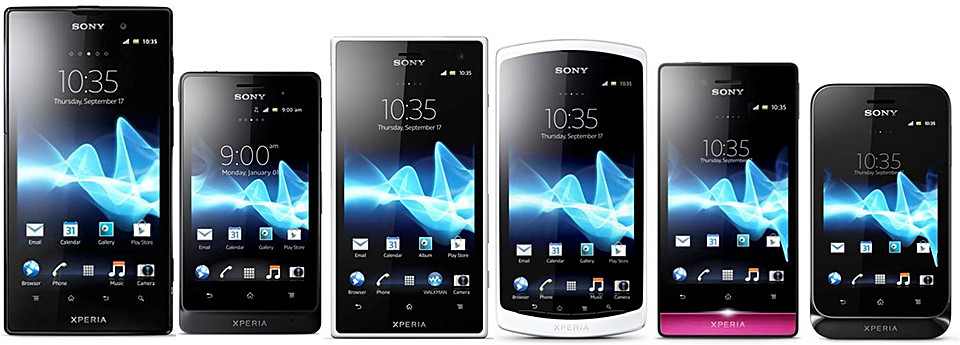
The Xperia ion and Xperia neo L are part of a slew of six that debuted in SE Asia today. From left: Sony Xperia ion, go, acro S, neo L, miro, and tipo.

The Xperia ion and Xperia neo L are part of a slew of six that debuted in SE Asia today. From left: Sony Xperia ion, go, acro S, neo L, miro, and tipo.

The other four phones were the Xperia go, Xperia acro S, Xperia miro and Xperia tipo.

They had been unveiled progressively over the past two weeks.

The Xperia ion has a massive 4.6-inch display (1280 x 720 pixels on a 16-million colour TFT), and a high-capacity embedded 1,900mAH battery.

Both the rear (1080p) and front (720p) cameras are HD capable.

The 12-megapixel rear camera boasts a quick sleep-to-snap speed of just over a second via a single key press.

The Xperia ion will be available in black in Singapore; and in black and red in Malaysia and Indonesia.

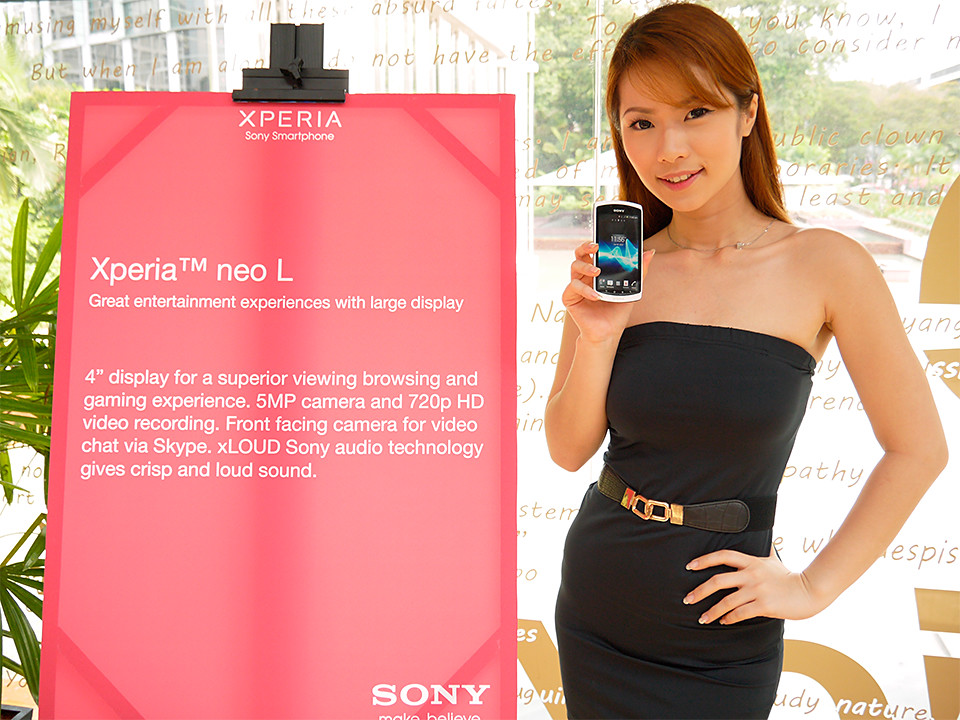
Sony Xperia neo L

Sony Xperia neo L

The Xperia neo L has a 4-inch display (480 x 854 pixels on a 16-million colour TFT), a 5.1-megapixel (720p) rear-camera, VGA front camera, and a 1,500mAH battery.

It has a sleek curved back design and glossy finish; and incorporates Sony’s xLoud technology for crisp and loud sound.

The Xperia neo L is available in Singapore, Malaysia and Indonesia in both black and white.

The tech specs for the Xperia ion and Xperia neo L can be viewed/downloaded below.

(more…)

Event: Sony Mobile debuts six new Xperia Android smartphones for South East Asia

Wednesday, June 20th, 2012

The six new models are: Xperia go, acro S, miro, tipo, ion, and neo L. The first four models were announced over the last two weeks, while the Xperia ion and neo L were unveiled today.

All six phone models will be available in Indonesia, Malaysia and Singapore in calendar Q3 2012.

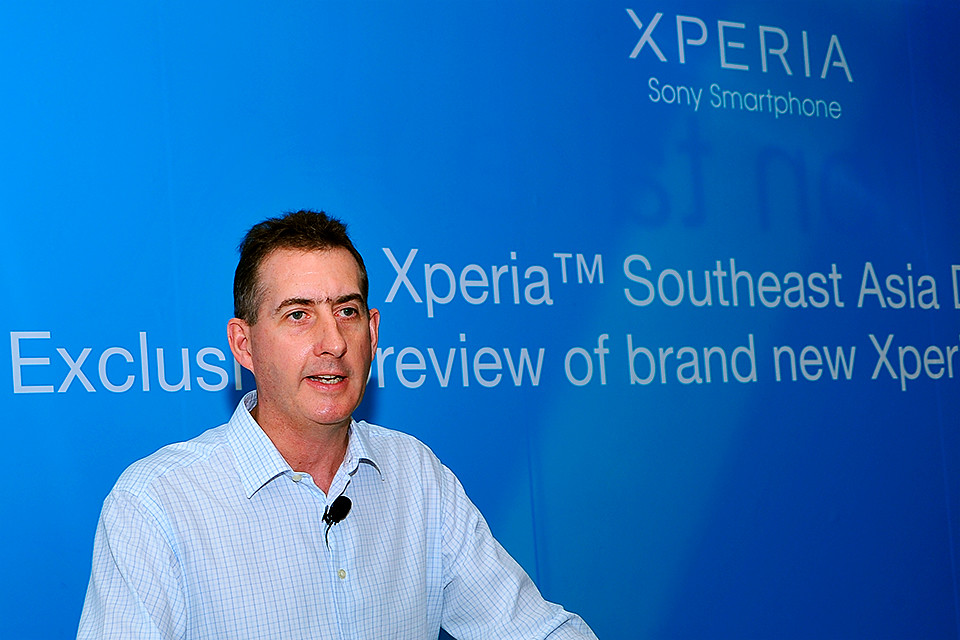
Mathew Lang, Corporate Vice President and Head of SEA & Oceania Customer Unit, Sony Mobile at the event at Art Palates Café, Istana Park, Singapore.

Mathew Lang, Corporate Vice President and Head of SEA & Oceania Customer Unit, Sony Mobile at the event at Art Palates Café, Istana Park, Singapore.

The Xperia ion is the new flagship smartphone for Sony Mobile.

Its 4.6-inch display is bigger than that of the 4.3-inch in the previous flagship Xperia S.

Water resistant Sony Xperia acro S. Don’t try this at home.

Water resistant Sony Xperia acro S. Don’t try this at home. Photo taken with Panasonic LUMIX DMC-GF5.

The Xperia ion also includes a microSD card expansion slot for up to 32GB – which was absent in the Xperia S.

The Xperia go and Xperia acro S are stylish, durable and water-resistant.

They are supposedly water-proof up to a depth of 1m.

The Xperia miro offers deep Facebook integration and features Sony’s xLOUD audio technology together with the Xperia neo L.

The Xperia tipo comes in both single and dual SIM versions.

The latter allows one-touch switching between two numbers through a dedicated network switch button on the phone.

All six models either ship with Android 4.0 installed or can be upgraded over-the-air to Android 4.0.

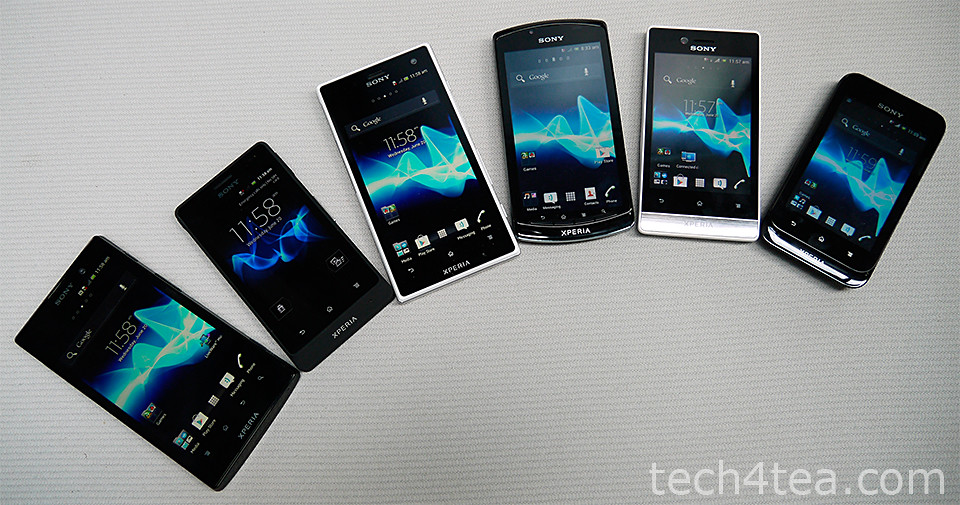
The six new Android smartphones debuting in SE Asia in Q3 2012: Sony Xperia ion, go, acro S, neo L, miro, and tipo.

The six new Android smartphones debuting in SE Asia in Q3 2012: Sony Xperia ion, go, acro S, neo L, miro, and tipo. Photo taken with Panasonic LUMIX DMC-GF5.

With such a range of smartphones catered to different tastes and needs, Xperia fans willl be spoilt for choice when shopping for their next smartphone.

Below are the technical specifications for the six Xperia smartphones from Sony Mobile.

(more…)

New Android smartphones: Sony Xperia miro and tipo

Wednesday, June 13th, 2012

Sony Mobile has unveiled two new Android 4.0 (Ice Cream Sandwich) smartphones that are designed to be stylish, fun and easy to use. One of them has a dual-SIM version available (Xperia tipodual).

Both smartphones will be launched globally in calendar Q3 2012.

Update (6 September, 2012):

The Xperia tipodual is now available in Singapore for S$268 from M1 and Sony stores.

Sony Mobile Xperia miro and Xperia tipo

Sony Mobile Xperia miro and Xperia tipo

The Xperia miro has a 3.5-inch display, 5-megapixel camera and 1,500mAH battery.

Sony Xperia tipo & miro

Sony Xperia tipo & miro

It provides deep Facebook integration and Sony’s xLOUD audio technology in a slim and stylish design.

The Xperia tipo has a 3.2-inch display, 3.2-megapixel camera and 1,500mAH battery.

It comes in both single and dual-SIM versions – no more hunting for dual-SIM adaptors that might not be compatible with your single-SIM phone.

You can have two separate lines, one personal and one work-related, on the same phone.

In some countries, different networks charge different rates for voice and data, local and overseas.

With the Xperia tipodual, users can switch – at one touch – to the cheaper network for whichever mode they are using.

The press release and specs can be viewed/downloaded below.

(more…)