Using Curves to enhance brightness and contrast in GIMP (Final Part 14 of 14)

May 15th, 2011
Both the rudimentary Brightness-Contrast command and the handy Levels command allows you to enhance the tonal balance of a photo and for correcting colour balance. But the Curves command gives you ultimate control over how specific tones are to be tweaked in your digital photo.

The Levels command allows the user to adjust the three main tonal ranges of a photo – the shadows, midtones and highlights. The Curves tool, however, allows you to target any tone or tonal range in the photo to tweak their brightness and contrast.

Using the Curves command

With the photo open in GIMP, choose the Colors > Curves command (or Tools > Color Tools > Curves)  from the main menu. An “Adjust Color Curves” dialog box pops up showing a square grid with a straight diagonal line. The histogram of the photo can be seen in the background of the grid for reference.

As for the Levels command, an understanding and analysis of the histogram of the photo is the basis for using the Curves command.

The horizontal X-axis of the grid represents the initial brightness values – from zero (black) to 255 (white) – of the pixels in the photo before the Curves command is applied. The vertical Y-axis represents the brightness values that each pixel is to be mapped into after the adjustments have been applied. It also ranges from zero to 255.

The lower left corner of the grid represents the black point (for pixels with brightness value zero) while the upper right corner represents the white point (for pixels with the maximum brightness value of 255).

Adjusting brightness

To begin adjusting the photo, click anywhere on the diagonal line in the grid. An anchor point is added to the line. You can drag the anchor point around with the mouse.

Drag the point downwards to make the photo darker. The straight diagonal line turns into a curve passing through the anchor point and the black and white points. A faint straight diagonal line is still visible in the grid – it serves as reference for an unadjusted photo.

When the cursor is inside the grid, you can see the X (input) and Y (output) values of the cursor at the top left hand corner of the grid. Mouse-over the anchor point that you’ve just dragged. In the example, you can see that the brightness of any pixel with original value 128 (X-value) will be reduced to 160 (Y-value). Pixels with brightness close to 128 will also be darkened. You can eyeball the effects of the adjustments by looking at the photo itself in the image window.

To lighten the photo, drag the anchor point down below the faint diagonal guide. Now pixels with brightness 128 will be darkened to 90, while the pixels of similar brightness will be darkened as well.

To remove an anchor point, simply drag it off the side of the grid. You can add as many as 14 anchor points (excluding the original black and white points) to the curve. This allows you to target up to 16 specific brightness values in the photo for brightening or darkening. However, you seldom need more than a handful anchor points to get the job done.

Adjusting contrast

If the histogram is bunched up the towards the middle, drag the black or points inwards horizontally to where the histogram begins and ends respectively. This is similar to dragging the black and white points of the Levels command inwards to maximise the tonal range of the photo.

The steeper gradient of the line indicates that the contrast of the photo is increased.

A typical Curves adjustment that can be applied to most photos is the “S-Curve”. This curve tends to enhance most photos by increasing the overall contrast and making the photo “pop” with vivid shadows and highlights.

To apply an “S-Curve” adjustment, add two points on the Curve – the first to lower the brightness of pixels of brightness 64, the second to increase the brightness of pixels of brightness 192. The above numbers are just guides – drag the adjustment points around with the mouse while eyeballing the photo.

The S-Curve suppresses the shadows and highlights while increasing the contrast of the mid-tones, where the main subject usually is. Add a third point with brightness of roughly 128 to increase or decrease the brightness of the midtones.

In addition to these adjustment points, you can add additional adjustment points to tweak specific tones in the photo – such as skin tones.

With some practice, you will be able to control and enhance any particular tone that appears in your photo.

MM and SM resign from Singapore Cabinet

May 14th, 2011
A week after a General Election that the ruling PAP won but would rather forget, the two former Prime Ministers have tendered their resignations to leave the Cabinet. PM Lee Hsien Loong has yet to accept their resignations but will give his answer by Monday.

Minister Mentor Lee Kuan Yew, Singapore's first Prime Minister from 1959 to 1990Minister Mentor Lee Kuan Yew was the first Prime Minister of Singapore for 31 years from 5 June 1959 – 28 November 1990, while Senior Minister Goh Chok Tong led Singapore for 14 years from 1990 till 12 August, 2004.

Lee Kuan Yew was appointed to the newly created post of Ministor Mentor on 12 August 2004. He is the founding father of Singapore and brought Singapore from a fledgling, newly-independent, former-colonial state barely able to survive – to a modern society able to hold its own.

Goh Chok Tong further brought Singapore forward and steered the nation through the choppy waters of the Asian Financial Crisis.

The 7-day old General Election was a “watershed” election for the PAP in the groundswell of vociferous resentment against the ruling party, especially on the Web. The anger towards a party widely perceived to have become arrogant and who have lost touch with the populace translated on polling day to the lowest overall percentage of support for the party since the independence of the country in 1965.

Although the PAP still won an overwhelming majority in terms of number of seats in Parliament (81 out of 87), the party brought in only 60.1% of the votes nation wide.

MM Lee Kuan Yew

MM Lee had enjoyed the only walkover in this General Election – their would-be opponents having been ruled out of contest for submitting their paperwork 35 seconds late. However, he had drawn the ire of the Malay community through his comments about the Malays in a book he had published just months prior to the election.

MM Lee also drew much flak for his comments during the hustings that the voters in the hotly contested Aljunied GRC (Group Representation Constituency) would have five years to “repent” if they voted out the incumbent PAP team of MPs.

The contesting team of heavyweights from the Workers’ Party won the GRC by a large margin of 10% – the first time an opposition party has been able to oust a PAP team in a GRC.

SM Goh Chok Tong

Senior Minister Goh Chok Tong, Prime Minister from 1990 to 2004SM Goh has always enjoyed extremely strong support from the electorate. In the 1991 General Election, he brought in 77% of the vote for his Marine Parade GRC. In the by-election in 1992, he repeated the resounding victory with 73% of the votes. Since then, he has enjoyed walkovers in the next three Generel Elections in 1997, 2001, and 2006 as Opposition candidates shy-ed away from his stronghold.

This election, however, saw voter support for the team of candidates led by him whittled down to 57%, one of the lowest amongst PAP’s candidates. A large part of the plunge in popularity for the team can be attributed to the popularity of one Nicole Seah of the opposing team, and the correspondingly unpopularity of Tin Pei Ling – a member of SM Goh’s team.

Both Nicole Seah and Tin Pei Ling were the youngest candidates in the opposition and ruling parties respectively – roped in to appeal and connect to the young generation of vociferous voters unafraid to voice their political convictions openly on the Web.

Whilst 24-year-old Seah captured the imagination and support of the populace, the 28-year-old Tin was reviled for her perceived relative immaturity.

It did not help his GRC team when some perceived SM Goh as resorting to personal attacks on his former PPS (Principal Private Secretary) who had joined the opposition. Netizens also pointed out that in so doing, SM Goh had violated his earlier statement of not commenting on candidates outside of Marine Parade.

His dismissal of the opposition team in Marine Parade as coming from the No-Substance-Party (pun on their actual party name National Solidarity Party) was also atypical of his image as a kindly and benign statesmen way beyond the name-calling and mud-slinging tactics of lesser politicians.

Turning of the tide

Against this slew of mis-steps were the national issues that the Opposition candidates brought to the fore during the campaign.

These issues include: high costs of living, high costs of public housing, high ministerial pay, overcrowded public transportation system, influx of foreign talent, mistakes such as the under-budgeting of the Youth Olympics Games and escape of terrorist Mas Selamat, the need for more opposition voices in the Parliament, and the perceived arrogance of the ruling party.

Midway through the hustings, the ruling party must have realised that the tide had turned against them. The slew of attacks from PAP candidates – calling the opposition “poison mushrooms”, labelling a potential coalition government as an ineffective “rojak” parliament, questioning an opposition town council’s accounts in the midst of hustings to throw suspicion on their trustworthiness – were not only failing to alienate the electorate from opposition candidates, but were possibly driving voters to support the opposition.

Lee Hsien Loong Prime Minister of Singapore from 2004As a last ditch attempt to salvage whatever votes that could be saved, the Prime Minister himself issued an unprecedented apology during a lunch-time rally in the business district for past mistakes and promised to try better. This change of strategy was taken up by other PAP candidates who suddenly adopted a contrite attitude and started to appear modest, apologising profusely and promising to work harder.
I’m sure this helped, in no small measure, to stem the flow of votes to the opposition and I commend the PM for being responsive enough and having the leadership and gumption to pull off this change in strategy so quickly and abruptly. It seemed that he even managed to gag the MM from making further damaging comments after the latter’s “repent” remarks.

Starting from a clean slate

Now that the General Election is behind us, all eyes are on the ruling party – whether it would be able to transform itself into one that genuinely cared and listened to the electorate.

People within and outside the PAP know that this is critical in ensuring the dominance – or even survival – of the ruling party in the next election. And the PM has promised change. The question is whether the mammoth of a party can really change, or will it be old wine in a new bottle.

I am guessing these two resignations are not individually motivated, but have been discussed at length within the PAP, as part of a slew of changes for the party. MM Lee’s departure would hopefully placate the Malays in the populace and convince people that PM Lee has a free hand to reform the party.

SM Goh’s departure? Probably a face-saving move to avoid having MM make a lonesome exit. At any rate, the two will probably continue to be employed as consultants to oversee areas of responsibilities they’ve been responsible for all this while. And that’s being wise considering the extensive experience and competencies embodied in these two senior statesmen, and the networks they have built up over the years.

What remuneration they would get in place of the unpopular but transparent ministerial pays they have been drawing would certainly draw keen public interest.

At any rate, it is a significant and symbolic move by PM Lee to signal how seriously the party is in transforming the party into one that is caring and connected to the people.

Full press statement

Below is the joint-email statement to the media from the two leaders and former Prime Ministers in full:

“We have studied the new political situation and thought how it can affect the future. We have made our contributions to the development of Singapore. The time has come for a younger generation to carry Singapore forward in a more difficult and complex situation. The Prime Minister and his team of younger leaders should have a fresh clean slate. A younger generation, besides having a non-corrupt and meritocratic government and a high standard of living, wants to be more engaged in the decisions which affect them. After a watershed general election, we have decided to leave the cabinet and have a completely younger team of ministers to connect to and engage with this young generation in shaping the future of our Singapore.

But the younger team must always have in mind the interests of the older generation. This generation who has contributed to Singapore must be well-looked after.”

Nubox opens 10th store at Junction 8 today

May 13th, 2011
Nubox opened its 10th store in Singapore at Junction 8 Shopping Centre today. A number of in-store promotions will be available at the 1447 sq ft Apple Premium Reseller store over the weekend from May 13 to 15.

Together with Nubox@nex at Serangoon which opened in November 2010, the new store, Nubox@Junction 8 is targeted at shoppers in the northern part of Singapore. Junction 8 Shopping Centre is located right beside Bishan MRT station.

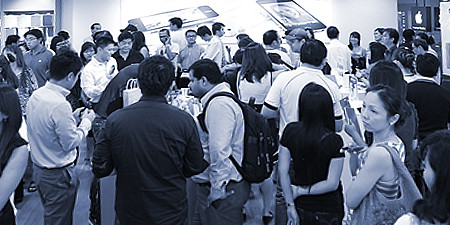
Crowd moving in for the in-store promotions at the new Nubox outlet at Bishan Junction 8.

Crowd moving in for the in-store promotions at the new Nubox outlet at Bishan Junction 8.

Other Nubox stores are located at:

Outlet Unit num Tel (+65)
Jurong Point Shopping Centre #B01-09 6790 8813
Raffles City Shopping Centre #03-25 6334 8132
Tampines Mall #01-49 6587 7130
Funan Digitalife Mall #03-21 6334 3531
Causeway Point #04-32 6767 0351
Sim Lim Square #03-82 6332 9396
Sim Lim Square #01-41 6334 9560
NEX Shopping Mall #02-45/46 6634 6180
Marina Bay Link Mall #B2-33/34 6634 4825

Nubox’s first store was opened in 2008 at Sim Lim Square. All Nubox stores are open from 11.00 am to 9.30 pm (except the Sim Lim and Funan outlets that close at 8 pm).

Nubox has plans to open another three Apple Premium Reseller stores by end 2011. They will be at Causeway Point in Woodlands (reopening), 112 Katong in Katong and JCube in Jurong.

Nubox is an arm of Newstead Technologies and sells the entire range of Apple products from Macs, iPods, iPhones and iPads to a wide range of accessories.

Acer Chromebook with Google Chrome OS

May 12th, 2011

Google has unveiled its first two Chrome-based notebooks from Acer and Samsung at the Google I/O conference in San Francisco. They will be available for order online from June 15.

Acer’s Wi-Fi only Chromebook will cost $349, while the Samsung Chromebook will cost $429 for the Wi-Fi only version and $499 for the 3G version.

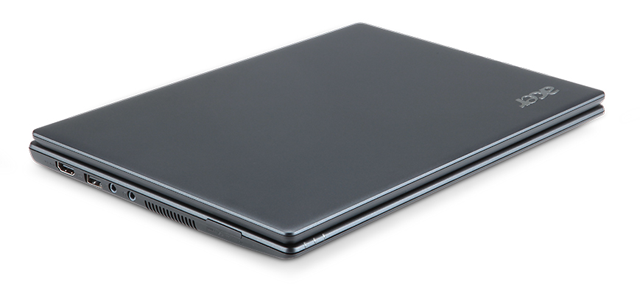
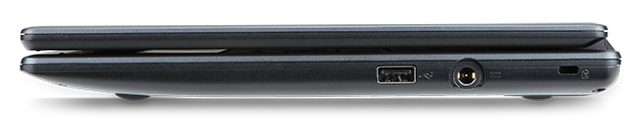
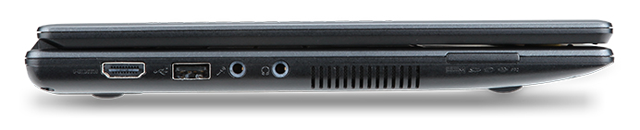
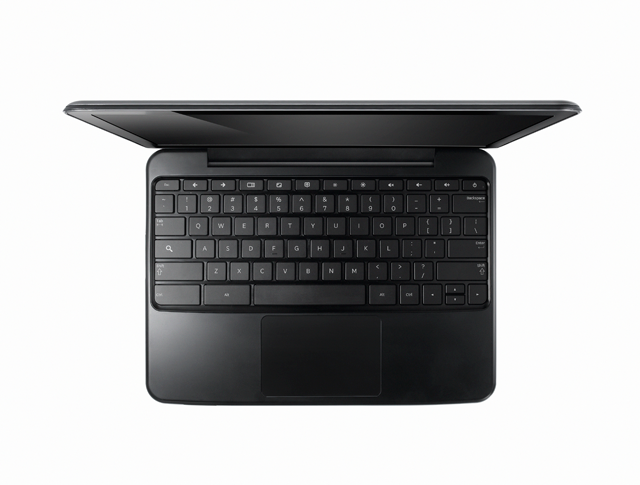
The Acer Chromebook is a netbook running Google’s Chrome OS. It has an 11.6 inch display, 1.66 GHz dual-core Intel Atom N570 processor, 16 GB SSD drive and 2 GB RAM, with 6 hours battery life. It is available in black.

Acer Chromebook running Google's Chrome OS

Acer Chromebook

The price of $349 is for the Wi-Fi only version. 3G will be an additional optional configuration.

Chromebooks will be available online June 15 in the U.S., U.K., France, Germany, Netherlands, Italy and Spain. More countries will follow in the coming months. In the U.S., Chromebooks will be available from Amazon and Best Buy and internationally from leading retailers.

Here are the main specifications:

  • 11.6″ HD (1,366×768) 16:9 Widescreen CineCrystalTM LED-backlit LCD
  • 1.66 GHz dual-core Intel Atom N570 processor
  • Acer Chromebook running Goolge's Chrome OS2GB RAM
  • 16GB SSD drive
  • 6 to 8 hours battery life
  • stereo speakers
  • 2 USB 2.0 ports
  • Acer Chromebook running Google's Chrome OS4-in-1 memory card slot
  • HDMI port
  • 11.6 x 8.6 x 0.8 inches
  • Acer Chromebook running Google Chrome OS2.95 lbs / 1.34 kg
  • A full-size keyboard
  • Multitouch touch pad
  • Built in dual-band 802.11 b/g/n Wi-Fi and World-mode 3G (optional)
  • 1.3 megapixel HD Webcam with noise cancelling microphone
  • Instant-on from standby, and an 8-second boot time


Samsung Series 5 Chromebook

May 11th, 2011

Google has unveiled today its first Chrome-based notebooks from Acer and Samsung at the Google I/O conference in San Francisco. They will be available for order online from June 15.

The Samsung Chromebook will cost $429 for the Wi-Fi only version and $499 for the 3G version, while Acer’s Wi-Fi only Chromebook will cost $349.

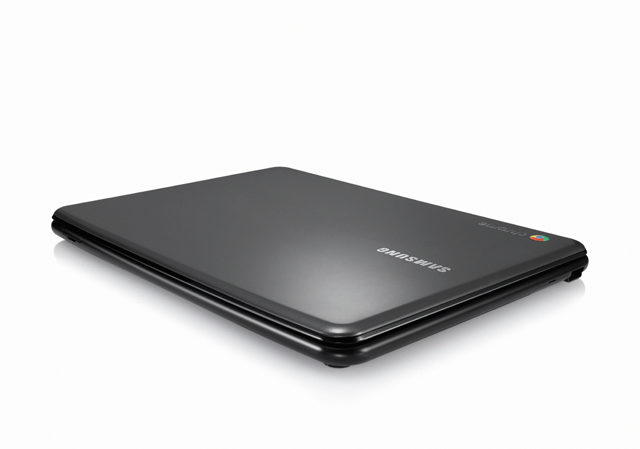
Samsung Series 5 Chromebook, based on Google's Chrome OS

Samsung Series 5 Chromebook

The Samsung Series 5 Chromebook is a netbook running Google’s Chrome OS. It has a 12.1 inch display, 1.66 GHz dual-core Intel Atom N570 processor, 16 GB SSD drive and 2 GB RAM, with 8.5 hours battery life.

Looking similar to the CR-48 prototype, the Series 5 is available either in white or “Titan Silver”.

Chromebooks will be available online June 15 in the U.S., U.K., France, Germany, Netherlands, Italy and Spain. More countries will follow in the coming months. In the U.S., Chromebooks will be available from Amazon and Best Buy and internationally from leading retailers.

Here are the main specifications:

  • A 12.1-inch (1280×800) SuperBright display at 300 nits, with a 16:10 aspect
  • 1.66 GHz dual-core Intel Atom N570 processor
  • Samsung Series 5 Chromebook, based on Google's Chrome OS2GB RAM
  • 16GB SSD drive
  • 8.5 hours battery life
  • Stereo speakers
  • Two USB 2.0 ports
  • SD/SDHC/MMC/SDXC card slot
  • Samsung Series 5 Chromebook, based on Google's Chrome OSMini-VGA port
  • 11.6 x 8.6 x 0.79 inches
  • 3.26 lbs / 1.48 kg
  • A full-size keyboard
  • Multitouch touch pad
  • Built-in dual-band Wi-Fi and World-mode 3G (optional)
  • HD Webcam with noise cancelling microphone
  • Instant-on from standby, and an 8-second boot time


Google to unveil Chromebooks

May 10th, 2011

Google will reveal its first Chrome-based notebooks from Acer and Samsung at the Google I/O conference in San Francisco. They will be available for order online from June 15.

The Samsung Chromebook will cost $429 for the Wi-Fi only version and $499 for the 3G version, while Acer’s Wi-Fi only Chromebook will cost $349.

It’ll be interesting whether consumers will bite, considering that you can buy a decent Netbook or an iPad the $499 price-tag for the 3G Samsung Chromebook.

Acer Chromebook, available from June 15, 2011

Acer Chromebook

Chromebooks will be available online June 15 in the U.S., U.K., France, Germany, Netherlands, Italy and Spain. More countries will follow in the coming months. In the U.S., Chromebooks will be available from Amazon and Best Buy and internationally from leading retailers.

Equipped with dual-core processors from Intel, the Chromebooks boast all-day battery life, and instant-on ability and built-in Net connectivity. Chromebooks will get updates and patches automatically every few weeks, like its browser cousin Chrome.

A special pricing is available for schools – Google will charge $20 a month for each Chromebook. The price will include hardware, administrative support, hardware upgrades, and warranty.

With this long awaited foray, Chromebooks will be taking on the tablet market dominated by Apple’s iPads, and the PC market dominated by both Microsoft and Apple.

Samsung Chromebook, available from June 15, 2011

Samsung Chromebook

The Chromebooks will run a new new bare-bones operating system that is basically a web browser that allows users to access applications like email, wordprocessors and spreadsheets directly on the web, instead of installing software such as Outlook or Office directly on the computer’s harddisks.

Users can also store their music and documents in the cloud for access from other computers as long as there is an Internet connection. Naturally, that means that a lot of the functionality may likely be unavailable or crippled offline.

Google has been touting Chrome as an alternative to Microsoft Windows for some two years now, but it has encountered delays producing computers designed to use the software.

10th Nubox store in Singapore at Junction 8

May 9th, 2011
Nubox will open its 10th store in Singapore at Junction 8 Shopping Centre on Friday May 13, 2011. The Apple Premium Reseller will open the 1447 sq ft store at 12 noon and celebrate the occasion with a number of in-store promotions over the weekend from May 13 to 15.

Nubox, Apple retailer in Singapore Customers who purchase a Macbook will receive a Speck case, a sleeve, a palm rest protector and a keyboard protector worth $143.00. The first 30 customers who purchase a Macbook will also receive a Microsoft Arc Mouse worth $89.00.

A Dexim silicon case for the iPod nano and iPod touch that comes with a screen protector, cleaning cloth, earphones and an AC adapter, will go to customers who purchase an iPod. Nubox is also offering up to 70% discount on selected accessories during this period.

Together with Nubox@nex at Serangoon which opened in November 2010, the new store, Nubox@Junction 8 is targeted at shoppers in the northern part of Singapore. Junction 8 Shopping Centre is located right beside Bishan MRT station.

The day after the General Election 2011

May 8th, 2011

The results of the General Election 2011 are out – PAP has been returned to power with 81 out of 87 parliamentart seats. Workers’ Party has done extremely well by not only retaining their Hougang SMC, but have managed to capture the Aljunied GRC as well.

What will the next Parliament look like? It will comprise 81 elected MPs from PAP, 6 elected MPs from the Workers’ Party, 2 NCMPs from the Workers’ Party, 1 NCMP from the SPP, and 9 NMPs, assuming both the Workers’ Party and SPP accept the NCMP seats.

Like many other Singaporeans, I stayed till past 3 am this morning to hear the charismatic Returning Officer announce the results of each and every contested constituency in the General Election.

Reams of post-election analysis and opinions have already been churned out and more will follow, so I’ll just share just 5 statements which I feel characterise the outcome of this election.

Perhaps a year from now when the dust has settled, and you’re looking for a concise summary of what General Election 2011 was like, the five statements will paint a quick characterisation of what transpired.

Feel free to let me know if you think some other statement should be included in lieu of any of the following list:

People's Action Party (PAP)

People's Action Party (PAP)

1. It is an election that the ruling PAP would rather forget

The PAP brought in 60.1% of the overall vote – the lowest since independence in 1965. It is also 6.5% lower than the previous 66.6% in 2006.

2. This is the first time the Opposition has managed to capture a GRC
Workers' Party (WP)

Workers' Party (WP)

Many see the GRC system as a scheme that makes it difficult for the Opposition to win because of their previous inability to produce enough nominees of adequate quality and racial composition.

Many also believe it allowed strong anchor PAP ministers to parachute in new PAP candidates, and to some extent, assure any senior but unpopular PAP ministers of reelection.

3. The electorate prefer a more compassionate approach rather than an arrogant attitude.

National Solidarity Party (NSP)

National Solidarity Party (NSP)

Passionate, heartful campaigning epitomised by the youngest candidate Nicole Seah from the NSP overshadows the traditional intellectual, above-it-all, know-it-all, we-know-what’s-best-for-you attitude of the ruling party. This made Seah the media darling and champion of the underprivileged who fell-through-the-cracks.

It also forced the ruling party to switch from a be-careful-of-your-property-and-asset-value stance at the beginning of the campaign to a so-sorry-we-did-make-some-mistakes-and-we’ll-try-better positioning for the second half of the hustings.

4. All-or-nothing gambit failed for veteran Chiam See Tong

Singapore People's Party (SPP)

Singapore People's Party (SPP)

While Workers’ Party Low Thia Khiang pulled off his gamble of venturing out from his Hougang SMC and vying for the Aljunied GRC, the same gamble by well-loved SPP Chiam See Tong to move out of Potong Pasir and move for Bishan-Toa Payoh GRC failed.

Workers’ Party emerged as the strongest Opposition party whose overall campaign results and party discipline has greatly strengthened the party’s brand name to be an asset to its members in future elections.

Reform Party (RP)

Reform Party (RP)

5. Coming of age for social media and a new generation of young voters

The proliferation of social media, coupled with the political awareness of a new generation of young voters has fueled an increased assertiveness of the electorate.

The Internet provided extensive coverage of Opposition campaigning and served as an avenue for opposition supporters to express and share their political views and opinions.

Singapore Democratic Party (SDP)

Singapore Democratic Party (SDP)

Singapore Democratic Alliance (SDA)

Singapore Democratic Alliance (SDA)

It is a much sought after alternative for traditional local mainstream media which is perceived by many to be biased against the Opposition in their coverage.

Final installement of Intermediate GIMP series

May 8th, 2011

The final installment of the 14-part Intermediate GIMP series will be run next weekend.

After more than a week of following the Singapore General Election 2011 and staying up past 3 am to watch the results, I’m afraid I’ve had to postpone the final installment of the Intermediate GIMP series till next weekend.

It will be on using the advanced Curves command to correct/enhance the brightness and contrast of a photo.

Singaporeans vote for their government today

May 7th, 2011

Today is polling day for the General Election in Singapore. Citizens vote today for the Members of Parliament who will manage their constituencies and estates, and represent them in Parliament.

The political party with the majority will also form the government for the next five or so years until the next election.

Polling stations across the island nation opened at 8 am local time to voters selecting their representatives in Parliament. The polling stations will remain open for voting until 8 pm tonight.

The neighbourhood school across the road from where I live has been designated as the polling station where residents around my neighbourhood will cast our votes.

As I walked towards the school with the Poll Card in my hands, I couldn’t help but muse that I was holding in my hands about the only tangible manifestation of what being a Singaporean Citizen entails – the right to vote.

Gripped in my hands was my voice. With it, I get to say who I want to represent me in the government. The most wonderful thing about it all is that everybody – whether you’re rich or poor, whether you’re from the establishment or whether you’re disenfranchised – gets exactly one vote. Nobody’s voice is louder than that of another.

The slogan “One man, one vote” has never sunk in so vividly until you walk with this IC-sized slip of paper towards a ballot box, especially since in this election, it can really make a difference as to who gets elected.

A poll card to exchange for a voting slip at the polling station

A poll card to exchange for a voting slip at the polling station

For this election, 2,350,873 citizens will decide who the 87 MPs representing 27 constituencies are. 12 of the constituencies are SMCs (Single Member Constituency) while 15 are GRCs (Group Representation Constituency where the constituency is represented by a team of candidates rather than a single person).
Unlike past elections, where many constituencies are unchallenged by opposition parties and enjoy walkovers even before the polling day, in this election – only one constituency has enjoyed a win without a fight.

The 5-member team headed by Minister Mentor Lee Kuan Yew in Tanjong Pagar GRC was returned into office on Nomination Day when their would-be opponents from the opposition failed to submit their paperwork in time. They were deemed to be 35 seconds late and the 139,771 electors in the constituency – some 6 percent of the overall electorate – will not have the chance to vote in this election.

Nevertheless, there are still 82 parliamentary seats up for grabs and the hustings this election has proven to be more intense than ever before, with the opposition presenting many credible and eminently qualified candidates who were able to enunciate why the voters should support them and what they can do for the nation.

Unsettling for the incumbent party, the voting public – at least based on any casual browsing of social websites on the Internet and overwhelming attendance at opposition rallies – seemed to resonate with opposition candidates.

How did I vote this morning? I voted – wisely.

Polling day for General Election 2011