Archive for the ‘TV’ Category

New 3D LED televisions: Metz Caleo 47” and 42” TV

Sunday, July 29th, 2012

Luxury German brand Metz has introduced its new slim line Metz Caleo range of 3D LED televisions in 47-inch (S$8,500) and 42-inch (S$7,600) screens. Prices include GST.

Metz Caleo 3D LED TV

Metz Caleo 3D LED TV

The Metz Caleo 3D LED televisions are styled in brushed aluminum with black anodised aluminum side panels

Premium LED, mecavisionHD+ and 200 Hz technologies make images come to life with large spatial depth, while the integrated 750 GB hard disk recorder allows 2D or 3D content to be viewed independently of the programme schedule.

Dynamic motion compensation (DMC) displays rapid movements in perfect clarity, even from HD sources.

A 3D comb filter and cross-colour reduction provides brilliant images.

The mecaSoundpro sound system and a highly efficient 2-way bass reflex system combine to provide rich, immersive sound.

The integrated Metz Media System enables the display of photos and videos, playing of music, as well as access to online services.

An LED backlight makes the TVs eco-friendly by optimising energy efficiency.

Samsung launches Angry Birds and SingTel mio TV PLAY apps for Smart TV

Friday, July 27th, 2012

The two new apps joins more than 400 other apps available for the Samsung Smart TV, with more to come in the next few months.

Angry Birds is developed by Rovio Entertainment. Throughout game play, all actions - including level of difficulty selection and screen zoom in/out - are performed using motion control. Players can activate the unique skills of each bird and even control the game’s trademark slingshot action using arm movement enabled by the built-in camera.

Angry Birds is developed by Rovio Entertainment. Throughout game play, all actions – including level of difficulty selection and screen zoom in/out – are performed using motion control. Players can activate the unique skills of each bird and even control the game’s trademark slingshot action using arm movement enabled by the built-in camera.

The two new apps are part of a slew of high quality content that Samsung has lined up for consumers in the next few months.

New Smart TV apps in the pipeline

  • Entertainment: Angry Birds, SingTel mio TV PLAY, StarHub Video Store, WOWtv and Viki Premiere
  • Edutainment: Yummy Science, Calculus, Ferog in the Well, My First World and E-Assessment
  • Information: Maybank

The new Angry Birds app for Samsung Smart TV utilises Samsung’s Motion Control technology, which works with just the wave of a hand in front of the screen.

The SingTel mio TV PLAY is an over-the-top (OTT) video streaming application providing access to web video content in SD, HD and 3D format through an online catalogue and an online video store with Hollywood and Asian movies.

The SingTel mio TV PLAY is an over-the-top (OTT) video streaming application providing access to web video content in SD, HD and 3D format through an online catalogue and an online video store with Hollywood and Asian movies.

Four interactive edutainment apps developed by the local developer community will be launched in September 2012.

These apps are a result of a joint call-for-proposal for the development of educational TV apps for the Samsung Smart TV platform and ecosystem announced in September 2011 with the Media Development Authority of Singapore’s (MDA) Interactive Digital Media Programme Office (IDMPO).

(more…)

Sneak peek: Belkin home automation and networking gadgets

Sunday, July 15th, 2012

Belkin will be introducing its latest range of Home automation and Networking products in Singapore later this year.

Head down to tech@vogue to get a preview and hands-on of the WeMo, @TV, and the AC1200DB Wi-Fi Dual-Band AC+ Gigabit Router.

Sneak preview of Belkin's upcoming home-automation and networking devices.

Sneak preview of Belkin’s upcoming home-automation and networking devices.

I was at the pre-opening preview of tech@vogue in nex Mall last Friday afternoon.

Control switches at home remotely using a smartphone/tablet.

Control switches at home remotely using a smartphone/tablet.

What caught my eye was this demo booth that Belkin has set up to provide a preview and hands-on experience of some of the home automation and networking products that it will be introducing into Singapore towards the end of this year.

These include WeMo, which was announced at this year’s CES 2012 at Las Vegas, the @TV, which provides a new way to watch, record and experience television content, as well as the AC1200 DB Wi-Fi Dual-Band AC+ Gigabit Router.

These Wi-Fi enabled gadgets allow you to use your iPhone or iPad to remotely switch on/off your wall power outlets from outside your homes.

The @TV can be controlled using both iOS devices and Android devices when viewing or recording television content.

Below are pictures and more information on these gadgets.

Belkin WeMo Home Control Switch and WeMo Home Control Switch with Remote

WeMo Home Control Switch and WeMo Home Control Switch with Remote

WeMo devices allow household electronics plugged into a wall outlet to be remotely switched on /off from a mobile app on a smartphone or tablet.

WeMo works with a home’s existing electrical system and requires only a Wi-Fi network and free smartphone app to set up and control.

Belkin @TV

@TV

@TV works over WiFi or 3G/4G networks, enabling users to access all content from their home theatre on their tablets, smartphones and laptops.

@TV works with the @TV mobile app, which is available for both iOS and Android platforms.

Belkin AC1200 DB Wi-Fi Dual-Band AC+ Gigabit Router

AC1200 DB Wi-Fi Dual-Band AC+ Gigabit Router

Enhanced reliability, greater speeds, and enhanced streaming capabilities.

Featuring Broadcom’s fifth-generation (5G Wi-Fi) 802.11ac chip technology, the Belkin AC1200 DB provides gigabit speeds wirelessly to extend network range and provide more reliable coverage at greater distances.

Game-changing technology: wearable unified displays with scalable imagery

Sunday, July 8th, 2012

In a time when new technology and gadgets are launched everyday, and every one of their makers proclaim them to be game-changers, it is truly heartening to see products showcasing technology that has genuine potential to become a game changer in the near future.

Wearable video displays are an example. The Epson Moverio and Google Glass are examples of such gadgets.

Wearable unified displays can be used everywhere and for any purpose in the future, here an aircraft engineer has his hands free while referencing his technical manual through an Epson Moverio.

Wearable unified displays can be used everywhere and for any purpose in the future. Here an aircraft engineer can have his hands free (if he clips the controller to his overalls) while referencing his technical manual through an Epson Moverio.

In my humble opinion, there are two main constraints in consumer devices that represent frontiers in product developments for gadget makers.

Google Glass was showed off by co-founder Sergey Brin (not in this picture) at the Google I/O conference in June.

Google Glass was showed off by co-founder Sergey Brin (not in this picture) at the Google I/O conference in June.

These are display technology and device input.

What defines a smartphone and a tablet, laptop and a laptop, or even a television and even the cinema?

It is the size and form factor of the device.

Apart from the backend processor and performance, a large determinant of their category is simply their screen size.

If it’s a 3-5 inch device (with 3G connectivity), it’s a smartphone. 7-10 inch flat screen (with or without 3G), it’s a tablet (used to be netbook not too long ago).

Beyond that, you have the 13-17 inch notebook computer, and still beyond that – the desktops with even bigger screens.

Sony HMZ T1 Personal 3D Viewer

Sony HMZ T1 Personal 3D Viewer

Need we go into the numerous sizes for TVs, projectors and erm – cinemas?

A large determinant of device portability and usability – which often run counter to each other – is the size of the display.

Greater portability results in more squinting, whereas nice expansive viewing pleasure means bigger heavier screens.

A viewer/display device that allows the user to divorce display size from processing hardware will free the user from having to own multiple devices with different form factors.

Imagine the ability to make calls, read ebooks, play games, work on documents or edit images/video, watch the equivalent of large-screen movies on a single viewer/display.

Wanna look like an X-men? Try the Cyclops look.

Wanna look like an X-men? Try the Cyclops look.

No need to purchase separate bulky devices with their own different-sized displays.

You’d still need to have the little black-boxes containing the different processing hardware and device input.

But imagine sharing the same viewer/display amongst all these devices.

All of them “plug” into the same viewer/display.

There’s no more difference between a smartphone and a 3G-capable tablet computer.

Cameras and camcorders could also pair up wirelessly.

Although the device closest to bringing this to reality is the mounted-visor display/viewer, I’m sure there’ll be other physical means and ways to achieve this “unified display”.

Olympus has just announced its wearable display prototype - MEG4.0.

Olympus has just announced its wearable display prototype – MEG4.0.

Eventually, I can envisage (pun intended) displays embedded in contact lenses or even implanted into the cornea of the eyes.

In fact, patents have already been filed for such designs.

I haven’t seen any patents that bypass the eyes and inject vision signals directly into the brain though.

In a way, nature already unifies human vision through our eyes. We do not put on a different set of eyes to see different things.

The Olympus MEG 4.0 promises to connect to devices via Bluetooth.

The Olympus MEG 4.0 promises to connect to devices via Bluetooth.

Everything we see are through the same pair of eyes.

Why should we require a different screen to view the contents of different devices?

Now this single unified display may not be good news to device makers, although it surely should be the dream of consumers – even if we may not realise it yet.

Surely it’s better to be able to sell a single user multiple devices with different screen sizes if his/her needs forces him/her to do so.

Many users today own separate tablets and smartphones.

Sony HMZ T1 Personal 3D Viewer

Sony HMZ T1 Personal 3D Viewer

Apple, for instance, would rather sell you an iPhone AND an iPad, than only a single mobile device that “throws” its display into a single viewer with a “scalable” image size.

Google Glass with augmented reality.

Google Glass with augmented reality.

I’m sure it isn’t even news to the makers.

It’s a bit akin to traditional airlines offering budget flights.

Why introduce new budget services – even though it would benefit customers – that will change the game and threaten their erstwhile profitable business?

Fortunately, we have entrepreneurs who have broken the ranks to offer such choice to budget travellers.

A closer analogy would be the way netbooks had cannibalised the mainstream laptop market.

Sony HMZ T1 Personal 3D Viewer

Sony HMZ T1 Personal 3D Viewer

We have Asus to thank for “creating” the netbook niche to bring affordable and no-frills portable computing to the masses.

The Epson Moverio and Google Glass are not the first such device on the market, and in their current form are not mature enough for mass adoption by consumers yet – in terms of usability and feature-set, as well as content and consumer readiness.

But hopefully it precipitates more momentum to force makers to get on the bandwagon.

The other frontier

The other “physical constraint” to device form-factor is input interaction, a large part of which is text-input.

The size of screen again comes into the picture again if an on-screen keyboard is used.

And if a physical keyboard is used – be it a BlackBerry style keypad or a bigger portable keyboard – it translates into the overall form factor of the device.

Voice-input represents a means to free a device from a physical or on-screen keyboard, and even provide interactivity – through voice commands and voice search.

It’s also still early days and much development is needed before we can enjoy keyboardless devices

But as consumers and end-users, we can always dream on.

* Photos and illustrations used in this article belong to Epson, Google, Sony, and Olympus.

窥探一下未来的显示浏览器。如今已有一些头目。譬如:Epson Moverio BT-100, Google Glass, Sony HMZ T1 Personal 3D Viewer, Olympus MEG4.0。希望有朝一日,能够只凭一个显示机利用多种电子设备器材。

Seminar: Canon Cinema EOS System in TV Production by Alexander Buono from Saturday Night Live

Saturday, July 7th, 2012

Thanks to Canon’s invitation, I got to attend this interesting talk by the Director of Photography for Saturday Night Live Film Unit.

Alexander Buono shared his insights and experiences from his tight weekly schedule and workflow for shooting the longest running series in American TV.

* All photos taken with a handheld smartphone.

Alexander Buono from Saturday Night Live on TV production using Canon Cinema EOS.

Alexander Buono from Saturday Night Live on TV production using Canon Cinema EOS.

At the Lido Cineplex in Singapore, Buono gave some very down to earth and pragmatic tips and shared the setups and settings that he uses with his Canon equipment.

One of Alex Bruno's setups.

One of Alex Bruno’s setups.

Buono related how he began shooting for the popular Saturday Night Live (SNL) program in 1999 using film.

In 2009, he began using the Canon EOS 5D Mk II, before including the EOS 7D and Cinema EOS C300 in his digital video inventory.

Some interesting nuggets from his presentation and Q&A below.

To better understand and play with what the settings on the Canon EOS C300, check out the C300 Menu Simulator which emulates the menu system on the camera.

Alex Buono's rig

Alex Buono’s rig

If you’re into shooting video, here are some people to follow on Twitter.

The Hobbit was shot in 5k 3D video at 48fps, while James Cameron’s next installment of Avatar is being shot in 5k 3D video at 60fps.

These will likely look hyper-realistic, departing from the more surrealistic feel of film.

Buono recommends shooting at 24fps for the film look, even though videos for TV are typically shot at 30fps.

Another of Buono's setups

Another of Buono’s setups

Buono recommends keeping the shutter speed constant throughout a shoot. A good setting would be the reciprocal of twice the frame rate for the shoot.

So for a video shot at 24fps, a good shutter speed to use would be 1/48 second.

Overall, it was an interesting session for the attendees who packed Hall 5 of the cinema in which the workshop was held.

Alex Buono attended the School of Cinematic Arts under the University of Southern California, majoring in film production and still photography.

Alex Buono, Director of Photography for Saturday Night Live Film Unit.

Alex Buono, Director of Photography for Saturday Night Live Film Unit.

He spent his early post-college years as camera crew for studio films including Twister, Conspiracy Theory and Armageddon, learning from top ASC cinematographers and personal mentors like Don Burgess and John Schwartzman.

He soon became Director of Photography of the Saturday Night Live Film Unit.

PC Show 2012 promotions: Samsung

Thursday, June 7th, 2012

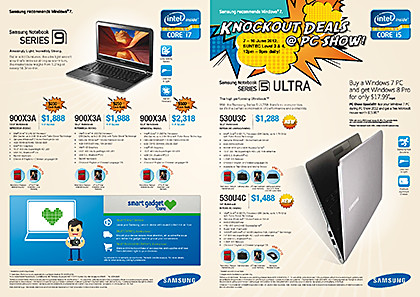
Samsung will be at the PC Show 2012 at Suntec Singapore at Levels 3 and 4.

Samsung's PC Show 2012 promotions for notebooks, ultrabooks, digital cameras, monitors, Smart TVs, and printers.

Samsung's PC Show 2012 promotions for notebooks, ultrabooks, digital cameras, monitors, Smart TVs, and printers.

Here are six brochures for Samsung’s PC Show 2012 promotions for notebooks, ultrabooks, digital cameras, monitors, Smart TVs, and printers.

PC Show 2012 promotions listing

Thursday, June 7th, 2012

This year’s PC Show 2012 is at Suntec Singapore from 7 June (Thursday) till 10 June (Sunday). Here’s a listing of some of the promotions and flyers for the four-day IT exhibition.

PC Show 2012 from 7 - 10 June at Suntec Singapore from 12 - 9 pm. Admission FREE.
Click on the links below to check out the deals and promotions from the brand. To see a consolidated list of postings related to PC Show 2012, click here. You can also click on the button near the top of the sidebar on the right that looks like the logo above.

Floor plans for Levels 4 and 6 can be found here.

Anybody wants a 40-inch tablet computer?

Thursday, April 19th, 2012

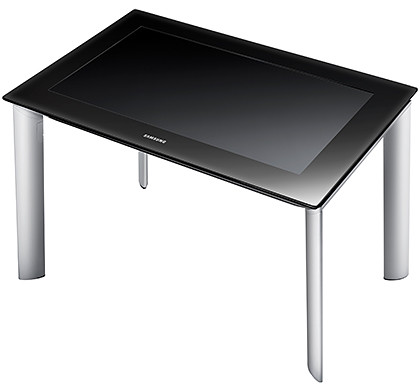
Microsoft and Samsung has unveiled the latest in surface computing in SouthEast Asia – the Samsung SUR40 for Microsoft Surface.

Prices for Singapore are estimated to be S$15k with LCD display only, and another S$750 to include the stand.

Samsung SUR40 for Microsoft

Samsung SUR40 for Microsoft

New PixelSense Technology enables the Samsung SUR40 to “see” and respond to touch and objects, creating new possibilities for interactive displays in various settings.

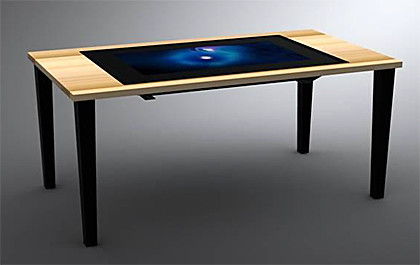
Embedding the SUR40 in a table

Embedding the Samsung SUR40 in a table

With Microsoft’s PixelSense technology, LCD panels can see and respond to touch and objects without using cameras.

SUR40 will allow people to share, collaborate and explore together using a large, thin (4-inch profile) display that recognises fingers, hands and other objects placed on the screen.

The interactive 40-inch Full HD 1080p (1920×1080) LCD panel can be used horizontally as a table, mounted vertically on a wall or embedded in other fixtures and furniture.

The collaboration between Microsoft Surface 2.0 software and Samsung’s display technology is now available through the Samsung channel and reseller partners in Singapore, Malaysia, Indonesia and Thailand.

SUR40 embedded in a table

Samsung SUR40 embedded in a table

Pricing and availability of the SUR40 may vary across countries and/or regions based on country-specific duties, taxes and fees.

Key specifications of the SUR40 is listed below.

(more…)

LG launches 3D World globally

Wednesday, April 18th, 2012

3D World is to improve access to high quality 3D content for LG customers and boost efforts to increase 3D content collaboration.

Content from 3D World will be available to LG’s CINEMA 3D Smart TV users in nearly 70 countries.

Content from 3D World will be available to LG’s CINEMA 3D Smart TV users in nearly 70 countries.

The newly launched 3D World is a premium content service that will be available to LG’s CINEMA 3D Smart TV users in nearly 70 countries.

“3D World is a critical part of LG’s long-term strategy which includes controlling more of the 3D ecosystem that CINEMA 3D owners experience,” said Havis Kwon, President and CEO of LG Home Entertainment Company.With DNA from LG’s original 3D Zone Smart TV app launched last year, 3D World gives LG customers access to an expansive selection of high quality 3D content via a “card” on the Home Dashboard

3D World allows customers the ability to search through high quality 3D content across a wide range of content categories, such as entertainment, sports, documentary, kids, and lifestyle.

“With the global roll-out of 3D World, LG is demonstrating its commitment to providing diverse, high quality 3D content,” added Kwon.In addition to the content, LG plans to pursue further collaborations with global 3D content providers in order to bring the most sought after 3D content to LG customers.

3D World will be offered in app-format for CINEMA 3D Smart TVs that were produced in 2011, while 2012 models will use the streamlined card system on the Home Dashboard.

New smart TVs: Sony Bravia HX, NX, and EX series

Tuesday, March 20th, 2012

Sony has launched its new Bravia TVs in Singapore. First unveiled during CES 2012 in January, the models range from the flagship HX to the mid-range NX and entry-level EX.

The Bravia HX855, HX750, EX650 will be available in Asia Pacific from May 2012 and the NX650 from the third quarter of 2012.

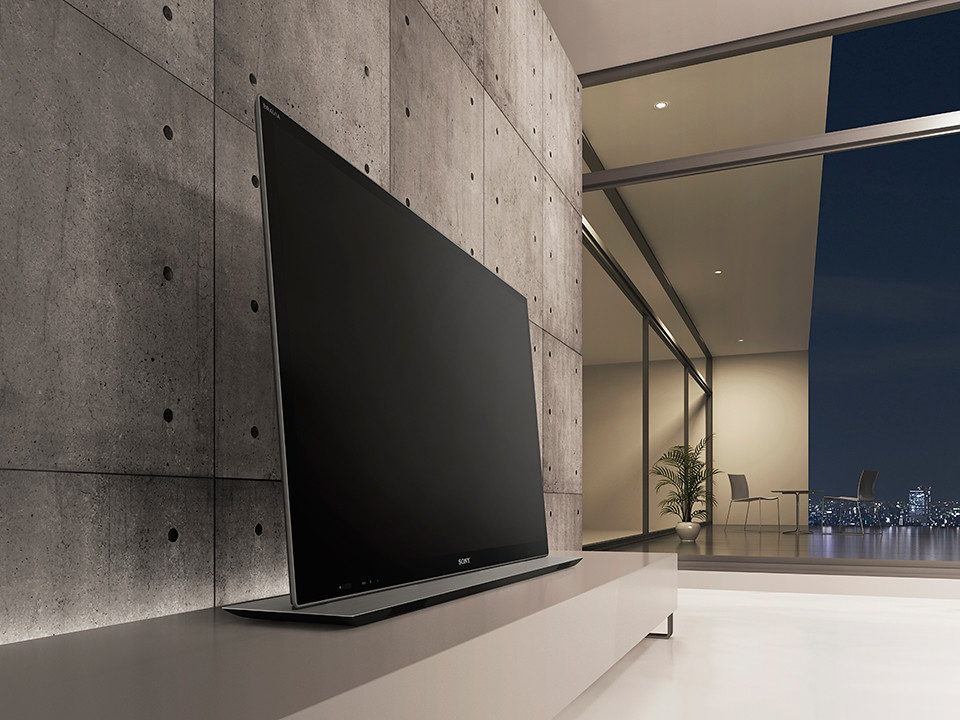
Sony has launched the new HX, NX, and EX series Bravia TVs in Singapore.

Sony has launched the new HX, NX, and EX series Bravia TVs in Singapore.

Picture quality of these new TVs is enhanced by Sony’s X-Reality PRO and X-Reality digital video processors.

X-Reality, Motionflow XR technology, as well as Internet connectivity via DNLA or Wi-Fi.

X-Reality, Motionflow XR technology, as well as Internet connectivity via DNLA or Wi-Fi.

The dual-chip X-Reality PRO picture engine optimises video sources by utilising a vast database of signal patterns and comparing incoming signals with ideal scenes to display greater detail and impressive colour.

The single-chip X-Reality engine separates incoming video into its constituent parts of outline, texture and colour/contrast, and then applies image enhancements to deliver its outstanding picture.

Bravia HX855 series is Sony's flagship LED LCD HDTV.

Bravia HX855 series is Sony's flagship LED LCD HDTV.

Sony’s newest version of Motionflow XR technology reduces blur caused by quick camera movements, enhancing sharpness and creating a smoother viewing experience for fast-paced sports and movie programming, as well as gaming.

Select models incorporate Dynamic Edge LED with local dimming and deliver a brilliant Full HD (1080p) picture with increased brightness and outstanding contrast, particularly in best-in-class deep blacks.

Bravia NX650 series LED LCD HDTV.

Bravia NX650 series LED LCD HDTV.

Sony’s OptiContrast panel elevates the picture to the front surface of the TV and creates a dark background for rich, vibrant, high contrast pictures even in well-lit rooms.

All the new models enjoy one-touch access to additional content on the Sony Entertainment Network, as well as Internet content from YouTube, Facebook and Twitter.

They are also Skype-ready, although you’ll need to connect an additional camera and microphone.

Below are the key features for the new models.

(more…)