Archive for July, 2010

BlackBerry BlackPad from Research In Motion (RIM)?

Wednesday, July 28th, 2010

At last, I see signs of some movement from Research In Motion (RIM), the maker of the  BlackBerry smartphone, in response to the inroads that its rival are making into the smartphone scene.

Artist impression of a BlackPad.

Is this what a BlackPad will look like?

It is much too early to tell whether this move will help RIM stave off its rivals’ inroads into its market share, but it is at least something. However, I believe RIM needs more than just a new device. Apple is successful because of the entire framework – apps, iTunes, chic branding. RIM is lagging in the Apps arena and does not have any music framework. The only thing it can leverage on is its branding from the success of its BlackBerrys. Even that is fading fast in the face of the popularity of the iPhone. I wonder if people still use BlackBerry as a verb anymore? Assessing company email from the phone is old news. What do people talk about nowadays? Apps – Apple apps and Android Apps.

RIM has acquired the internet rights to blackpad.com, fueling speculation that it is developing a tablet device to challenge Apple’s wildly successful iPad.

According to the Whois database of Internet domain names, the domain name assigned to RIM was created on July 8 and expires Sept. 8, 2011.

Bloomberg reports that there was no record of a trademark application for “blackpad” with the U.S. Patent and Trademark Office as of today.

Apple, the maker of the iPad, claimed in June that it has sold 3 million of the tablet computers within 80 days of launch in the US.

Other device makers are vying to develop tablets following Apple’s success with its iPad, although the concept of tablet computers is not new and had been actively but not as successfully pursued by Microsoft nearly a decade ago.

Hewlett-Packard, which bought smartphone maker Palm earlier this month, applied to the Patent Office on July 9 to register the name Palmpad for computers and computer software. HP said last week it plans to produce a tablet device this year.
Promises from RIM for future BlackBerrys

Friday, July 9th, 2010
BlackBerry Bold 9650 smartphone

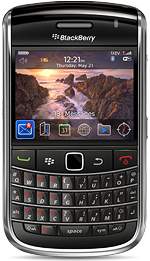
BlackBerry smartphone from RIM

Canadian based Research In Motion (RIM) is hoping to woo consumers as BlackBerry loses ground to Apple’s iPhone and smartphones running Google’s Android operating system. RIM currently leads with 41 percent of the market share for smartphones versus 22 percent for Apple, according to Gartner.

BlackBerry’s strengths lie in their strong security features and data capabilities, which is what corporate clients value. RIM had grabbed the lead in market share by enabling wireless email access easy and secure for BlackBerry users.

However, easy email access has become a basic feature in smartphones, with Apple’s iPhone and Android-based smartphones boasting hip handsets and vast librabries of applications that let users customize their phones.

As of July, there are 225,000 iPhone apps and 65,000 Android apps, compared to 7000 for the BlackBerry. RIM needs to persuade software developers to produce more apps for BlackBerrys, in order to attract consumers. Wade Beavers, US-based software developer has built 142 apps for the iPhone, 130 for Android, and “no more than seven” for the Blackberry.

Beavers griped that RIM is difficult to work with because the apps need to be customised for different BlackBerry models. He said that interest in BlackBerry apps among users is so limited that it’s hard to make money from the programs that he does write for it. Beavers added that “developing for RIM is just a waste of time until they can show there’s an appetite for apps on their platform”.

BlackBerry’s weak browser capability is another issue. Although CTOs do not covet or welcome fun features like games and video apps for their employees, more users want their companies to smartphones sexier than the BlackBerry.

Bloomberg reports that “PayPay has gone from all BlackBerrys two years ago to about half iPhones today”. Other companies like OCBC bank in Singapore are also switching from BlackBerry to other platforms.

A friend of mine carries two phones – a BlackBerry issued by the company and her personal smartphone. She uses the BlackBerry only to access the company’s messaging system and the Windows-based Acer smartphone for everything else. She does not enjoy the Acer at all, but at least she does not change the company name – she has nicknamed RIM to RIP and strongly believes it will follow the footsteps of the killed KINs in the not-too-distant future. That’s how much she enjoys her BlackBerry – not to mention the hassle of having to carry two handphones.

RIM is poised to unleash a wave of new technology which Co-Chief Executive Officer Jim Balsillie promises will have consumers “blown away”. Although RIM’s sneak peek of the BlackBerry 6 technology in April did not spark much enthusiasm, Balsille says he is planning a new look for BlackBerry’s devices, enhanced software and a better user experience.

I am looking forward to hearing more specific details of what these features are.

iPhone 4 debut floods secondhand market with older models

Tuesday, July 6th, 2010
iPhone 3GS, the model before the new iPhone 4

Old iPhones flood the market

A deluge of used iPhones are hitting eBay, recyclers and discount sites, following Apple’s wildly successful debut of the iPhone 4.

Ryan Flinn from Bloomberg reports that in the two weeks after preorders for iPhone 4 started, Gazelle.com – a site that buys electronics from consumers – bought 20,000 used iPhones – compared to 350 in a typical two-week period.

Apple aficionados scramble to purchase the latest iPhones in the annual introduction of new models by the company. While many of the old phones are thrown away or abandoned in a drawer, millions are recycled via secondhand dealers.

Secondhand stores can sell them at more than the price of a new phone from AT&T because AT&T subsidizes the price but comes with a contract.

eBay’s online site has seen the number of used iPhone 3GS and 3G listed for sale increase by 124 percent between June 5 and June 28.

BuyMyTronics.com, which purchases used electronics, has gone from buying 10 iPhones a day, to a daily averaged of almost 40 in recent weeks.

The flood of old iPhones has led to a drop in price in the secondhand market. Gazelle’s offer price for a mint-condition 32 GB iPhone 3GS – last year’s model – has fallen from US$304, prior to the launch of iPhone 4, to US$168.

Adobe Flash CS5 Professional

Monday, July 5th, 2010

Flash CS5 Professional was launched on 12 April 2010 as part of the Adobe CS5 Suite. It is the industry standard for adding animation, interactive content, videos and games to webpages.

New text engine in Flash CS5 Professional

New text engine in Flash CS5 Professional

Its top feature would have been its Packager for iPhone, which enables developers to write applications within Flash and then convert them into iPhone apps.

However, four days before its launch, and as part of Apple’s beta release of iPhone OS 4 Software Development Kit (SDK), Apple amended its developer licence agreement for iPhone developers to prohibit the use of third-party cross-platform development tools, like Flash, to produce iPhone apps.

Adobe has since announced that while it will ship the Packager as part of Flash CS5, it has stopped all new investments in this area.

Even without the Packager for iPhone, there are enough goodies within Flash CS5 Professional to entice code writers and designers. I will be delving into some of the main features below in more detail over the next few weeks. I also did a review of Adobe Flash CS5 Professional  in Digital Life on 2 Jun 2010.

For the Designer:

  • New text engine – Print-quality typographic control like in desktop publication software, Global language support, Advanced inline text editing, Advanced rendering support.
  • Spring for Bones – The Inverse kinematics feature is enhanced with a dynamic physics engine that simulates realistically the springy vibrational oscillations of a spring.
  • New Deco drawing tools – Dynamic Deco brush tools are extended with new brushes with additional shapes and animation effects.

For the Coder:

  • Code Snippets panel – Prebuilt codes that can be injected into projects for things like timeline navigation, actions, animation, audio and video, and event handlers. The snippets contain helpful comments and clear instructions for easy customisation for the inexperienced programmer.
  • Enhanced ActionScript editor – Custom class code hinting and code completion, and reference your own code or external code libraries more efficiently.
  • Flash Builder – Formerly Adobe Flex Builder, this coding tool is bundled with Flash CS5 Professional and both are tightly integrated with each other.

For all users:

  • Distribute content virtually anywhere – Deliver consistently across screens of virtually any size and use Adobe Device Central for enhanced device testing.
  • XML-based FLA source files – XFL offers improved cross-product integration and workflow productivity.
  • Improved Creative Suite integration – Tight integration with Photoshop, Illustrator, Flash Catalyst, Flash Builder, InDesign, Fireworks, and After Effects.
  • Video improvements – Streamline embedding and encoding processes with on-stage video scrubbing and the ability to define cue points directly in the Properties panel. Playback FLV video directly on the stage instead of testing the movie.

Photoshop CS5: Complex and hairy selections made easier

Sunday, July 4th, 2010
Deer staring into headlights

Sharp edges along the horns and hairy edges elsewhere.

Photoshop CS5 has made it easier to make image selections and masks, speeding up the extraction of subjects from backgrounds and the creation of realistic composites.

Enhanced intelligent selection technology offers better edge detection and faster, more accurate masking results of complex subjects such as hair. Automatic color decontamination helps eliminate background color around the edges of a selection, resulting in more seamless compositions when placing extracted subjects on new backgrounds.

Dialog box with controls for Refine Edge

New controls can be found in the Refine Edge dialog

The enhanced controls are found in the Refine Edge dialog box when a selection is made.

The Smart Radius setting uses adaptive selection-edge modification approach to produce different types of selection edges on different parts of the subject’s outline, depending on the type of edges — whether the portion of the edge is fuzzy or sharp. This is based on the traditional best practice of using different techniques for different types of edges along the outline of the subject — one method for fuzzy hair and another for the clear edge of a building.

Selection outline in black and white

Selection outline in black and white

Additional view modes provide new ways of previewing the quality of the selections.

The Refine Radius and Erase Refinements tools allows the initial selection to be refined — be it to add more of the subject or to remove more of the background along the selection edge.

My article in Digital Life on 2 June 2010 (Not a hair out of place) illustrated the use of the enhanced selection controls to make a hairy selection round a starry-eyed deer in Miyajima, Japan.

Existing technology and setup is more than adequate to avert soccer controversies

Saturday, July 3rd, 2010

Dear Sepp Blatter,

The use of technology to help referees and umpires in their jobs is not new. Other sports like cricket and tennis have enlisted the help of technology to determine whether the ball has gone out of play.

Even a sport as traditional as Sumo Wrestling and as steeped in ritual has integrated the use of video replays into their refereeing workflow.

Sepp Blatter - FIFA President

Sepp Blatter - FIFA President

In Sumo, two wrestlers grapple with each other within a 4.55 m diameter circle, under the watchful eye of an umpire. The first to step out of the circle or have any part of his body (except his sole) touch the ground is the loser.

You can imagine how difficult it is for the umpire to spot when a body part of wrestler brushes the ground, especially if his line of sight is obscured by the bulk of the other wrestler. The task is made even more challenging when both hulks fall to the ground and the umpire has to ascertain which one’s body part touches the ground first.

As a result, the umpire in the ring is assisted by 4 other umpires sitting around the ring, plus another two sitting in a video room who watches video replays whenever there is any uncertainty about the outcome of a bout. One of the 4 ringside umpires is the Chief Umpire who has an audio link with the video umpires, and who makes the final decision based on discussion with the other umpires, and advice from the video umpires.

Most of the time, the umpire in the ring makes the call and there is little interference from the ringside umpires and the video room umpires. Only when there is a very close call and there is strong belief that the umpire in the ring has made a wrong call does the arbitration from the other umpires kick in.

I believe FIFA can very easily adapt this arrangement to Soccer. And the technical setup is already there to be tapped – even for the ongoing World Cup in South Africa.

Instead of having additional referees on the ground with Mark II eyeballs who are subject to the same constraints as the existing referees, put those two in a room with the existing commercial video feeds that are already being shot and broadcast to the rest of the world.

Work out two simple SOPs (standard operating procedures) for the group of referees umpiring the match:

  1. Identify the decision maker among the group, whether it should be the main referee on the pitch, or to appoint one of the two video room referees when a controversial incident occurs.
  2. Delineate the types of occurrence to trigger a video referee interference. I’ve prioritised a list here and FIFA can decide which of these to be allowed to trigger interference:
  • Goal (whether the ball crossed the goal line)
  • Offside (when a goal is involved)
  • Infringements resulting in a goal (handballs, fouls etc)
  • Violent fouls, diving
  • Off-the-ball incidents

For a start, the interference could be limited to the first two types of controversies. For most of the match, there is no need for any interference. Some matches might not even result in any interference at all.

With the availability of video feeds, the setup would not incur much cost or effort, and it should not be difficult or time consuming to resolve a controversial occurence. The existing instant replays soccer fans watch today over the air is usually good enough to illustrate whether the referee made a terrible decision.

Mr Blatter, take a courageous step. Just do it. Don’t wait till after this World Cup. You never know what might happen during the semi-finals and the Final. Let soccer fans enjoy the game for its brillance and fair play, instead of suffering the frustration and outrage of injustice.

Is it a question of technology?

Friday, July 2nd, 2010

For a long time now, people in the soccer community have been wishing for the introduction of some form of technology to help referees on the pitch avoid major refereeing mistakes that can change the course of the game being played, or simply change the final score of the game.

Oh my God!

Lampard's legitimate goal was not awarded

Up till the ongoing World Cup tournament in South Africa, the landmark refereeing oversight has been the goal scored by the “hand of God”. Based on video and photographic evidence, Maradona, one of the best players in the game’s history had pushed the ball into the net with his left fist. The referee, who did not see the infringement, allowed the goal, which allowed Argentina to take a 1-0 lead over its opponent, England. Argentina then went on to win that quarter-finals match 2-1 and eventually won that World Cup in 1986.

FIFA, the world governing body of the game, has inexplicably resisted calls to introduce some form of technology to avert such mistakes. Suggestions include the use of video-playbacks, goal-line technology and embedded chip in the ball. Some even believe the reluctance could stem from the desire to keep soccer interesting by ensuring there is no lack of such controversies.

This world cup has had its share of such controversies. France managed to secure its place in S Africa at the expense of Ireland during a playoff match. Thierry Henry, the captain of the French team handled the ball illegally during the build-up to the scoring of the deciding goal by William Gallas, another French player.

In a single day on 27 June, both the quarter-finals match involved goal controversies which the victims believed played a significant role in their eventual loss of their matches.

In the England vs Germany match, Lampard’s shot at the German goal clearly crossed the goal line after it bounced off the cross-bar, before it bounced out of the goal again. It happened in a split-second and I don’t blame the referee for missing it. But live video replays showed millions of viewers worldwide that it clearly should have been a goal. England naturally believes if that goal had been rightfully awarded, they would have played the match differently and possibly could have won the match eventually.

In the Mexico vs Argentina match, the opening goal by Argentina’s Carlos Tevez should have been disallowed because he was offside – an infringement whereby the player is nearer to the opponent’s goal than any of the opponent’s players (except the goalkeeper) at the time the ball is passed to him. Video replays around the stadium showed clearly that Tevez was indeed offside and the Mexican players naturally remonstrated with the referee to nullify the goal. The referee, despite consulting with his assistant referees, allowed the goal and Argentina went on to score two more goals to win the match eventually.

If you ask me, I don’t blame the referees at all. Some of these infringements happen in the split of a second and it is entirely possible for the referees on the ground to miss it – since they are only human and they have to keep watch in many directions at once and sometimes from a distance. And I’m not sure they are encouraged to change their decisions based on video replays since the practice is not officially sanctioned.

Is it really impossible to eliminate these controversies? Is it really a question of technology? I provide some suggestions to Sepp Blatter, President of FIFA, in my next post tomorrow.

Apple sued for reception problems on iPhone 4

Thursday, July 1st, 2010
Is iPhone 4 sweating yet"?

Is iPhone 4 sweating yet"?

Two separate complaints were filed against Apple Inc. in federal court in San Francisco on 30 June, accusing the company of unfair business practices and false and misleading advertising because of reception problems with its new iPhone 4.

The two lawsuits were filed separately by a New Jersey resident and a Massachusetts resident. They had bought the new iPhone 4 and seek to represent other buyers of the new mobile phone in a class action, or group, lawsuit.

The iPhone 4 was launched on 24 June but criticism surfaced over diminishing signal strength when users cover the bottom left corner of the phone with their palm.

Apple has sold 1.7 million iPhone 4 within the first three days of its launch, making it the fastest selling gadget Apple has launched to date.

(more…)