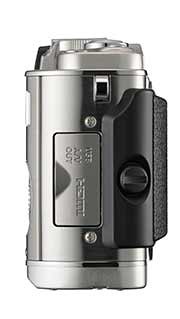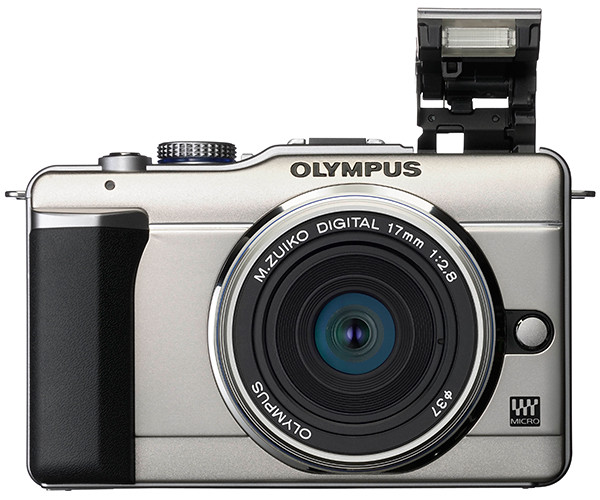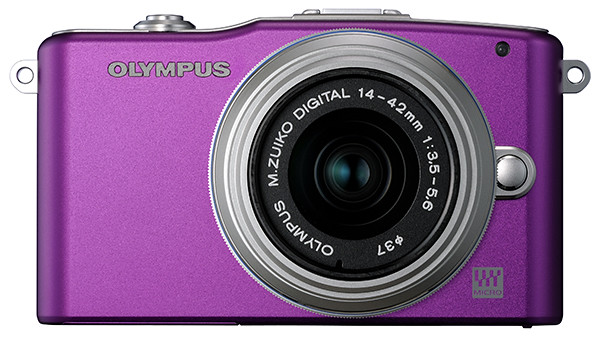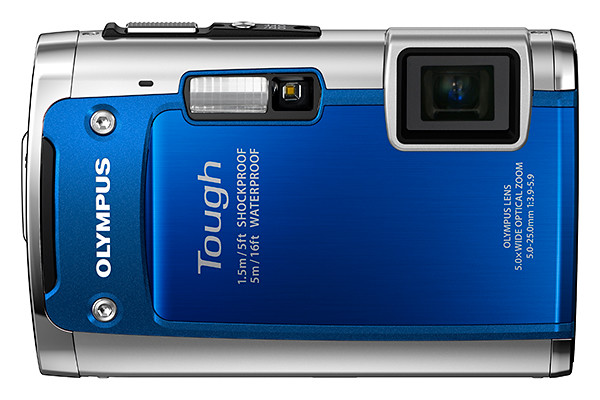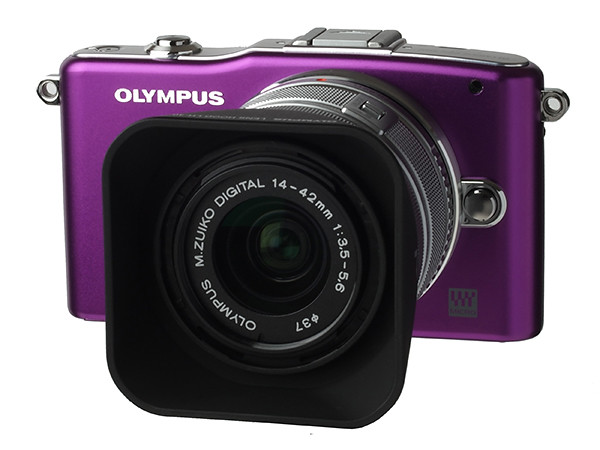
Olympus will be at Booth 5D10 in Hall 5 at the Singapore EXPO during SITEX 2011 (24-27 November).
When you hit SITEX 2011 today, check out some of the promotional discounts and free gifts for Olympus cameras.
Olympus will be at Booth 5D10 in Hall 5 at the Singapore EXPO during SITEX 2011 (24-27 November).
When you hit SITEX 2011 today, check out some of the promotional discounts and free gifts for Olympus cameras.
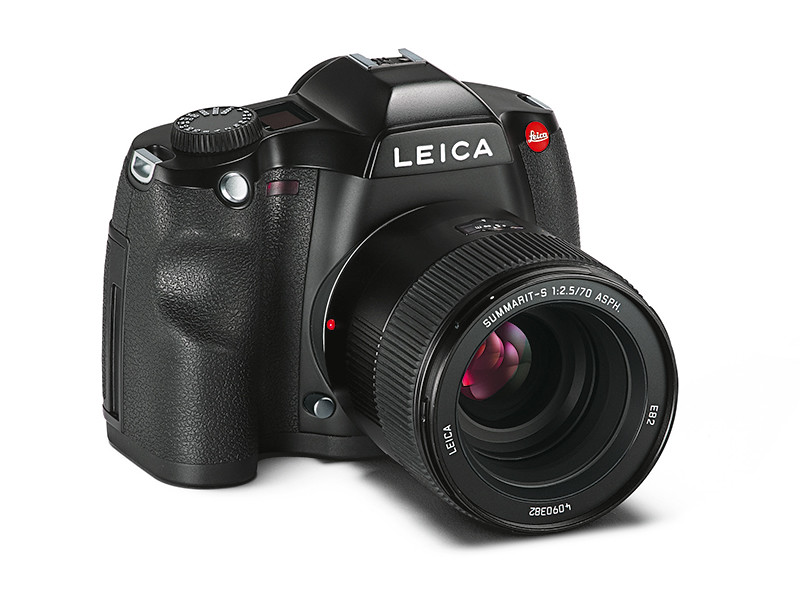
Leica Camera sales from first half of this year (April 1 to September 30, 2011) increased by a double digit 56% compared to the corresponding period last year (April 1 to September 30, 2010).
Sales in Asia contributed to 23.7% of Leica’s global sales.
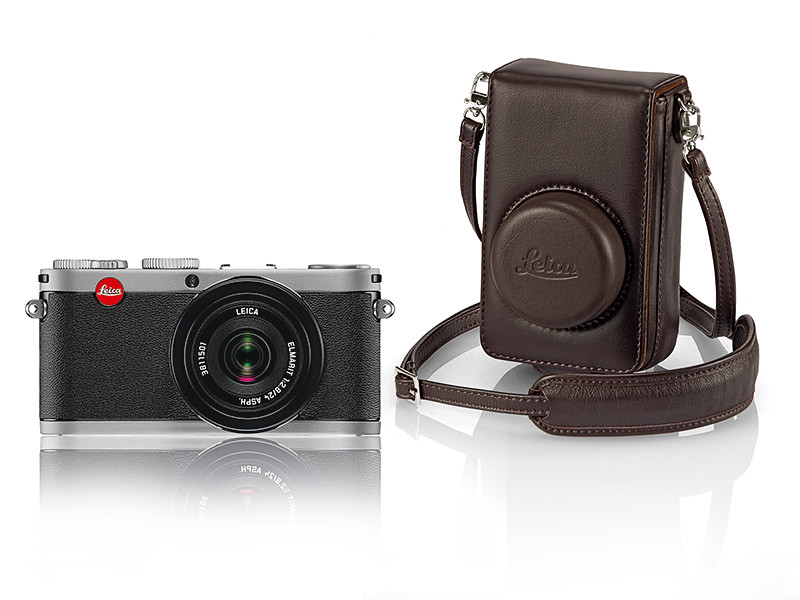
The Company’s success drivers were the Leica M9 rangefinder camera, the S2 professional system, as well as the Leica X1 compact camera.

The Leica compact camera models V-Lux 20, V-Lux 2 and D-Lux 5 also made essential contributions to the positive overall development.
Further success drivers are the Rangemaster and Televid product lines in the Leica Sport optics product group.
The Samsung NX200 was first unveiled on September 1, 2011. It has just become available yesterday, with prices in Singapore set at S$1,099 (incl 7% GST and 18-55 mm kit lens).
Here are the main specifications for the Samsung NX200 mirrorless interchangeable lens digital camera:
| NX200 | Main specifications |
|---|---|
| Image Sensor | 20.3 Megapixels APS-C Size CMOS (23.5 x 15.7mm) |
| Lens | Samsung Lenses for Samsung NX Mount, bundled with Standard Kit Lens: Samsung 18-55mm F3.5-5.6 OIS i-Function lens |
| Image Stabilization | Lens Shift (depends on Lens) |
| Shutter Speed | Auto: 1/4000sec. – 30sec.
Manual: 1/4000sec. – 30sec. (1/3 EV step) |
| Exposure |
|
| Focusing | Contrast AF (100ms AF Speed)
|
| Shooting |
|
| Drive |
|
| Movie | 1080p/30fps Full HD Movie Recording with MP4 (H.264)
|
| Flash | External Flash only (Bundle with SEF8A) with 28mm wide-angle
Fill-in + Red-eye reduction, 1st Curtain, 2nd Curtain, Off
|
| Physical Specifications |
|
| Additional features |
|
First announced two months ago in September, the 20.3 megapixel camera is now available worldwide. The Samsung NX200 is priced at S$1,099 (incl 7% GST and 18-55 mm kit lens) in Singapore.
The NX200 promises DSLR quality combined with compactness and the ease-of-use of a digital compact point-and-shoot. This is Samsung’s fifth NX camera in its third body design. The 20.3 megapixel APS-C CMOS sensor is contained in an all-metal body.
For high speed capture, the NX200 achieves 100ms Advanced AF speed, fast boot and seven frames per second continuous shooting. Its ISO ranges from 100 to 12,800 (in seven stops) for low light shooting or to help freeze action shots. The NX200 records 1920×1080/30p (H.264) HD movie recording and Stereo Sound.
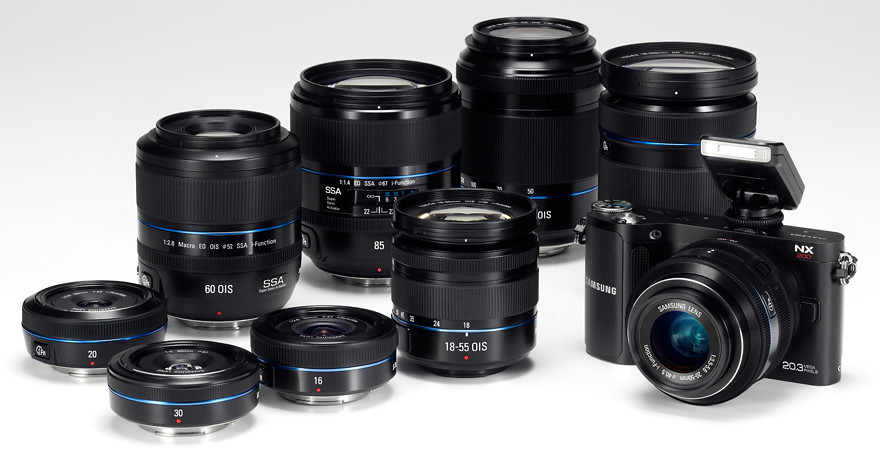
The NX200 is fully compatible with Samsung’s range of nine i-Function lenses, which allows toggling between shutter speed, aperture, exposure value (EV), white balance (WB), and ISO quickly and easily through the button and ring on the lens.
With the upgraded i-Function 2.0 on the NX200, it can control six different Smart Filters and the intelli-Zoom function from the lens whilst in Lens Priority Mode. New lenses for the i-Function system include 18-200mm (S$1,099), 16mm (S$499), 60mm and 85mm focal lengths.

Samsung NX200, with 20.3 megapixels, APS-C CMOS sensor, 1920x1080/30p (H.264) HD movie recording, and 3.0” VGA AMOLED display.
Images captured can be viewed on the 3.0” VGA AMOLED display of the NX200. The camera’s Smart Panel also offers intuitive control thanks to hot keys that enable users to switch to key functions without the need to scroll through confusing menus to get to the desired shot.
A new Panorama function allows users to take lengthened shots of large objects or turn the image into a 3D scene, bringing the object to life. A Sound Picture function allows a snippet of sound to be recorded together with a still snapshot.
The main specifications for the Samsung NX200 can be found here.
Olympus will be at Booth 8205 on Level 4 in Hall 404 during COMEX 2011. Head for promotional discounts and bundles especially limited sets of the Pen E-PL1, which has been reduced from S$998 to S$498 plus free gifts worth S$320.
The star promotion from Olympus for COMEX 2011 is the PEN E-PL1. Launched in February 2010, OLYMPUS E-PL1 is an entry-level model, equipped with a new Live Guide interface which makes it easy for users to get the results they want even if they have little previous experience with photography.
Key features include the Live Guide user interface for easy, intuitive adjustment of brightness, hue, background defocusing, and other image parameters; dedicated Movie mode button for seamless access to movie shooting at any time; go-anywhere portability in a light, compact body with built-in flash and image stabilization; offered in white, champagne gold, and black; and six Art Filters, including new Gentle Sepia, for enhanced photographic creativity.
The normal pricing for the E-PL1 14-42mm Lens Kit is at S$998 (with GST), which includes the body (in White, Champagne Gold, and Black), an M.ZUIKO DIGITAL ED 14–42mm F3.5–5.6 lens (Silver) and an 8 GB SD card.
The COMEX 2011 offer at S$498 includes an additional 8 GB SD Card, an E-PL1 Skin, a camera bag, a screen protector, a card reader, 3 months local extended warranty and free E-Workshop.
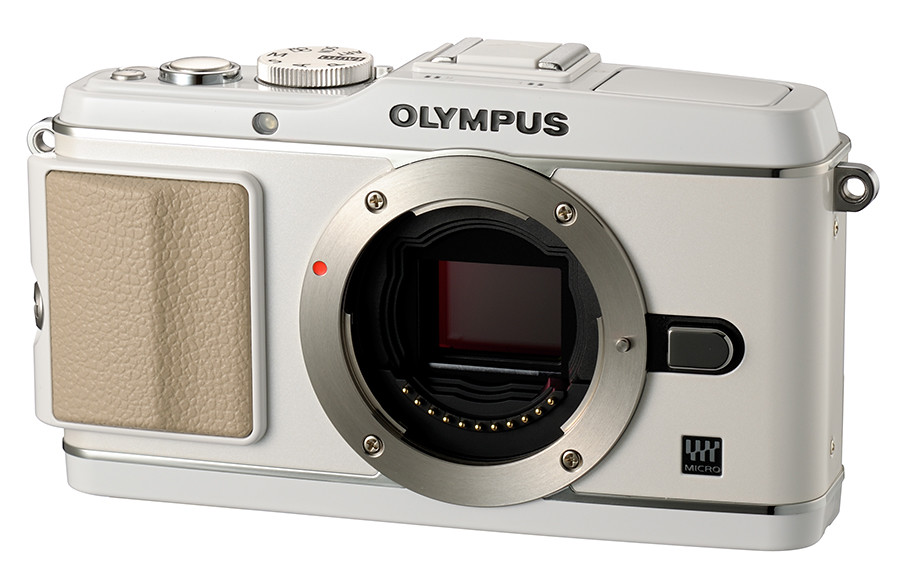
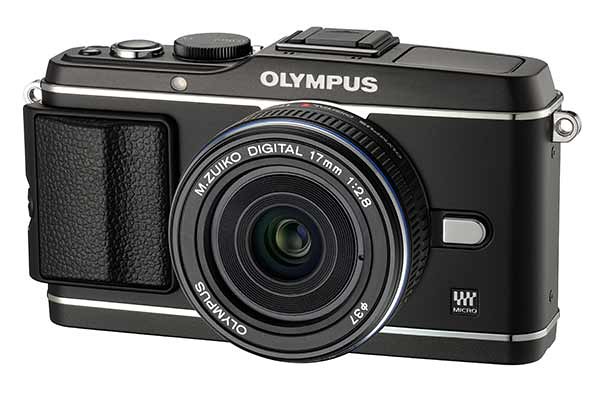
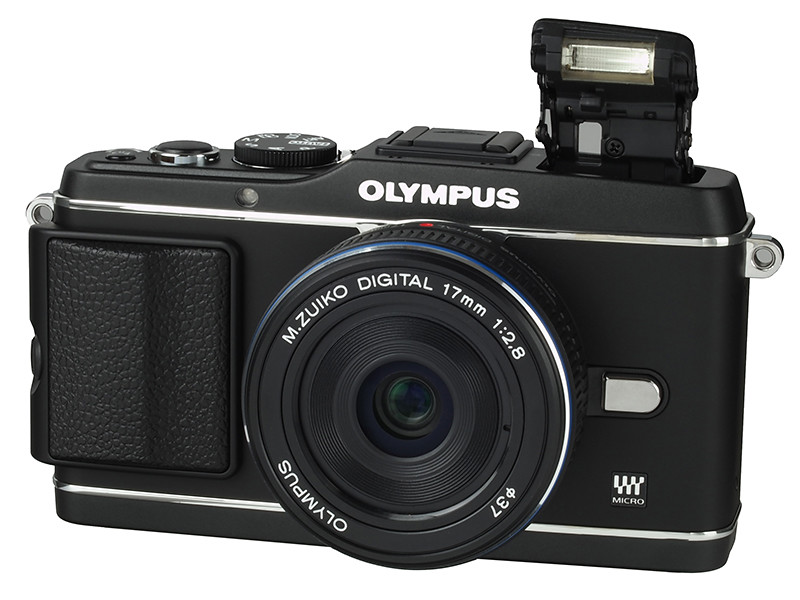
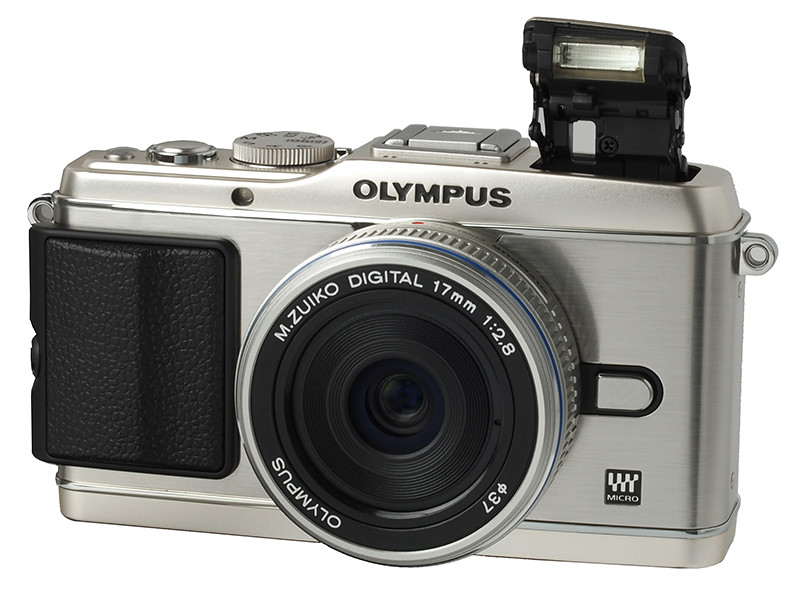
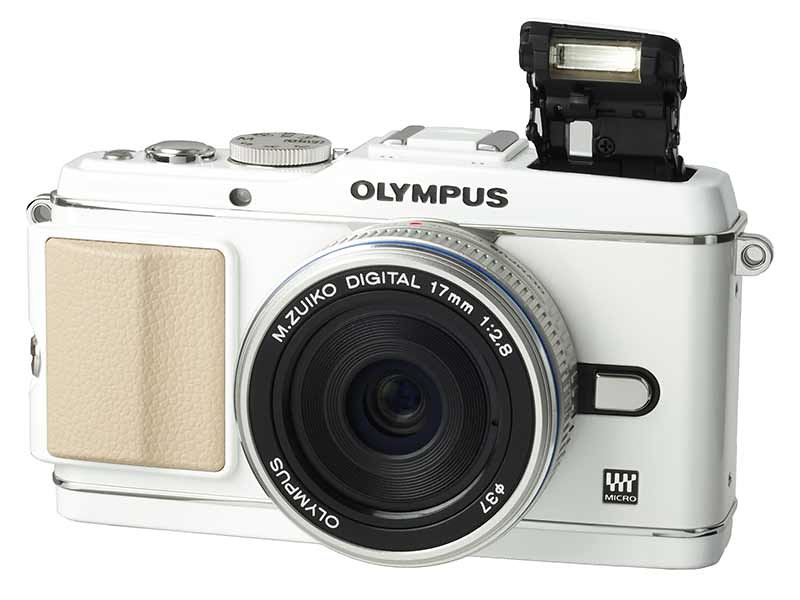
Olympus has announced the Suggested Retail Prices (SRP) of the PEN-E-P3 in Singapore. Available in black, silver and white and bundled with an 8 GB SD card, the 14-42mm Lens Kit is priced at S$1,298 (incl GST), while the Twin Lens Kit will set you back by S$1,548 (incl GST).
The E-P3 14-42mm Lens Kit is priced at S$1,298.00 (incl GST) and includes both the body and the M.ZUIKO DIGITAL 14-42mm f3.5-5.6 II R lens.
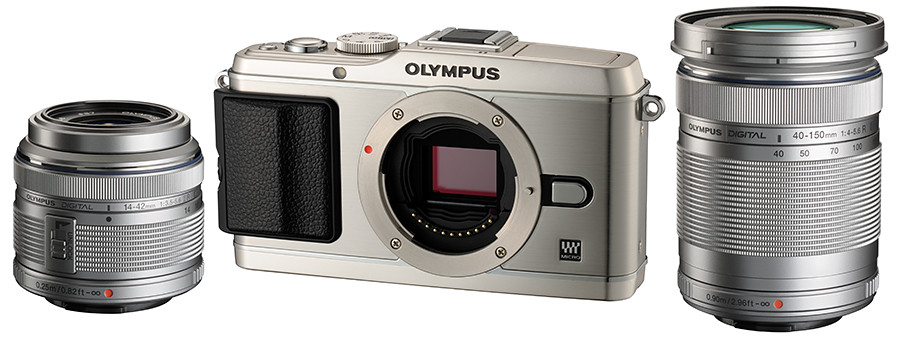
The E-P3 Twin Lens Kit is priced at S$1,548.00 (incl GST) and includes the body, the M.ZUIKO DIGITAL 14-42mm f3.5-5.6 II R lens and the M.ZUIKO DIGITAL ED 40-150mm f4.0-5.6R lens.
Both options come bundled an 8 GB SD card. The body is available in black, silver and white. Black camera bodies will be matched with black lenses. Silver and white camera bodies will come with silver lenses.
The Olympus PEN E-P3 can be purchased from Olympus authorised retailers.
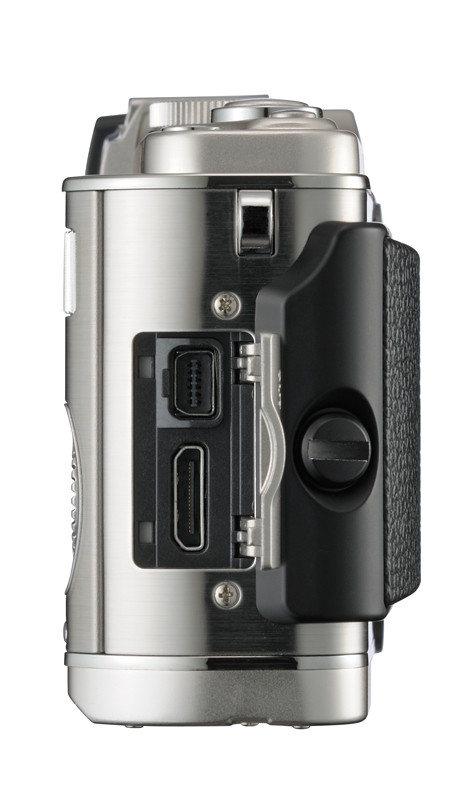
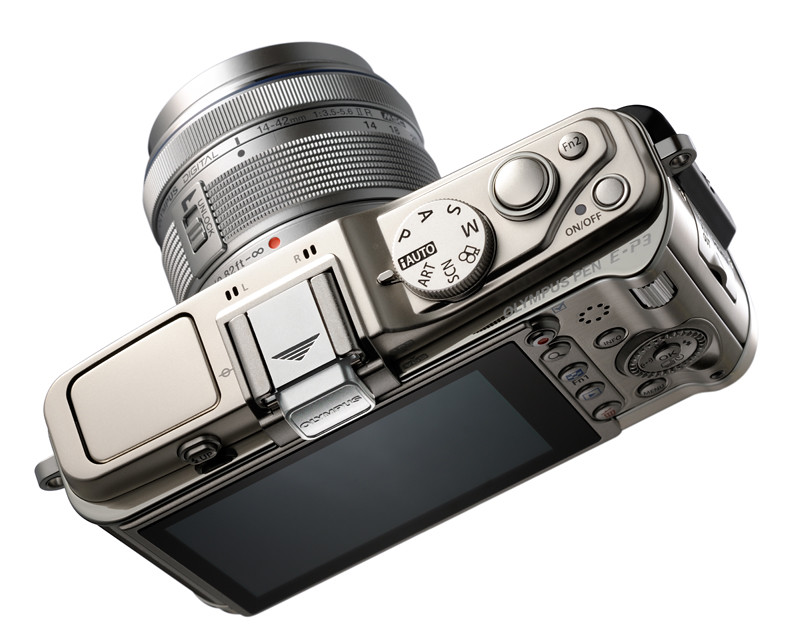
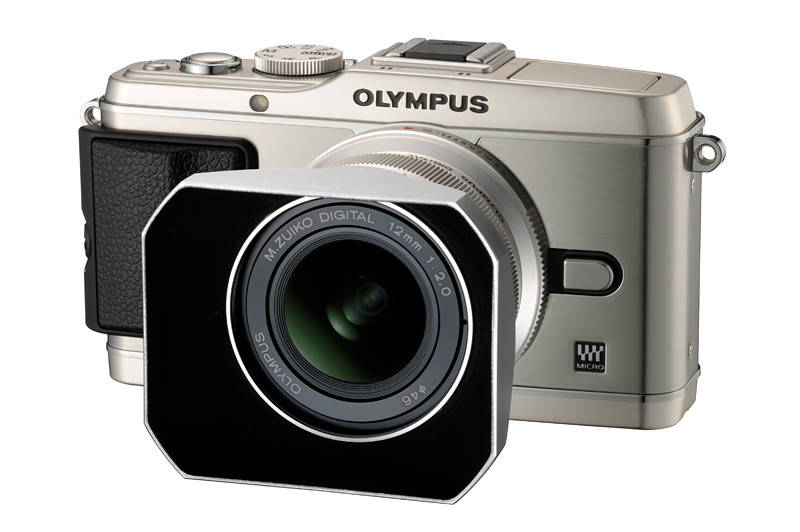
Here are the specifications for the latest flagship digital camera for the PEN series of mirrorless interchangeable lens DSLR from Olympus. Although it looks similar to its predecessor, the PEN E-P3 features near instantaneous autofocus speeds, enhanced image quality and a more ergonomical user interface. The camera comes in black, silver or white.
The Olympus PEN E-P3 is a 12.3-megapixel entry-level DSLR camera which is more compact than traditional DSLRs because the design leaves out the mirror that channels the view through the lens to an optical viewfinder on top of the camera.
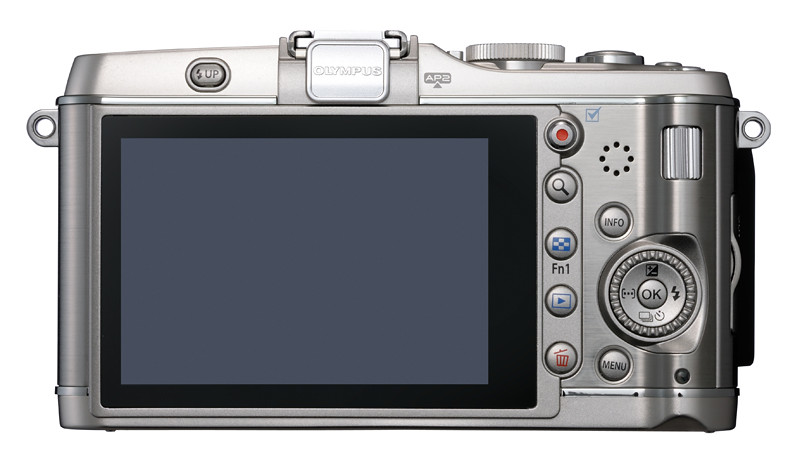
The LCD screen at the back of the camera shows a preview of the shot for framing and composition. An optional add-on electronic viewfinder is available for those who prefer to hold the camera to the face rather than at arms length.
The micro four thirds format and size of the image sensor also contributes to the compactness, although some believe the smaller size of the sensor would slightly impact the image quality when compared with other DSLRs using the standard but slightly larger APS-C sized sensor.
The main highlight of the PEN E-P3 is the enhancement of the autofocus system, which has improved the autofocus speed by more than three times when compared to its predecessor.
I’ve tried it during the launch event for the product and the autofocus felt near instantaneous and impressive.
The details are below:
| Main Specs | |
|---|---|
| Price (Singapore) | to be announced |
| Effective megapixels | 12.3 |
| Monitor | 3-inch 3:2 OLED touch screen with 610k dots |
| Colours | Black, Silver or White |
| Movie | – HD 1280 x 720 @ 30fps (16:9) – SD 640 x 480 @ 30fps (4:3) |
| The juicy details | |
| Image stabilisation | – Photo: “Supersonic Wave Drive” in-body sensor shift (up to 3 EV stops compensation) – Video: Digital IS |
| Sensor | 4/3 inch hi-speed Live MOS sensor |
| File format (Photos) | JPEG, RAW, MPO (3D) |
| Largest photo size | 4032 x 3024 pixels |
| Image aspect ratio | 4:3, 3:2, 16:9, 1:1 |
| Video recording | AVCHD and AVI Motion-JPEG 1920 x 1080, 60i recording, 17 Mbps Frame rate: 30 fps Max length: 29 min, 4 GB |
| Image processor engine | TruePic VI |
| Auto focus | FAST AF system with 35-area multiple AF (Imager contrast detection) |
| AF assist lamp | Yes |
| Exposure modes | iAuto, Program AE (with shift), P, A, S, M, Art Filter, Scene select |
| Sensitivity | – Auto: ISO 200 – 12800 – Manual: ISO 100 – 12800 (adjustable in 1/3 EV step) |
| Metering modes | Digital ESP (324-area multi-pattern metering), Centre-weighted average, Spot (1%) |
| AE Bracketing | 2, 3, 5 or 7 frames |
| Exposure compensation | Up to +/- 3 EV in 1/3, 1/2 or 1.0 steps |
| Shutter speed | 1/4000 sec to 60 sec |
| WB | Auto, Sunny, Shadow, Cloudy, Incandescent, Fluorescent, Flash, Custom |
| Art filters | 10 (Pop Art, Soft Focus, Grainy Film, Pin Hole, Diorama, Dramatic, Pale & Light Color, Light Tone, Cross Process, Gentle Sepia) |
| Scene modes | 23 |
| Continuous shooting | – Sequential (3 fps) – Raw: max 8 frames – JPEG: Unlimited until memory runs out |
| Self-timer | 2 or 12 sec |
| Flash | – Built-in pop-up (GN10 at ISO 200 – Hotshoe for external flash |
| Viewfinder | Optional EVF |
| Orientation sensor | Yes |
| Storage | SD (SDHC, SDXC) |
| Dimensions | 122 x 69.1 x 34.2 mm |
| Weight (excl battery and card) | 275g / 9.2oz. (incl. Battery and card) |
| In the box | Li-ion battery BLS-5, charger BCS-1, USB/Video multi cable, Shoulder strap, Software CD-ROM, Instruction manual. |

The PEN E-P3 - flagship model for the PEN series of mirrorless interchangeable lens cameras from Olympus.
Externally similar to its predecessors, the PEN E-P3 has received a new sensor, image processing engine and the autofocus system has been tuned up to become lightning fast.
The PEN E-P3 is scheduled for release in Singapore on July 22, 2011 although the pricing has not been revealed yet. Online retailers such as Adorama is taking preorders for the PEN E-P3 at US$899 with M. Zuiko 14-42mm II R f/3.5-5.6 kit lens. The camera is available in black, white and silver. See the specifications here.
FASTer autofocus
Olympus claims that the new FAST (Frequency Acceleration Sensor Technology) autofocus (AF) system makes the E-P3 the camera to beat when it comes to AF speed. The FAST AF is achieved through the combination of a few innovations.
Firstly, the Live MOS Sensor is driven at double the previous speed – 120 fps – so that image data can be obtained more quickly than with previous systems. Secondly, the speed of the AF computations that generate the contrast information from the image data – in order to determine the degree of focusing – has also been doubled. Thirdly, the speed of communication for controlling the lens motion during AF has been increased. Finally, the response time from pressing the shutter release to the start-up of AF system has been shortened.
Overall, the imager AF speed has become almost three times faster than before.
I tried out the camera during its launch on 30 June and found the AF was indeed much faster than its predecessors the E-P2 and E-P1 – even at low light. An AF illuminator light – inexplicably absent in previous models – has a range of 3m for low light situations.
The number of focus selection areas has been increased from 11 to 35, enabling detailed, pinpoint AF across a wider area than before. To capture a moving subject accurately, the group area selection can apply AF to a limited region compose of 3 vertical and 3 horizontal areas.
Design and UI
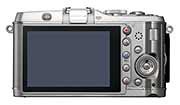
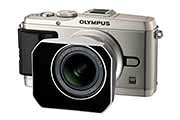
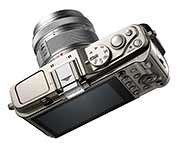
The Olympus PEN E-P3 retains the retro design of the PEN series and looks similar to its predecessors.
The 3-inch, 610k-dot OLED display is not only bright and sharp but features a touch screen that is easy to use – in fact addictive. Simply tap the main subject on the screen to prefocus, or focus and take the snapshot immediately. The font and graphic design of the user interface and menu system has been improved to become more readable and good-looking.
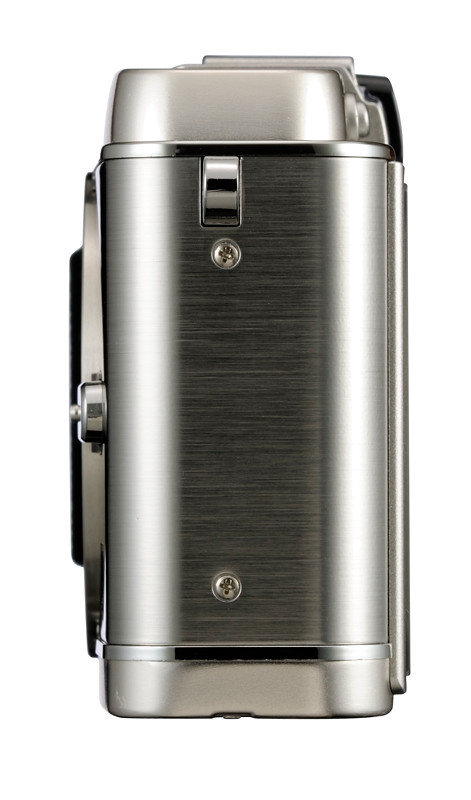
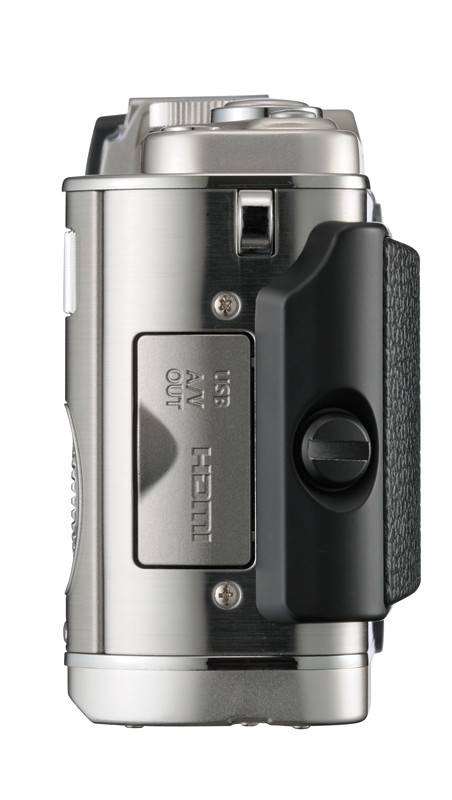
In terms of external design, its retro look is similar to its predecessors with a few design and functional differences. There are now two Function buttons and a direct movie-recording button – making camera control easier. A built-in GN10 (ISO 200) flash – absent in previous models – is now available. Two designs of detachable camera grips are available in white, black or silver. Alternatively, leave the grip at home for a minimalistic look, showing off the metallic finish on the E-P3 body.
Inside the camera
A new 12.3 megapixel Live MOS sensor in the micro four thirds interchangeable lens digital camera promises an enhanced image quality. 1080i60 full HD movies in AVCHD format are now possible as is high-sensitivity shooting at ISO12800.
The dual core processor allows live view on the LCD panel and image processing when a shot is taken to be executed in parallel, decreasing the blackout time after snapping each photo. This, together with the aforementioned FASTer AF gives the E-P3 a snappier feel and makes it more responsive – especially when taking multiple shots at a go.
The E-P3 now ships with 10 Art Filters – precanned special effects that are applied to the JPEG image when you snap a photo. This is two more than the E-P2 and four more than the E-PL3. Art Filter bracketing is now possible for recording multiple Art Filtered pictures with a single snapshot.
Two new Art Effects are added – “Starlight” and “White Edge”, as well as a new Art Filter variation called the “Pale & Light Colour II”. The Art Filters can be applied during full HD movie shooting and the 3D Art Filter is compatible with the new 3D Photo Shooting scene mode.
Image processing has been enhanced by incorporating the “Full Detail” processing algorithm used in the E-5, the flagship DSLR from Olympus. New “Real Colour Technology” targets the reproduction of colours that are difficult to accurately reproduce such as emerald green and yellow making the image pop.

The “Advanced Shadow Adjustment Technology” (ASAT) tries to correct backlit photos by brightening the backlit subject independently without blowing out the bright background.
Olympus has just launched, worldwide, its slew of new cameras, lenses and accessories. The three new camera models include updates to the PEN E-P2 and E-PL2, as well as the new E-PM1 with a similar form factor (for the body) as the Olympus XZ-1. New and repackaged lenses are also being launched.

The new Truepic VI engine and sensor promise enhanced image quality and, together with the new auto-focusing system, deliver much faster auto-focus on these new cameras.
The Olympus PEN E-P3 is here. And some of its new powerful features have also been made available to its “Lite” and “Mini” cousins: the E-PL3 and E-PM1 respectively.
Two new lenses – a 12 mm f/2.0 lens and a 45 mm f/1.8 lens – have also been introduced together with the new cameras. At the same time, two existing kit lenses has been repackaged into the 14-42 mm II R and the 40-150 mm II R to match the design of the new cameras, although the functionality remains unchanged. A new external wireless-capable flash – FL300R – was also unveiled.
The PEN E-P3 and the 12 mm f/2.0 lens is scheduled for release in Singapore on July 22, 2011, while the other camera models and lenses will only be available later. As of today’s launch, only the E-P3 was ready for shooting, while the E-PL3 was not ready to be powered on. For the E-PM1, only a mock-up was viewable in a display case.
Prices in Singapore are yet to be determined, although Adorama is taking preorders online for the PEN E-P3 (US$899 with kit lens), the 12 mm f/2.0 lens (US$799) and the 45 mm f/1.8 lens (US$399).
The launch in Singapore at the National Geographic Store in VivoCity is one of 6 venues worldwide holding the event at the same time.
“The much faster autofocus speed is achieved through the combination of four components making up the FAST <Frequency Acceleration Sensor Technology> autofocus system introduced in these new cameras,” Terada Toshiyuki (寺田 利之), Group Leader of the Product and Marketing Planning Group in Olympus told me.
“This includes a new LiveMOS sensor which is driven twice as fast as current sensors, faster calculation of the contrast detection autofocus, faster communications between the camera and the lens, and reduction of the lag in activating autofocus when the shutter release button is pressed,” elaborated the Tokyo-Shinjuku based guest.
Trying out the E-P3 unit myself, I found the auto-focus almost instantaneous – even in low-light. It certainly feels much faster than the previous incarnations of cameras in the PEN series.
I found the touch-screen really addictive and easy to use – simply point at the subject you want to focus on, and the camera focuses quickly on it and takes the snapshot. No more fiddling with buttons and menu systems just to select from a limited number of focus points.
You can also use the touch screen to pre-focus in prefocus mode – simply tap the main screen where the main subject is and the camera focuses but does not release the shutter. Press the regular shutter release button to take the snapshot.
The previous PEN cameras came with auto-tracking of subjects. This works with the touch-screen as well.
Olympus claims that image quality has also been improved with the new sensor and Truepic VI engine. More realistic colour reproduction and selective brightening of back-lit subjects without the addition of noise are some of the advanced features touted.
Olympus will announce a slew of new products tomorrow (Thursday June 30th) at 6 am London time (1 pm Singapore time). Expect the E-P3, E-PL3, E-PM1 and a slew of new and repackaged lens that leverage a new Truepic VI engine and faster electronic connections to provide faster auto-focus.
Olympus has been gearing up towards tomorrow’s launch event at multiple venues worldwide. There is much speculation as to what will be launched. Here are some sneak peeks. Check back for the actual specs tomorrow.
The new Truepic VI engine promises to improve the auto-focus speed tremendously, compared to existing Olympus PEN cameras.
New camera models
New lenses
Reworked lenses
Accessories