Archive for the ‘Technology’ Category

Sony aims for 15% market share for interchangeable lens cameras

Wednesday, February 23rd, 2011
Sony wants to increase its market share from 11% of global SLR camera sales in 2009, to at least 15% market share by March 2011.

Sony aims to increase its market share for Interchangeable Lens Cameras

Sony may control about 15 percent of the global market for single-lens-reflex cameras by the end of March, Masashi Imamura, president of the Personal Imaging & Sound Business Group told Bloomberg in an interview in Tokyo yesterday.

Interchangeable lens cameras is the fastest growing segment of digital imaging devices last year. Sales of SLR cameras increased 30% in the past year, more than twice the 13% growth by compact cameras, according to the Camera & Imaging Products Association, a Tokyo-based industry group.

In a report from research company IDC in April last year, leading the race was Canon which sold 45% of the world’s SLR cameras, followed by Nikon which sold 34%. Sony was in third place, accounting for 11% of the 9.77 million units sold in 2009. In the previous four years that it has been in the segment, Sony has garnered about 10% of the market share.

It bought the high-end camera business of Konica Minolta Holdings in 2006 when Konica ended its 130-year-old camera business to focus on printers.

Sony, which also manufactures the Cyber-shot compact cameras, has been aggressively introducing new models in its pursuit to grab market share from the two leaders.

The maker of alpha-series DSLR cameras introduced its NEX cameras (NEX-3 and NEX-5) in June 2010. These cameras feature the large sensors of traditional DSLRs, do away with the use of the reflex mirror and optical viewfinder, while allowing the camera lens to be changeable.

Like the Micro Four Thirds mirrorless cameras from Olympus and Panasonic, the NEX cameras offer the image quality of traditional DSLRs, the flexibility of using different lens for different shooting situations, yet enjoy a reduced bulk.

Sony also launched a slew of new models in its existing Alpha line in September. These include the SLT A55 and A33, which replace the traditional reflex mirror between the lens and the sensor with a stationary translucent mirror. This also makes the camera smaller and improves the auto-focus performance of the camera.

Micro Four Thirds vs Four Thirds

Saturday, February 5th, 2011
Ever wondered what’s the difference between Four Thirds and the newer Micro Four thirds? Here’s a really quick comparison.

Flangeback distance: MFT only 50% of FT

The Four Thirds system is a standard created by Olympus and Kodak in 2001 for digital single-lens reflex camera (DSLR) design and development. Unlike older SLR systems, Four Thirds has been designed from the ground up to be entirely digital.

The Micro Four Thirds system was developed in 2008 by Olympus and Panasonic.

The Four Thirds System standard offers the benefits of compact, lightweight performance, and the new Micro Four Thirds System standard takes this still further to enable development of new ultra-compact interchangeable lens type digital camera systems.

The image sensor diagonal dimensions are the same for both Four Thirds System and Micro Four Thirds System standards.

Mount electrical contacts: MFT(11) vs FT(9)

The Micro Four Thirds System standard enables users to enjoy the same high image quality of the Four Thirds System’s 4/3-type image sensor in a much more compact body, and also take advantage of significantly more compact lenses, particularly in the wide-angle and high-power zoom range.

The new Micro Four Thirds System standard also incorporates a greater number of lens-mount electrical contacts (increased from 9 to 11) for the support of new features and expanded system functionality in the future.

Lens mount diameter: MFT is 6mm smaller than FT

Other primary distinguishing features of the Micro Four Thirds System standard (when compared to the Four Thirds System standard) are:

Approximately 50% shorter flangeback distance (mount-to-sensor distance).

Lens mount outer diameter approximately 6mm smaller.

4G network in Singapore as early as this year?

Monday, January 24th, 2011

Not so fast. In theory, it is possible to see 4G implemented in Singapore as early as this year. In reality, when we really see 4G take off in Singapore depends on many factors: roll-out by telcos, launch of smartphones and tablets by device makers, availability of compatible peripherals like dongles, and most important of all, applications to exploit the higher speed.

IDA announced its blueprint for the rollout of a 4G network in Singapore today. But don’t jump for joy yet – it is more a roadmap for early planning by the telcos to implement their versions of the network.

Logo of IDA4G refers to the fourth generation of wireless-mobile standards and can be five to 10 times faster than current 3G networks. Downloading a video will become real fast. Maybe you can play those mean bandwidth-hungry games on your smartphones too.

The two main announcements on the rollout of Singapore’s 4G network address the immediate term from now to 2015, and the subsequent landscape beyond 2015.

Between now and 2015

Today, five companies SingTel, StarHub, M1, QMax and PacketOne hold the rights to use the 2.3/2.5 Ghz spectrum for wireless broadband access. SingTel, StarHub and M1 also holds the rights to use the 900/1800MHz bands for 2G mobile services. In 2005, they had successfully bid for the right to use the spectrums until 2015.

IDA gave the go-ahead for these operators to offer 4G services using their eixsting radiofrequency spectrums. These Telcos can seek approval from IDA to do so and the approval could be completed in a matter of weeks.

IDA did not mention the 700MHz band although it is included in the 4G standard.

Beyond 2015

Beyond 2015, IDA is planning to re-allocate rights to the wireless broadband spectrum. IDA will hold an auction for six lots of 4G wireless spectrum rights next year.

“SingTel is exploring all options available and is working closely with network providers to ensure commercial LTE services can be introduced to our customers in good time,” said a SingTel spokesperson.Thus far, SingTel, StarHub and M1 have announced plans to roll out a 4G technology based on the Long Term Evolution (LTE) standard.

M1 has completed its LTE trials in April 2010 and will be upgrading its network to LTE in 2011.

A StarHub spokesperson said that StarHub is “currently conducting technical trials of LTE.”

4G networks have already been rolled out in the US and a few4G handsets have already been launched by some smartphone makers.

Use of the 4G network in Singapore will probably begin on laptops using dongles. 4G smartphones and tablets will only come later, probably in 2012, but more likely in 2013.

However, the main driving factor of WHEN a 4G network in Singapore will really take off depends on whether consumers or business users can find a compelling need to migrate from an already speedy 3G network to the new network, presumably at an increased cost.

The IDA has gotten off to a good start by laying down the blueprint early for all interested parties to plan their hardware and network investments, as well as to clarify the usage of the relevant spectrums.

The gauntlet is now thrown to the Telcos to work out the detailed standards and spectrum allocation, price plans and services to exploit the broader bandwidth.

Google’s 4th quarter earnings (Ended 31 Dec 2010)

Friday, January 21st, 2011

Google reported a net income of US$2.54 billion (or US$7.81 per share) in the quarter ended 31 Dec. This is an increase of 29% from US$1.97 billion (or US$6.13 per share) in the quarter a year earlier.

Google IncProfit excluding some items was US$8.75 a share, exceeding the US$8.08 average of estimates compiled by Bloomberg, and exceeding the US$6.79 a share from the quarter a year earlier.

Sales of US$6.37 billion (excluding commissions paid to advertising partners) surpassed the US$6.06 billion average of estimates. This is up from US$4.95 billion from the preceding year.

According to ComScore, Android beat Apple’s iPhone in US smartphone subscribers for the first time in November, accounting for 26% of the market, compared with 25% for Apple. BlackBerry maker Research In Motion continued to lead with 33.5%.

In the search-engine business, Google continues to lead. In December, Google accounted for 66.6% of searches in the US (up from 66.2% in November) compared to a share of 28% (down from 28.2%)  from Microsoft and Yahoo combined. Yahoo began using Microsoft’s Bing technology for its online search in August.

RIM’s India concession likely to prompt others

Wednesday, September 1st, 2010
Having given in to demands from the Indian government to open up access to BlackBerry e-mail and instant messenger correspondence, other countries will expect the same concessions to be extended to them.

RIM's logo with flags of countries concerned with security

RIM’s India concession likely to prompt others

The Indian deal sets a precedent and RIM will find it difficult to turn down other countries seeking similar access. Prashant Singhal, head of the telecommunications division at Ernst & Young India Pvt. in New Delhi, told Bloomberg that “with some of the countries where discussions were on or are still on, like Saudi Arabia, governments may go back and ask for security codes, following in India’s footsteps. Most governments are going to ask for the same security solution RIM has offered.”

Motivated by security concerns, both the United Arab Emirates and Saudi Arabia have threatened to ban BlackBerry services unless RIM allowed access to its encrypted client data to the authorities. Turkey and Indonesia have also expressed security concerns about BlackBerry services.

RIM has reiterated last week that the company maintains a “consistent global standard” for lawful access to its messaging system that “does not include special deals for specific countries.”

RIM fell 6% to US$42.84 in the Nasdaq Stock Market yesterday, the biggest decline since June 29, after a Sanford C. Bernstein Ltd. survey found more companies opting for rival devices such as Apple Inc.’s iPhone, reports Bloomberg.

The shares have lost 37% this year while Apple’s share price has increased by 15%.

India to get BlackBerry access

Monday, August 30th, 2010
Indian flag with BlackBerry logo.

India to get BlackBerry access from RIM

The Indian government disclosed that Research In Motion Ltd. (RIM) has given Indian authorities access to BlackBerry e-mail and instant messenger correspondence. This is on the eve of an August 31 deadline for RIM to do so or face a ban on BlackBerry services in India. RIM first agreed to allow monitoring of e-mail on BlackBerry handsets by the Indian government in 2008.

Other countries like Saudi Arabia and the United Arab Emirates have also threatened to shut off BlackBerry services unless RIM provide access to its encrypted client data. These countries are worried the secure comms provided by BlackBerry devices could be exploited by terrorists such as those in the 2008 Mumbai attacks and insurgents from Kashmir and Assam. It could also help criminals evade authorities monitoring their comms for illegal activities.

Nokia Oyj, the biggest mobile-phone maker in the world, has agreed to set up servers in India by Nov 5, to allow security agencies to monitor its customers’ e-mail.

India is also exploring how to track voice-over-Internet protocol services provided by companies like Skype and Google.

RIM’s proposal to placate India would be at the expense of legitimate corporate customers whose privacy will be compromised.

Roger Entner, an analyst with IAG Research Inc. told Bloomberg that in the U.S., the Federal Bureau of Investigation can monitor the mobile e-mail of particular people with authority from a judge, as they do in wiretapping phone calls. American officials would go to a company for access to an employee’s messages or to an Internet service provider for non-corporate e-mail.

According to Bloomberg, India accounts for about 2 percent of RIM’s 46 million customers worldwide. Mike Abamsky, an analyst at RBC Capital Markets in Toronto, puts the number to about 1.1 million. As of June, India had 636 million mobile-phone subscribers, second only to China’s 805 million.

Romal Shetty, executive director of the telecommunications division at KPMG’s Indian unit, opined that “India as a market is small today for BlackBerry phones but the opportunity space for RIM is very, very large. They can’t walk away from a market like India. It’s not something anybody can afford to do.”

India’s telecommunications department will test RIM’s proposal for 60 days to see whether it allows security agencies to tap its messenger and corporate e-mail services.

Research In Motion earns a reprieve from Saudi Arabia’s BlackBerry ban

Wednesday, August 11th, 2010
Blackberry logo superimposed on Saudi Arabia flag

Saudi Arabia postpones BlackBerry ban indefinitely.

Some hints of hope for Research In Motion (RIM), the maker of the popular BlackBerry smartphone, in its aspirations of growth outside of North America.

AFP reported that Saudi Arabia has postponed indefinitely a BlackBerry ban after a deadline passed for finding a solution allowing authorities to monitor its encrypted messages. The state news agency SPA reported that the Communications and Information Technology Commission (CITC) had announced that BlackBerry messenger services would remain online, due to progress in efforts to find a solution to the concerns.

Among the reported solutions is the installation of a local server accessible to Saudi authorities, instead of the data going directly to RIM’s Canadian servers. Local daily Okaz on Monday quoted a technical source at one of the monarchy’s three mobile phone companies as saying the tests on the server and requested programmes have been successful.

More than 700,000 Saudis subscribe to BlackBerry, with most reportedly purchasing the smartphone for personal use.

The telecoms regulator had previously ordered mobile operators to block the BlackBerry feature from Friday last week or face a 1.3-million-dollar fine, after similar moves by other Arab nations. United Arab Emirates had announced that it would ban BlackBerry messenger, email and web browsing from October 11, over concerns that the encrypted communications on BlackBerry smartphones could not be monitored by the government for criminal and terrorist activities.

The UAE’s telecoms regulator said last week that it remained open to discussions to find a “regulatory-compliant solution,” possibly a resolution based on enabling monitoring.

Outside the Arab world, India is mulling a ban and Indonesia is not ruling out the option, although on Thursday it denied the world’s largest Muslim nation was considering a suspension of BlackBerry services.

India plans to set a deadline later this week for operators to allow security agencies access to encrypted BlackBerry messages or face disconnection, the Hindustan Times quoted a home ministry official as saying Tuesday.

Hurdles from foreign governments for BlackBerry’s overseas growth

Monday, August 2nd, 2010

It never rains but pours for Research In Motion (RIM), maker of the BlackBerry smartphone. RIM’s overseas aspirations are confronted with threats from foreign governments to restrict or ban its services as these countries tighten restrictions on mobile e-mail.

BlackBerry logo with flags of foreign governments superimposed.

Potential bans from foreign governments threaten RIM's overseas growth.

With the challenges from Apple and Android-based smartphones checking its growth in North America, Canada-based RIM is looking to countries such as India, Indonesia, Brazil and kingdoms in the Middle East for growth. Bloomberg reports that revenue from outside North America and the U.K. nearly doubled last quarter as US sales, which account for a quarter of revenue, dropped 7 percent.

One of BlackBerry’s main strength over competitor’s smartphones is the security it promises for its encrypted messenging service. But it is precisely this that foreign governments are concerned with, since they are worried that the encrypted communications could be used by criminals and terrorists who are targeting their countries. The foreign governments want some means to monitor the BlackBerry communications in their countries.

All BlackBerry e-mails are handled by the company’s own enterprise servers in Canada, making the devices popular with companies and government officials including Barack Obama, who kept his BlackBerry after becoming U.S. president.

A potential solution is to setup proxy servers in overseas countries so that the foreign governments can monitor the  communications that uses BlackBerrys in their countries.

An official in India has said that the country may ban BlackBerry e-mail use while Saudi Arabia could take similar steps. The Telecommunications Regulatory Authority in the UAE has announced that, from October 11, BlackBerry’s Messenger, e-mail and Web browsing services will be halted.

BlackBerry BlackPad from Research In Motion (RIM)?

Wednesday, July 28th, 2010

At last, I see signs of some movement from Research In Motion (RIM), the maker of the  BlackBerry smartphone, in response to the inroads that its rival are making into the smartphone scene.

Artist impression of a BlackPad.

Is this what a BlackPad will look like?

It is much too early to tell whether this move will help RIM stave off its rivals’ inroads into its market share, but it is at least something. However, I believe RIM needs more than just a new device. Apple is successful because of the entire framework – apps, iTunes, chic branding. RIM is lagging in the Apps arena and does not have any music framework. The only thing it can leverage on is its branding from the success of its BlackBerrys. Even that is fading fast in the face of the popularity of the iPhone. I wonder if people still use BlackBerry as a verb anymore? Assessing company email from the phone is old news. What do people talk about nowadays? Apps – Apple apps and Android Apps.

RIM has acquired the internet rights to blackpad.com, fueling speculation that it is developing a tablet device to challenge Apple’s wildly successful iPad.

According to the Whois database of Internet domain names, the domain name assigned to RIM was created on July 8 and expires Sept. 8, 2011.

Bloomberg reports that there was no record of a trademark application for “blackpad” with the U.S. Patent and Trademark Office as of today.

Apple, the maker of the iPad, claimed in June that it has sold 3 million of the tablet computers within 80 days of launch in the US.

Other device makers are vying to develop tablets following Apple’s success with its iPad, although the concept of tablet computers is not new and had been actively but not as successfully pursued by Microsoft nearly a decade ago.

Hewlett-Packard, which bought smartphone maker Palm earlier this month, applied to the Patent Office on July 9 to register the name Palmpad for computers and computer software. HP said last week it plans to produce a tablet device this year.

Promises from RIM for future BlackBerrys

Friday, July 9th, 2010
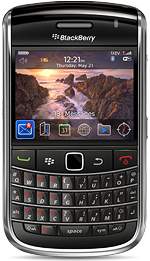
BlackBerry Bold 9650 smartphone

BlackBerry smartphone from RIM

Canadian based Research In Motion (RIM) is hoping to woo consumers as BlackBerry loses ground to Apple’s iPhone and smartphones running Google’s Android operating system. RIM currently leads with 41 percent of the market share for smartphones versus 22 percent for Apple, according to Gartner.

BlackBerry’s strengths lie in their strong security features and data capabilities, which is what corporate clients value. RIM had grabbed the lead in market share by enabling wireless email access easy and secure for BlackBerry users.

However, easy email access has become a basic feature in smartphones, with Apple’s iPhone and Android-based smartphones boasting hip handsets and vast librabries of applications that let users customize their phones.

As of July, there are 225,000 iPhone apps and 65,000 Android apps, compared to 7000 for the BlackBerry. RIM needs to persuade software developers to produce more apps for BlackBerrys, in order to attract consumers. Wade Beavers, US-based software developer has built 142 apps for the iPhone, 130 for Android, and “no more than seven” for the Blackberry.

Beavers griped that RIM is difficult to work with because the apps need to be customised for different BlackBerry models. He said that interest in BlackBerry apps among users is so limited that it’s hard to make money from the programs that he does write for it. Beavers added that “developing for RIM is just a waste of time until they can show there’s an appetite for apps on their platform”.

BlackBerry’s weak browser capability is another issue. Although CTOs do not covet or welcome fun features like games and video apps for their employees, more users want their companies to smartphones sexier than the BlackBerry.

Bloomberg reports that “PayPay has gone from all BlackBerrys two years ago to about half iPhones today”. Other companies like OCBC bank in Singapore are also switching from BlackBerry to other platforms.

A friend of mine carries two phones – a BlackBerry issued by the company and her personal smartphone. She uses the BlackBerry only to access the company’s messaging system and the Windows-based Acer smartphone for everything else. She does not enjoy the Acer at all, but at least she does not change the company name – she has nicknamed RIM to RIP and strongly believes it will follow the footsteps of the killed KINs in the not-too-distant future. That’s how much she enjoys her BlackBerry – not to mention the hassle of having to carry two handphones.

RIM is poised to unleash a wave of new technology which Co-Chief Executive Officer Jim Balsillie promises will have consumers “blown away”. Although RIM’s sneak peek of the BlackBerry 6 technology in April did not spark much enthusiasm, Balsille says he is planning a new look for BlackBerry’s devices, enhanced software and a better user experience.

I am looking forward to hearing more specific details of what these features are.