Archive for the ‘Linux’ Category

Review: Seagate NAS 4-bay 20TB Network Attached Storage for businesses

Monday, May 11th, 2015

If you’re a small growing business looking for an easy-to-use and affordable NAS storage solution that keeps your data secure and always available, this Seagate NAS 4-bay 20TB (S$1,899) could well be your answer.

Seagate NAS 4-Bay 20TB.

Seagate NAS 4-Bay 20TB.

The NAS 4-bay 20TB is one of many configurations (see sidebar below) that Seagate introduced as part of its Network Attached Storage (NAS) product line refresh that saw the replacement of its previous Business Storage series with the NAS and NAS Pro lines of product.
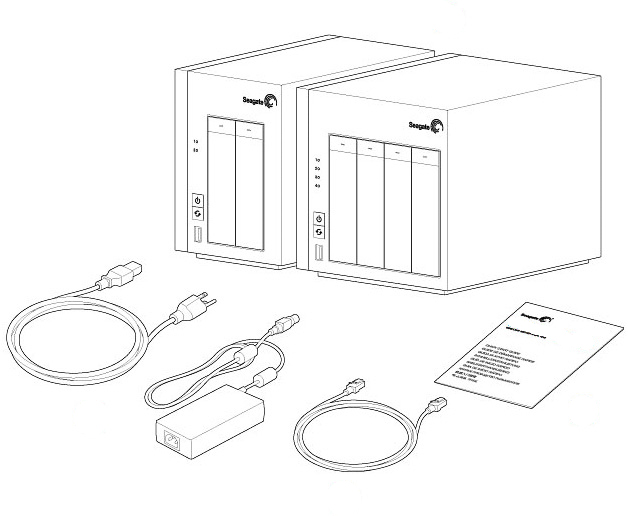
In the box: Seagate NAS, power supply cable, Ethernet cable, Quick Start Guide.

In the box: Seagate NAS, power supply cable, Ethernet cable, Quick Start Guide.

With pre-installed hard disk drives (HDD) and pre-configured RAID disks, as well as its latest operating system – NAS 0S 4 – Seagate offers storage simplicity for SOHOs (Small Office Home Office) and small businesses with ease of use and private cloud access over the Internet.

The ease of use and set-up is particularly attractive to small companies without dedicated IT resources, while the cloud access is especially useful for organisations with mobile workers requiring secure remote access to vital documents, data and resources from the field.
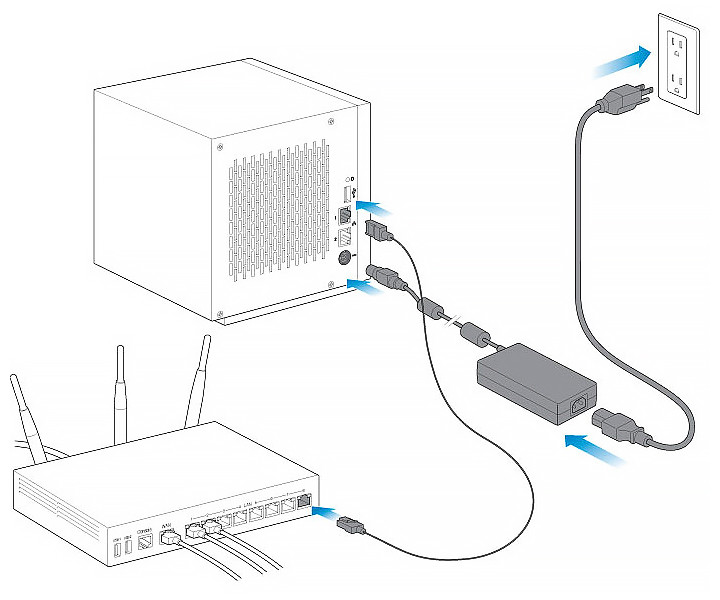
Connection is easy: Simply connect the Ethernet cable to the NAS and the router. Then connect the power cable to the NAS and the outlet and you're ready to go. You can connect a second Ethernet cable for redundancy or performance.

Connection is easy: Simply connect the Ethernet cable to the NAS and the router. Then connect the power cable to the NAS and the outlet and you’re ready to go. You can connect a second Ethernet cable for redundancy or performance.

The easy-to-navigate HTML user-interface is driven by the new LINUX-based NAS OS 4, which now comes with a redesigned Device Manager, enabling users to manage preferences and configure settings from a single location.

It includes useful features such as App Manager and Seagate Sdrive for remote access – some of the most demanded features of NAS users in general.

I found the NAS device management effortless from a desktop, laptop, tablet, or even a smartphone.

I was also impressed by how silent the internal fan of the NAS was – you can just leave the NAS on and hardly notice any noise.

My take:

“Seagate’s NAS 4-bay 20TB offers an excellent affordable and reliable network attached storage solution for home and small business businesses with up to 25 employees – with easy set-up and usage, as well as cloud access from anywhere with an Internet connection, from mobile devices including tablets and smartphones.”

(more…)

Red Hat launches open source Red Hat Enterprise Linux 7

Tuesday, July 8th, 2014

Red Hat’s new Enterprise Operating System is now generally available, and offers a single platform for enterprises to converge their computing across the open hybrid cloud, from bare metal and virtual machines to the cloud.

Red Hat's latest release of its flagship platform - Red Hat Enterprise Linux 7 promises dramatic improvements in reliability, performance, and scalability.

Red Hat’s latest release of its flagship platform – Red Hat Enterprise Linux 7 promises dramatic improvements in reliability, performance, and scalability.

Red Hat Enterprise Linux 7, the latest major release of the company’s flagship platform.

Red Hat Enterprise Linux 7 not only lays the foundation for the open hybrid cloud and serves enterprise workloads across converged infrastructures, but it also pushes the operating system beyond today’s position as a commodity platform.

Built to meet modern datacenter demands along with next-generation IT requirements, Red Hat Enterprise Linux 7 powers the spectrum of enterprise IT, from application containers to cloud services.

Bare metal servers, virtual machines, Infrastructure-as-a-Service (IaaS) and Platform-as-a-Service (PaaS) are converging to form a robust, powerful datacenter environment to meet constantly changing business needs.

(more…)

Red Hat signs MOU with A*STAR BATC on Data Analytics Development

Tuesday, October 1st, 2013

A*STAR’s Business Analytics Translational Centre (BATC) collaborates with Red Hat to Use open source solutions for data analytic applications development.

Witnesses and signing parties of the MOU collaboration between Red Hat and A*STAR’s Business Analytics Translational Centre. From L-R: Ang Wee Tiong, Director, Technology, BATC; Dr. Tan Geok Leng, Executive Director, Science & Engineering Research Council, A*STAR & Chairman, BATC Management Committee; Damien Wong, General Manager, ASEAN, Red Hat; Suresh Sachi, Deputy Managing Director (Corporate & Legal), General Counsel, A*STAR; Jim Whitehurst, President and CEO, Red Hat; Dr. Vivian Balakrishnan, Minister for the Environment and Water Resources; Jacqueline Poh, Managing Director, IDA; Shankha Sen, Chief Financial Officer, Red Hat Asia Pacific.

Witnesses and signing parties of the MOU collaboration between Red Hat and A*STAR’s Business Analytics Translational Centre. From L-R: Ang Wee Tiong, Director, Technology, BATC; Dr. Tan Geok Leng, Executive Director, Science & Engineering Research Council, A*STAR & Chairman, BATC Management Committee; Damien Wong, General Manager, ASEAN, Red Hat; Suresh Sachi, Deputy Managing Director (Corporate & Legal), General Counsel, A*STAR; Jim Whitehurst, President and CEO, Red Hat; Dr. Vivian Balakrishnan, Minister for the Environment and Water Resources; Jacqueline Poh, Managing Director, IDA; Shankha Sen, Chief Financial Officer, Red Hat Asia Pacific.

Red Hat, Inc., a leading provider of open source solutions, today announced plans for a new collaboration with A*STAR’s Business Analytics Translational Centre (BATC) to help accelerate innovation and drive adoption of business analytics with open source solutions from Red Hat.

“Open source has evolved to become a foundation for innovation. As technology continues to become more of a commodity, the standardization of parts can help spur more rapid innovation,” said Jim Whitehurst, president and CEO of Red Hat.

Jim Whitehurst, president and CEO of Red Hat, was present for the signing of a Memorandum of Understanding (MOU) today in Singapore with Dr Tan Geok Leng, Chairman of BATC Management Committee and Executive Director for the Science & Engineering Research Council (SERC), A*STAR.

Red Hat will be collaborating with BATC in areas of big data, middleware, Platform-as-a-service (PaaS), cloud and storage, for the innovation and development of current and upcoming analytics projects.

(more…)

Infographic: Red Hat started from a spare bedroom

Sunday, September 9th, 2012

Did you know Red Hat started out in a spare bedroom in Tim Burke’s (current Vice President, Linux Engineering, Red Hat) house?

Here’s a tech byte about the software company that provides open source software to the enterprise community.

Red Hat started out from a spare bedroom. Click to see full infographic which includes Red Hat and Open Source software.

Red Hat started out from a spare bedroom. Click to see full infographic which includes Red Hat and Open Source software.

Red Hat Linux first appeared in 1994, with an October release called Halloween. It also started the Fedora Project in 2003.

Red Hat believes in community-led innovation. That’s why Red Hat is the leading corporate contributor to the kernel, with 70,790 changes, making up 16.3% of contributions to the GNOME project.

The Top 5 Asia Pacific stock exchanges are powered by Red Hat.

Infographic: Linux turns 21

Saturday, September 8th, 2012

Do you know that Linux has turned 21 years old on 25 August 2012? Here’s a tech byte about the open source operating system.

Linux is now twenty-one years old. Click to see full infographic which includes Red Hat and Open Source.

Linux is now twenty-one years old. Click to see full infographic which includes Red Hat and Open Source.

The initial announcement from Linus Torvalds was posted on 25 August 1991.

The kernel which forms the core of the Linux system is the result of one of the largest co-operative software projects ever attempted.

Almost 8,000 individual developers contributed to each kernel release between ver. 2.6.11 to 3.2, and the numbers continue to increase.