Milestone signals Windows 8 has completed product development and testing, and is being handed-off to hardware partners to get ready for October 26 general availability. Release schedule below.
Windows 8 has reached RTM (Release to Manufacturing).
Microsoft has just announced that Windows 8 has reached Release to Manufacturing (RTM), the latest milestone in the launch of the new Windows 8 operating system.
Users buying a new Windows 7 PC between 2 June 2012 to 31 January 2013 can purchase an upgrade to Windows 8 Pro for S$17.99 (including GST) on the day of Windows 8 launch.
Those currently on Windows XP, Windows Vista or Windows 7 (prior to 2 June) can upgrade to Windows 8 Pro for US$39.99.
For those wanting to try a pre-release version of Windows 8 before general availability, the Windows 8 Release Preview is available for download here.
Developers can visit the Windows Dev Center to get access to all the tools and resources they need to design, build, and sell apps in the Windows Store.
Whereas all apps during the preview phases were free, developers can now begin charging for apps with the RTM.
Those with access to RTM bits will begin to see paid apps appear in the Windows Store.
The schedule for releasing the final RTM code to select audiences – including developers, IT professionals and partners – will begin in mid-August.
August 15th
Developers building new apps for Windows 8 will be able to download the final version of Windows 8 via an MSDN subscription. You can visit the Windows Dev Center to get access to the final build of Visual Studio 2012.
IT professionals testing Windows 8 in organizations will be able to access the final version of Windows 8 through a TechNet subscription.
August 16th
Customers with existing Microsoft Software Assurance for Windows will be able to download Windows 8 Enterprise edition through the Volume License Service Center (VLSC), allowing you to test, pilot and begin adopting Windows 8 Enterprise within your organization.
Microsoft Partner Network members will have access to Windows 8.
August 20th
Microsoft Action Pack Providers (MAPS) receive access to Windows 8.
Microsoft has released the preview of Outlook.com, a web-based “unified” email that allows the user to consolidate mails and messages from Hotmail, Gmail, Yahoo mail.
It is also connected to Facebook, Twitter, LinkedIn, and soon – Skype.
Try out the Outlook.com preview here.
You can find more details for the Outlook.com preview on the Outlook blog.
One of the first and most frequently asked questions from my readers when Microsoft first unveiled its Customer Release for Office 2013 – was the difference between Office 365 and Office 2013.
Microsoft has now clarified on its nomenclature.
Microsoft’s logo for “the new Office”. The new logo is highly reminiscent of the new Windows mark and is part of Microsoft’s company-wide approach to deliver a more consistent branding experience across all of its products.
The paras below are how Microsoft differentiates between Office 365 and Office 2013.
Office 365. This is our services brand. Office 365 services are subscriptions with multiple installs for different devices and are always the latest technology every day of the year. Last week, we announced an extension of our Office 365 services for consumers – Office 365 Home Premium – and a new option for business users – Office 365 ProPlus, which join our Office 365 services for small businesses, enterprises, education and government.
Office Client – Release Year Editions. Just like a car, these editions are the latest technology up to that year. The new release is the “2013” edition. You’ll see this label in suites such as “Office Home and Student 2013.” These editions are also in the cloud and save to SkyDrive by default, but people buy and install once on a single machine.
Note: Individual client applications such as Word, Excel, Outlook, OneNote and PowerPoint carry a year-model moniker no matter how you get them. If you are a subscriber, the year model edition is updated as part of new updates.
My reply: It’s the next version of Office. Think everyone can relate to Office 2013. I believe Office 365 is more the packaging and subscription plan. The Office 365 was previously for business customers, but will now be extended to Office Home Premium version for home users as well. If you install the Customer Preview, you’ll find that they call it Office 15. Even more confused now?
In addition, the Office Web Apps are free browser-based companions to Office, which are available to everyone for quick viewing and light editing.
My interpretation? Office 2013, or Word 2013 and Excel 2013 marks the version number of each of the software components.
But Office 365 is more the subscription package, like the various previous Office bundles (eg. Office Professional, Office Home and Office) which included different combinations of the various component software.
By the way, Microsoft is now calling the new release – “the new office” (as in “the new iPad”).
This is something new in itself – at least to me, since I didn’t notice this term when the Customer Release was first unveiled. Does it refer to Office 365 or does it refer to Office 2013?
I call it N Wow! Microsoft Singapore demonstrated how it has transited from a traditional fixed-room-and-desk office layout, to a Starbucks-style working environment where employees can work at ANY available desk in its six floors of office space at One Marina Boulevard in Singapore.
No more assigned desks. Click to enlarge to see more of the new way of work.
What happens to the personal paraphernalia that adorn the typical office cubicle or room?
Well each employee, including Managing Director Jessica Tan, gets a locker to store their personal effects.
Plenty of collaboration spaces.
Each desk comes with power-sockets, a wireless mouse and keyboard, and a Samsung monitor that comes with a privacy screen.
Nothing else – not even a phone.
A single cable from the monitor plugs into the employee’s laptop.
In addition to connecting the display to the monitor, the same cable also provides Internet connection to the laptop, as well as control over the wireless mouse and keyboard.
Every floor has a “landing area” at the entrance – a convenient rendezvous point.
Why isn’t there a phone?
Employees rely on Microsoft’s Lync telephony and collaboration solution which allows them to communicate using the Internet.
It is now as easy to work from home as it is to work in the office.
Yet more employees prefer to come physically to the office than to work from home – because of the more open and spontaneous collaborative environment the revamp has facilitated.
For a start, there’re no walls and cubicles between employees.
Workers can choose a private booth to dock-in if they really need to work on or discuss about something really confidential.
But by-and-large, most work in the open, at one of the docking desks.
Overview of rooms and workstations. Reminiscent of Metro UI?
Microsoft Singapore invited the regional media to walk around their operational offices to see this concept live.
I suppose this is Microsoft’s way of demonstrating how their technology can help enterprises and businesses adapt to the latest trends of work, where people tend to collaborate more in the course of work.
Instead of a concept demo, Microsoft is showing how they walk the talk – in fact, they’ve been working this concept in Amsterdam for the past five years..
And it was an impressive walkabout – to see what many organisations have only talked or dreamed about.
Samsung SUR40Pixelsense. Seen at Microsoft Technology Centre at One Marina Boulevard in Singapore.
Singaporean adventurer and motivational speaker Khoo Swee Chiow will attempt to scale the summit of K2, the world’s second highest mountain, with the support of title sponsor Seagate Technology.
Khoo Swee Chiow will climb K2, one of the most notorious mountains in the world. Photo by Kevin Mayea.
The Seagate K2 2012 expedition, from 20 June to 20 August, will see Khoo Swee Chiow join an international team of 13 climbers from China, South Korea, USA, Turkey, Macedonia, Serbia, Spain, Nepal and Singapore.
“Swee Chiow has shown incredible tenacity and determination in realizing his dreams. His expeditions have made it possible for him to instill confidence, leadership and excellence in thousands of people through motivational talks,” said BanSeng Teh, senior vice president and managing director for Asia Pacific & Japan, Seagate Technology.Khoo Swee Chiow and his team will be climbing the mountain along the Abruzzi Ridge, otherwise known as the Southeast Ridge, from the Pakistani border.
On this climb, Khoo Swee Chiow is taking Seagate Backup Plus hard drives to store and backup his photos, videos and journal files for him to share his story when he returns.
Seagate’s newly designed external storage – Backup Plus hard drives – deliver easy setup, one-click backup and the ability to save and share content on Facebook and Flickr.
In addition to Seagate Technology, they will be supported by other sponsors including Microsoft, Canon, Millet, Adventure21, Iridium, Energizer, Oakley, Touch&Print, Banana Boat, Powertraveller, GoPro and Meteorological Service Singapore.
“K2 will be the hardest climb of my life, much harder than Everest. After more than 20 years of climbing, I feel the time has come for me to give it a go,” said Khoo Swee Chiow, who first climbed Everest in 1998.Standing at an elevation of 8,611 metres above sea level, K2 is known for its high level of difficulty and notoriously high casualty rate.
It has a daunting death rate of 26 percent per ascent, six times higher than that of the world’s tallest mountain, Mount Everest.
To date, only 302 climbers have successfully reached K2’s peak, a number that pales in comparison to Everest’s 3,500.
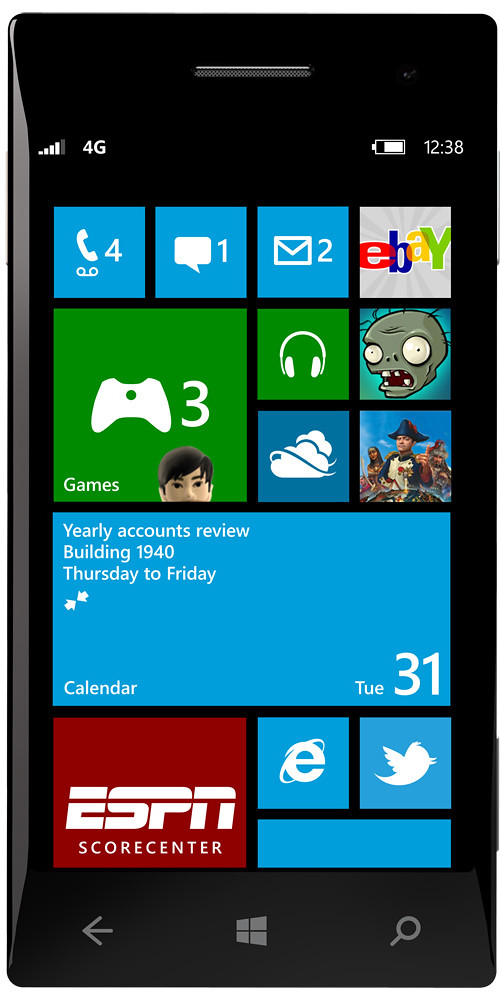
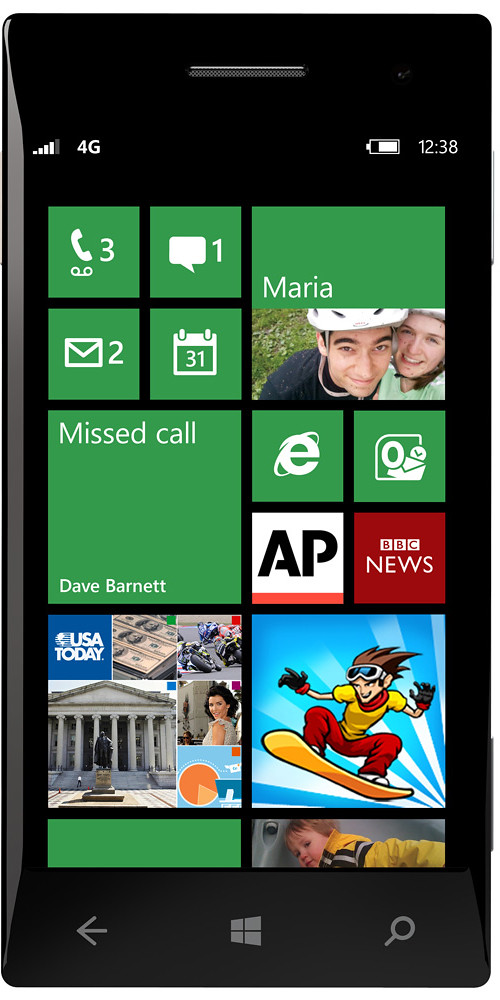
Windows Phone 8 will get a Start screen facelift; share technology core with Windows 8; support for NFC, in-app purchases and eWallet; more developer tools; and better security for enterprise use.
But existing Windows Phone 7.5 users will only get the revamped Start screen through an upgrade to Windows Phone 7.8.
Microsoft gave a preview of what Windows Phone 8 will be at the Windows Phone Summit in San Francisco.
The immediate cosmetic change to the user-interface is the Start screen.
In addition to the current square tiles and rectangular (twice the width of the square tiles) tiles, there is now a third size for tiles.
This is what I call the “mini-square” tile. Each of these is a square tile a quarter the size of the original square tile.
Whereas Windows Phone 7.5 does not allow users to specify which tile to use for an app – Windows Phone 8 will let users specify which tile size to use for each app.
Bigger tile for more frequently used apps (or to display more live information), and smaller tiles for less used apps.
The smaller tiles also allows more tiles/apps to be displayed on each screen to minimise scrolling.
Existing Windows Phone 7.5 users will get this revamped Start screen through an upgrade to Windows Phone 7.8 (no date given), but that’s pretty much all they’ll get – they will NOT be able to upgrade to Windows Phone 8 when it becomes available end of the year.
Yes, some who have just bought spanking new Windows 7.5 phones are complaining that they’re now landed with “obsolete” handsets.
Microsoft says that Windows Phone 8 is a generation shift in technology so it will not run on existing hardware.
Read more details about Windows Phone 8 on the official Windows Phone Blog.
Microsoft has unveiled two 10.6-inch Windows tablets and accessories.
One model will run on Windows RT and will be released with the general availability of Windows 8. The other tablet will be available about 90 days after and feature Windows 8 Pro.
Microsoft’s Steven Sinofsky has just announced at its annual sales meeting that customers will be able to get Windows 8 on 26 October, 2012. This will be available both as an upgrade or on a new PC.
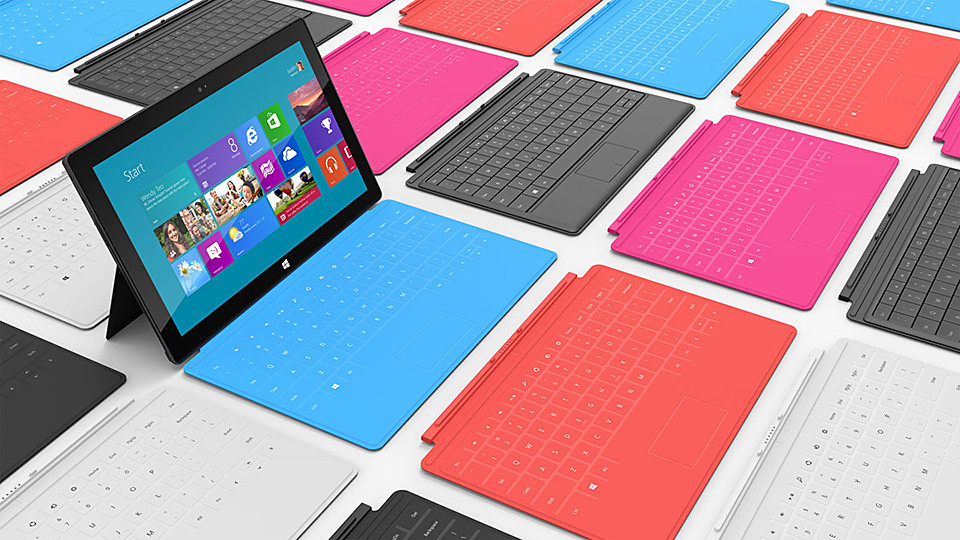
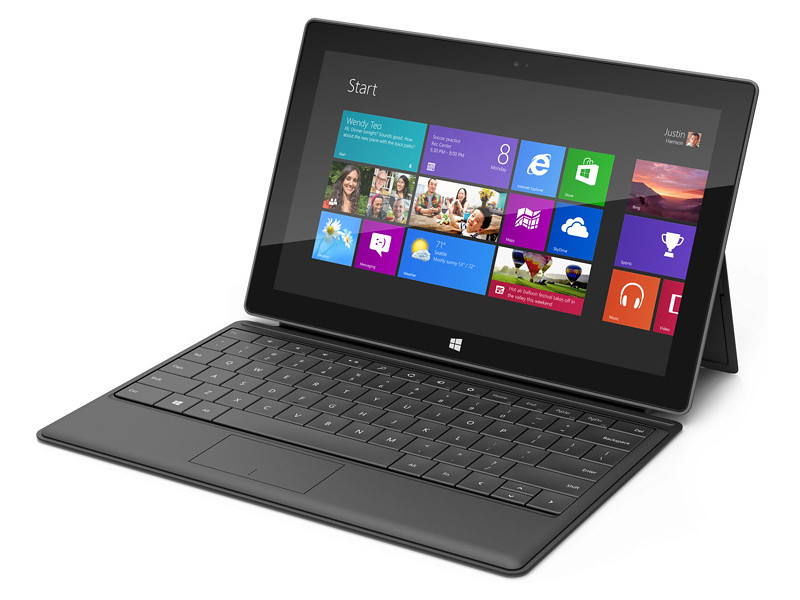
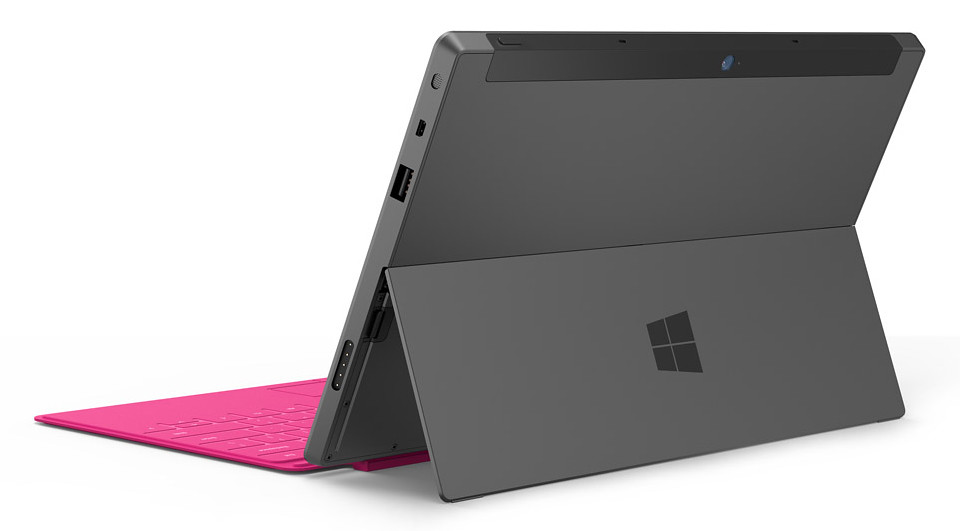
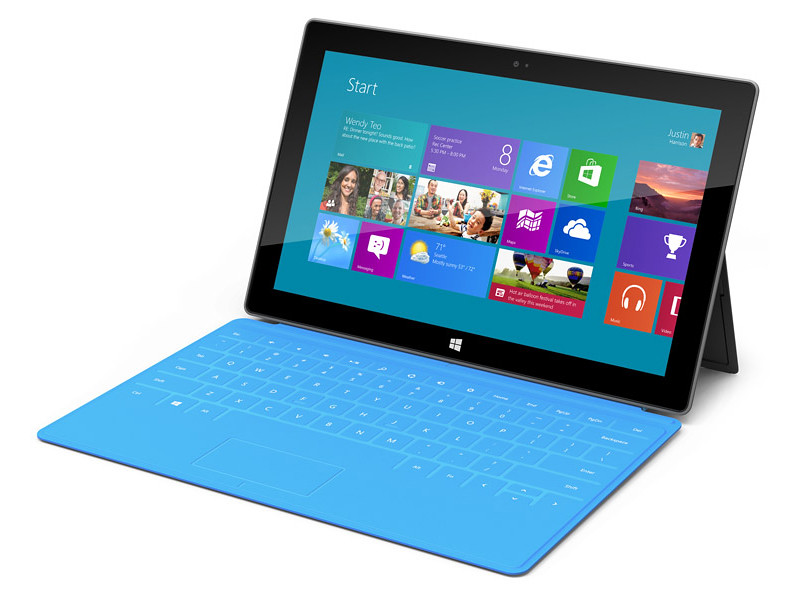
Microsoft finally joins the fray by unveiling its 10.6-inch Surface tablets.
The Windows RT Surface tablet will run on an ARM processor, while the Windows 8 Pro version will have a third-generation Intel Core processor.
The Touch Cover and Type Cover double up as keyboards.
Each Surface tablet will have a full-sized USB port, a microSD slot, and a 16:9 aspect ratio; with edges angled at 22 degrees.
The casing of Surface is created using VaporMg (pronounced Vapor-Mag), where metal and deposit particles are molded to create a finish akin to luxury watches.
Starting with magnesium, parts can be molded as thin as .65 mm, thinner than the typical credit card, to create a product that is thin, light and rigid/strong.
The VaporMg materials and processes has enabled the thin and sleek design of the Surface tablets.
This also enables an extremely thin built-in kickstand to prop the tablet up when watching movies or video conferencing with the HD front- or rear-facing video cameras.
The integrated, built-in kickstand removes the need for a separate accessory.
I like the idea and design of this integrated kickstand.
To transform the tablet into a “notebook”, a 3 mm Touch Cover uses pressure-sensitive technology to sense keystrokes as gestures, allowing users to touch type significantly faster than on an on-screen keyboard.
The Touch Cover will be available in a selection of vibrant colors. It clicks into the Surface tablet via a built-in magnetic connector, forming a natural spine like you find on a book, and doubles up as a protective cover.
The Touch Cover and Type Cover comes in many vibrant colours.
Alternatively, users can click in a 5 mm-thin Type Cover that adds moving keys for a more traditional typing feel.
Retail pricing will be announced closer to availability but is expected to be competitive with a comparable ARM tablet or Intel Ultrabook-class PC.
OEMs will have cost and feature parity on Windows 8 and Windows RT.
Oh and if you’re interested in a 40-inch tablet, check out the Samsung SUR40 for Microsoft Surface. (I haven’t heard anyone else calling THAT a tablet yet).
The main technical specifications of the two Surface tablets are tabulated below.
Microsoft’s Steven Sinofsky has just announced at its annual sales meeting that customers will be able to get Windows 8 on 26 October, 2012. This will be available both as an upgrade or on a new PC.
Wonder if the Surface will be available at the same date?
Microsoft has announced that users who are currently running Windows XP, Windows Vista or Windows 7 will qualify to upgrade to Windows 8 Pro for US$39.99. Local pricing TBA.
Windows Media Center will also be available as a free option via the “add features” option within Windows 8 Pro after the upgrade.
This upgrade offer will be available in 131 markets and will run through 31 January 2013.
Are you thinking of buying a Windows 7 PC but are hesitating because Windows 8 is not generally available yet? Those who purchase eligible Windows 7-based PCs from today can upgrade to Windows 8 Pro for S$17.99 (incl. GST) later on.
Those who purchase eligible Windows 7-based PCs from today can upgrade to Windows 8 Pro for S$17.99 (incl. GST) later on.
But what is an “eligible” Windows 7 PC? Here’s a summary of the criteria and terms for the Windows Upgrade Offer.
Consumers who have bought a Windows 7 PC preinstalled with Windows 7 Home Basic, Home Premium, Professional or Ultimate; and includes a matching and valid OEM Certificate of Authenticity
The Windows 7 PC must be purchased new during the eligibility period of 2 June 2012 – 31 January 2013
The Windows 8 Pro download must be redeemed before end February 2013
The download will be made available to consumers on this offer starting the day Windows 8 is made generally available
Do note that the Windows 7 PC that you buy now will likely not come with a touch screen, so it won’t be able to use the touch interface for Windows 8 when you eventually upgrade.
Microsoft’s Steven Sinofsky has just announced at its annual sales meeting that customers will be able to get Windows 8 on 26 October, 2012. This will be available both as an upgrade or on a new PC.
Wonder if the Surface will be available at the same date?
Microsoft has announced that the Windows 8 Release Preview is now available for download in 14 languages.
Those who purchase eligible Windows 7-based PCs from 2 June can upgrade to Windows 8 Pro for S$17.99 later on.
Windows 8 Release Preview is available for download now.
Windows 8 is entering the final stages of development and is on the road to general availability.
The Release Preview is available for download here, where you can also view a video of Windows 8 in action.
Notable improvements throughout the platform includes:
Improvements to Mail, Photos and People apps since Consumer Preview.
Increased personalization options for the Start screen.
Improved multi-monitor support.
Refinements to the way people find and download apps through the Windows Store.
New Family Safety features and enriched privacy and security controls when browsing online, including Do Not Track capabilities being turned on by default with Internet Explorer 10.
Enriched support for touch with Internet Explorer 10, including a new capability with Release Preview called “flip ahead” that allows users the option to flip between pages with the swipe of a finger, as well as a touch-friendly Adobe Flash Player now fully integrated into IE10.
New Bing apps, including those for Travel, News and Sports
For those planning to purchase new computers that currently come with Windows 7, Microsoft is rolling out the Windows Upgrade Offer program in 131 markets.
Windows 8 promises a fast and fluid experience, along with a new user interface that responds equally well to touch as it does to keyboard and mouse.
The February release of Windows 8 Consumer Preview was downloaded more than 1 million times in the first 24 hours.
With today’s release, it enters its final phase of development before it releases to manufacturing.
From June 2, 2012 to January 31, 2013, those who buy eligible PCs with Windows 7 can purchase an upgrade to Windows 8 Pro for an estimated retail price of S$17.99 (including GST).
Other offers will be announced later to help those with existing Windows 7-based PCs upgrade to Windows 8.
For more details about the Release Preview, check out this inside look from the Windows engineering team.