Archive for the ‘RIM’ Category

BlackBerry PlayBook Launch

Tuesday, April 19th, 2011

The 7-inch tablet from Research In Motion (RIM) hits the shelves in the US today. Here’s a quick roundup of the likes and dislikes from those who have tried out the shipping version of the BlackBerry PlayBook.
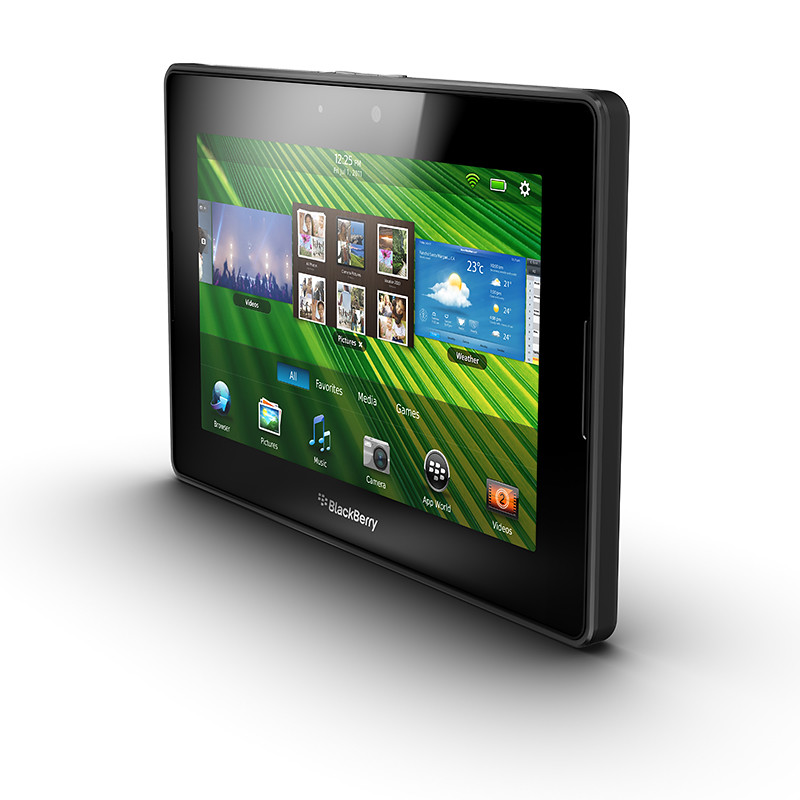
RIM PlayBookThere’s a lot to like about the PlayBook, but there’re also plenty of frustrations out there from those who’ve had the privilege of playing with the PlayBook. The general feel seems to be that the PlayBook has the potential to be something great – just that it’s not quite complete at the moment.

Already behind the iPad 2 and other Android tablets in terms of launch date, my feel is that RIM wants to get the hardware out as soon as possible before the specs get old – even though the software isn’t quite as ready yet.
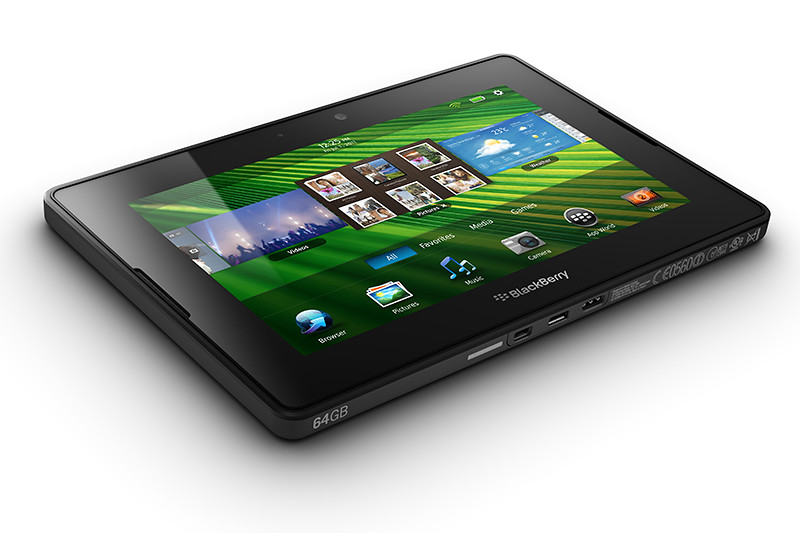
RIM PlayBookDare I compare that with an evolutionary release of the iPad 2 with bigger steps only to be expected for the upcoming iPad 3?

With such stiff competition in the tablet market, it is no wonder these slate-makers are rolling off their products as soon as possible. In all honesty, I do believe RIM will sort out the grouses that reviewers have complained about, but the question is whether consumers are willing to fork out the dough to buy what’s beginning to be perceived as an unfinished product, that is only going to be made complete after a few more months – if ever.
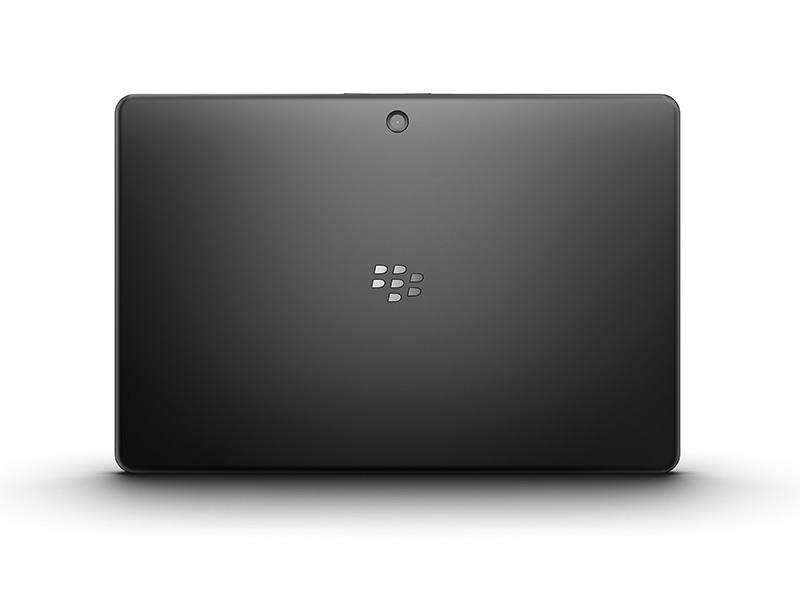
RIM PlayBookPerhaps, RIM should have launched it at a discounted price – you know, an early bird discount – to entice consumers and grab market share. Given that the hardware is fabulous, the discount may have worked to convince consumers to buy first and wait out for the software to catch up.

At any rate, below is a quick round-up of the likes and dislikes from people who has played with the PlayBook so far. Prices for the 16, 32 and 64-gigabyte models in the US are $500, $600, and $700 respectively.

Likes Dislikes Mitigation
Fabulous display, and user interface Tiny recessed power button difficult to find and press Nothin’ much can be done about this – but do I care?
Sleek:
10mm / 0.4 inch thick 

Light:
0.9 lbs / 425 g

No native email, messenger, contacts and calendar Need to be Bluetooth tethered via a BlackBerry smartphone to access these. 

Native support could be added later on

Lightning fast processor No 3G connection 3G version in summer 

4G version end 2011

Impressive multi-tasking Small repository of Apps (~3,000) Compatibility with selected Android apps to be introduced later, plus build-up of PlayBook specific apps.
Supports Flash and HTML5 No video chat Video chat app to be released later.

BlackBerry Torch 9800 Review

Monday, April 18th, 2011
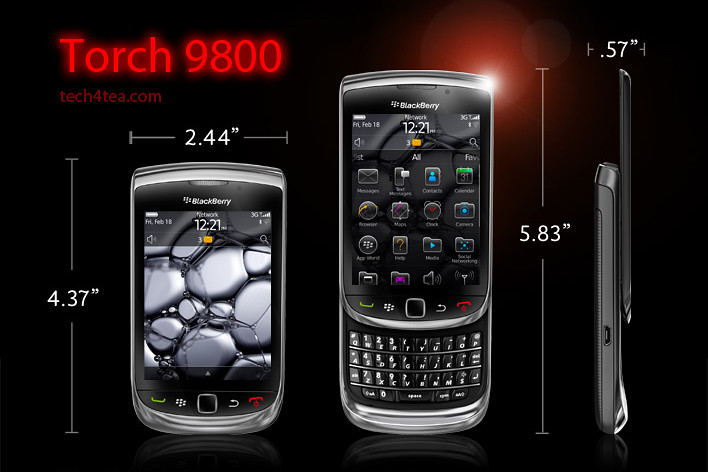
RIM touts the Torch as the best BlackBerry ever. I’ve been using one over the last two weeks. Indeed, it’s the best BlackBerry smartphone I’ve played with so far and I certainly prefer it over my wife’s BlackBerry Bold.

The BlackBerry Torch was the first smartphone from Research In Motion (RIM) that shipped with the new BlackBerry OS 6. It has a completely new keyboard implementation – instead of having the physical keyboard and the screen share the face of the device, the Torch allowed the 3.2 inch screen to hog the entire front.


BlackBerry Torch 9800 with 6.0 Operating System.

BlackBerry Torch 9800 with 6.0 Operating System.

An on-screen keyboard – which I found rather responsive – can be easily called up in case you need to type something. Need the traditional QWERTY keyboard to do some intensive typing? Slide it out from below the screen and you’re good to go.

It’s a trade-off, whether you have the hard keyboard readily available all the time or hide-in below the screen to make for a bigger screen.

For my usage profile, at least, I liked the balance – I do a fair bit of messaging and typing but I don’t mind having to slide out the keyboard when I need it – since I get a bigger screen real estate – 480×360 pixels on a 3.2 inch capacitive touch screen.

I did find the Bold keyboard slightly easier to type than on the Torch, but both are far more tactile and better than typing on a touch screen.

I suppose those who really have a lot of typing to do would rather have the keyboard available at all times – it depends on your usage profile. The Torch tries to give you both the large screen of the Storm and the popular hard keyboard in a compact body.

The hardware

The form factor is almost identical to many other BlackBerry devices like the Bold. The usual five buttons line the bottom of the screen: BlackBerry call, menu, back, and end buttons and optical trackpad.

The Marvell CPU runs at 624MHz (though the company claims this is a newer generation chip), with 512 MB RAM and 4 GB of storage. You can add up to 32 GB though the microSD slot. The device also comes with 802.11b/g/n WiFi, Bluetooth 2.1 and an AGPS chip.

Photos were rather impressive for a phone camera

Photos were rather impressive for a phone camera

The Torch has a 5 megapixel camera, with an LED flash. Photo quality was rather remarkable for a smartphone camera.  I like the preset scene modes – Party mode for lowlight indoor shooting and Sports mode both yielded impressive results. Video wise, you can shoot clips at 640×480 resolution.

New OS and interface

With the new OS 6, web browsing on the Torch is now quite a pleasant experience using the new Webkit-based browser. Unfortunately, neither Flash nor HTML5 video are supported.

I really love the persistent notification alert bar at the top of the home screen: the small row of icons allows you to see social networking, email, SMS, call, and calendar alerts all in one place. The bar drops down a separate window to show the list of notifications, each of which can be clicked on to bring you to the app.

11 scene modes are available for taking photos under different situations

11 scene modes are available for taking photos under different situations

Another new feature I like is the universal search. Ever wanted to look for something you know is on your phone but can’t recall exactly where it is located and how to get at it? Simply begin typing the relevant search term into the search box and the Torch throws the icon for it right at you – almost instantaneously. It really beats having to wade through the menus and interface looking for contacts, messages, calendar, music or pictures.

has included a powerful universal search alongside a social networking tool which allows you to aggregate RSS feeds and services like Twitter or Facebook into a single view. There are a lot of changes, so we’re going to go step-by-step through what we consider the biggest changes for the BlackBerry platform.

Battery life

As with other BlackBerry devices I’ve tested before, battery seems to last forever. Alright, that’s exaggerating. There were days when I ran Youtube videos and videos from the media folder for extended periods of time and the battery held out. Under normal usage, I only had to recharge the battery every few days.

BlackBerry Torch 2

There’s been numerous leaks about what the upcoming BlackBerry smartphones lined up for 2011. One of them is the Torch 2. Expected to be announced during the BlackBerry World in May and released in the US in July, it looks physically like the Torch, but features a 1.2 GHz processor and a 640×480 resolution on a similarly-sized 3.2 inch screen.

Going by previous BlackBerry release schedules, we’ll probably only see the Torch 2 in Singapore towards the end of the year.

In the meantime, if you’re looking at replacing your current BlackBerry phone, do give the Torch a spin and see if it impresses you enough for you to pick one up as replacement.

BlackBerry Torch 2 sneak peek

Sunday, April 17th, 2011
The BlackBerry Torch 2 is rumoured to be announced during the BlackBerry World in May and then go on sale in the US in July later this year. With the release of the PlayBook tablet next Tuesday in the US, RIM has a few more models in line to keep its fanbase riveted for the rest of the year.

Photo of BlackBerry Torch 2There has been plenty of leaks from RIM (Research In Motion) about upcoming BlackBerry models for 2011. These include the BlackBerry Touch (Monaco/Monza), Bold Touch, Storm 3, Bold (Dakota), Curve (Apollo), and the Torch 2.

Having gotten hold of a Torch 2, BGR reports that the new device looks almost identical to its predecessor but features a significantly more powerful 1.2 GHz processor. Coupled with the BlackBerry OS 6.1 and a 3.2 inch 640×480 VGA display, it will be an exciting gadget to own.

Processor power has been doubled from the current 624 MHz, and the 3.2 inch screen runs at a higher pixel resolution than the 480×360 pixels on the current BlackBerry Torch.

Going by previous BlackBerry release schedules, we’ll probably only see the Torch 2 in Singapore towards the end of the year.

The main specifications of the Torch 2 are listed below:

  • CPU – 1.2 GHz processor
  • Display – 3.2″ VGA (480 x 640) capacitive touchscreen display
  • Radio – Quad-band GSM/GPRS/EDGE ; Tri-band HSPA 14.4Mbps
  • Memory – 8GB storage + 512MB RAM + up to 32GB MicroSD
  • Connectivity – WiFi, Bluetooth, NFC
  • Camera – 5 megapixels
  • Battery – 1300MAh battery
  • Thickness – 14.6mm thick
  • Sensors – magnetometer, digital compass

BlackBerry PlayBook preview in Singapore

Friday, April 15th, 2011
The BlackBerry PlayBook Bus will tour Singapore tonight, showing off a preview of RIM’s 7-inch tablet computer, that is due to be launched in the US on 19 April next Tuesday.
Preview of the BlackBerry PlayBook in Singapore

Preview of the tablet on the BlackBerry PlayBook Bus in Singapore

Keep a lookout for the limo bus driving around town tonight. Sources tell me it will launch from the Tanjong Pagar area. The first time that the BlackBerry PlayBook debuted in Singapore was back in March. But the two devices I played with were still beta release versions.

Tonight, the preview will provide some hands-on for the real McCoy. Perhaps RIM (Research In Motion) will also provide some hints as to when the aspiring challenger to the iPad will be launched in Singapore and at what pricing.

For now, here’re some of the main specs of the BlackBerry PlayBook:

Looks
7″ LCD display, 1024 x 600 WSVGA Multi-touch capacitive screen

Physical feel
0.9 lbs (425g) and 5.1″ x 7.6″ x 0.4″ (130mm x 194mm x 10mm)

Performance
1 GHz dual-core processor
1 GB RAM
Symmetric multi-processing
Full Adobe Flash 10.1 enabled
Built-in support for HTML 5

Configuration
Internal storage of 16, 32 or 64 GB
GPS, Orientation Sensor (Accelerometer), 6-Axis Motion Sensor (Gyroscope), Digital Compass (Magnetometer)
Stereo speakers and stereo microphones
Wi-Fi (802.11 a/b/g/n) connectivity, Wirelessly connect to your BlackBerry smartphone for real time access to: Email, calendar, address book, task list and BBM

Cameras
3 MP high-definition forward-facing camera
5 MP high-definition rear-facing camera
Codec support for superior media playback, creation and video calling
1080p HD video; H.264, MPEG4, WMV HDMI video output
Micro USB and Micro HDMI ports
Video calling with dual video cameras

BlackBerry Tablet OS
Powered by QNX technology, supports POSIX OS, SMP, Open GL, BlackBerry 6, WebKit, Adobe Flash, Java and Adobe Mobile AIR

Android compatibility for the PlayBook

Saturday, April 2nd, 2011
Having had only 25,000 apps in BlackBerry App World, RIM’s PlayBook will tap the 150,000 apps in the Android Market to give it a headstart, while ramping up the number of PlayBook specific apps to stand against the staggering 350,000 apps in Apple’s App Store.

RIM launches the PlayBook on April 19RIM will be opening the PlayBook to Android apps to provide customers a wider choice of apps.

Software tools for making Android apps work on the PlayBook will be available this summer, Tyler Lessard, head of RIM’s developer relations told Bloomberg in an interview.

Android is the world’s fastest-growing smartphone platform and is also gaining market share for tablet computers, based on data on global shipments from Strategy Analytics below.

Percentage of global shipments Android iPad
Oct to Dec 2010 22 % 75%
Jul to Sep 2010 2.3 % 95 %

Although developers can port Android apps for the PlayBook, Lessard states that developers should still create programs specifically for the PlayBook to make the most of its multimedia performance and ensure their apps work as well as possible.

Bloomberg reports that “Dozens” of games for the PlayBook will be released this year through Unity Technologies’s Union game development tool.

RIM readies itself for launch of its PlayBook

Friday, April 1st, 2011
RIM positions PlayBook to capture market share from its Apple and Android tablet rivals from the consumer market, even as it opens up for Android app compatibility and ramps up on building its own ecosystem of PlayBook specific apps.

Research In Motion (RIM) whose BlackBerry smartphone was a hit with corporate customers, is also targeting developers of consumer applications, including games and magazines.

The 7-inch tablet will be preloaded with applications such as Tetris – my favourite game on an Apple Macintosh during my college days, and the Kobo e-book reader.

An online version of Pro Football Weekly magazine will also be available for sports aficionados.

The display was superb and performance lightning fastThe PlayBook goes on sale in the US on April 19 and will feature a new operating system, a dual-core processor, and the capability to play applications for Google’s Android platform.

I had the chance to play with a beta release version of the PlayBook when it was first brought to Singapore three weeks ago and the display not only looked great, the processor was lightning fast, multi-tasking 8-10 CPU/graphics-intensive apps without showing any latency.

Although RIM has not been as successful as Apple or Google in attracting independent developers to write consumer apps for the BlackBerry, it is trying to rectify this with the PlayBook.

Hugo Miller from Bloomberg quoted Travis Boatman, senior vice president at Electronic Arts as being impressed with the PlayBook.

“It’s one of the fastest devices out there … You take a good software environment and great hardware, you’ve got a device that designers and developers can create great content on.”

The Redwood City, California-based company will release “Tetris” and “Need for Speed Undercover,” a car racing game, on the PlayBook.

Research In Motion launches the PlayBook on April 19RIM will be opening the PlayBook to Android apps to provide customers a wider choice of apps. There are more than 150,000 apps in the Android Market, compared with more than 25,000 in BlackBerry App World and more than 350,000 in Apple’s App Store.

“We are absolutely targeting the consumer, personal apps market as much if not more because there is such a vast market out there,” Tyler Lessard, head of RIM’s developer relations told Bloomberg in an interview.

Polar Mobile, a Toronto-based developer of apps for magazines including Time, GQ and Sports Illustrated, is building over 100 PlayBook apps including Pro Football Weekly, that will be ready in July, said Polar CEO Kunal Gupta.

Like other newcomers to the tablet scene, the PlayBook will be hoping to chip away at the market share of Apple, the market leader who has enjoyed little competition since the launch of its iPad in April 2010.

Analysts estimate that Apple has shipped more than 15 million iPads so far, and sold about 500,000 of the newly launched iPad 2, over its March 11 debut weekend.

RIM’s First-Quarter forecasts behind estimates

Friday, March 25th, 2011

Research In Motion (RIM), maker of BlackBerry smartphones, has forecast first-quarter revenues and profits that fail to meet analysts’ estimates. Its launch of new models like the Torch has failed to stop a slide in its market share.

The average of analysts’ estimates were compiled by Bloomberg for comparison. Below are the key numbers:

First Quarter Forecast RIM Analysts average estimate
Profit per share $1.47 – $1.55 $1.66
Revenue $5.2 – 5.6 billion $5.65 billion
Gross Margin (% sales after production costs) 41.5% 42.7%
BlackBerrys shipped (4th Qtr) 14.9 million 15 million

In the meantime, Bloomberg quotes Pierre Ferragu from Sanford C. Bernstein & Co as saying that “The company’s sales in the high end have been shrinking for the last 12 months, even if the launch of the Torch has slowed down the trend in the last two quarters.”

Although RIM has traditionally been the darling of large corporations because of its secure messaging, it has seen customers adopting rival devices.

Hugo Miller of Bloomberg reports that JPMorgan Chase, Bank of America and Citigroup are some of the banks that has begun testing iPhones and Android devices late last year, according to at least three people familiar with the trials.

The table below summarises how RIM’s share of worldwide smartphone sales has slipped from a year earlier, compared to its rivals.

Worldwide smartphone marketshare RIM Apple Android
4th Qtr 2010 14% 16% < 11%
4th Qtr 2009 20% 16% 16%

RIM PlayBook debuts in US on April 19

RIM will be launching the PlayBook in the US on April 19, while the company is already taking orders.The company revealed that the tablet would be able to play apps from Google’s Android.

The PlayBook will strive to chip at the huge market share that Apple has enjoyed with its iPad and iPad2.

The iPad has has a full year’s headstart over the PlayBook and has sold over 15 million units so far. Apple also claims that 65 percent of Fortune 100 companies are testing or deploying the iPad, including Procter & Gamble.

This is the same market sector that RIM targets.

Free BlackBerry 6 upgrade available now

Monday, March 14th, 2011

BlackBerry 6, the latest BlackBerry smartphone operating system from Research In Motion (RIM), is now available to existing owners and new customers of BlackBerry® Curve™ 3G and BlackBerry® Bold™ 9700 smartphones for free.

The new BlackBerry 6 operating system includes an intuitive user interface, enhanced web browsing experience, universal search, social feeds and an engaging multimedia experience.

BlackBerry 6 OS available for upgrade

To upgrade, existing owners of the BlackBerry Curve 3G and BlackBerry Bold 9700 can connect their smartphone to their computer and go to ap.blackberry.com/blackberry6 to download the update.

You will find detailed instructions and additional information at the website as well.

RIM’s Playbook displayed in Singapore for the first time

Friday, March 11th, 2011
Two units of the beta-release Playbook were specially flown into Singapore as part of the Adobe Refresh Roadshow.

True multi-tasking using SMP for the dual-core processor.

True multi-tasking using SMP for the dual-core processor.

The beta version of the BlackBerry Playbook was first unveiled during the Adobe Max 2010 developer conference in October last year. Two units were brought in by Sarim Aziz, Senior Application Development Consultant at RIM, to make its first appearance in Singapore.

Aziz showed how the Playbook was able to mult-itask various memory/CPU intensive applications simultaneously without missing a beat.

He explained that the both of the processors in the dual-core Playbook were allowed to work simultaneously to enable true multi-tasking using Symmetric Multi-Processing – apps continue to run at full tilt even in the background without being paused.

I had the chance to play with the 0.9 lbs (425g) Playbook and here are some snapshots. Check out the details at the Playbook’s website. Essentially, it is about 9mm thick, sports front/rear cameras (3 and 5 megapixels respectively, both capable of HD video), a 1 GHz dual-core processor with 1 GB RAM.

The operating system is from QNX, which RIM acquired in Apr 2010. Both Flash and HTML5 are supported.

BlackBerry Playbook from RIM - shown for the first time in Singapore.

BlackBerry Playbook from RIM - shown for the first time in Singapore.

In terms of interface, something interesting is that the 1” black border around the 7” 1024×600 pixel screen is also touch-capable. Swipe down from the top border brings in the operating system’s menu, like the Start button in Windows – not sure if this will stay in the final product.

Tapping the lower left corner activates the soft keyboard onscreen, and swiping upwards from the bottom border displays the thumbnails of apps currently running so that you can switch to another app.

Even with 8-10 apps running, Quake was going at 60 fps without dropping frames. Apparently, should the RAM maxed out, the operating system will quietly shut down the least used App to free up memory space. Quietly – as in it won’t even ask the user.

Price-wise, we’re probably looking in the region of US$500 with launch in late March to early April for N America followed by the rest of the world.