Posts Tagged ‘security’

Ernst & Young finds security lagging behind business needs in survey

Thursday, November 17th, 2011

In its 14th annual Global Information Security Survey, Ernst & Young found that companies rushing to digitise their businesses with new technologies are increasingly leaving their ability to tackle new and complex security threats behind.

“Information security needs to be more visible in the board room with a clearly defined strategy that will support the business,” said Gerry Chng, IT Risk and Assurance Partner, Ernst & Young Advisory Pte. Ltd.The global survey involved 1,700 organisations in 52 countries and was conducted between June and August 2011.

Although companies are moving into the increasingly borderless world of cloud computing and social media, information security is still not a boardroom priority for most companies and is not a visible agenda for them.

“Security must be carefully planned and take into consideration the practicality of the controls that considers the IT operations. There needs to be buy-in from the business functions, and support needs to come from the top,” Chng added.Only 51% of the survey stated that they have a documented information security strategy. 12% of the respondents present information security topics at each board meeting and fewer than half (49%) of respondents believe that their information security function is meeting the needs of the organization.

With the consumerisation of enterprise IT, organisations have had to allow employees to use personal tablets to access corporate information.

“There are existing solutions in the market that support the secure access of information on personal smartphones and tablets. Organizations should evaluate whether these solutions meet their needs, rather than using traditional channels such as web interfaces and opening up email access via the web as an option.”It was therefore natural that more than half the survey respondents ranked this adoption the second-highest on the list of technology challenges.

Policy adjustments and awareness programs are the top two measures used to address risks posed by this new mobile technology.

The adoption of security techniques and software, however, is still low. For instance, encryption techniques are used by fewer than half (47%) of the global organisations.

The massive popularity and growth of social media has also threatened the IT risk landscape. Social media risks include the introduction of malicious software lurking within social networks, hacked accounts that are used to solicit information, and the release of confidential or negative company information or personal data.

“The traditional paradigm of security within a perimeter is no longer valid.”To address potential risks posed by social media, organizations seem to be adopting a hard-line response. A majority (53%) of the global organizations respond by blocking access to sites rather than embracing the change and adopting enterprise-wide measures.

“With the increased collaboration with upstream and downstream partners, data resides not just within the confines of the organization.”Despite all the hype about cloud computing, many organisations are still unclear of the implications of cloud computing. From the survey, 48% of the global respondents said that the implementation of cloud computing is a difficult challenge, and more than half of them (52%) have not implemented any controls to mitigate the risks associated with cloud adoption.

The most frequently taken measure is stronger oversight on the contract management process with cloud providers, but even this is done by only 22% of respondents.

“Confronted with diminishing borders, cloud services, and increasing support of personal tablets for information mobility, companies are asking themselves how to respond to new and emerging risks and whether their strategy needs to be revisited. The focus must move from short-term fixes to a more holistic approach integrated with long-range strategic corporate goals.”The good thing is that companies are aware of the widening gap between business needs and information security – and are willing to address the situation.

72% of the respondents in the survey see a rising level of risk due to increased external threats.

At the same time, more than half (59%) of them plan to increase their information security budgets in the coming 12 months, focusing on areas including business continuity capabilities (47%), data leakage and data loss prevention (28%), compliance monitoring (21%), and identity and access management (21%).

Gerry Chng observes that “there is generally a slow uptake of public cloud services for larger enterprises due to risk concerns. Such services may make sense for a small company as the utility model of the cloud means that these companies do not need to have the capital and operational expenses to maintain their own infrastructure and applications.”

“For larger organizations, the risks of compromising the integrity of sensitive data far outweighs the benefits they may reap from cloud computing. The concept of cloud computing is centered around easy access to data, without the need for knowledge on where the data is stored and how the cloud works,” Chng added

“This lack of specific details makes it difficult for organizations to assess the risks to their data residing in the cloud. In the absence of clear guidance, many organizations seem to be making ill-informed decisions, either moving to the cloud prematurely and without appropriately considering the associated risks, or avoiding it altogether,” concluded Chng.

Delete does not mean deleted

Tuesday, November 1st, 2011

More than 300GB of potentially sensitive data was discovered on five second hand storage devices that were advertised as having been wiped of previously stored information.

“Our findings underline that data erasure is critical before any hardware devices are disposed of – personal computers, servers, hard disk drives, USBs and even MP3 players,” said CK Lee, country manager, Kroll Ontrack Singapore.Kroll Ontrack – a leading provider of data recovery and information management products and services, is warning companies to be extra vigilant when disposing of computer equipment in light of recent tests carried out in its labs

It recently conducted a little experiment in Singapore. Specialists from the company purchased five storage devices from a popular international online auction site to see if there was any sensitive data that could be recovered from the supposedly “wiped” devices.

The specialists found more than 300GB of data including personal and corporate proprietary information including Microsoft Office documents, applications, databases, e-mails and photos.

“Simply pressing the ‘delete’ button or using other basic overwriting techniques only removes the pathways to the data and not the data itself and it is essential to remember this when preparing equipment for sale or disposal,” Lee added.The five devices were from different parts of Singapore and included two hard disk drives from a server in RAID configuration, a server, a desktop HDD (Hard Disk Drive) and a laptop HDD.

Recoverable data poses risk of security breaches if it falls into the wrong hands. It is crucial for individuals and businesses to ensure that data is destroyed before disposal. Without the correct data erasure procedures, proprietary information becomes vulnerable.

Kroll Ontrack provides several options for data erasure such as Ontrack Eraser Software and Ontrack Eraser Degausser. Both solutions set out to destroy data in a fast, secure and user-friendly way.

CA Access Control for Virtual Environments

Wednesday, October 26th, 2011

CA Technologies promises to improve Virtualisation security with a new securty solution that enforces end-to-end privileged user management suport for VMware vSphere Environments.

CA Technologies is an IT management software and solutions company.CA Technologies is leveraging on CA Access Control for Virtual Environments to extend its identity and access management (IAM) security expertise. The new solution complements and protects VMware virtual environments.

“We see CA Access Control for Virtual Environments as a key solution that will meet our needs in virtualization security and help us to comply with PCI-DSS requirements,” said Arieh Berger, manager, Operating Systems and Information Security, EL AL Airlines. “By complementing and extending the security that comes with VMware, CA Access Control for Virtual Environments will allow us to enact segregation of duties and control privileged user access – all automatically.”The solution helps customers confidently virtualize critical applications by addressing security and compliance concerns, and helping control privileged user access to the virtual environment.

Virtualization management tools provide IT administrators with tremendous flexibility and power to make significant, rapid changes to their virtual environments.

This authority increases the insider threat and raises the need to protect virtual environments from user mistakes, misuse or blatant, malicious actions by those users with the most privilege.

CA Access Control for Virtual Environments is available direct from CA Technologies or through a growing global partner channel.

CA Access Control for Virtual Environments helps customers:

  • Achieve compliance for their virtual data center through privileged user management for the hypervisor and guest virtual machines;
  • Gain visibility and control over virtual environments with activity logging and privileged user password vaulting;
  • Automate security operations and reduce security costs by applying security controls according to pre-set policies;
  • Expedite adoption of virtualization technology for critical applications by improving security controls; and
  • Create a secure, multi-tenant environment by isolating virtual machines through network zoning.

The State of the Internet 2Q 2011 report from Akamai

Monday, October 24th, 2011

Taiwan has beaten Myanmar and US as the top source of attack traffic on the Internet, while Asian cities maintain their dominance of having the fastest connection speeds in the world, with HK at the pinnacle.

Akamai State of the Internet report Q2 2011

This is the 4th year for the quarterly report.

Akamai has released its Q2 State of the Internet report for 2011. It is a leading provider of cloud optimisation services.

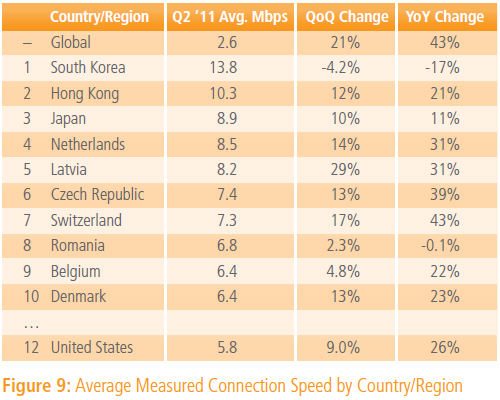
Average Connection Speed by Country/Region

Average Connection Speed by Country/Region

Based on data gathered from the Akamai Internet Platform, which carries between 15-30 percent of the world’s Web traffic, the report provides insight into key global Internet statistics such as the world’s fastest and slowest regions for connection speed, the most frequent origins of attack traffic, and the highest-performing geographies for mobile connectivity, as well as resulting trends over time.

It uses its globally distributed network of servers to gather massive amounts of information on many metrics about the Internet, such as connection speeds, attack traffic, and network connectivity/availability/latency problems, as well as traffic patterns on leading Web sites.

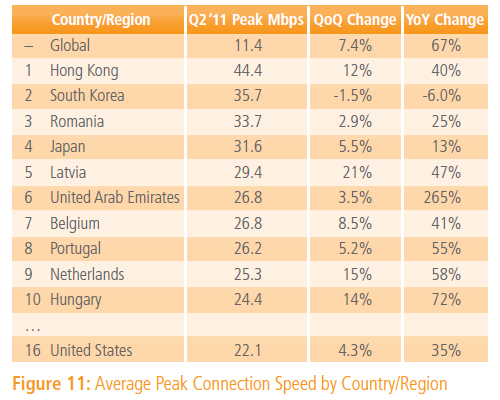
Average Peak Connection Speed by Country/Region

Average Peak Connection Speed by Country/Region

The Q2 report includes data gathered from across Akamai’s Intelligent Internet Platform during the second quarter of 2011 about attack traffic, broadband adoption, and mobile connectivity, as well as trends seen in this data over time.

In addition, this quarter’s report also includes insights into the state of IPv4 exhaustion, the impact of World IPv6 Day, the state of client-side SSL, and smartphone usage trends as observed by Akamai partner Ericsson.

The main highlights from the Q2 report paints the following picture:

Speed

  • Global average connection speed increased 43 percent year over year to 2.6 Mbps. South Korea again had the highest average connection speed at 13.8 Mbps. Singapore was ranked 29th at 4.5 Mbps.
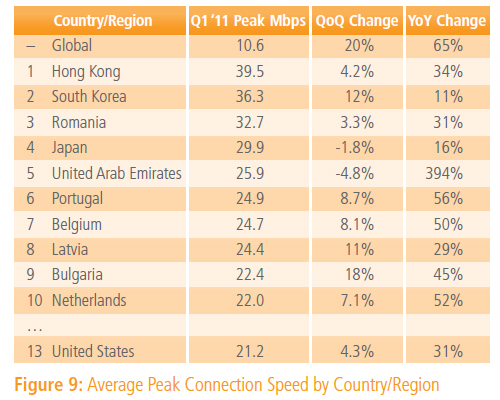
  • Global average peak connection speed was 11.4 Mbps. Hong Kong has maintained its position as having the highest average peak connection speed at 44.4 Mbps. Singapore was 19th at 20.7 Mbps.
  • Globally, high broadband (>5 Mbps) adoption grew to 27%. At 68%, the Netherlands was the highest, pushing S Korea to third position. Hong Kong came in second, while Singapore was 20th at 33% adoption.
  • Gloobal broadband (>2 Mbps) adoption increased to 65%. Singapore was 48th at 67%.
  • Global narrowband (<256 kbps) adoption at 2.9% continued its decline. Lebanon, with its 56% narrowband adoption is the top laggard.
  • Cities in Asia again have the fastest connection speeds in the world. Out of the 100 fastest cities worldwide, 70 were from Asia, with Hong Kong, 59 cities in Japan and 10 cities in South Korea.
  • Brno, Czech is the fastest city in Europe, at number 55 out of 100.
  • 18 US cities made the top 100 list. 9th-placed San Jose’s 13.7 Mbps moved the US into the top 10 for the first time.

Security

Sources of top attack traffic

Sources of top attack traffic

Taiwan was the top source of attack traffic accounting for 10% of overall attack traffic. Myanmar and US together accounted for another 17%. Having made it debut as top attack traffic source in the last quarter, second-placed Myanmar has continued its attack activities showing its entrance into the ranks of top attack traffic sources was not a flash in the pan.

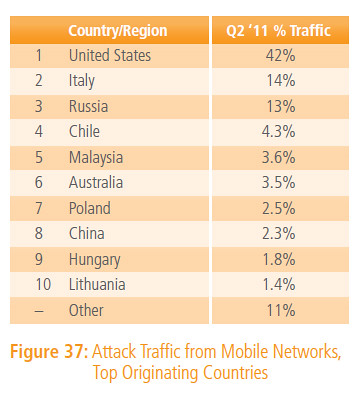
Attack traffic from mobile networks

Attack from mobile networks

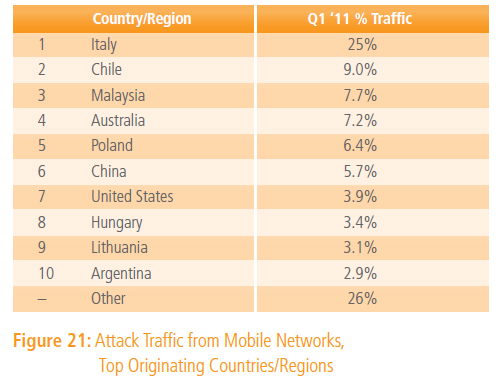
With respect to attack traffic originating from mobile network providers, the US vaulted to the top of the list, generating 42% of the observed traffic. Italy has gone down to second place, after its observed attack traffic from was halved compared to the previous quarter. Russia took third place. The top three countries were responsible for almost 70% of observed attacks, while the top 10 countries accounted for nearly 90% of the observed attacks.

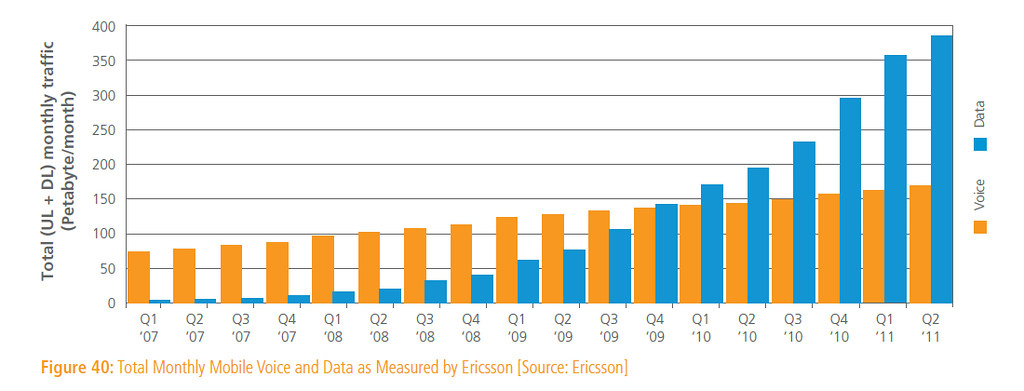
Exponential growth in mobile data traffic is outstripping linear growth of mobile voice traffic.

Exponential growth in mobile data traffic is outstripping linear growth of mobile voice traffic.

Previous SOTI reports from Akamai on tech4tea.com

1st Quarter, 2011 Report (Volume 4, Number 1)
4th Quarter, 2010 Report (Volume 3, Number 4)

RIM Announces BlackBerry Management Center for Small Businesses

Monday, August 22nd, 2011

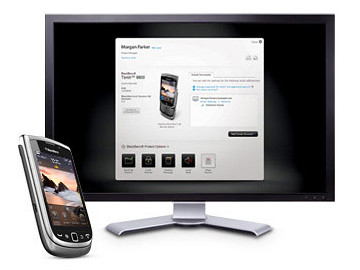
The BlackBerry Management Center is a free online service for small businesses to centrally manage company or employee-owned BlackBerry smartphones in the cloud and protect business-related content stored on the devices.

The BlackBerry Management Centre is free from Research In Motion (RIM)

The BlackBerry Management Center is free from Research In Motion (RIM)

The service is designed for businesses with up to 100 BlackBerry smartphones that access email services from an Internet service provider (ISP) or web-based email services like Gmail, Hotmail, and Yahoo!

Different research studies have indicated that the use of smartphones in business environments in APAC has enjoyed the greatest growth rate around the world. The IDC Worldwide Smartphone 2011–2015 Forecast from June 2011 indicates that APAC’s 2010-2015 CAGR for smartphone shipments is expected to grow at 32.1%, more than the worldwide average of 26.4%.

Screenshot from BlackBerry Management Center

Screenshot from BBMC

According to Worldwide SMB 2011 Top 10 Predictions from IDC in March 2011, SMB IT spending is also expected to increase the greatest in Asia Pacific at 11.2%, especially in China and India. ABI Research also indicated that APAC will have the second highest business-to-employee (B2E) application subscribers for smartphones and tablets by 2016.

With the increasing popularity and potential of smartphone usage in businesses in APAC, BlackBerry Management Center is positioned to provide control and management capability at no cost for small businesses who wish to enhance productivity and efficiency while protecting their company data at a minimized IT resources requirement.

What does BBMC do?

What does BBMC do?

BlackBerry Management Center will help take that worry away by allowing businesses to manage those devices so they are protected even if they’re lost or stolen. The service can be used to:

  • Wirelessly back up BlackBerry smartphones automatically on a daily, weekly or monthly basis to aid in the recovery of lost business-related content stored on the handset.
  • Protect content on an employee’s lost or stolen BlackBerry smartphone by remotely locking it and, if necessary, wiping the contents, including the microSD card.
  • Locate a lost BlackBerry smartphone by remotely locking it, initiating a loud ring, and displaying a message on the Home screen.
  • Easily restore the settings and content on a new or replacement device.
  • Reset a password.

BlackBerry Management Center is available today here.

Asian cities still the fastest, Myanmar now the most dangerous — says the Akamai Q1 2011 State of the Internet report

Sunday, July 31st, 2011

Asian cities again claim the fastest connection speeds in the world, with HK maintaining its lead in clocking the highest peak connection speed. Myanmar has pipped Russia to generate the most attack traffic.

Q1 2011 State of the Internet analysis from AkamaiAkamai has released its Q1 State of the Internet report for 2011. It is a leading provider of cloud optimisation services. Based on data gathered from the Akamai Internet Platform, which carries between 15-30 percent of the world’s Web traffic, the report provides insight into key global Internet statistics such as the world’s fastest and slowest regions for connection speed, the most frequent origins of attack traffic, and the highest-performing geographies for mobile connectivity, as well as resulting trends over time.

The main findings from the quarterly State Of The Internet (SOTI) report paints the following picture:

SpeedAverage measured connection speed by country/region

  • Global average connection speed increased 23 percent year over year to 2.1 Mbps.
  • Cities in Asia have the fastest connection speeds in the World. The 100 fastest cities worldwide is dominated by Asian countries, with 61 cities in Japan, five cities in South Korea, and Hong Kong. Lyse, Norway is the fastest city in Europe, at number 33 out of 100. 18 U.S. cities made the top 100 list, with Riverside in California ranking as the fastest U.S. city, at number 39 out of 100.
  • Average peak connection speed by country/regionSouth Korea has the highest level of “high broadband” (> 5 Mbps), with 60% of connections to Akamai at speeds above 5 Mbps.
  • South Korea has also achieved the highest average connection speed at 14.4 Mbps.
  • Hong Kong has maintained its position as having the highest average peak connection speed.
  • Other cities in Japan and South Korea continued to hold many of the top spots for highest average and average peak connection speeds by city.

Security

Attack traffic - top originating countries/regions

Attack traffic from mobile networks - top originating countries/regions

The latest findings reflected in the report show some significant changes in Q1 2011 related to sources of attack traffic. Most notably, Myanmar not only made its first appearance on the list, but also ranked #1 by generating 13 percent of attack traffic during this period.

Russia dropped from top into 4th place, accounting for 7.7 percent of global observed attack traffic, down from 10 percent in the previous quarter. Among other changes, the United States rose from 5th to 2nd, accounting for 10 percent of observed global attack traffic.

For attack traffic originating from mobile network providers, Italy remained in the top spot, responsible for 25 percent of observed attack traffic in the first quarter.

Mobile Consumption & Connectivity

In the first quarter of 2011, the average measured connection speed for known mobile providers worldwide ranged from a high of slightly more than 6 Mbps to a low of 163 kbps.  A service provider from Poland delivered the highest average mobile connection speed in the first quarter 2011, bumping last quarter’s fastest provider from Greece to the number two spot.

Akamai is the leading global service provider for accelerating content and business processes online.Consumption figures indicate that during Q1 2011, seven percent of the surveyed mobile providers consumed an average of 1 GB of content per month, while 73 percent consumed an average of 100 MB. The remaining 20 percent consumed less than 100 MB.
As a result of Akamai’s recently announced partnership with Ericsson, the report now includes data collected by the equipment provider. Overall mobile data traffic, as measured by Ericsson, experienced 130 percent yearly growth in the first quarter, and is now more than double the volume of voice traffic.

Akamai’s SOTI analysis

This is the fourth year that Akamai is publishing its quarterly analysis of Global Connectivity, Attack Traffic and Broadband Consumption.

More than 584 million unique IP addresses from 237 countries/regions connected to the Akamai Platform in Q1 2011. This represents 5.2 percent more IP addresses when compared with the fourth quarter of 2010, and an increase of 20 percent compared to the same quarter a year ago.

Consistent with last quarter’s report, the top ten countries/regions accounted for nearly 70 percent of the total IP addresses, indicating that the majority of the world’s unique IP addresses are concentrated within a relatively small number of geographies.  This quarter saw Italy enter the top ten with its 11 percent quarter-over-quarter growth while Canada dropped out of the top ten.

New data visualization tool show trends by geography in several measured categories.

New data visualization tool show trends by geography in several measured categories.

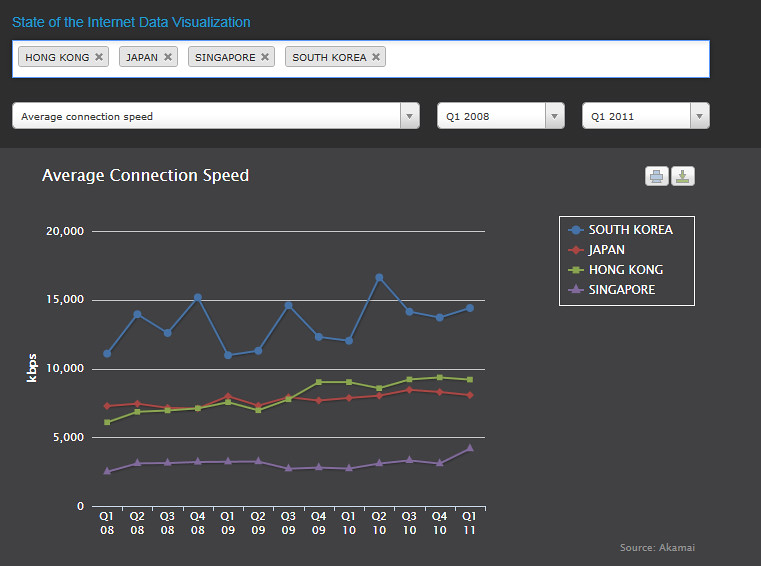
Akamai has also released a new data visualization tool showcasing trends by geography in several measured categories.  The tool allows users to generate and print/download graphs highlighting average connection speed, average peak connection speed, and high broadband/broadband/narrowband adoption rates.  In addition, the online tool offers quick, easy and customized views of trend data since the report was first published at the beginning of 2008.

Company byte: Kroll Ontrack

Wednesday, July 13th, 2011

Kroll Ontrack provides technology-driven services and software to help legal, corporate and government entities as well as consumers manage, recover, search, analyze, produce and present data efficiently and cost-effectively.

“Kroll Ontrack has become a leading provider of legal technologies, with operations in North America, Europe, and Asia Pacific. It has patented technologies and capabilities in recovering seemingly deleted files, including internet-based information cleared from the cache.” – WikipediaIn addition to its suite of software, Kroll Ontrack provides data recovery, data destruction, paper and electronic discovery, document review, computer forensics and ESI consulting.

Kroll Ontrack is the technology services division of Kroll Inc., the global risk consulting company. Kroll is a subsidiary of Altegrity, an industry-leading provider of information solutions.

Companies or individuals can contact Kroll Ontrack for free consultation on the best way to erase data from all types of media. Those in Singapore can call (+65) 6296 5131 or visit their website here. Kroll Ontrack provides several options for data erasure such as Ontrack Eraser Software and Ontrack Eraser Degausser. Both solutions set out to data in a fast, secure and user-friendly way.

Asian cities are fast, Russia is dangerous – says the Akamai Q4 2010 State of the Internet report

Thursday, May 5th, 2011

Asian cities have the fastest connection speeds in the world, with HK clocking the highest peak connection speed, and Japan having the highest level of broadband adoption. Russia generated the most attack traffic.

Basically, the Internet has become a faster and more dangerous place.

The State of the Internet report for Q4 2010

The State of the Internet report for Q4 2010

Akamai has released its Q4 State of the Internet report for 2010. It is a leading provider of cloud optimisation services. Based on data gathered from the Akamai Internet Platform, the report provides insight into key global Internet statistics such as the world’s fastest and slowest regions for connection speed, the most frequent origins of attack traffic, and the highest-performing geographies for mobile connectivity, as well as resulting trends over time.

Akamai is the leading global service provider for accelerating content and business processes online.Looking at the two main areas of speed and security, the State Of The Internet (SOTI) report paints the following picture:

Speed

  • Cities in Asia have the fastest connection speeds in the World.
    (top 40 cities are either in Japan or South Korea)
  • Hong Kong has the highest peak connection speed.
  • Japan has the highest level of broadband adoption.
  • Average peak connection speeds on mobile devices rose to 21.2Mbps globally.

Security

  • Russia is the number one country in terms of generating attack traffic, followed by Taiwan (2nd), China (4th), US (5th), Malaysia (25th), HK (47th), and Singapore (48th). 10% of all attack traffic originates from Russia.
  • The Akamai network saw more DDoS attacks in Q42010 than the previous three quarters combined.
  • In terms of mobile-generated attack traffic, the top ten countries are:
  1. Italy
  2. Chile
  3. UK
  4. Poland
  5. Malaysia
  6. China
  7. Russia
  8. US
  9. Hungary
  10. Lithuania

Akamai’s globally distributed network of servers allows it to gather massive amounts of information on many metrics, including connection speeds, attack traffic, and network connectivity/availability/latency problems, as well as traffic patterns on leading Web sites.

Each quarter, Akamai publishes a “State of the Internet” report. The 2010 Q4 report included data about attack traffic, broadband adoption, and mobile connectivity, as well as trends seen in this data over time.

Ransom for a kidnapped phone – $148

Wednesday, March 16th, 2011

With the stress and inconvenience of losing one’s mobile phone, half of those who had lost one were willing to pay an average of S$148 to get their phone back, a survey of mobile phone owners in Singapore found.

Average ransom people are willing to pay for their lost phone.That is assuming that the finder or thief offers the owner the chance to redeem their lost or stolen mobile phone. Most of the time, it’s “finders keepers” and the owners are laden with the inconvenience of reconstructing lost contact lists and worried over their private information falling into wrong hands.

Victims who have become celebrities overnight because the saucy secrets from their mobile phones have been splashed all over the Internet can attest to the stress involved.

In Singapore, where each person owns – on average – more than one mobile phone, about half (52%) of Singaporeans have lost their phones before. Despite that, only slightly more than a third (37%) currently have a password protecting their devices. These are some of the findings found by a survey commissioned by Symantec Corporation in January 2011.

With smartphones being so capable, people are relying more on them to communicate, work and play. Almost ninety percent of “Singaporeans never leave home without their mobile phones and nearly half cannot live without their phones” [Synovate 2009].

Norton Mobile Survey commissioned by SymantecThe  Norton Mobile Survey found “a whopping 89 percent of victims noting that they could neither remotely lock nor wipe the phone’s memory after the device was stolen or lost.”



“As smartphones become more pervasive in our lives, there is a greater need to protect the data on such devices.  This is one of the reasons why Norton is taking security beyond the PC to develop solutions that protect consumers, regardless of the device they use,” says Effendy Ibrahim, Internet Safety Advocate and Consumer Business Head, Asia, Symantec.

On the whole, a significant number of Singaporeans consider security factors before making a mobile phone purchase, with 72 percent noting that they are more likely to make a purchase if their mobile device or software is able to be locked remotely and has the ability to erase all the data on their device remotely.

Protection

So what does Symantec have to counter cybercriminals cashing in on increasing prevalence and reliance on smartphones? Norton Mobile Security has been introduced as part of the Norton Everywhere three-part initiative, which will address some of today’s most common issues for smartphones, including device loss and data protection.

Norton Mobile Security will allow users to locate and remotely wipe or lock their lost or stolen Android phones with a quick text message.  Consumers can currently download a free limited-trial beta version directly from the Android Market.

Go to work dressed as Lady Gaga for a week?

Tuesday, March 15th, 2011

This is what 17% of Singaporeans would rather do than to lose their mobile phones, a survey of mobile phone owners in Singapore found.

Other noxious things that these 17% of mobile phone owners were willing to put themselves through – rather than lose their mobile phones – include getting a root canal and eating rotten eggs.

In fact, “32 percent of Singaporeans would rather lose their childhood photographs than lose their mobile phones,” the Norton Mobile Survey found.

The Norton Mobile Survey is based on research conducted in January 2011 by The Leading Edge, an independent market research firm, on behalf of Symantec Corporation. The Leading Edge conducted an online survey among 500 adults, between the ages 18 and 54, within each of the following six markets: Singapore, India, Australia, Taiwan, China and Japan.

The Singapore sample size comprised the following:

Gender Percentage of 500 respondents
Female 51%
Male 49%
Age Group
45 to 54 years old 26%
35 to 44 years old 34%
25 to 34 years old 27%
18 to 24 years old 13%
Phone Type
Standard mobile phones 42%
Smartphones 58%
Apps on Smartphones
Average free Apps 23
Average paid Apps 3