Posts Tagged ‘MIL’

New MIL camera: Fujifilm X-Pro1

Wednesday, February 22nd, 2012

Fujifilm launched the X-Pro1 mirrorless interchangeable lens (MIL) camera in Singapore today.

The 16-MP retro beauty will be available here in March at S$2,400 for the camera body and S$900-S$1,000 for a basic lens. (All prices include 7% GST.)

Fujifilm X-Pro1 mirrorless interchangeable lens camera (Body only: S$2,400)
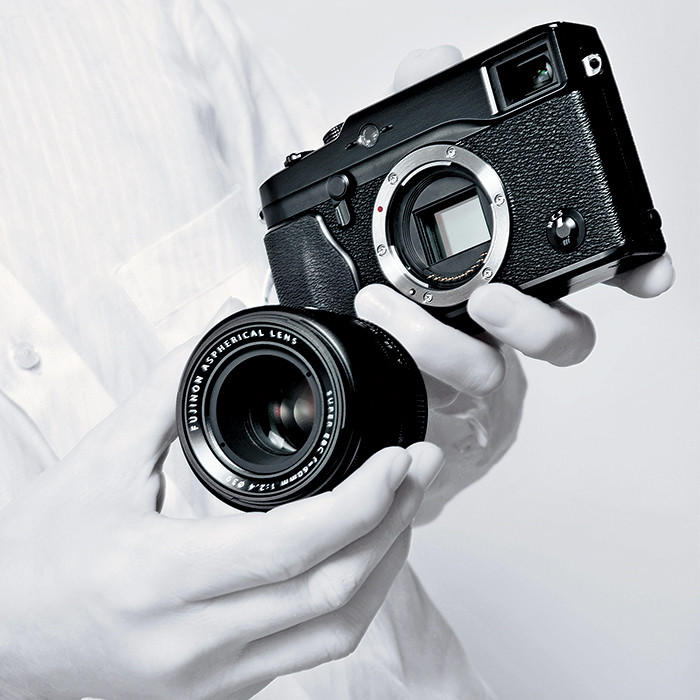
Fujifilm X-Pro1 mirrorless interchangeable lens camera (Body only: S$2,400)

First interchangeable lens camera in Fujifilm's X series.

First interchangeable lens camera in Fujifilm's X series.

First impressions

I tried out the camera during the launch event.

First impression, apart from the exorbitant price-tag, is that the retro design is incredibly beautiful.

It is relatively big and heavy compared to other MIL cameras.

But I love the direct controls enabled by the dials and well-placed buttons all over the camera.

You can adjust the shutter speed and exposure compensation on knurled metal dials on the top of the camera, and the Side view of the Fujifilm X-Pro 1 MIL cameraaperture in ⅓ stop increments on a ring on the lens itself.
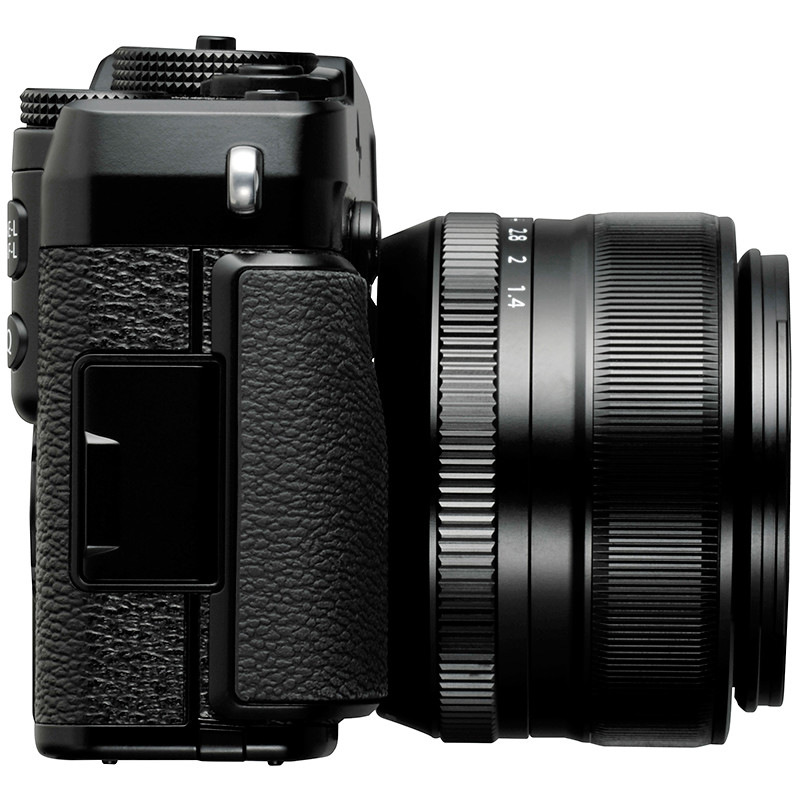
The shutter release also had the firm but springy feel reminiscent of film SLRs.

Focus was fast and pictures came out sharp and vividly coloured, with little noise even at high ISO and low light.

It’s definitely a camera to drool over.

The X-Pro1 is the first MIL camera from Fujifilm and features a 16-megapixel APS-C X-Trans CMOS sensor, a new X lens mount, a Hybrid Multi Viewfinder, and three prime lenses.
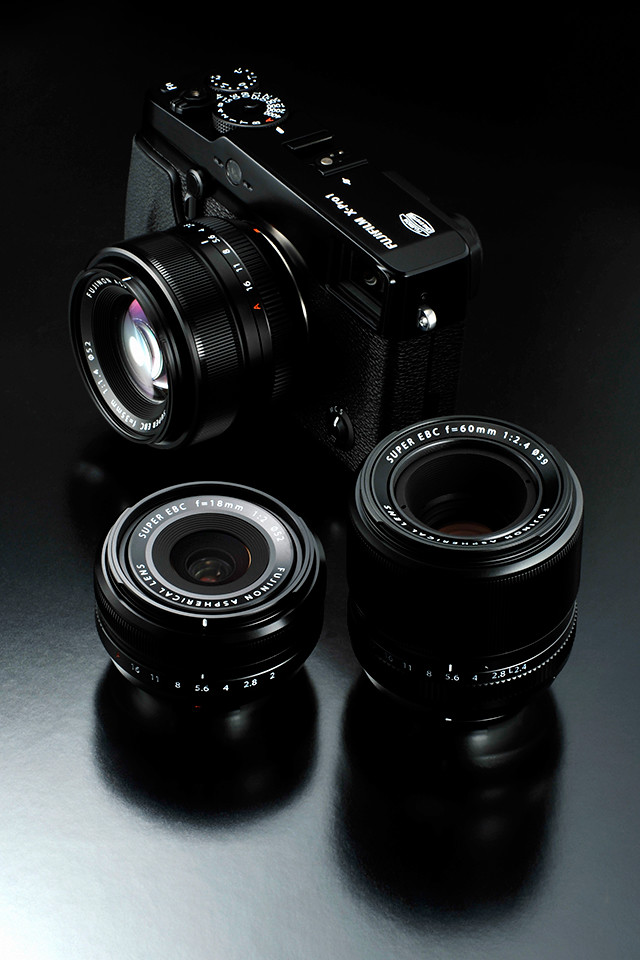
Three prime lenses have been launched together with the X-Pro1.

Three prime lenses have been launched together with the X-Pro1.

The sensor is physically larger than the 1-inch sensor in the Nikon J1/V1 MIL offering, and the four thirds and micro four thirds sensors in the MIL and DSLR cameras from Olympus and Panasonic.

The APS-C sensor has a crop factor of 1.5 and is the same size as those found in the Samsung NX and Sony NEX series of MIL cameras and most DSLRs.

New sensor colour filter array

Fujifilm claims that the X-Pro1 can produce pictures with lower noise and greater detail than other MIL and DSLR cameras.

The usual optical low pass filter – which reduces moire and false colour generation at the expense of image detail resolution – has been foregone.
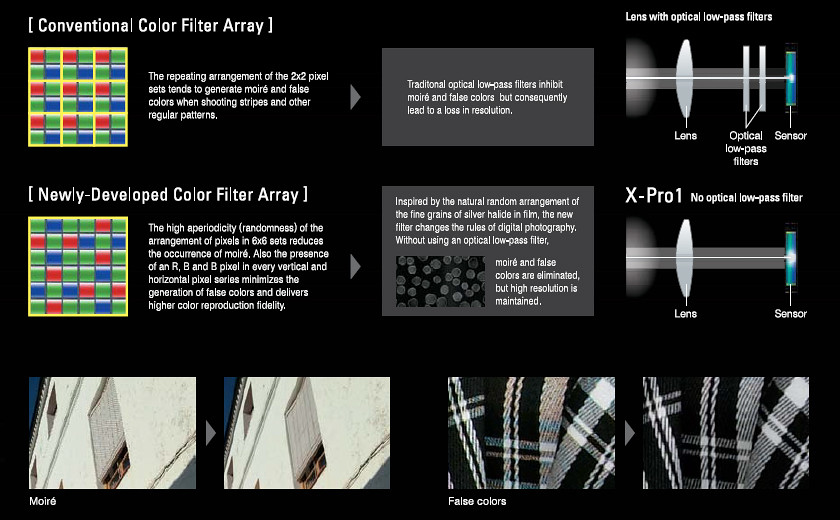
The X Trans CMOS sensor has a new array design for its colour filter to remove moire.

The X Trans CMOS sensor has a new array design for its colour filter to remove moire.

Instead, a new colour filter array in the sensor array has replaced the usual Bayer-patterned array to reduce moiré in photos containing stripes/chequered patterns or other regular/repeating patterns.
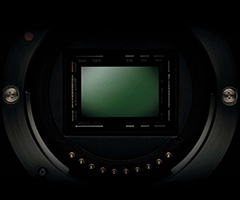
16-megapixel APS-C sensor

16-megapixel APS-C sensor

In the array, RGB pixels are arranged in 6×6 pixel sets with high aperiodicity (randomness).

Increasing the degree of randomness eliminates the fundamental cause of moiré and false colours.

These are problems that occur in conventional arrays when shooting stripes and other repeating patterns.

The new sensor array contains slightly more green sensor elements than the traditional Bayer array, and is inspired by the irregular physical dispersion of silver halide particles in film, which did not suffer from moiré problems.

Fujifilm X-Pro 1 MIL camera The additional image processing demands required by the new array is met by a new EXR Processor Pro which will maximise the full potential of the X-Trans CMOS sensor and deliver high speed and high precision image processing.

Prime FUJINON XF lenses

Three compact XF FUJINON fast aperture prime lenses will be available in March 2012.

The “XF18mmF2 R”, “XF 35mmF1.4 R” and “XF60mmF2.4 R Macro” lenses promise precise control over depth-of-field and excellent out-of-focus bokeh.

The new X-Mount has a short flange back distance of just 17.7mm.

The X-Pro1 and its accessories.

The X-Pro1 and its accessories.

Hybrid Multi Viewfinder

The Hybrid Viewfinder first appeared in the X100 and allows the user to instantly switch between an Optical Viewfinder and Electronic Viewfinder.

For viewing images in the brightest mode and to keep shutter lag to a minimum, users should choose the Optical Viewfinder.

Those wanting focus confirmation, exposure information, white balance information and depth of field indicators should switch to the Electronic Viewfinder.

This retro beauty has a high drool factor.

This retro beauty has a high drool factor.

Simulated film effects

Leveraging on Fujifilm’s photo film legacy, the X-Pro1 comes with 10 in-camera pre-canned special effects that simulate different types traditional film effects in the photos, from different film types to different film development techniques.

Check out the detailed features of the Fujifilm X-Pro1 below:

(more…)

New MIL camera: Olympus OM-D E-M5

Wednesday, February 8th, 2012

It’s confirmed! The Olympus E-M5 (from the new OM-D series) has been launched in Singapore in sync with the launch in Japan. The Micro Four Thirds mirrorless interchangeable lens (MIL) camera will be available in late March. Price TBC.

Retro-looking Olympus OM-D E-M5 launched today some 40 years after the original OM film SLR. Photo taken with PEN E-P3.

Retro-looking Olympus OM-D E-M5 launched today some 40 years after the original OM film SLR. Photo taken with PEN E-P3.

Most of the speculation prior to the actual launch turned out to be spot-on. The camera will be launched in Kuala Lumpur tomorrow.

“The four-thirds traditional DSLR like the E-5 is not dead. Even now, the staff at Tokyo HQ are discussing what the successor to the E-5 should be like,” Toshiyuki Terada, Group Leader of Product and Marketing Planning Group.The launch will then be held in Amsterdam for the European countries next week.

The key question everybody is asking is whether the four-thirds DSLR, viz the E-5, E-30, E620 line of traditional DSLRs is dead.

Many in the industry that I’ve spoken to thinks so.

So I posed the question to Toshiyuki Terada, Group Leader of Product and Marketing Planning Group.

Toshiyuki Terada san, holding an E-M5 doused in water.

Toshiyuki Terada san, holding an E-M5 doused in water.

Terada-san said that the four-thirds DSLR are not dead.

According to him – even now, the Tokyo staff is discussing what the successor to the E-5 will be like.

E-5 is the flagship four-thirds traditional DSLR in Olympus’ four-thirds line.

Terada acknowledges that the higher end professional photographers will, for the moment, prefer the E-5 as the primary camera.

But the micro four-thirds mirrorless cameras are gaining very rapidly in popularity (especially with the younger generation) and capability.

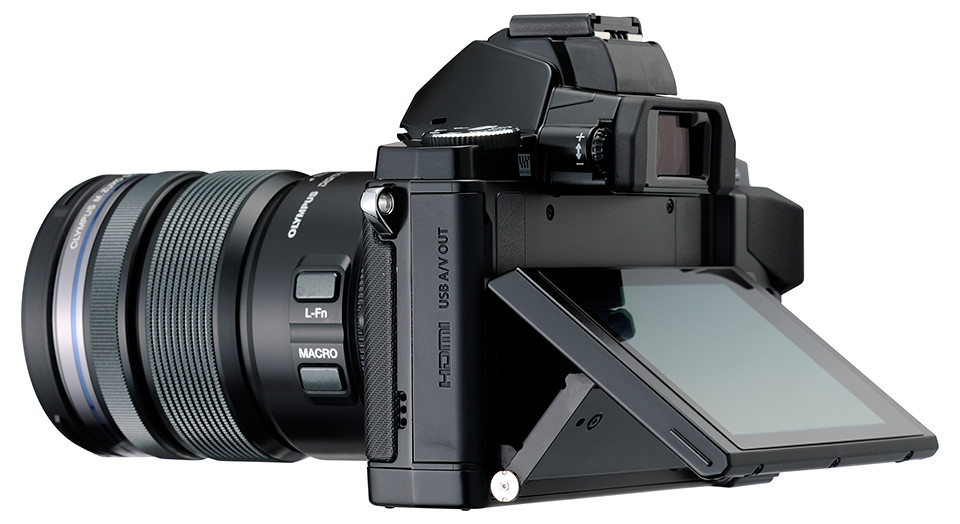
The Olympus OM-D E-M5 Micro Four Thirds mirrorless interchangeable lens camera.

The Olympus OM-D E-M5 Micro Four Thirds mirrorless interchangeable lens camera.

Looking at the OM-D E-M5, it does look like a “bridge” between the PEN E-P3 and the E-5.

Newly unveiled Olympus OM-D E-M5

Newly unveiled Olympus OM-D E-M5

Main improvements in plugging that gap is the increased auto-focus speed and the built-in electronic viewfinder, together with a host of other sweeteners.

Probably due to physics, it is still not possible for the OM-D to be a replacement for the E-5.

Only time will tell if the traditional DSLR will follow the way of the film cameras, or will the MIL cameras themselves be eventually replaced by higher performing prosumer compacts.

The camera will come with an M.Zuiko Digital ED 12-55mm f3.5-6.3 EZ kit lens.

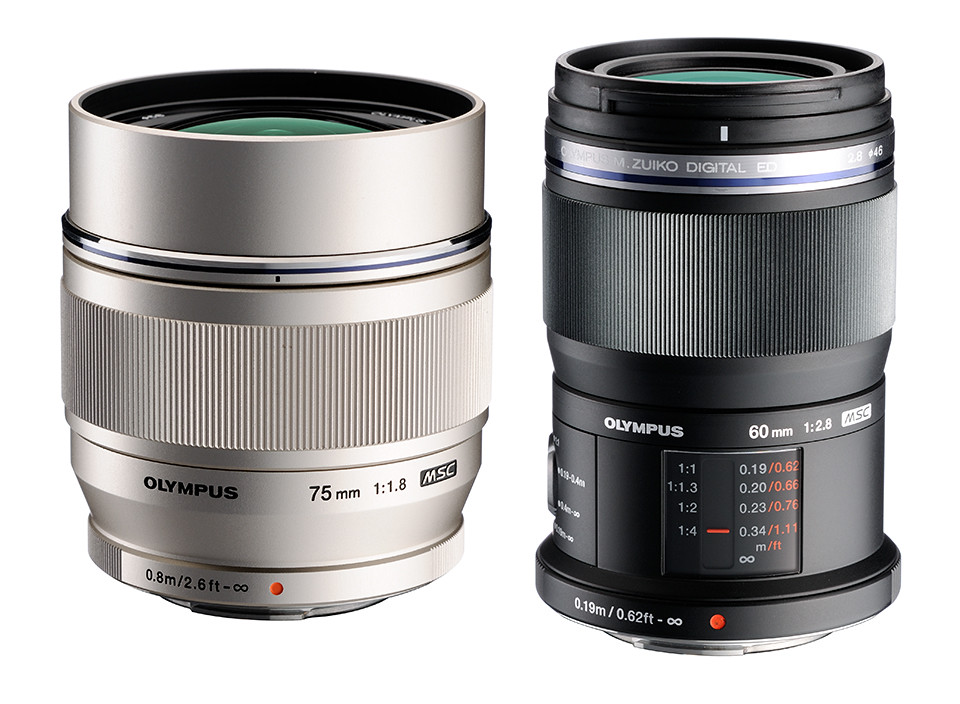
In addition, two new micro four thirds lenses – ED 75mm f/1.8 and ED 60mm f/2.8 macro lenses – were also unveiled to be under development.

Two new Micro Four Thirds lenses under development - ED 75mm f/1.8 and ED 60mm f/2.8 macro lenses.

Two new Micro Four Thirds lenses under development - ED 75mm f/1.8 and ED 60mm f/2.8 macro lenses.

The design mock-up of these lenses will be exhibited at CP+ in Yokohama, Japan from 9-12 February, 2012.

Olympus OM-D E-M5 comes in black or silver but kit lens only comes in black.

Olympus OM-D E-M5 comes in black or silver but kit lens only comes in black.

Main specifications of the OM-D E-M5

  • 16 megapixel Live MOS sensor
  • TruePic VI image processing engine
  • 5-axis (instead of 2) image stabilisation
  • ISO range of 200 to 25,600
  • 3-inch 610k-dot OLED-based touch-screen
  • Built-in 1.44-megapixel electronic viewfinder.
  • Fast auto-focus (20% faster than PEN E-P3)
  • 3D tracking
  • New “Key Line” Art Filter
  • New “Cross Process II” & “Dramatic Tone II” Art Filter variations
  • Dust/splash proof
  • Echo special effect for video
  • Burst shooting of 4.2-9.2fps
  • Shutter speeds from 60 to 1/4000th second.
  • 121mm x 89.6mm x 41.9mm (4.8 x 3.5 x 1.7 inches)
  • 425 g with battery and memory card
  • Hot-shoe for external flash

Rumour: Olympus OM-D/E-M5

Wednesday, February 8th, 2012

After much speculation and buzz over the past few weeks, Olympus will be launching, worldwide, their new micro four-thirds camera today. It is believed to be the new OM-D/E-M5 (speculated price: SGD1,600 or JPY100,000).

The widely anticipated Olympus launch event

The widely anticipated Olympus launch event

I’ll be attending the Singapore launch later on today. For now, this is what the rumour mills out there speculate. We’ll see how close to the truth later on today.

Front view of the anticipated Olympus OM-D E-M5 (Photo: 43Rumors)

Front view of the anticipated Olympus OM-D E-M5 (Photo: 43Rumors)

The OM-D/E-M5 is believed to be a micro four thirds mirrorless interchangeable lens camera based in design on the retro OM-series of film SLRs from Olympus.

The camera is expected to have a 16 megapixel sensor, five-axis image stabilisation, an ISO range of 200 to 25,600, a hot-shoe for external flash, and a 3-inch 610k-dot OLED-based touch-screen, as well as a built-in 1.44-megapixel electronic viewfinder.

It’s supposed to have superfast auto-focus and 3D tracking, burst shooting of four frames per second, shutter speeds between 60 and 1/4000th of a second.

Rear view of the OM-D E-M5 (Photo:43Rumors)

Rear view of the OM-D E-M5 (Photo:43Rumors)

Body dimensions could be 122mm x 89mm x 43mm (4.8 x 3.5 x 1.7 inches), weighing 369 grams (about 0.8 pounds).

Two photos of the camera were leaked and withdrawn on Amazon Japan, but not before 43Rumors downloaded them and posted them. The pictures show the camera with a battery grip.

Lens-wise, two new micro four thirds lenses – 75mm f/1.8 and 60mm f/2.8 macro lenses – may be launched in conjunction with the camera.

Some believe it’s a higher end PEN E-P3 in the class of E-5.

Review: Nikon 1 V1 and J1 MIL camera

Monday, February 6th, 2012

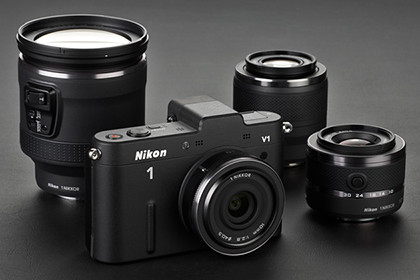
I tried out the Nikon 1 V1 (and Nikon 1 J1) mirrorless interchangeable lens (MIL) digital camera over the Chinese New Year.

Here’s what I like and dislike about Nikon’s debut into this relatively new segment of digital cameras.

This is a joint review in partnership with Tech65.org. Check out their video review of the Nikon 1 V1 and J1.

This is a joint review in partnership with Tech65.org. Check out their video review of the Nikon 1 V1 and J1.

Both the Nikon 1 V1 and J1 comes with a choice of 3 lenses. Their bundled prices are tabulated below.

Nikkor Lens kit Nikon 1 V1 Nikon 1 J1
10mm S$1,269 S$969
VR 10-30mm S$1,199 S$899
10mm + VR 10-30mm S$1,399 S$1,099
VR 10-30mm + VR 30-110mm S$1,449 S$1,149

The Nikon 1 has a crop factor of 2.7, so the 10, 30 and 110 mm focal lengths of the Nikon 1 lenses are equivalent (35mm format) to 27, 81 and 297 mm respectively.

If you’re looking for a compact and stylish camera that focuses fast, shoots good quality images in auto mode, offers the flexibility of changing lenses; and you’re not into rolling up your sleeves to interfere with exposure controls – this camera is for you.

Likes

I like the simplicity and clean design of the camera. It’s as simple to use (actually simpler) as a digital compact, and yet it’s only slightly heftier than a compact, but with faster focusing and better image quality.

The new CX format 1-inch 10.1 megapixel CMOS sensor is larger than those in compact cameras but smaller than other MIL cameras. It has a crop factor of 2.7 and allows lenses to be compact.

The new CX format 1-inch 10.1 megapixel CMOS sensor is larger than those in compact cameras but smaller than other MIL cameras. It has a crop factor of 2.7 and allows lenses to be compact.

With a bigger sensor than most compacts, the image quality was noticeably better. Focusing was also very fast with its hybrid Contrast and Phase detection auto-focus.

So on those days that I just want a point-and-shoot that I can leave on auto and snap away at those precious spontaneous moments, this would be an ideal choice.

Such as when people come and go over the Chinese New Year period to “拜年” and you just want to shoot stills and videos of the kids spewing their well-wishing lines to earn their ang pows.

No need to frighten the kids with this gigantic and obstructive DSLR getting in the way. Besides, the design is retro and nice, very similar to the Olympus PEN, whose design I also like.

And the white design of the Nikon 1 V1 that I used was the conversation topic drawing oohs and aahs from the subjects.

(That is invariably followed by more oohs and aahs when they hear the price of the camera).

On the main mode dial, you can see the four main shooting modes for using the camera. The usual Still shooting mode and Movie recording mode, as well as two interesting new modes: Motion Snapshot and Smart Photo Selector.

Motion Snapshot

The first time I shot with Motion Snapshot mode I really liked the effect. What happens is that when you half-press the shutter release button, the camera begins to record video in its buffer.

(more…)