Posts Tagged ‘Android’

Adobe introduces Creative Suite 5.5

Tuesday, April 12th, 2011

Adobe’s major mid-cycle product release targets enhancements across Flash, HTML5, video, mobile App and digital publishing tools. It also extends workflows to include tablets.

Adobe announced today the new Adobe Creative Suite 5.5 product line, enabling designers and developers to target popular and emerging smartphone and tablet platforms, as the revolution in mobile communications fundamentally changes the way content is distributed and consumed.

Today’s launch marks a significant change to Adobe’s product release strategy for Creative Suite, the design and development software catering for print, video, mobile and online media.

Adobe now plans to have milestone Creative Suite product introductions at 24-month intervals and – starting with Creative Suite 5.5 – major mid-cycle releases between the milestone versions.

Product lineup and pricing

The new Creative Suite product lineup is headlined by Adobe Creative Suite 5.5 Master Collection, which includes, in a single package, all of Adobe’s industry-defining creative tools, such as Photoshop, Illustrator, InDesign, Acrobat, Flash Builder, Flash Catalyst, Flash Professional, Dreamweaver, Adobe Premiere Pro and After Effects.

These products are available separately or as components of one or more of the five Creative Suite editions.

The complete Creative Suite 5.5 lineup and their estimated street prices are tabulated below, and is scheduled to ship within 30 days. Upgrade pricing, volume licensing and education pricing are also available.

Creative Suite 5.5 Master Collection: US$3159
Creative Suite 5.5 Design Premium: US$2309
Creative Suite 5.5 Web Premium: US$2185
Creative Suite 5.5 Production Premium: US$2065
Creative Suite 5.5 Design Standard: US$1579

Key enhancements

The new Creative Suite 5.5 Web Premium suite sees enhancements in HTML5 and Adobe Flash authoring tools, allowing users to create, deliver and monetize rich content and applications for virtually any screen.

This release helps enable designers and developers to deliver mobile applications on Android, BlackBerry Tablet OS, iOS and other platforms; create rich browser-based content across screens using HTML5; and leverage Flash Player to deliver premium video content, casual games and rich Internet applications.

Tablet devices are now included in the creative workflow, going beyond the desktop computer. A new scripting engine in Adobe Photoshop and an enhanced Photoshop Software Development Kit (SDK) enable developers to build tablet applications that interact with Photoshop from Android, BlackBerry and iOS devices.

Adobe also announced three new iPad applications that demonstrate the creative possibilities of using tablets to drive common Photoshop workflows – Adobe Color Lava for Photoshop, Adobe Eazel for Photoshop and Adobe Nav for Photoshop.

With the launch of Adobe Flash Builder 4.5 – available as part of the Creative Suite 5.5 Web Premium suite – and the Flex 4.5 framework, developers can easily develop and deploy mobile applications to the over 200 million Android, BlackBerry Playbook and iOS devices anticipated to be in market by the end of 2011.

With more than 131 million smartphones expected to have Flash Player installed by the end of the year, Adobe Flash makes it possible to bring rich content to desktops and devices inside the browser.

Flash Player is supported on Android, HP webOS and Google TV today. BlackBerry Tablet OS, upcoming versions of Windows Phone, Samsung SmartTVs and others are expected to support Flash Player in the near future.

For video and audio professionals, Adobe Creative Suite 5.5 Production Premium suite promises breakthrough performance, workflow improvements, creative innovations, and powerful new audio editing capabilities.

The powerful Adobe Mercury Playback Engine, introduced in Adobe Premiere Pro CS5, broadens its graphics processing unit (GPU) hardware support to include laptops and more supported cards, allowing users to open projects faster, get real-time feedback and work more smoothly at higher resolutions.

Creative Suite 5.5 Design Premium suite includes Adobe’s recent product innovations in digital publishing to create slick digital editions for tablet devices. Using InDesign CS5.5, in combination with the integrated Folio Producer toolset, designers can add new levels of interactivity to their page layouts targeted to tablet devices.

Documents can include video, audio, panoramic views, 360-degree object rotation, pan and zoom of images, integration of HTML and HTML5 content and other interactive overlays. Leading to a much more robust and engaging reading experience.

Creative Suite 5.5 is tightly integrated with Adobe Digital Publishing Suite to support publication, sale and analysis of content on an array of tablet devices.

Adobe Creative Suite 5.5 products integrate with Adobe CS Live, a set of online services that accelerate key aspects of the creative workflow and enable designers to focus on creating their best work. CS Live online services include: Adobe BrowserLab; Adobe CS Review; Acrobat.com; Adobe Story; and Adobe SiteCatalyst NetAverages powered by Omniture. Adobe CS Live is free until April 12,2012.

Android compatibility for the PlayBook

Saturday, April 2nd, 2011
Having had only 25,000 apps in BlackBerry App World, RIM’s PlayBook will tap the 150,000 apps in the Android Market to give it a headstart, while ramping up the number of PlayBook specific apps to stand against the staggering 350,000 apps in Apple’s App Store.

RIM launches the PlayBook on April 19RIM will be opening the PlayBook to Android apps to provide customers a wider choice of apps.

Software tools for making Android apps work on the PlayBook will be available this summer, Tyler Lessard, head of RIM’s developer relations told Bloomberg in an interview.

Android is the world’s fastest-growing smartphone platform and is also gaining market share for tablet computers, based on data on global shipments from Strategy Analytics below.

Percentage of global shipments Android iPad
Oct to Dec 2010 22 % 75%
Jul to Sep 2010 2.3 % 95 %

Although developers can port Android apps for the PlayBook, Lessard states that developers should still create programs specifically for the PlayBook to make the most of its multimedia performance and ensure their apps work as well as possible.

Bloomberg reports that “Dozens” of games for the PlayBook will be released this year through Unity Technologies’s Union game development tool.

RIM readies itself for launch of its PlayBook

Friday, April 1st, 2011
RIM positions PlayBook to capture market share from its Apple and Android tablet rivals from the consumer market, even as it opens up for Android app compatibility and ramps up on building its own ecosystem of PlayBook specific apps.

Research In Motion (RIM) whose BlackBerry smartphone was a hit with corporate customers, is also targeting developers of consumer applications, including games and magazines.

The 7-inch tablet will be preloaded with applications such as Tetris – my favourite game on an Apple Macintosh during my college days, and the Kobo e-book reader.

An online version of Pro Football Weekly magazine will also be available for sports aficionados.

The display was superb and performance lightning fastThe PlayBook goes on sale in the US on April 19 and will feature a new operating system, a dual-core processor, and the capability to play applications for Google’s Android platform.

I had the chance to play with a beta release version of the PlayBook when it was first brought to Singapore three weeks ago and the display not only looked great, the processor was lightning fast, multi-tasking 8-10 CPU/graphics-intensive apps without showing any latency.

Although RIM has not been as successful as Apple or Google in attracting independent developers to write consumer apps for the BlackBerry, it is trying to rectify this with the PlayBook.

Hugo Miller from Bloomberg quoted Travis Boatman, senior vice president at Electronic Arts as being impressed with the PlayBook.

“It’s one of the fastest devices out there … You take a good software environment and great hardware, you’ve got a device that designers and developers can create great content on.”

The Redwood City, California-based company will release “Tetris” and “Need for Speed Undercover,” a car racing game, on the PlayBook.

Research In Motion launches the PlayBook on April 19RIM will be opening the PlayBook to Android apps to provide customers a wider choice of apps. There are more than 150,000 apps in the Android Market, compared with more than 25,000 in BlackBerry App World and more than 350,000 in Apple’s App Store.

“We are absolutely targeting the consumer, personal apps market as much if not more because there is such a vast market out there,” Tyler Lessard, head of RIM’s developer relations told Bloomberg in an interview.

Polar Mobile, a Toronto-based developer of apps for magazines including Time, GQ and Sports Illustrated, is building over 100 PlayBook apps including Pro Football Weekly, that will be ready in July, said Polar CEO Kunal Gupta.

Like other newcomers to the tablet scene, the PlayBook will be hoping to chip away at the market share of Apple, the market leader who has enjoyed little competition since the launch of its iPad in April 2010.

Analysts estimate that Apple has shipped more than 15 million iPads so far, and sold about 500,000 of the newly launched iPad 2, over its March 11 debut weekend.

iPad 2 launch on 2 Mar?

Thursday, February 24th, 2011

Have you received the invitation from Apple?

Apple's invitation for the 2 March event

Apple emailed the invitation to a media event in San Francisco that showed a calendar page with the date 2 March and the top right corner of the page peeling back to reveal an iPad underneath. The peek-a-boo iPad suggests that Apple may unveil its new version of the iPad during the event.

Earlier reports from Taiwan-based Yuanta Securities had surmised that the iPad launch might be delayed to June this year because of production bottlenecks at the China production line of Hon Hai – Apple’s Taipei-based contract manufacturer.

Will the iPad 2 be announced on 2 Mar?Indulging in my own bit of speculation, both schools of thought may not be untrue. We might actuallly see an iPad announcement on March 2 followed by the taking of orders, with deliveries only materialising in June, probably staged out based on country.

What with the legion of Android tablets being unveiled by the day, with specs that trounce the year old iPad, any delay in unveiling the upgraded specs of iPad 2 could create a negative impression in people that the iPad is inferior to Android tablets.

The announcement of iPad2 with all the specs that has been rumoured to ship with it should maintain its aura of invincibility that over challengers.

Apple certainly won’t want to announce the iPad 2 in June only to have people yawn at its specs, since by then it may already have been featured on the Android tablets out there.

Samsung’s Android-based Galaxy Tab was launched last year and was well-received. Motorola’s Xoom Android-based tablet goes on sale today, while Research In Motion plans to release four versions of its Playbook this year.

The original iPad went on sale on April 3. Announcing the iPad 2 on March would mean that it will follow an annual cycle of updates like the iPhone and iPod.

Google’s 4th quarter earnings (Ended 31 Dec 2010)

Friday, January 21st, 2011

Google reported a net income of US$2.54 billion (or US$7.81 per share) in the quarter ended 31 Dec. This is an increase of 29% from US$1.97 billion (or US$6.13 per share) in the quarter a year earlier.

Google IncProfit excluding some items was US$8.75 a share, exceeding the US$8.08 average of estimates compiled by Bloomberg, and exceeding the US$6.79 a share from the quarter a year earlier.
Sales of US$6.37 billion (excluding commissions paid to advertising partners) surpassed the US$6.06 billion average of estimates. This is up from US$4.95 billion from the preceding year.

According to ComScore, Android beat Apple’s iPhone in US smartphone subscribers for the first time in November, accounting for 26% of the market, compared with 25% for Apple. BlackBerry maker Research In Motion continued to lead with 33.5%.

In the search-engine business, Google continues to lead. In December, Google accounted for 66.6% of searches in the US (up from 66.2% in November) compared to a share of 28% (down from 28.2%)  from Microsoft and Yahoo combined. Yahoo began using Microsoft’s Bing technology for its online search in August.

Google Co-founder Larry Page replaces Eric Schmidt as CEO

Friday, January 21st, 2011
As Apple’s co-founder Steve Jobs hands over day-to-day running of the company to COO Tim Cook, Google announces in a shocker that its co-founder Larry Page will take over the reins of the company from chief executive Eric Schmidt.

As the new chief executive, 38-year-old Larry Page will “merge Google’s technology and business vision,” Schmidt said in a blog post. He is currently the president of products in Google.

What Larry's name card might look like

The 55-year-old Schmidt will be staying in Google as the Executive Chairman and serve as an advisor to Page and co-founder Sergey Brin. Schmidt will focus on external issues like “deals, partnerships, customers and broader business relationships, government outreach and technology thought leadership.”

37-year-old Sergey Brin, who is currently the president of technology, will focus on strategic projects, especially new products and assume the simple title of Co-Founder.

When Schmidt first joined Google in 2001, people in the Silicon Valley joked that the company was finally going to get some “adult supervision.” According to The New York Times, “neither Mr. Brin nor Mr. Page, the company’s co-founders, had much formal work experience in the technology industry besides the work they were doing at Google, which they started in 1998.” Neither of them has ever been the CEO of a public company.

Now, Schmidt writes on his Twitter account to some 225,000 followers that “Day-to-day adult supervision is no longer needed.”

Page will be helming a company with 24,000 employees – more than 100 times the 200 odd employees when Schmidt took over 10 years ago.

His challenges inlcude intense rivalry from Facebook, the world’s largest networking site founded in 2004, which boasts more than 500 million users. Google also competes with Apple in mobile advertising, and with Yahoo and Microsoft in its traditional search arena.

The management changeout was announced during the press release on Thursday of Google’s Q4 financial results, which beat forecasts by Wall Street analysts.

BlackBerry BlackPad from Research In Motion (RIM)?

Wednesday, July 28th, 2010

At last, I see signs of some movement from Research In Motion (RIM), the maker of the  BlackBerry smartphone, in response to the inroads that its rival are making into the smartphone scene.

Artist impression of a BlackPad.

Is this what a BlackPad will look like?

It is much too early to tell whether this move will help RIM stave off its rivals’ inroads into its market share, but it is at least something. However, I believe RIM needs more than just a new device. Apple is successful because of the entire framework – apps, iTunes, chic branding. RIM is lagging in the Apps arena and does not have any music framework. The only thing it can leverage on is its branding from the success of its BlackBerrys. Even that is fading fast in the face of the popularity of the iPhone. I wonder if people still use BlackBerry as a verb anymore? Assessing company email from the phone is old news. What do people talk about nowadays? Apps – Apple apps and Android Apps.

RIM has acquired the internet rights to blackpad.com, fueling speculation that it is developing a tablet device to challenge Apple’s wildly successful iPad.

According to the Whois database of Internet domain names, the domain name assigned to RIM was created on July 8 and expires Sept. 8, 2011.

Bloomberg reports that there was no record of a trademark application for “blackpad” with the U.S. Patent and Trademark Office as of today.

Apple, the maker of the iPad, claimed in June that it has sold 3 million of the tablet computers within 80 days of launch in the US.

Other device makers are vying to develop tablets following Apple’s success with its iPad, although the concept of tablet computers is not new and had been actively but not as successfully pursued by Microsoft nearly a decade ago.

Hewlett-Packard, which bought smartphone maker Palm earlier this month, applied to the Patent Office on July 9 to register the name Palmpad for computers and computer software. HP said last week it plans to produce a tablet device this year.

Promises from RIM for future BlackBerrys

Friday, July 9th, 2010
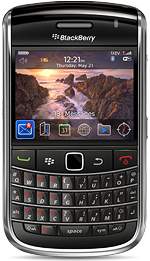
BlackBerry Bold 9650 smartphone

BlackBerry smartphone from RIM

Canadian based Research In Motion (RIM) is hoping to woo consumers as BlackBerry loses ground to Apple’s iPhone and smartphones running Google’s Android operating system. RIM currently leads with 41 percent of the market share for smartphones versus 22 percent for Apple, according to Gartner.

BlackBerry’s strengths lie in their strong security features and data capabilities, which is what corporate clients value. RIM had grabbed the lead in market share by enabling wireless email access easy and secure for BlackBerry users.

However, easy email access has become a basic feature in smartphones, with Apple’s iPhone and Android-based smartphones boasting hip handsets and vast librabries of applications that let users customize their phones.

As of July, there are 225,000 iPhone apps and 65,000 Android apps, compared to 7000 for the BlackBerry. RIM needs to persuade software developers to produce more apps for BlackBerrys, in order to attract consumers. Wade Beavers, US-based software developer has built 142 apps for the iPhone, 130 for Android, and “no more than seven” for the Blackberry.

Beavers griped that RIM is difficult to work with because the apps need to be customised for different BlackBerry models. He said that interest in BlackBerry apps among users is so limited that it’s hard to make money from the programs that he does write for it. Beavers added that “developing for RIM is just a waste of time until they can show there’s an appetite for apps on their platform”.

BlackBerry’s weak browser capability is another issue. Although CTOs do not covet or welcome fun features like games and video apps for their employees, more users want their companies to smartphones sexier than the BlackBerry.

Bloomberg reports that “PayPay has gone from all BlackBerrys two years ago to about half iPhones today”. Other companies like OCBC bank in Singapore are also switching from BlackBerry to other platforms.

A friend of mine carries two phones – a BlackBerry issued by the company and her personal smartphone. She uses the BlackBerry only to access the company’s messaging system and the Windows-based Acer smartphone for everything else. She does not enjoy the Acer at all, but at least she does not change the company name – she has nicknamed RIM to RIP and strongly believes it will follow the footsteps of the killed KINs in the not-too-distant future. That’s how much she enjoys her BlackBerry – not to mention the hassle of having to carry two handphones.

RIM is poised to unleash a wave of new technology which Co-Chief Executive Officer Jim Balsillie promises will have consumers “blown away”. Although RIM’s sneak peek of the BlackBerry 6 technology in April did not spark much enthusiasm, Balsille says he is planning a new look for BlackBerry’s devices, enhanced software and a better user experience.

I am looking forward to hearing more specific details of what these features are.

Android smartphones outsell iPhone in US 2010Q1

Tuesday, May 11th, 2010

Smartphones have become the next battleground for the technology behemoths to seize pole position. Exciting times lie ahead with the rivalry between Apple’s iPhone/iPad and smartphones based on Google’s Android, while HP plots its next move with the newly acquired Palm’s WebOS, and incumbent leader RIM seeks to preserve its market share.

Google Android Nexus One and Apple iPhone

Google & Android vs Apple & iPhone

According to the NPD Group, smartphones sold during the first quarter of 2010 in the United States stands had the following OS (operating system). NPD’s sales data are based on large consumer surveys:

  1. 36% – Research in Motion’s Blackberry OS
  2. 28 % – Google’s Android OS
  3. 21% – Apple’s iPhone OS

(more…)