Archive for the ‘Tech news’ Category

Intel buys McAfee for US$7.68 billion

Friday, August 20th, 2010

Software security built right in the computer chip hardware. That could be the next trend in the fight against attackers on the Internet. Shares of other computer security houses like Symantec are also gaining in the anticipation that other big technology companies could make a similar move for those companies.

Logos of Intel and McAfee

Intel buys McAfee for US$7.68 billion.

In the largest technology deal this year so far, Intel will fork out US$7.68 billion for antivirus and computer security software maker McAfee. Intel has said that the acquisition could allow it to build McAfee’s anit-virus technology directly into its chips, helping to protect computers, wireless devices and embedded systems in vehicles and ATMs from online crime.

As a sign of how keen Intel is over McAfee, it is paying a higher-than-average premium for McAfee. The US$48 for each McAfee share is a 60% premium over McAfee’s US$29.93 close on Wednesday. Data from Bloomberg show that in the last five years there have been 171 acquisitions in the Internet security business, with an average premium of only 22.3 percent.

To address worries that Intel will mismanage their new acquisition into oblivion, Intel said that McAfee would “operate as a wholly owned subsidiary”. There will be no job cuts from the 61,000 employees in McAfee which, like Intel, is also based in Santa Clara, California.

Intel’s foray into computer security will hopefully help it expand beyond the PC market, which is increasingly overshadowed by growths in the smartphone and tablet markets. Although Intel’s chips run more than 80 percent of personal computers, they are absent from mobile phones now on the market.

Research In Motion earns a reprieve from Saudi Arabia’s BlackBerry ban

Wednesday, August 11th, 2010
Blackberry logo superimposed on Saudi Arabia flag

Saudi Arabia postpones BlackBerry ban indefinitely.

Some hints of hope for Research In Motion (RIM), the maker of the popular BlackBerry smartphone, in its aspirations of growth outside of North America.

AFP reported that Saudi Arabia has postponed indefinitely a BlackBerry ban after a deadline passed for finding a solution allowing authorities to monitor its encrypted messages. The state news agency SPA reported that the Communications and Information Technology Commission (CITC) had announced that BlackBerry messenger services would remain online, due to progress in efforts to find a solution to the concerns.

Among the reported solutions is the installation of a local server accessible to Saudi authorities, instead of the data going directly to RIM’s Canadian servers. Local daily Okaz on Monday quoted a technical source at one of the monarchy’s three mobile phone companies as saying the tests on the server and requested programmes have been successful.

More than 700,000 Saudis subscribe to BlackBerry, with most reportedly purchasing the smartphone for personal use.

The telecoms regulator had previously ordered mobile operators to block the BlackBerry feature from Friday last week or face a 1.3-million-dollar fine, after similar moves by other Arab nations. United Arab Emirates had announced that it would ban BlackBerry messenger, email and web browsing from October 11, over concerns that the encrypted communications on BlackBerry smartphones could not be monitored by the government for criminal and terrorist activities.

The UAE’s telecoms regulator said last week that it remained open to discussions to find a “regulatory-compliant solution,” possibly a resolution based on enabling monitoring.

Outside the Arab world, India is mulling a ban and Indonesia is not ruling out the option, although on Thursday it denied the world’s largest Muslim nation was considering a suspension of BlackBerry services.

India plans to set a deadline later this week for operators to allow security agencies access to encrypted BlackBerry messages or face disconnection, the Hindustan Times quoted a home ministry official as saying Tuesday.

Hurdles from foreign governments for BlackBerry’s overseas growth

Monday, August 2nd, 2010

It never rains but pours for Research In Motion (RIM), maker of the BlackBerry smartphone. RIM’s overseas aspirations are confronted with threats from foreign governments to restrict or ban its services as these countries tighten restrictions on mobile e-mail.

BlackBerry logo with flags of foreign governments superimposed.

Potential bans from foreign governments threaten RIM's overseas growth.

With the challenges from Apple and Android-based smartphones checking its growth in North America, Canada-based RIM is looking to countries such as India, Indonesia, Brazil and kingdoms in the Middle East for growth. Bloomberg reports that revenue from outside North America and the U.K. nearly doubled last quarter as US sales, which account for a quarter of revenue, dropped 7 percent.

One of BlackBerry’s main strength over competitor’s smartphones is the security it promises for its encrypted messenging service. But it is precisely this that foreign governments are concerned with, since they are worried that the encrypted communications could be used by criminals and terrorists who are targeting their countries. The foreign governments want some means to monitor the BlackBerry communications in their countries.

All BlackBerry e-mails are handled by the company’s own enterprise servers in Canada, making the devices popular with companies and government officials including Barack Obama, who kept his BlackBerry after becoming U.S. president.

A potential solution is to setup proxy servers in overseas countries so that the foreign governments can monitor the  communications that uses BlackBerrys in their countries.

An official in India has said that the country may ban BlackBerry e-mail use while Saudi Arabia could take similar steps. The Telecommunications Regulatory Authority in the UAE has announced that, from October 11, BlackBerry’s Messenger, e-mail and Web browsing services will be halted.

BlackBerry BlackPad from Research In Motion (RIM)?

Wednesday, July 28th, 2010

At last, I see signs of some movement from Research In Motion (RIM), the maker of the  BlackBerry smartphone, in response to the inroads that its rival are making into the smartphone scene.

Artist impression of a BlackPad.

Is this what a BlackPad will look like?

It is much too early to tell whether this move will help RIM stave off its rivals’ inroads into its market share, but it is at least something. However, I believe RIM needs more than just a new device. Apple is successful because of the entire framework – apps, iTunes, chic branding. RIM is lagging in the Apps arena and does not have any music framework. The only thing it can leverage on is its branding from the success of its BlackBerrys. Even that is fading fast in the face of the popularity of the iPhone. I wonder if people still use BlackBerry as a verb anymore? Assessing company email from the phone is old news. What do people talk about nowadays? Apps – Apple apps and Android Apps.

RIM has acquired the internet rights to blackpad.com, fueling speculation that it is developing a tablet device to challenge Apple’s wildly successful iPad.

According to the Whois database of Internet domain names, the domain name assigned to RIM was created on July 8 and expires Sept. 8, 2011.

Bloomberg reports that there was no record of a trademark application for “blackpad” with the U.S. Patent and Trademark Office as of today.

Apple, the maker of the iPad, claimed in June that it has sold 3 million of the tablet computers within 80 days of launch in the US.

Other device makers are vying to develop tablets following Apple’s success with its iPad, although the concept of tablet computers is not new and had been actively but not as successfully pursued by Microsoft nearly a decade ago.

Hewlett-Packard, which bought smartphone maker Palm earlier this month, applied to the Patent Office on July 9 to register the name Palmpad for computers and computer software. HP said last week it plans to produce a tablet device this year.

Promises from RIM for future BlackBerrys

Friday, July 9th, 2010
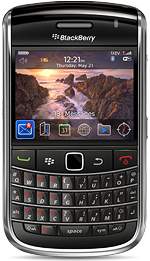
BlackBerry Bold 9650 smartphone

BlackBerry smartphone from RIM

Canadian based Research In Motion (RIM) is hoping to woo consumers as BlackBerry loses ground to Apple’s iPhone and smartphones running Google’s Android operating system. RIM currently leads with 41 percent of the market share for smartphones versus 22 percent for Apple, according to Gartner.

BlackBerry’s strengths lie in their strong security features and data capabilities, which is what corporate clients value. RIM had grabbed the lead in market share by enabling wireless email access easy and secure for BlackBerry users.

However, easy email access has become a basic feature in smartphones, with Apple’s iPhone and Android-based smartphones boasting hip handsets and vast librabries of applications that let users customize their phones.

As of July, there are 225,000 iPhone apps and 65,000 Android apps, compared to 7000 for the BlackBerry. RIM needs to persuade software developers to produce more apps for BlackBerrys, in order to attract consumers. Wade Beavers, US-based software developer has built 142 apps for the iPhone, 130 for Android, and “no more than seven” for the Blackberry.

Beavers griped that RIM is difficult to work with because the apps need to be customised for different BlackBerry models. He said that interest in BlackBerry apps among users is so limited that it’s hard to make money from the programs that he does write for it. Beavers added that “developing for RIM is just a waste of time until they can show there’s an appetite for apps on their platform”.

BlackBerry’s weak browser capability is another issue. Although CTOs do not covet or welcome fun features like games and video apps for their employees, more users want their companies to smartphones sexier than the BlackBerry.

Bloomberg reports that “PayPay has gone from all BlackBerrys two years ago to about half iPhones today”. Other companies like OCBC bank in Singapore are also switching from BlackBerry to other platforms.

A friend of mine carries two phones – a BlackBerry issued by the company and her personal smartphone. She uses the BlackBerry only to access the company’s messaging system and the Windows-based Acer smartphone for everything else. She does not enjoy the Acer at all, but at least she does not change the company name – she has nicknamed RIM to RIP and strongly believes it will follow the footsteps of the killed KINs in the not-too-distant future. That’s how much she enjoys her BlackBerry – not to mention the hassle of having to carry two handphones.

RIM is poised to unleash a wave of new technology which Co-Chief Executive Officer Jim Balsillie promises will have consumers “blown away”. Although RIM’s sneak peek of the BlackBerry 6 technology in April did not spark much enthusiasm, Balsille says he is planning a new look for BlackBerry’s devices, enhanced software and a better user experience.

I am looking forward to hearing more specific details of what these features are.

iPhone 4 debut floods secondhand market with older models

Tuesday, July 6th, 2010
iPhone 3GS, the model before the new iPhone 4

Old iPhones flood the market

A deluge of used iPhones are hitting eBay, recyclers and discount sites, following Apple’s wildly successful debut of the iPhone 4.

Ryan Flinn from Bloomberg reports that in the two weeks after preorders for iPhone 4 started, Gazelle.com – a site that buys electronics from consumers – bought 20,000 used iPhones – compared to 350 in a typical two-week period.

Apple aficionados scramble to purchase the latest iPhones in the annual introduction of new models by the company. While many of the old phones are thrown away or abandoned in a drawer, millions are recycled via secondhand dealers.

Secondhand stores can sell them at more than the price of a new phone from AT&T because AT&T subsidizes the price but comes with a contract.

eBay’s online site has seen the number of used iPhone 3GS and 3G listed for sale increase by 124 percent between June 5 and June 28.

BuyMyTronics.com, which purchases used electronics, has gone from buying 10 iPhones a day, to a daily averaged of almost 40 in recent weeks.

The flood of old iPhones has led to a drop in price in the secondhand market. Gazelle’s offer price for a mint-condition 32 GB iPhone 3GS – last year’s model – has fallen from US$304, prior to the launch of iPhone 4, to US$168.

Photoshop CS5: Complex and hairy selections made easier

Sunday, July 4th, 2010
Deer staring into headlights

Sharp edges along the horns and hairy edges elsewhere.

Photoshop CS5 has made it easier to make image selections and masks, speeding up the extraction of subjects from backgrounds and the creation of realistic composites.

Enhanced intelligent selection technology offers better edge detection and faster, more accurate masking results of complex subjects such as hair. Automatic color decontamination helps eliminate background color around the edges of a selection, resulting in more seamless compositions when placing extracted subjects on new backgrounds.

Dialog box with controls for Refine Edge

New controls can be found in the Refine Edge dialog

The enhanced controls are found in the Refine Edge dialog box when a selection is made.

The Smart Radius setting uses adaptive selection-edge modification approach to produce different types of selection edges on different parts of the subject’s outline, depending on the type of edges — whether the portion of the edge is fuzzy or sharp. This is based on the traditional best practice of using different techniques for different types of edges along the outline of the subject — one method for fuzzy hair and another for the clear edge of a building.

Selection outline in black and white

Selection outline in black and white

Additional view modes provide new ways of previewing the quality of the selections.

The Refine Radius and Erase Refinements tools allows the initial selection to be refined — be it to add more of the subject or to remove more of the background along the selection edge.

My article in Digital Life on 2 June 2010 (Not a hair out of place) illustrated the use of the enhanced selection controls to make a hairy selection round a starry-eyed deer in Miyajima, Japan.

Apple sued for reception problems on iPhone 4

Thursday, July 1st, 2010
Is iPhone 4 sweating yet"?

Is iPhone 4 sweating yet"?

Two separate complaints were filed against Apple Inc. in federal court in San Francisco on 30 June, accusing the company of unfair business practices and false and misleading advertising because of reception problems with its new iPhone 4.

The two lawsuits were filed separately by a New Jersey resident and a Massachusetts resident. They had bought the new iPhone 4 and seek to represent other buyers of the new mobile phone in a class action, or group, lawsuit.

The iPhone 4 was launched on 24 June but criticism surfaced over diminishing signal strength when users cover the bottom left corner of the phone with their palm.

Apple has sold 1.7 million iPhone 4 within the first three days of its launch, making it the fastest selling gadget Apple has launched to date.

(more…)

Steve Jobs at All Things Digital Conference in Los Angeles

Wednesday, June 2nd, 2010
Steve Jobs at D8 in Los Angeles on 1 Jun 2010

Steve Jobs at D8 in Los Angeles on 1 Jun 2010

Steve Jobs kicked off the 8th annual All Things Digital Conference in Los Angeles on 1 Jun 2010. The three-day tech event will feature other industry leaders including Microsoft CEO Steve Ballmer, AOL Chief Tim Armstrong and Facebook CEO Mark Zuckerburg. Steve Jobs last appeared in the series of conferences in 2007 alongside Bill Gates.

Here are Steve’s main bullets from his one-and-a-half hour interview with hosts Kara Swisher and Walt Mossberg.

  • Passing Microsoft in valuation was “surreal”.
  • Flash is a technology that’s waning.
  • HTML5 is starting to emerge as a rival to Flash.
  • Gaps on iPhone/iPads caused by HTML5 are getting solved.
  • The market will decide whether iPhone/iPads without Flash is viable.
  • There’s a debate about whether the lost iPhone prototype was left behind at the bar or stolen out of the Apple engineer’s bag.
  • The Foxconn suicides are troubling but the 400,000-employee Foxconn factory is not a sweatshop. Apple is trying to address the situation.
  • Apple has no plans to go into the search business because others do it well.
  • Google started the competition with Apple by moving into the mobile platform with the Android OS.
  • The iPhone OS was conceived for a tablet but the iPhone was rolled out first.
  • Consumers are likely to migrate away from the PC to tablets within the next 5 years due to the evolution of demographics and demand.
  • Rules for approving/rejecting an iPad App:
    • It has to do what it’s advertised to do
    • It has to not crash
    • It can’t use private APIs
    • It can’t defame other people
  • 95% of Apps are approved within 7 days.
  • The current Ad delivery system in the industry sucks and iAd hopes to do it better

Two million Apple iPads in less than 60 days

Tuesday, June 1st, 2010

Apple sold 2 million iPads in less than 60 days since the tablet’s launch on April 3, the company said. It took 2 years for the iPod to reach the 2-millionth mark, and about 4 months to sell its 2 millionth iPhone. In fact, it took the hugely successful iPhone 74 days just to reach the 1-millionth mark.

The Apple juggernaut is rolling on, leaving fellow tech companies in the dust. The shares are rising even as Microsoft, Google, HP, IBM, eBay, Amazon, Yahoo are diminishing in market value.

Apple sells 2 million iPads in less than 60 days

Apple sells 2 million iPads in less than 60 days

The company is hitting the headlines every few days. Apple first launched the iPad in the US on 3 Apr, achieved its first million sales of the iPad on 3 May after merely 28 days, released the iPad to 9 countries worldwide on 28 May, has now announced its two millionth iPad milestone on 31 May, will be speaking at the  All Things Digital D8 Conference in Los Angeles on 1 Jun, and will probably unveil the new iPhone during the WWDC on 7 Jun. The momentum of the steam engine that is Apple does not seem likely to ebb in the near future.

5000 new Apps have already been released for the iPad, while most of the more than 200,000 Apps already on the App Store can be run on the iPad, including those already purchased for the iPhone and iPod Touch.