Archive for the ‘Tech news’ Category

Olympus XZ-1 wins TIPA 2011 award for Best Expert Compact Camera

Monday, April 25th, 2011
The flagship compact digital camera from Olympus has won the Best Expert Compact Camera award at the annual XXI TIPA 2011 awards.

Technical Image Press Association - XXI TIPA Awards 2011The 29 member magazines of the Technical Image Press Association (TIPA) awarded the award for the “Best Expert Compact Camera” category to the Olympus XZ-1.

Olympus XZ-1 - Best Expert Compact CameraInto its twenty-first year, the annual awards recognised the best photo and imaging products in 2011 in 40 categories. TIPA has member magazines from nine European countries plus Australia, Canada, China, USA and South Africa.
In its citation, it lauded the XZ-1 for its fast lens, as well its larger sensor area for each pixel – which translates to greater sensitivity, lower noise and better image quality.
“The Olympus XZ-1 has one of the fastest zoom lenses in its class, the iZuiko f1.8-2.5 6.0-24mm (28-112mm equivalent angle of view in 35mm cameras). Rather than succumb to the continuing Megapixel race, the light-reception area of each pixel of the 1/1.63-inch, 10 Megapixel CCD has been doubled. The XZ-1’s AF illuminator, Dual Image Stabilisation, Low-Light mode that automatically adjusts the ISO sensitivity up to ISO 3200 and the compact size all add up to an exciting “candid” camera that also offers advanced manual controls.” – Citation for XXI TIPA Awards for “Best Expert Compact Camera”

In Singapore, the Olympus XZ-1 is available at a suggested retail price of S$748 (incl GST & bundled with a 8GB SD Card).

Listed here are some earlier write-ups on the Olympus XZ-1:
Photo review | Full reviewSpecsSelling pointsDiorama movie

DSLR winners at the XXI TIPA 2011 awards.

Sunday, April 24th, 2011

The four categories for DSLRs were won by Canon, Nikon, Olympus and Pentax at this year’s TIPA awards.

Founded in 1991, the Technical Image Press Association (TIPA) comprises 29 independent photo & imaging magazines from nine European countries plus Australia, Canada, China, USA and South Africa.

This is the 21st installment of the annual awards.

Out of 40 categories of photo and imaging products for this year’s TIPA awards, four were for DSLRs. The winners for the four DSLR categories are tabulated below.

Category / Winner TIPA citation
Best DSLR
Entry LevelBest DSLR Entry: Canon EOS 600D / Rebel T3i / Kiss X5 

Canon
EOS 600D

The EOS 600D continues the legacy of easy operation and high functionality. TIPA members were very impressed with the features such as the 18.0 Megapixel CMOS image sensor, full HD video recording, Live View shooting, Wireless flash photography and a Vari-angle 3-inch LCD monitor. Offering 3.7 frames-per-second shooting rate, a top 1/4000 second shutter speed and up to 6400 ISO sensitivity (plus 12,800 H), the camera allows for the full DSLR experience with ease of operation that makes for a great first camera for those seeking to ‘step up’ from compact cameras.
Best DSLR
AdvancedBest DSLR Advanced: Nikon D7000 

Nikon
D7000

The Nikon D7000 impressed us as the definition of a state-of-the-art DX-format DSLR (APS-C size) with a 16.2 MP CMOS sensor, six frames-per-second framing rate for up to 100 shots and full 1080p HD movies with full-time AF. With twin SD card slots, a 100% viewfinder and bright 3-inch LCD for Live View operation, the camera is extremely versatile in the field. The magnesium alloy top and rear covers, special weather and dust seals plus 150,000 cycle-rated shutter system give it a pro feel.
Best DSLR
ExpertBest DSLR Expert: Olympus E-5 

Olympus
E-5

For a very reasonable price, the Olympus E-5 provides benefits that rival those found in some professional SLRs: complete weather-sealing, comprehensive functions, excellent responsiveness, 100% viewfinder, good noise control, dual CF/SD slots, built-in image stabilisation, all in a rugged magnesium-alloy body. Add to this Olympus’ Dust Reduction System, which has proven to be among the most effective solutions in the market. The 12.3 Megapixel Live MOS sensor, combined with the ‘TruePic V+’ image engine produces images that rival competitors with substantially higher pixel counts.
Best DSLR
ProfessionalBest DSLR Professional: Pentax 645D 

PENTAX
645D

TIPA members appreciated the design, build and feature specs of this 40 Megapixel medium format digital camera. The magnesium alloy body is fully weather-sealed, making it a great choice for outdoor and location photographers, plus the all-glass trapezoid pentaprism finder makes for a dazzling capture experience. Perhaps most impressive is lens compatibility, which encompasses both the new D FA autofocus lenses as well as older 645 lenses.

Apple profit almost double after iPhone’s Verizon debut

Thursday, April 21st, 2011
Profit for the second quarter almost doubled due to iPhone sales via Verizon, even though sales for newly launched iPad 2 were below estimates because of supply shortage.

Fears of growth being affected by supply disruptions from Japan’s earthquake and tsunami were also allayed.

2nd Quarter A year earlier Bloomberg survey
Net income
(almost doubled)
$5.99 billion,
$6.40 a share
$3.07 billion,
$3.33 a share
$5.04 billion,
$5.39 a share
Sales
(up 83%)
$24.7 billion $13.5 billion $23.4 billion

Apple began selling the iPhone through Verizon Wireless in February, and launched the iPad 2 on March 11.

Demand for the iPad has been so strong that Apple has not been able to make enough, leading to sales that were lower than what most analysts predicted.

2nd Qtr Analysts predictions
iPhones sold through Verizon 18.7 million 16.3 million
iPads sold 4.69 million 6.1 million
Mac computers 3.76 million 3.6 million
iPod media players 9.02 million 9.8 million

“Apple is ramping up production as it prepares to start selling the tablet computer in 13 additional countries this month”, Chief Operating Officer Tim Cook told Bloomberg.

Still, sales of products in the country may be $200 million lower as consumers coping with the temblor and tsunami buy fewer gadgets, he said.

BlackBerry PlayBook Launch

Tuesday, April 19th, 2011

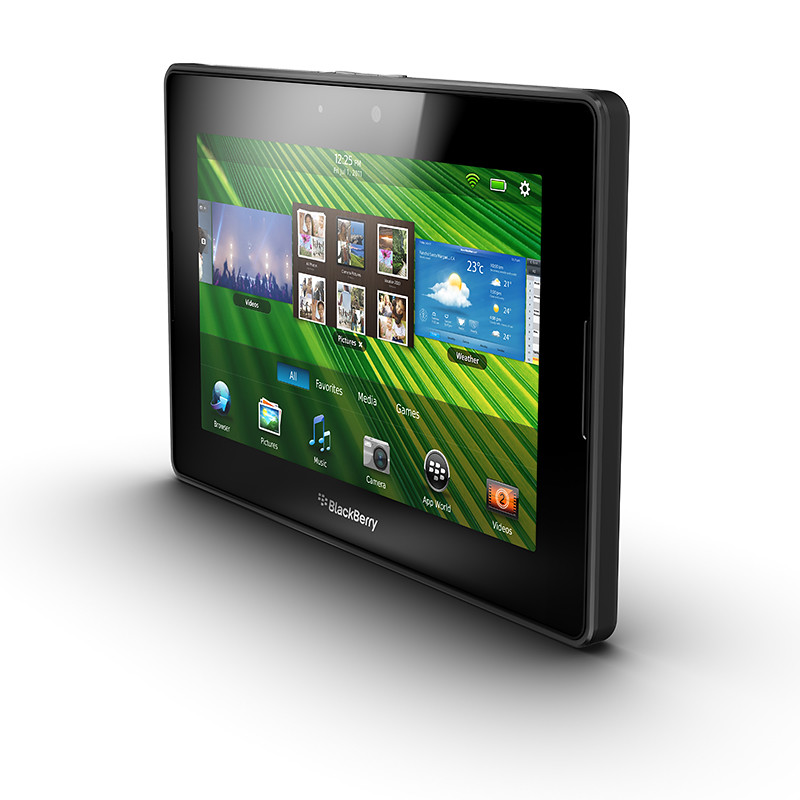
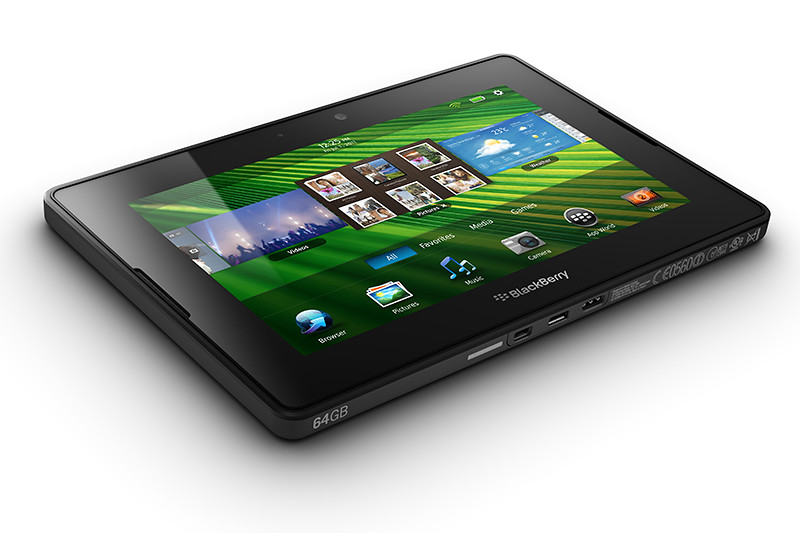
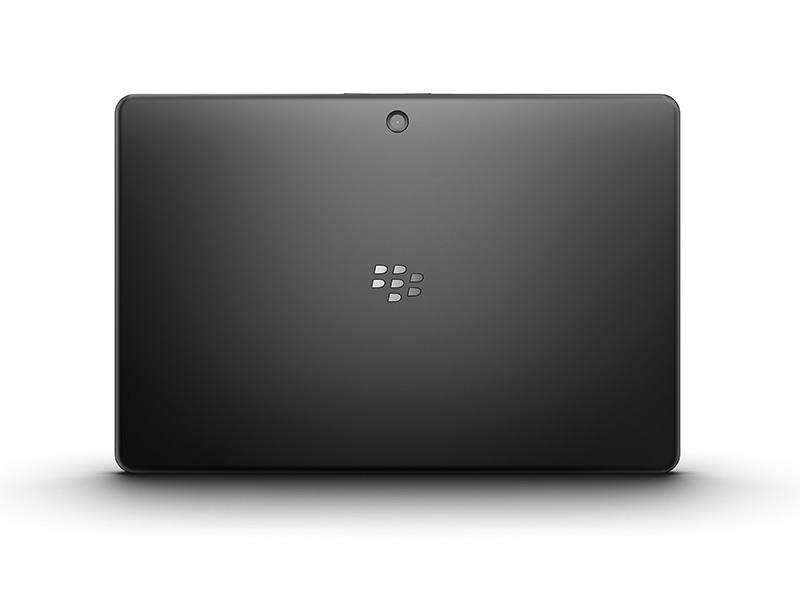
The 7-inch tablet from Research In Motion (RIM) hits the shelves in the US today. Here’s a quick roundup of the likes and dislikes from those who have tried out the shipping version of the BlackBerry PlayBook.

RIM PlayBookThere’s a lot to like about the PlayBook, but there’re also plenty of frustrations out there from those who’ve had the privilege of playing with the PlayBook. The general feel seems to be that the PlayBook has the potential to be something great – just that it’s not quite complete at the moment.

Already behind the iPad 2 and other Android tablets in terms of launch date, my feel is that RIM wants to get the hardware out as soon as possible before the specs get old – even though the software isn’t quite as ready yet.

RIM PlayBookDare I compare that with an evolutionary release of the iPad 2 with bigger steps only to be expected for the upcoming iPad 3?

With such stiff competition in the tablet market, it is no wonder these slate-makers are rolling off their products as soon as possible. In all honesty, I do believe RIM will sort out the grouses that reviewers have complained about, but the question is whether consumers are willing to fork out the dough to buy what’s beginning to be perceived as an unfinished product, that is only going to be made complete after a few more months – if ever.

RIM PlayBookPerhaps, RIM should have launched it at a discounted price – you know, an early bird discount – to entice consumers and grab market share. Given that the hardware is fabulous, the discount may have worked to convince consumers to buy first and wait out for the software to catch up.

At any rate, below is a quick round-up of the likes and dislikes from people who has played with the PlayBook so far. Prices for the 16, 32 and 64-gigabyte models in the US are $500, $600, and $700 respectively.

Likes Dislikes Mitigation
Fabulous display, and user interface Tiny recessed power button difficult to find and press Nothin’ much can be done about this – but do I care?
Sleek:
10mm / 0.4 inch thick 

Light:
0.9 lbs / 425 g

No native email, messenger, contacts and calendar Need to be Bluetooth tethered via a BlackBerry smartphone to access these. 

Native support could be added later on

Lightning fast processor No 3G connection 3G version in summer 

4G version end 2011

Impressive multi-tasking Small repository of Apps (~3,000) Compatibility with selected Android apps to be introduced later, plus build-up of PlayBook specific apps.
Supports Flash and HTML5 No video chat Video chat app to be released later.

BlackBerry PlayBook preview in Singapore

Friday, April 15th, 2011
The BlackBerry PlayBook Bus will tour Singapore tonight, showing off a preview of RIM’s 7-inch tablet computer, that is due to be launched in the US on 19 April next Tuesday.
Preview of the BlackBerry PlayBook in Singapore

Preview of the tablet on the BlackBerry PlayBook Bus in Singapore

Keep a lookout for the limo bus driving around town tonight. Sources tell me it will launch from the Tanjong Pagar area. The first time that the BlackBerry PlayBook debuted in Singapore was back in March. But the two devices I played with were still beta release versions.

Tonight, the preview will provide some hands-on for the real McCoy. Perhaps RIM (Research In Motion) will also provide some hints as to when the aspiring challenger to the iPad will be launched in Singapore and at what pricing.

For now, here’re some of the main specs of the BlackBerry PlayBook:

Looks
7″ LCD display, 1024 x 600 WSVGA Multi-touch capacitive screen

Physical feel
0.9 lbs (425g) and 5.1″ x 7.6″ x 0.4″ (130mm x 194mm x 10mm)

Performance
1 GHz dual-core processor
1 GB RAM
Symmetric multi-processing
Full Adobe Flash 10.1 enabled
Built-in support for HTML 5

Configuration
Internal storage of 16, 32 or 64 GB
GPS, Orientation Sensor (Accelerometer), 6-Axis Motion Sensor (Gyroscope), Digital Compass (Magnetometer)
Stereo speakers and stereo microphones
Wi-Fi (802.11 a/b/g/n) connectivity, Wirelessly connect to your BlackBerry smartphone for real time access to: Email, calendar, address book, task list and BBM

Cameras
3 MP high-definition forward-facing camera
5 MP high-definition rear-facing camera
Codec support for superior media playback, creation and video calling
1080p HD video; H.264, MPEG4, WMV HDMI video output
Micro USB and Micro HDMI ports
Video calling with dual video cameras

BlackBerry Tablet OS
Powered by QNX technology, supports POSIX OS, SMP, Open GL, BlackBerry 6, WebKit, Adobe Flash, Java and Adobe Mobile AIR

Adobe introduces Creative Suite 5.5

Tuesday, April 12th, 2011

Adobe’s major mid-cycle product release targets enhancements across Flash, HTML5, video, mobile App and digital publishing tools. It also extends workflows to include tablets.

Adobe announced today the new Adobe Creative Suite 5.5 product line, enabling designers and developers to target popular and emerging smartphone and tablet platforms, as the revolution in mobile communications fundamentally changes the way content is distributed and consumed.

Today’s launch marks a significant change to Adobe’s product release strategy for Creative Suite, the design and development software catering for print, video, mobile and online media.

Adobe now plans to have milestone Creative Suite product introductions at 24-month intervals and – starting with Creative Suite 5.5 – major mid-cycle releases between the milestone versions.

Product lineup and pricing

The new Creative Suite product lineup is headlined by Adobe Creative Suite 5.5 Master Collection, which includes, in a single package, all of Adobe’s industry-defining creative tools, such as Photoshop, Illustrator, InDesign, Acrobat, Flash Builder, Flash Catalyst, Flash Professional, Dreamweaver, Adobe Premiere Pro and After Effects.

These products are available separately or as components of one or more of the five Creative Suite editions.

The complete Creative Suite 5.5 lineup and their estimated street prices are tabulated below, and is scheduled to ship within 30 days. Upgrade pricing, volume licensing and education pricing are also available.

Creative Suite 5.5 Master Collection: US$3159
Creative Suite 5.5 Design Premium: US$2309
Creative Suite 5.5 Web Premium: US$2185
Creative Suite 5.5 Production Premium: US$2065
Creative Suite 5.5 Design Standard: US$1579

Key enhancements

The new Creative Suite 5.5 Web Premium suite sees enhancements in HTML5 and Adobe Flash authoring tools, allowing users to create, deliver and monetize rich content and applications for virtually any screen.

This release helps enable designers and developers to deliver mobile applications on Android, BlackBerry Tablet OS, iOS and other platforms; create rich browser-based content across screens using HTML5; and leverage Flash Player to deliver premium video content, casual games and rich Internet applications.

Tablet devices are now included in the creative workflow, going beyond the desktop computer. A new scripting engine in Adobe Photoshop and an enhanced Photoshop Software Development Kit (SDK) enable developers to build tablet applications that interact with Photoshop from Android, BlackBerry and iOS devices.

Adobe also announced three new iPad applications that demonstrate the creative possibilities of using tablets to drive common Photoshop workflows – Adobe Color Lava for Photoshop, Adobe Eazel for Photoshop and Adobe Nav for Photoshop.

With the launch of Adobe Flash Builder 4.5 – available as part of the Creative Suite 5.5 Web Premium suite – and the Flex 4.5 framework, developers can easily develop and deploy mobile applications to the over 200 million Android, BlackBerry Playbook and iOS devices anticipated to be in market by the end of 2011.

With more than 131 million smartphones expected to have Flash Player installed by the end of the year, Adobe Flash makes it possible to bring rich content to desktops and devices inside the browser.

Flash Player is supported on Android, HP webOS and Google TV today. BlackBerry Tablet OS, upcoming versions of Windows Phone, Samsung SmartTVs and others are expected to support Flash Player in the near future.

For video and audio professionals, Adobe Creative Suite 5.5 Production Premium suite promises breakthrough performance, workflow improvements, creative innovations, and powerful new audio editing capabilities.

The powerful Adobe Mercury Playback Engine, introduced in Adobe Premiere Pro CS5, broadens its graphics processing unit (GPU) hardware support to include laptops and more supported cards, allowing users to open projects faster, get real-time feedback and work more smoothly at higher resolutions.

Creative Suite 5.5 Design Premium suite includes Adobe’s recent product innovations in digital publishing to create slick digital editions for tablet devices. Using InDesign CS5.5, in combination with the integrated Folio Producer toolset, designers can add new levels of interactivity to their page layouts targeted to tablet devices.

Documents can include video, audio, panoramic views, 360-degree object rotation, pan and zoom of images, integration of HTML and HTML5 content and other interactive overlays. Leading to a much more robust and engaging reading experience.

Creative Suite 5.5 is tightly integrated with Adobe Digital Publishing Suite to support publication, sale and analysis of content on an array of tablet devices.

Adobe Creative Suite 5.5 products integrate with Adobe CS Live, a set of online services that accelerate key aspects of the creative workflow and enable designers to focus on creating their best work. CS Live online services include: Adobe BrowserLab; Adobe CS Review; Acrobat.com; Adobe Story; and Adobe SiteCatalyst NetAverages powered by Omniture. Adobe CS Live is free until April 12,2012.

HTC and Acer switch fortunes as smartphones and tablets outmode netbooks and PCs

Thursday, March 31st, 2011
HTC is now valued at 22.2 times reported earnings, compared with 10.6 for Acer. Only in February last year, HTC had a PE ratio of 11 times, while Acer was at 22.

Taipei-based HTC is the world’s largest maker of handsets using operating systems from Google and Microsoft. Acer is the world’s second-largest manufacturer of personal computers.

HTC makes Android and Windows Mobile smartphonesThe wheel of fortune for the two companies seems to have turned as sales of smartphones and tablet computers grew at the expense of notebooks and personal computers.

Prior to the explosive growth, set off by Apple, of the smartphone and tablet sector, Acer had snatched the lead from Asus for a similarly explosive growth in the netbook sector.

From HTC’s low in February last year, it has rallied some 264 percent, while Acer has fallen by 36 percent. According to Kevin Chang from Citigroup, Acer is the biggest seller of consumer notebooks in the developed world.

Acer won the pole position for the netbook market from AsusIn a report dated March 28, Chang wrote that “Consumers are not buying notebooks because they have already spent money on new tablet PCs or on upgrading their handsets from feature phones to smartphones.” He adds that Acer could become “a much smaller company in the next few years,” if tablet PC sales grow to exceed those for notebooks.

Not surprisingly, Chang has a “sell” rating on Acer’s stock and a “buy” recommendation on HTC.

A March 24 report from the Goldman Sachs Group estimates that HTC’s market worth may reach $100 billion in the next three to five years from $30 billion now, as the company ships a possible 200 million smartphones and 30 million tablet computers a year.

HTC’s value has quadrupled since reaching a low of $7.4 billion in February last year, while Acer’s market capitalization has declined to $5.6 billion from a peak of $9.4 billion reached in January 2010.

Firefox 4 breaks its predecessor’s first 24-hr download record

Saturday, March 26th, 2011

The pent-up demand arising from the delay of its launch from November last year has resulted in a whopping 8.75 million downloads in the first 24-hours following its launch earlier this week on March 22.

It easily trounced the 2.35 million downloads that Internet Explorer 9 garnered in the first 24-hours of its launch just a week prior.

Firefox 4 is downloaded 8.75 times within first 24 hours

The number of Firefox 4 downloads in the first 24 hours surpassed the previous record set by Firefox 3 when the predecessor captured a cool 8 million downloads during the first 24 hours after its launch in June 2008.
Firefox 4 is available on Windows, Mac OS and Linux. It supports Windows XP while IE9 doesn’t. Many observers see that as the main reason why it has drawn more than 3 times the number of downloads that IE9 recorded in its first 24 hours.

Windows XP accounts for more than 61 percent of all windows-based machines that went online in February, according to web metrics firm Net Applications.

While Mozilla has chided Microsoft for leaving Windows XP users stuck with the two-and-a-half year old IE8, the latter supports only Windows 7, Vista and Windows Server based PCs because it wants to leverage the more advanced technology available in these newer operating systems and does not want IE9 to be constrained by the older technology in 10-year-old Windows XP.

In the meantime, visit http://glow.mozilla.org/ for a live status of the number of Firefox 4 downloads worldwide.

And for some statistics of the market share of the various browsers, checkout this wikipedia page. Below are some download statistics updated from my earlier posting for the IE9 launch:

Browser/
App/
Plug-in
Claimed downloads Time period Launch Date
Mozilla Firefox 4.0 8.75 1 day Mar 2011
Mozilla Firefox 3.0 8 million 1 day Jun 2008
Opera 11 6.7 million 1 day Dec 2010
IE 9 2.35 million 1 day Mar 2011
Apple Safari 4.0 6 million 3 days Jun 2009
IE9 beta 2 million 2 days Sep 2010
IE8 beta 1.3 million 5 days Aug 2008
Angry Birds 5 million 1 month Dec 2010
Mac App Store 1 million 1 day Jan 2011
Nokia Ovi 3 million Daily Ongoing
Adobe Flash Player 8 million Daily Ongoing

Japan disaster recovery: Canon restarts two plants

Thursday, March 24th, 2011

As the dust settles on the aftermath of the massive 9.0 earthquake, 10 metre tsunami and nuclear accident, more positive news are trickling out for the recovery of supply lines for companies around the world.

Canon restarts two plants after Japan disastersCanon has resumed partial production at two plants last week. It is the biggest camera-maker in the world.

Gota Fumoto, a spokesman for Canon, told Bloomberg by phone that the two plants are at Ami and Toride.  The company has closed a factory at Miyazaki prefecture, that makes compact digital cameras.

Adobe CS6 in 2012

Wednesday, March 23rd, 2011

The next major version of Adobe Creative Suite will arrive in 2012, Chief Executive Officer Shantanu Narayen revealed. This is in line with the 18 – 24 month product renewal cycle the suite has followed in the past.

Adobe CS6 in 2012In the meantime, Adobe plans to release an HTML5 update to the current version. The update will make it easier for designers and developers to build websites using the HTML5 Internet standard.



Adobe released the current Creative Suite 5, which includes the Photoshop and Illustrator programs, in April 2010. The version before that, Creative Suite 4, was released in October 2008.

The HTML5 standard is supported by both Apple and Google and competes with Adobe’s Flash Internet video and animation software. Apple bans Flash on the iPad tablet computer and iPhone handset.

Adobe believes that selling HTML5 development tools and working with software developers who create applications for smartphones and tablets can help Adobe assert the importance of its tools.

By embracing HTML5, Adobe gives Web developers more options and positions itself to benefit whether programmers decide to use Flash or HTML5. It is a win-win situation for the company whether developers choose to work with Flash or HTML5.