Posts Tagged ‘cameras’

COMEX 2011 promotions: Olympus cameras and accessories

Thursday, September 1st, 2011

Olympus will be at Booth 8205 on Level 4 in Hall 404  during COMEX 2011. Head for promotional discounts and bundles especially limited sets of the Pen E-PL1, which has been reduced from S$998 to S$498 plus free gifts worth S$320.

The star promotion from Olympus for COMEX 2011 is the PEN E-PL1. Launched in February 2010, OLYMPUS E-PL1 is an entry-level model, equipped with a new Live Guide interface which makes it easy for users to get the results they want even if they have little previous experience with photography.

Olympus promotional price list for cameras and accessories during COMEX 2011 Olympus promotional price list for cameras and accessories during COMEX 2011

Key features include the Live Guide user interface for easy, intuitive adjustment of brightness, hue, background defocusing, and other image parameters; dedicated Movie mode button for seamless access to movie shooting at any time; go-anywhere portability in a light, compact body with built-in flash and image stabilization; offered in white, champagne gold, and black; and six Art Filters, including new Gentle Sepia, for enhanced photographic creativity.

Olympus promotional price list for cameras and accessories during COMEX 2011 Olympus promotional price list for cameras and accessories during COMEX 2011

The normal pricing for the E-PL1 14-42mm Lens Kit is at S$998 (with GST), which includes the body (in White, Champagne Gold, and Black), an M.ZUIKO DIGITAL ED 14–42mm F3.5–5.6 lens (Silver) and an 8 GB SD card.

Olympus promotional price list for cameras and accessories during COMEX 2011 Olympus promotional price list for cameras and accessories during COMEX 2011

The COMEX 2011 offer at S$498 includes an additional 8 GB SD Card, an E-PL1 Skin, a camera bag, a screen protector, a card reader, 3 months local extended warranty and free E-Workshop.

Main specifications for the LG Optimus 3D

Saturday, August 13th, 2011

The LG Optimus 3D was launched in Singapore on 11 August 2011. The Android smartphone will be available at S$938 (incl GST without contract) in Singapore in end August. Here are the main specifications.

Network 2G GSM 850 / 900 / 1800 / 1900
3G HSDPA 900 / 1900 / 2100
Size Dimensions 128.8 x 68 x 11.9 mm
Weight 168 g
Display Type 3D LCD capacitive touchscreen, 16 million colors
Size 480 x 800 pixels, 4.3 inches
Memory Internal 8GB storage, 512MB RAM
Card slot microSD, up to 32GB
Data 3G HSDPA 14.4Mbps, HSUPA 5.76Mbps
WLAN Wi-Fi 802.11 b/g/n, DLNA
Bluetooth Yes, v3.0 with A2DP, EDR
USB Yes, microUSB v2.0
Camera Primary Dual 5 megapixel, 2560х1920 pixels, autofocus,

LED flash

Features Stereoscopic photos and videos, geo-tagging
Video Yes, 1080p@24fps (2D), 720p@30fps (3D)
Secondary Yes
Features OS Android OS, v2.2 (Froyo), upgradable to v2.3
CPU Dual-core 1GHz ARM Cortex-A9 processor,

PowerVR SGX540 GPU, TI OMAP4430 chipset

3D Features – Glasses free 3D viewing
– 3D Hotkey
– 3D Video Stabilization
– Real-Time Misalignment Correction
– Real-Time 2D/3D Conversion
– 3D Depth Control
Battery Standard battery, Li-Ion 1500 mAh

LG Optimus 3D launched in Singapore

Thursday, August 11th, 2011

Available at S$938 (incl GST without contract) in Singapore in end August, the latest Android smartphone from LG allows users to create 3D photos and video using the phone and to view 3D content and play 3D games without wearing any 3D glasses.

LG Optimus 3D launched today at Marina Bay Sands

LG Electronics today launched the LG Optimus 3D at its LG Live outlet at Marina Bay Sands.

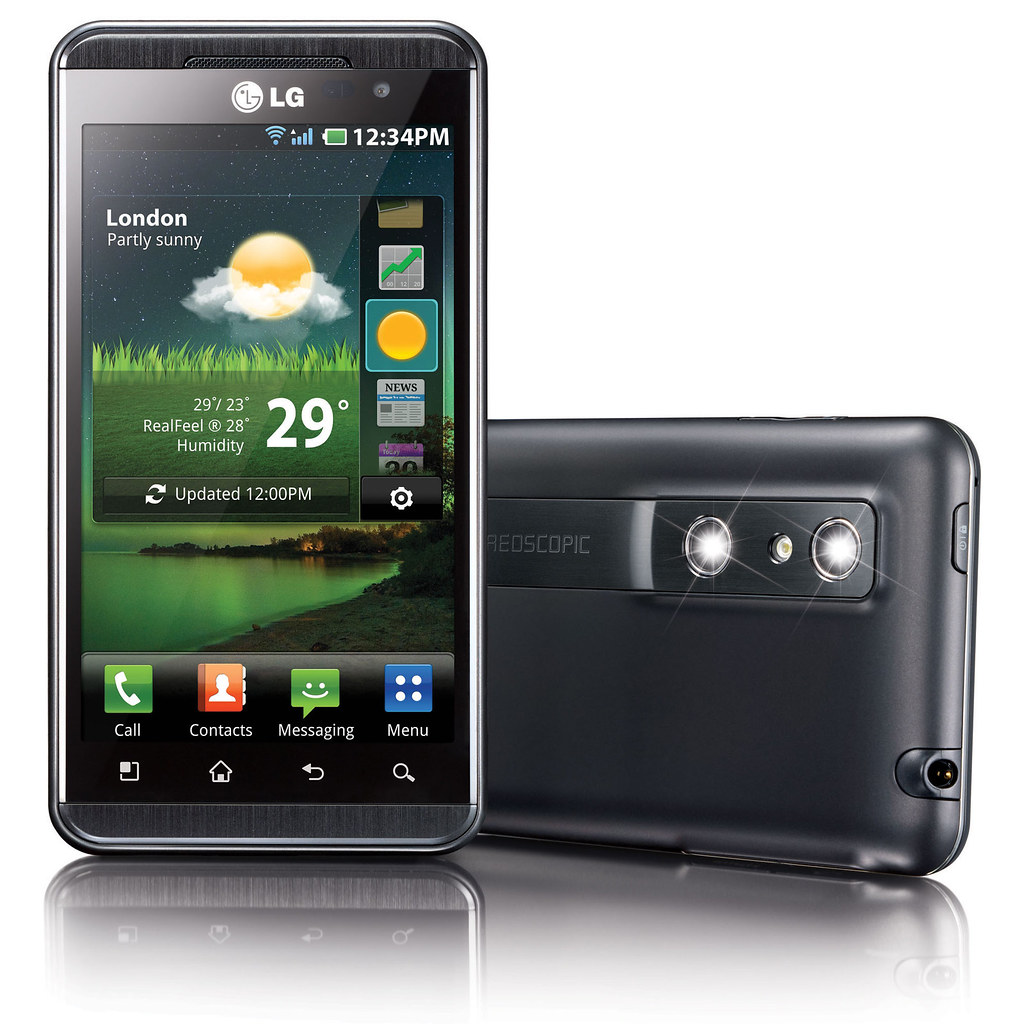
Optimus 3D smartphone from LGThe new Android smartphone boasts a “Tri-Dual” architechure – dual-core, dual-channel and dual-memory – promising improved performance when multi-tasking, viewing graphics-intensive websites, watching a movie or playing graphics-intensive games.

It also brings glasses-free 3D experience into the palms of its users. LG wants to empower its users to immerse themselves in 3D – from creating 3D photos and video, to enjoying them, and beyond that to sharing 3D media with others  – all from a smartphone.

Create, enjoy, share

Optimus 3D smartphone from LGTo create 3D photos and video, the user can use the dual 5 megapixel stereoscopic cameras on board to shoot 3D stills and footage. Alternatively, users can use included software on the smartphone to convert existing 2D photos and videos into 3D. Free software for converting 2D games will be available for download (more details to be announced soon)

Optimus 3D smartphone from LGTo enjoy 3D media  – and this is where LG is all excited about – the user does not need to wear 3D glasses. By using double-layered screen technology, the two images for the left and right eyes are are interlaced with each other and sent separately to both eyes so that the left eye only sees the image meant for the left eye and the right eye only sees the image meant for the right eye.

Optimus 3D smartphone from LGLG boasts that the cross-talk between the two images – the extent to which pixels meant for one eye is seen by the other eye – is extremely low. I tried it myself and found the 3D images gave a strong sense of depth and dimensionality – very realistic without any nausea even after more than 10 minutes of use.

The intensity of the 3D effect can be reduced or turned off – based on user’s preference – similar to the Nintendo 3DS game console. The sweet spot for optimal 3D effect seems to be about 30 cm away from the screen.

The 4.3-inch WVGA display offers bright and flicker-free images in HD, up to 1080p in 2D and up to 720p in 3D.

In case the user drops the smartphone after purchase and the dual stereoscopic cameras get misaligned, the Optimus 3D allows re-calibration of the cameras by correcting the images captured via software to account for any mis-alignment.

LG Optimus 3D smartphoneThe Optimus 3D comes preloaded with 10 free 3D games including titles such as Nova, Asphalt 6 and Let’s Golf 2.

Play 3D games on the LG Optimus 3DCaptured 3D content can be shared with 3D TVs via an HDMI 1.4 connection and the phone can also send content to any DLNA Certified device. In addition, users can upload and stream 3D content on YouTube’s dedicated 3D channel (www.youtube.com/3D).

Smartphone and 3D gizmo

Even without its 3D functionality, the Optimus 3D serves as a highly powered smartphone with top-notch graphic performance, web browsing experience, raw computing speed and high video resolution.

The LG Optimus 3D smartphone was launched in Singapore today.

The LG Optimus 3D smartphone was launched in Singapore today.

For 3D buffs, it offers a chance to own a 3D camera and glasses-free 3D viewing/playing device and a gadget to share and interact with 3D content on the Web.

The LG Optimus 3D offers the best of both worlds and places both functionalities into a single device. This class of gadgets will surely bring 3D into the lives of the average smartphone user.

The main specifications of the Optimus 3D can be found here.

HTC EVO 3D arrives in Singapore

Wednesday, August 10th, 2011

The EVO 3D is the first smartphone with “glasses-free” 3D display to be launched in Singapore. The Android-Gingerbread (2.3) smartphone will be available at all mobile operators and authorized retailers at a suggested retail price of S$895 in August 2011.

Android Gingerbread 2.3 based HTC EVO 3D

The HTC EVO 3D empowers the user to capture and view photos and video in 3D through a brilliant high-defintion 4.3-inch QHD 3D display, which does not require the wearing of special 3D glasses.

HTC EVO 3D arrives in Singapore on 10 August 2011The HTC EVO 3D features a powerful 1.2 GHz Qualcomm Snapdragon dual-core processor, dual 5 megapixel cameras, which can be used to capture both conventional 2D and stunning 3D images and videos.

With integrated 3D HD (720p) video capture and the latest version of HTC Sense, HTC EVO 3D will enable users to easily and seamlessly post 3D media to YouTube or Facebook.

Its integrated DLNA (Digital Living Network Alliance) capability allows fast and easy to sharing of stored music, pictures and user-generated HD video wirelessly with other DLNA-certified home electronics, including HDTVs, monitors, digital cameras, printers and more.

Connection via an HDMI cable (sold separately) enables sharing of user-created 3D video content via a 3D TV.

Access 3D movies and games through the EVO 3D

According to ABI Research (Dec. 20, 2010) mobile 3D devices will be driven by three key applications: creation of user-generated 3D content by integrated video and still cameras, playback of 3D content and 3D gaming.

It also anticipates that mobile devices may turn out to be the most successful form factor towards bringing 3D technology into mainstream markets.

HTC EVO 3D will be pre-loaded with HTC Watch which provides access to a large catalog of movies, including 3D titles optimized for viewing on the HTC EVO 3D’s 4.3-inch screen.

HTC Watch offers the latest new releases on the same day that they become digitally available in the region. Customers can buy or rent digitally and download directly to their smartphone, along with select 3D movies.

Rentals will be available for viewing on one screen within at least 30 days of rental, with a 24-hour  or 48-hour viewing period once the title is first played.

The HTC EVO 3D ships with a whole library of multimedia entertainment that includes The Green Hornet 3D Movie  (limited stocks available) and games such as Spider-Man: Total Mayhem HD, Need for Speed SHIFT and  The Sims 3.

HTC has also teamed up with Chalkboard, a large location-based network in Southeast Asia  to offer HTC EVO 3D users access to a catalogue of local offers wherever they go.

Main features of the HTC EVO 3D are summarised here.

First look at the Olympus PEN E-P3

Sunday, July 3rd, 2011
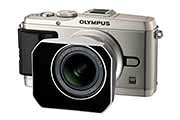
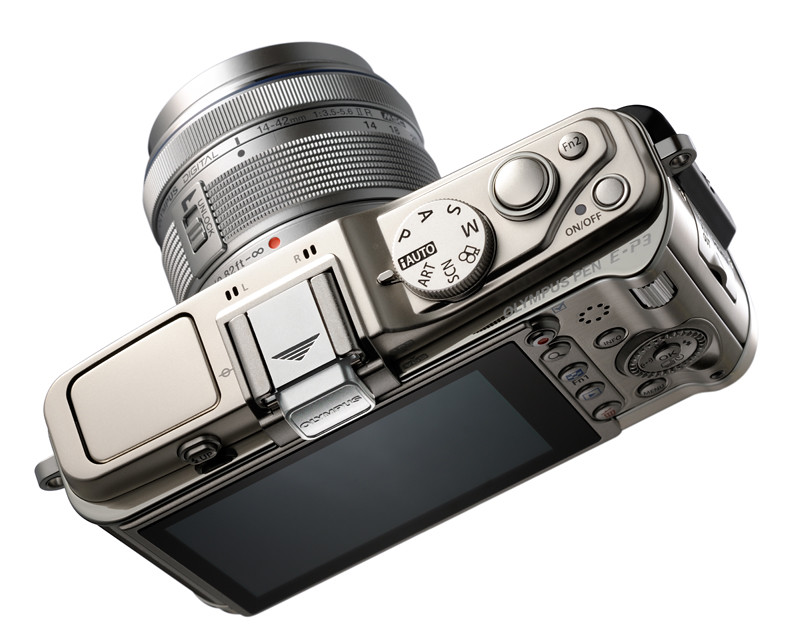
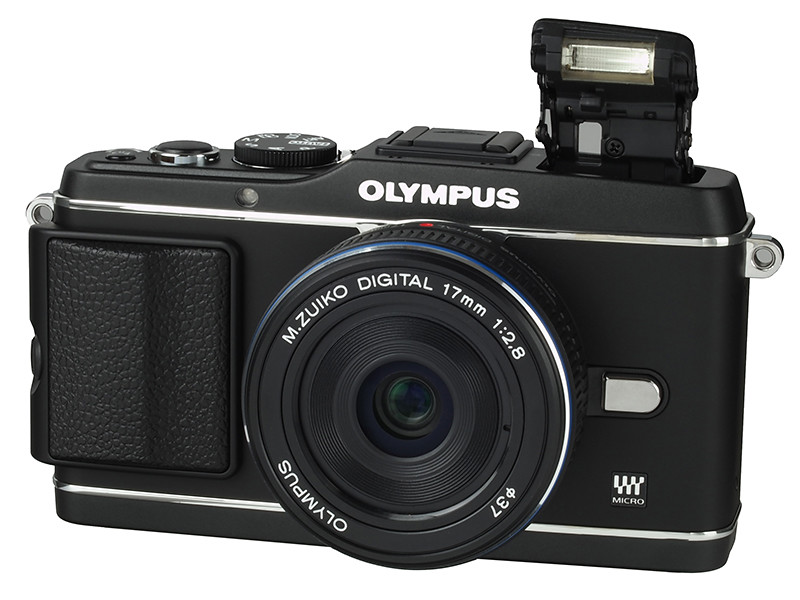
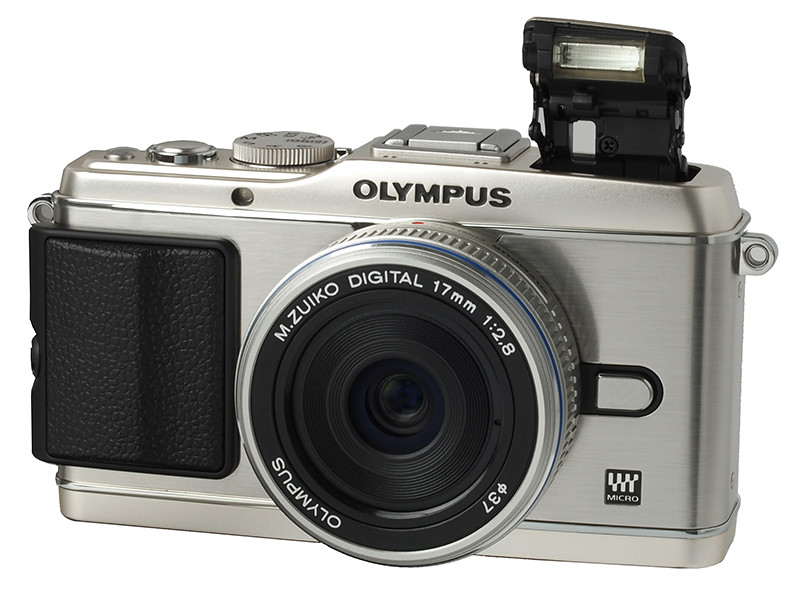
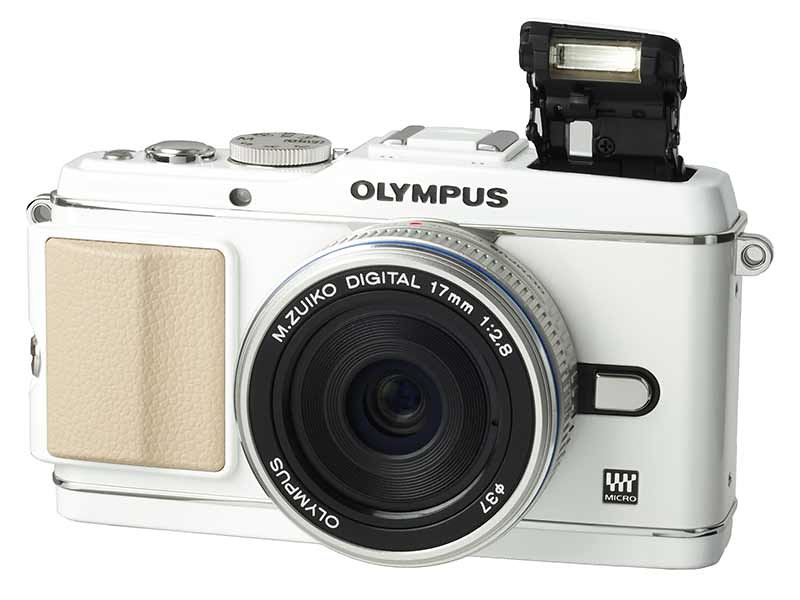
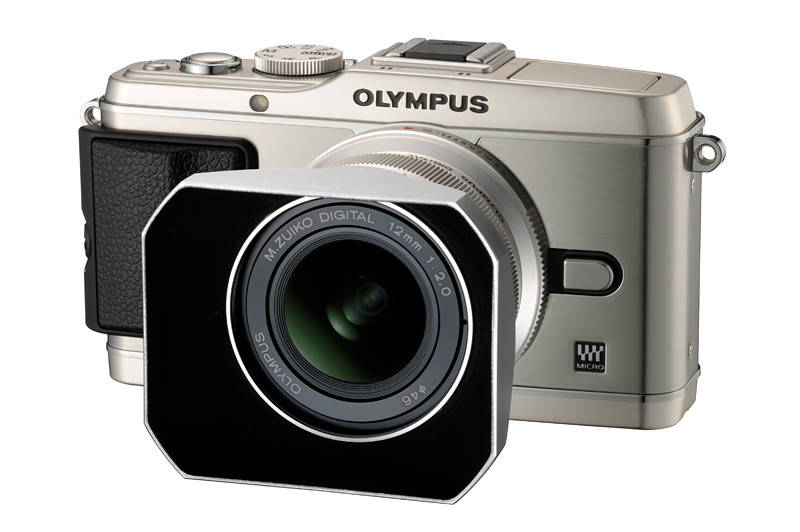
The PEN E-P3 - flagship model for the PEN series of mirrorless interchangeable lens cameras from Olympus.

The PEN E-P3 - flagship model for the PEN series of mirrorless interchangeable lens cameras from Olympus.

Externally similar to its predecessors, the PEN E-P3 has received a new sensor, image processing engine and the autofocus system has been tuned up to become lightning fast.

The PEN E-P3 is scheduled for release in Singapore on July 22, 2011 although the pricing has not been revealed yet. Online retailers such as Adorama is taking preorders for the PEN E-P3 at US$899 with M. Zuiko 14-42mm II R f/3.5-5.6 kit lens. The camera is available in black, white and silver. See the specifications here.

FASTer autofocus

Olympus claims that the new FAST (Frequency Acceleration Sensor Technology) autofocus (AF) system makes the E-P3 the camera to beat when it comes to AF speed. The FAST AF is achieved through the combination of a few innovations.

The PEN E-P3 - flagship model for the PEN series of mirrorless interchangeable lens cameras from Olympus.

Three colours are available - black, silver and white.

Firstly, the Live MOS Sensor is driven at double the previous speed – 120 fps – so that image data can be obtained more quickly than with previous systems. Secondly, the speed of the AF computations that generate the contrast information from the image data – in order to determine the degree of focusing – has also been doubled. Thirdly, the speed of communication for controlling the lens motion during AF has been increased. Finally, the response time from pressing the shutter release to the start-up of AF system has been shortened.

Overall, the imager AF speed has become almost three times faster than before.

I tried out the camera during its launch on 30 June and found the AF was indeed much faster than its predecessors the E-P2 and E-P1 – even at low light. An AF illuminator light – inexplicably absent in previous models – has a range of 3m for low light situations.

The number of focus selection areas has been increased from 11 to 35, enabling detailed, pinpoint AF across a wider area than before. To capture a moving subject accurately, the group area selection can apply AF to a limited region compose of 3 vertical and 3 horizontal areas.

Design and UI
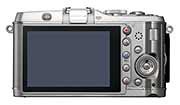
The PEN E-P3 - flagship model for the PEN series of mirrorless interchangeable lens cameras from Olympus.

The Olympus PEN E-P3 retains the retro design of the PEN series and looks similar to its predecessors.

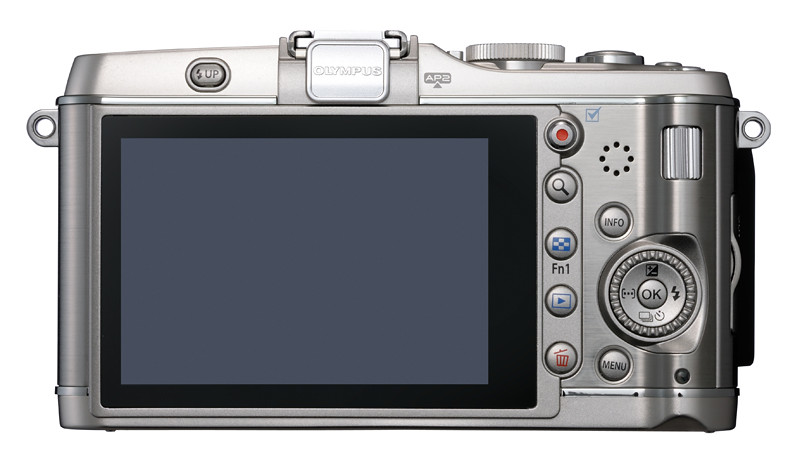
The 3-inch, 610k-dot OLED display is not only bright and sharp but features a touch screen that is easy to use – in fact addictive. Simply tap the main subject on the screen to prefocus, or focus and take the snapshot immediately. The font and graphic design of the user interface and menu system has been improved to become more readable and good-looking.

In terms of external design, its retro look is similar to its predecessors with a few design and functional differences. There are now two Function buttons and a direct movie-recording button – making camera control easier. A built-in GN10 (ISO 200) flash – absent in previous models – is now available. Two designs of detachable camera grips are available in white, black or silver. Alternatively, leave the grip at home for a minimalistic look, showing off the metallic finish on the E-P3 body.

Inside the camera
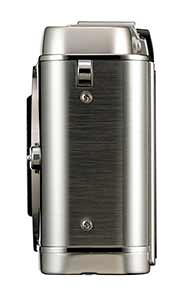
The PEN E-P3 - flagship model for the PEN series of mirrorless interchangeable lens cameras from Olympus.

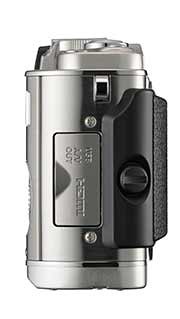
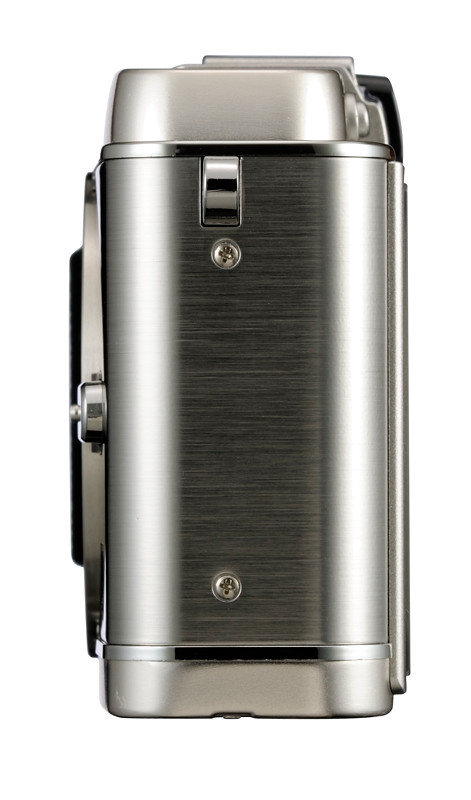
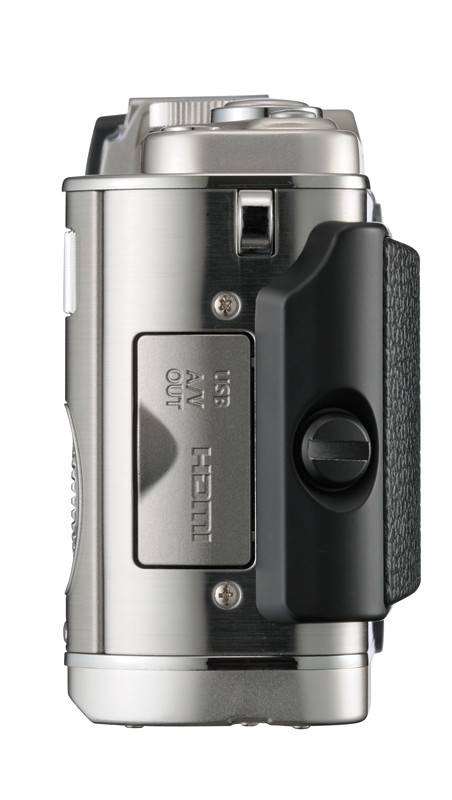
Sideviews of the Olympus PEN E-P3.

A new 12.3 megapixel Live MOS sensor in the micro four thirds interchangeable lens digital camera promises an enhanced image quality. 1080i60 full HD movies in AVCHD format are now possible as is high-sensitivity shooting at ISO12800.

The dual core processor allows live view on the LCD panel and image processing when a shot is taken to be executed in parallel, decreasing the blackout time after snapping each photo. This, together with the aforementioned FASTer AF gives the E-P3 a snappier feel and makes it more responsive – especially when taking multiple shots at a go.

The E-P3 now ships with 10 Art Filters – precanned special effects that are applied to the JPEG image when you snap a photo. This is two more than the E-P2 and four more than the E-PL3. Art Filter bracketing is now possible for recording multiple Art Filtered pictures with a single snapshot.

Two new Art Effects are added – “Starlight” and “White Edge”, as well as a new Art Filter variation called the “Pale & Light Colour II”. The Art Filters can be applied during full HD movie shooting and the 3D Art Filter is compatible with the new 3D Photo Shooting scene mode.

Image processing has been enhanced by incorporating the “Full Detail” processing algorithm used in the E-5, the flagship DSLR from Olympus. New “Real Colour Technology” targets the reproduction of colours that are difficult to accurately reproduce such as emerald green and yellow making the image pop.

The “Advanced Shadow Adjustment Technology” (ASAT) tries to correct backlit photos by brightening the backlit subject independently without blowing out the bright background.

Based on paper specifications and a short physical handling session, the Olympus E-P3 promises to be a much better performer than its predecessor, the E-P2, in terms of AF speed, image quality and camera operation, viz touch screen and enhanced button and menus.

Company byte: Leica Camera

Sunday, June 26th, 2011

Leica Camera is a German optics company that has a long heritage of over 162 years in quality German engineering. Leica makes cameras, high quality lenses and sport optic tools.

Leica Camera AGThe company has been in the forefront of photojournalism and related activities – having been bestowed the Oskar Barnack Award for high quality reportage photography.

Leica Camera has presented photographs taken by international photographers through its galleries offering access to life’s hidden stories.

Follow articles related to Leica on tech4tea.com.

Compact camera winners at the XXI TIPA 2011 awards

Saturday, April 30th, 2011
Compact digital cameras took up seven out of 40 categories evaluated by the 29-member magazines of the Technical Image Press Association (TIPA) this year. Winners include Nikon, Canon, Olympus, Samsung, Fujifilm and Panasonic.

Compared to the four categories for DSLR cameras, there were seven categories for compact digital cameras.

Founded in 1991, the Technical Image Press Association (TIPA) comprises 29 independent photo & imaging magazines from nine European countries plus Australia, Canada, China, USA and South Africa.

This is the 21st installment of the annual awards.

The winners for the seven compact digital camera categories are tabulated below.

Category / Winner TIPA citation
Best General Compact Camera 

Best DSLR Entry: Canon EOS 600D / Rebel T3i / Kiss X5

Nikon
COOLPIX P300

The Nikon COOLPIX P300 is a stylish compact camera with a remarkably powerful f/1.8 lens, starting at 24mm (35mm equivalent) with 4.2x optical zoom. High Refraction Index glass further ensures sharp images with high contrast. Combined with its powerful 12.2 Megapixel back-illuminated CMOS sensor, this camera gives excellent image quality even in dim lighting conditions. The P300 can film in Full HD (1080p), but also in slow motion with a recording speed of up to 120fps.
Best Expert Compact Camera 

Best DSLR Advanced: Nikon D7000

Olympus
XZ-1

The Olympus XZ-1 has one of the fastest zoom lenses in its class, the iZuiko f1.8-2.5 6.0-24mm (28-112mm equivalent angle of view in 35mm cameras.) Rather than succumb to the continuing Megapixel race, the light-reception area of each pixel of the 1/1.63-inch, 10 Megapixel CCD has been doubled. The XZ-1’s AF illuminator, Dual Image Stabilisation, Low-Light mode that automatically adjusts the ISO sensitivity up to ISO 3200 and the compact size all add up to an exciting “candid” camera that also offers advanced manual controls.
Best Premium Camera 

Best DSLR Expert: Olympus E-5

Fujifilm
FinePix X100

Fujifilm’s FinePix X100 offers unrivalled image quality for a compact camera, thanks to its APS-C format CMOS sensor and Fujinon 23mm f/2.0 lens. The Hybrid Viewfinder uniquely combines the ‘bright frame’ window-type optical viewfinder found in high-end film cameras, and the electronic viewfinder system of fixed single lens or digital compact system cameras, offering the user ‘the best of both worlds’. Added to the package is a newly-developed EXR Processor, which combines all the latest Fujifilm image processing technology.
Best Compact System Camera
Entry Level 

Best DSLR Professional: Pentax 645D

Samsung
NX100

The Samsung NX100’s new body design drastically revises the ‘DSLR look-alike’ concept found in other compact interchangeable lens cameras, and is a bold step from the company’s previous NX10/11 designs. This brings it into direct competition with other Compact System Cameras. Impressive features include a vivid 3-inch AMOLED screen, an APS-C size sensor and a line of high-tech iFunction lenses. This promising new series of optics blazes new viewing and camera control paths by allowing the user to program numerous functions right from the lens.
Best Compact System Camera
Expert 

Best DSLR Professional: Pentax 645D

Panasonic
Lumix DMC-GH2

The Panasonic Lumix DMC-GH2 is a true ‘hybrid’ photo and video camera, where video is no longer just an additional function. The DMC-GH2 features full HD 1920×1080, 60i (NTSC) / 50i (PAL) smooth, high quality video recording with 60p (NTSC) / 50p (PAL) output in addition to the high quality photo, a world’s first for cameras in this category. The DMC-GH2 can be operated through an intuitive touch control screen. For example, just tapping a subject on the screen will make the camera focus with a speed that rivals the best DSLR’s on the market.
Best Superzoom Camera 

Best DSLR Professional: Pentax 645D

Canon
PowerShot
SX230 HS

The Canon PowerShot SX230 HS features a 12.1-Megapixel HS System with high-sensitivity CMOS sensor, and a 14x optical zoom (28-392mm equivalent) with optical image stabilisation. A 3-inch LCD screen, with 100% frame coverage, makes for easy viewing and menu control. TIPA members were impressed with features such as Full HD 1080p video with Dynamic Image Stabilizer, a new GPS function (including supplied Map Utility software) and a high-sensitivity CMOS sensor coupled with Canon’s DIGIC 4 processor that reduces noise levels even at the higher ranges (up to ISO 3200).
Best Rugged Compact Camera 

Best DSLR Professional: Pentax 645D

Panasonic
Lumix DMC-FT3 / DMC-TS3

The Panasonic Lumix DMC-TS3/FT3 is waterproof to a depth of 12m and dust-proof equivalent to the IPX8 and IP6X standard. It has an integrated GPS function, ideal for photographers who want to shoot in the great outdoors and record their exact position during that shoot. The camera has a built-in compass, altimeter and barometer to show and record altitude, barometric pressure and orientation data. The barometer also works as indicator for depth underwater. Thanks to its location awareness, the internal clock of the camera is automatically adjusted to the local time.

Olympus XZ-1 wins TIPA 2011 award for Best Expert Compact Camera

Monday, April 25th, 2011
The flagship compact digital camera from Olympus has won the Best Expert Compact Camera award at the annual XXI TIPA 2011 awards.

Technical Image Press Association - XXI TIPA Awards 2011The 29 member magazines of the Technical Image Press Association (TIPA) awarded the award for the “Best Expert Compact Camera” category to the Olympus XZ-1.

Olympus XZ-1 - Best Expert Compact CameraInto its twenty-first year, the annual awards recognised the best photo and imaging products in 2011 in 40 categories. TIPA has member magazines from nine European countries plus Australia, Canada, China, USA and South Africa.
In its citation, it lauded the XZ-1 for its fast lens, as well its larger sensor area for each pixel – which translates to greater sensitivity, lower noise and better image quality.
“The Olympus XZ-1 has one of the fastest zoom lenses in its class, the iZuiko f1.8-2.5 6.0-24mm (28-112mm equivalent angle of view in 35mm cameras). Rather than succumb to the continuing Megapixel race, the light-reception area of each pixel of the 1/1.63-inch, 10 Megapixel CCD has been doubled. The XZ-1’s AF illuminator, Dual Image Stabilisation, Low-Light mode that automatically adjusts the ISO sensitivity up to ISO 3200 and the compact size all add up to an exciting “candid” camera that also offers advanced manual controls.” – Citation for XXI TIPA Awards for “Best Expert Compact Camera”

In Singapore, the Olympus XZ-1 is available at a suggested retail price of S$748 (incl GST & bundled with a 8GB SD Card).

Listed here are some earlier write-ups on the Olympus XZ-1:
Photo review | Full reviewSpecsSelling pointsDiorama movie

Olympus announces 3 new digital compact cameras.

Monday, March 7th, 2011
Olympus has unveiled 3 new digital compacts. This continues its 2011 trend of releasing new cameras at the beginning of every month.
16M backlit CMOS, 12.5x, 24 - 300 mm

Olympus SZ-20

altText

Olympus SZ-30MR

14M CCD, 5x, 28 - 140 mm

Olympus TG-810


Having launched seven cameras on 6 January and four on 8 February, Olympus has announced another 3 new models on 2 March. The three models are: TG-810, SZ-20, SZ-30MR.

The TG-810 will be available in Singapore in March but availability of the two new SZ series models have yet to be ascertained.

The three models and their main highlights are listed below:

Model
Date available
Estimated price
Colours
Highlights
TG-810
March 2011
S$540 

Colours:
Black
Silver
Blue
Red
– 14 megapixels CCD.
– 5x optical zoom from 28 to 140 mm (35mm equiv).
– 3” 920k dots TFT LCD display.
– HD movie (MPEG-4 AVC/H.264) at 1280 x 720 pixels with dedicated REC button. 

Battle-hardened for the rugged adventurer, this jock is:

– waterproof to a depth of 10m
– shockproof against falls from 2m
– crushproof against loads of up to 100kgf
– dustproof, freezeproof; basically abuse-proof.
– equipped with GPS and electronic compass

SZ-20
Avail: TBD
Price: TBD 

Colours:
Black
Silver

– 16 megapixels backlit CMOS.
– 12.5x optical zoom from 24 to 300 mm (35mm equiv).
– 3” 460k dots LCD display.
– HD movie (MPEG-4 AVC/H.264) at 1920 x 1080 pixels with dedicated REC button. 

For the avid traveller and sports fan, this compact has large zoom, high sensitivity sensor and good for high-speed continuous shooting. Additional features include:

– Hand-held starlight mode combines 4 exposures to eliminate blur and noise in low light.
– Smart Panorama captures up to 360-degrees.
– High-speed continuous shooting of 7 (full-size) or 15 (5 megapixels) photos per second.

SZ-30MR
Avail: TBD
Price: TBD 

Colours:
Black
Silver

– 16 megapixels backlit CMOS.
– 24x optical zoom lens from wide angle of 25 to 600 mm (35mm equiv).
– 3” 460k dots LCD display.
– HD movie (MPEG-4 AVC/H.264) at 1920 x 1080 pixels with dedicated REC button. 

Has everything the SZ-20 has, and more. Zooms twice as far. Multi recording shoots 1080p HD movies and full resolution photos simultaneously.

Common features Features that the 3 new cameras share (and together with many other recent Olympus models) include: 

– 8 Magic Filters for in-camera special effects for stills.
– 6 of them available in movie recording.
– 3D photo shooting.
– Multi Picture format for 3D photos.
– Pet mode for auto-detecting dogs and cats.
– Auto Release when dog/cat faces the camera.
– Eye-Fi card compatible.

Interesting movie effect using Diorama mode

Friday, March 4th, 2011

The Diorama Art Filter mode in Olympus cameras gives an interesting fast-forward effect, like those you see in documentaries where a flower blooms from bud to full-bloom in seconds, or of clouds racing across the sky.

I shot the video below using the Olympus XZ-1 compact digital camera, shooting it as an HD movie while in Diorama mode.

The Diorama mode is one of six Art Filters included in the camera to add special effects in-camera to photos taken. The Diorama mode imposes an extremely shallow depth of field to simulate photos taken of miniature models.

In newer Olympus cameras, these Art Filters can also be used when shooting videos, although the frame rate or size might be different from the basic normal movie shooting mode.

In the video below, you can see only part of the track is in focus while the rest are blurred. Also, although the snippet is only 12 sec long, the actual sequence lasted more than half a minute.