Posts Tagged ‘BlackBerry’

RIM’s India concession likely to prompt others

Wednesday, September 1st, 2010
Having given in to demands from the Indian government to open up access to BlackBerry e-mail and instant messenger correspondence, other countries will expect the same concessions to be extended to them.

RIM's logo with flags of countries concerned with security

RIM’s India concession likely to prompt others

The Indian deal sets a precedent and RIM will find it difficult to turn down other countries seeking similar access. Prashant Singhal, head of the telecommunications division at Ernst & Young India Pvt. in New Delhi, told Bloomberg that “with some of the countries where discussions were on or are still on, like Saudi Arabia, governments may go back and ask for security codes, following in India’s footsteps. Most governments are going to ask for the same security solution RIM has offered.”

Motivated by security concerns, both the United Arab Emirates and Saudi Arabia have threatened to ban BlackBerry services unless RIM allowed access to its encrypted client data to the authorities. Turkey and Indonesia have also expressed security concerns about BlackBerry services.

RIM has reiterated last week that the company maintains a “consistent global standard” for lawful access to its messaging system that “does not include special deals for specific countries.”

RIM fell 6% to US$42.84 in the Nasdaq Stock Market yesterday, the biggest decline since June 29, after a Sanford C. Bernstein Ltd. survey found more companies opting for rival devices such as Apple Inc.’s iPhone, reports Bloomberg.

The shares have lost 37% this year while Apple’s share price has increased by 15%.

India to get BlackBerry access

Monday, August 30th, 2010
Indian flag with BlackBerry logo.

India to get BlackBerry access from RIM

The Indian government disclosed that Research In Motion Ltd. (RIM) has given Indian authorities access to BlackBerry e-mail and instant messenger correspondence. This is on the eve of an August 31 deadline for RIM to do so or face a ban on BlackBerry services in India. RIM first agreed to allow monitoring of e-mail on BlackBerry handsets by the Indian government in 2008.

Other countries like Saudi Arabia and the United Arab Emirates have also threatened to shut off BlackBerry services unless RIM provide access to its encrypted client data. These countries are worried the secure comms provided by BlackBerry devices could be exploited by terrorists such as those in the 2008 Mumbai attacks and insurgents from Kashmir and Assam. It could also help criminals evade authorities monitoring their comms for illegal activities.

Nokia Oyj, the biggest mobile-phone maker in the world, has agreed to set up servers in India by Nov 5, to allow security agencies to monitor its customers’ e-mail.

India is also exploring how to track voice-over-Internet protocol services provided by companies like Skype and Google.

RIM’s proposal to placate India would be at the expense of legitimate corporate customers whose privacy will be compromised.

Roger Entner, an analyst with IAG Research Inc. told Bloomberg that in the U.S., the Federal Bureau of Investigation can monitor the mobile e-mail of particular people with authority from a judge, as they do in wiretapping phone calls. American officials would go to a company for access to an employee’s messages or to an Internet service provider for non-corporate e-mail.

According to Bloomberg, India accounts for about 2 percent of RIM’s 46 million customers worldwide. Mike Abamsky, an analyst at RBC Capital Markets in Toronto, puts the number to about 1.1 million. As of June, India had 636 million mobile-phone subscribers, second only to China’s 805 million.

Romal Shetty, executive director of the telecommunications division at KPMG’s Indian unit, opined that “India as a market is small today for BlackBerry phones but the opportunity space for RIM is very, very large. They can’t walk away from a market like India. It’s not something anybody can afford to do.”

India’s telecommunications department will test RIM’s proposal for 60 days to see whether it allows security agencies to tap its messenger and corporate e-mail services.

Research In Motion earns a reprieve from Saudi Arabia’s BlackBerry ban

Wednesday, August 11th, 2010
Blackberry logo superimposed on Saudi Arabia flag

Saudi Arabia postpones BlackBerry ban indefinitely.

Some hints of hope for Research In Motion (RIM), the maker of the popular BlackBerry smartphone, in its aspirations of growth outside of North America.

AFP reported that Saudi Arabia has postponed indefinitely a BlackBerry ban after a deadline passed for finding a solution allowing authorities to monitor its encrypted messages. The state news agency SPA reported that the Communications and Information Technology Commission (CITC) had announced that BlackBerry messenger services would remain online, due to progress in efforts to find a solution to the concerns.

Among the reported solutions is the installation of a local server accessible to Saudi authorities, instead of the data going directly to RIM’s Canadian servers. Local daily Okaz on Monday quoted a technical source at one of the monarchy’s three mobile phone companies as saying the tests on the server and requested programmes have been successful.

More than 700,000 Saudis subscribe to BlackBerry, with most reportedly purchasing the smartphone for personal use.

The telecoms regulator had previously ordered mobile operators to block the BlackBerry feature from Friday last week or face a 1.3-million-dollar fine, after similar moves by other Arab nations. United Arab Emirates had announced that it would ban BlackBerry messenger, email and web browsing from October 11, over concerns that the encrypted communications on BlackBerry smartphones could not be monitored by the government for criminal and terrorist activities.

The UAE’s telecoms regulator said last week that it remained open to discussions to find a “regulatory-compliant solution,” possibly a resolution based on enabling monitoring.

Outside the Arab world, India is mulling a ban and Indonesia is not ruling out the option, although on Thursday it denied the world’s largest Muslim nation was considering a suspension of BlackBerry services.

India plans to set a deadline later this week for operators to allow security agencies access to encrypted BlackBerry messages or face disconnection, the Hindustan Times quoted a home ministry official as saying Tuesday.

BlackBerry Torch 9800: RIM’s first device based on the 6.0 Operating System

Friday, August 6th, 2010

Finally, an actual BlackBerry based on the 6.0 operating system, which Co-Chief Executive Officer Jim Balsillie promised last month will have consumers “blown away”.

Views and dimensions of BlackBerry Torch 9800

BlackBerry Torch 9800 with 6.0 Operating System.

Bloomberg’s Rich Jaroslovsky summarises the smartphone maker scene succintly at the beginning of his weekly Friday column:

“It’s become fashionable among the digerati to dismiss the BlackBerry as a remnant of yesterday’s technology and lump its maker, Research In Motion Ltd., with Microsoft and Nokia as wireless pioneers who squandered their early advantages and are now sinking toward irrelevance.”

Rich’s assessment for the Torch is that although it provides BlackBerry users with a more modern experience, “it falls well short of Apple Inc.’s iPhone and the many devices that run Google Inc.’s Android operating system, and provides no reason for users of any of those phones to contemplate switching.”

RIM’s application store, called AppWorld, has only about 9,000 offerings, a small fraction of the number available for the iPhone or Android devices. And the BlackBerry’s media-playing capabilities remain basic, even primitive, when compared with some of its rivals.

Sporting the classic BlackBerry form factor, the Torch weighs 161 grams (5.7 ounces) – 18 percent heavier than an iPhone 4.

Typing can be done using either the physical keyboard, which slides out from behind the screen, or by using the on-screen keypad. The 3.2 inch colour touch screen recognises the usual pinch-and-zoom gestures to resize text and images, and you can move from message to message by swiping the screen sideways.

The new interface for the new operating system will also be available to users of BlackBerry’s Bold 9700 and 9650 and Pearl 3G models. Rich reports that “the home screen is well laid out, with a separate screen for frequently used applications; settings and options have been made simpler across the board.”

The biggest improvement seems to be in web-surfing, considering how painful it had been on older BlackBerry models. The browser has been revamped to be faster and to include new features.

Hurdles from foreign governments for BlackBerry’s overseas growth

Monday, August 2nd, 2010

It never rains but pours for Research In Motion (RIM), maker of the BlackBerry smartphone. RIM’s overseas aspirations are confronted with threats from foreign governments to restrict or ban its services as these countries tighten restrictions on mobile e-mail.

BlackBerry logo with flags of foreign governments superimposed.

Potential bans from foreign governments threaten RIM's overseas growth.

With the challenges from Apple and Android-based smartphones checking its growth in North America, Canada-based RIM is looking to countries such as India, Indonesia, Brazil and kingdoms in the Middle East for growth. Bloomberg reports that revenue from outside North America and the U.K. nearly doubled last quarter as US sales, which account for a quarter of revenue, dropped 7 percent.

One of BlackBerry’s main strength over competitor’s smartphones is the security it promises for its encrypted messenging service. But it is precisely this that foreign governments are concerned with, since they are worried that the encrypted communications could be used by criminals and terrorists who are targeting their countries. The foreign governments want some means to monitor the BlackBerry communications in their countries.

All BlackBerry e-mails are handled by the company’s own enterprise servers in Canada, making the devices popular with companies and government officials including Barack Obama, who kept his BlackBerry after becoming U.S. president.

A potential solution is to setup proxy servers in overseas countries so that the foreign governments can monitor the  communications that uses BlackBerrys in their countries.

An official in India has said that the country may ban BlackBerry e-mail use while Saudi Arabia could take similar steps. The Telecommunications Regulatory Authority in the UAE has announced that, from October 11, BlackBerry’s Messenger, e-mail and Web browsing services will be halted.

BlackBerry BlackPad from Research In Motion (RIM)?

Wednesday, July 28th, 2010

At last, I see signs of some movement from Research In Motion (RIM), the maker of the  BlackBerry smartphone, in response to the inroads that its rival are making into the smartphone scene.

Artist impression of a BlackPad.

Is this what a BlackPad will look like?

It is much too early to tell whether this move will help RIM stave off its rivals’ inroads into its market share, but it is at least something. However, I believe RIM needs more than just a new device. Apple is successful because of the entire framework – apps, iTunes, chic branding. RIM is lagging in the Apps arena and does not have any music framework. The only thing it can leverage on is its branding from the success of its BlackBerrys. Even that is fading fast in the face of the popularity of the iPhone. I wonder if people still use BlackBerry as a verb anymore? Assessing company email from the phone is old news. What do people talk about nowadays? Apps – Apple apps and Android Apps.

RIM has acquired the internet rights to blackpad.com, fueling speculation that it is developing a tablet device to challenge Apple’s wildly successful iPad.

According to the Whois database of Internet domain names, the domain name assigned to RIM was created on July 8 and expires Sept. 8, 2011.

Bloomberg reports that there was no record of a trademark application for “blackpad” with the U.S. Patent and Trademark Office as of today.

Apple, the maker of the iPad, claimed in June that it has sold 3 million of the tablet computers within 80 days of launch in the US.

Other device makers are vying to develop tablets following Apple’s success with its iPad, although the concept of tablet computers is not new and had been actively but not as successfully pursued by Microsoft nearly a decade ago.

Hewlett-Packard, which bought smartphone maker Palm earlier this month, applied to the Patent Office on July 9 to register the name Palmpad for computers and computer software. HP said last week it plans to produce a tablet device this year.

Promises from RIM for future BlackBerrys

Friday, July 9th, 2010
BlackBerry Bold 9650 smartphone

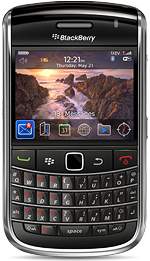
BlackBerry smartphone from RIM

Canadian based Research In Motion (RIM) is hoping to woo consumers as BlackBerry loses ground to Apple’s iPhone and smartphones running Google’s Android operating system. RIM currently leads with 41 percent of the market share for smartphones versus 22 percent for Apple, according to Gartner.

BlackBerry’s strengths lie in their strong security features and data capabilities, which is what corporate clients value. RIM had grabbed the lead in market share by enabling wireless email access easy and secure for BlackBerry users.

However, easy email access has become a basic feature in smartphones, with Apple’s iPhone and Android-based smartphones boasting hip handsets and vast librabries of applications that let users customize their phones.

As of July, there are 225,000 iPhone apps and 65,000 Android apps, compared to 7000 for the BlackBerry. RIM needs to persuade software developers to produce more apps for BlackBerrys, in order to attract consumers. Wade Beavers, US-based software developer has built 142 apps for the iPhone, 130 for Android, and “no more than seven” for the Blackberry.

Beavers griped that RIM is difficult to work with because the apps need to be customised for different BlackBerry models. He said that interest in BlackBerry apps among users is so limited that it’s hard to make money from the programs that he does write for it. Beavers added that “developing for RIM is just a waste of time until they can show there’s an appetite for apps on their platform”.

BlackBerry’s weak browser capability is another issue. Although CTOs do not covet or welcome fun features like games and video apps for their employees, more users want their companies to smartphones sexier than the BlackBerry.

Bloomberg reports that “PayPay has gone from all BlackBerrys two years ago to about half iPhones today”. Other companies like OCBC bank in Singapore are also switching from BlackBerry to other platforms.

A friend of mine carries two phones – a BlackBerry issued by the company and her personal smartphone. She uses the BlackBerry only to access the company’s messaging system and the Windows-based Acer smartphone for everything else. She does not enjoy the Acer at all, but at least she does not change the company name – she has nicknamed RIM to RIP and strongly believes it will follow the footsteps of the killed KINs in the not-too-distant future. That’s how much she enjoys her BlackBerry – not to mention the hassle of having to carry two handphones.

RIM is poised to unleash a wave of new technology which Co-Chief Executive Officer Jim Balsillie promises will have consumers “blown away”. Although RIM’s sneak peek of the BlackBerry 6 technology in April did not spark much enthusiasm, Balsille says he is planning a new look for BlackBerry’s devices, enhanced software and a better user experience.

I am looking forward to hearing more specific details of what these features are.