Archive for the ‘Brands’ Category

Apple to release Mac OS X Lion on the Mac App Store

Friday, July 15th, 2011

The eighth major release of the Mac’s operating system will be available as a $29.99 download from the Mac App Store from July 20, 2011.

Mac OS X Lion - the latest operating system for Apple Macs

Mac OS X Lion - the latest operating system for Apple Macs

Some of the 250 new features include: new Multi-Touch gestures; system-wide support for full screen apps; Mission Control, an overview of everything running on your Mac; the Mac App Store that’s built right into the OS; Launchpad, a new home for all your apps; and a completely redesigned Mail app.
New Multi-Touch gestures in Mac OS X Lion
Additional new features in Lion include:

  • Resume, which conveniently brings your apps back exactly how you left them when you restart your Mac or quit and relaunch an app;
  • Auto Save, which automatically and continuously saves your documents as you work;
  • Versions, which automatically records the history of your document as you create it, and gives you an easy way to browse, revert and even copy and paste from previous versions; and
  • AirDrop, which finds nearby Macs and automatically sets up a peer-to-peer wireless connection to make transferring files quick and easy.
“Lion makes upgrading a Mac easier than ever before; just launch the Mac App Store, buy Lion with your iTunes account, and the download and install process will begin automatically,” said Philip Schiller, Apple’s senior vice president of Worldwide Product Marketing.

Mac OS X Lion is available as an upgrade to Mac OS X version 10.6.6 Snow Leopard from the Mac App Store for $29.99. At around 4GB, Lion is about the size of an HD movie from the iTunes Store. Users who do not have broadband access at home, work or school can download Lion at Apple retail stores and later this August, Lion will be made available on a USB thumb drive through the Apple Store for S$88 (incl GST). Mac OS X Lion Server requires Lion and is available from the Mac App Store for $49.99 (US).

Lion requires an Intel-based Mac with a Core 2 Duo, i3, i5, i7 or Xeon processor and 2GB of RAM. Lion is an upgrade and can be installed on all authorized personal Macs. Details regarding Business and Education licensing can be found at apple.com/macosx.

Mac OS X Lion, latest operating system for Apple MacsThe OS X Lion Up-to-Date upgrade will be available through the Mac App Store at no additional charge to all customers who purchased a qualifying new Mac system from Apple or an Apple Authorized Reseller on or after June 6, 2011. Users must request their Up-to-Date upgrade within 30 days of purchase of their Mac computer. Customers who purchased a qualifying Mac between June 6, 2011 and July 20, 2011 will have until August 19, 2011 to make a request.

Company byte: Seagate Technology

Thursday, July 14th, 2011

NASDAQ-listed Seagate Technology (STX) is one of the world’s largest manufacturers of hard disk drives. It is currently incorporated in Dublin, Ireland but its principal executive offices are located in Scotts Valley, California in the United States.

Seagate is a worldwide leader in hard disk drives and storage solutions.Seagate was originally incorporated in 1978 as Shugart Technology. It is a worldwide leader in the design, manufacturing and marketing of hard disk drives and storage solutions.

In fiscal 2011, the company had a revenue of $11 billion, net income of $0.5 billion and shipped 199 million units (approximate data from Seagate’s website).

Follow articles related to Seagate on tech4tea.com.

Company byte: Research In Motion

Monday, July 11th, 2011

Research In Motion Limited (RIM) is a Canadian multinational  telecommunications company that makes the BlackBerry PlayBook tablet computer, as well as BlackBerry smartphones.

Update (30 January, 2013):

Along with the launch of the new BlackBerry 10 platform, President & CEO Thorsten Heins has announced that the company will change its name from Research In Motion to BlackBerry.

Research In Motion, maker of BlackBerry smartphones and the PlayBook tabletRIM was founded in 1984 by Mike Lazaridis, who currently serves as its co-CEO along with Jim Balsillie.

The company designs, manufactures and markets wireless solutions for the worldwide mobile communications market. The introduction of the BlackBerry solution in 1999 provides platforms and solutions for access to information, including e-mail, voice, instant messaging, short message service (SMS), Internet and intranet-based applications and browsing.

Headquartered in Waterloo, Ontario in Canada, RIM operates offices in North America, Europe, Asia Pacific and Latin America. RIM is listed on the NASDAQ Stock Market (NASDAQ: RIMM) and the Toronto Stock Exchange (TSX: RIM).

Click here to follow articles related to RIM and BlackBerry news and products on tech4tea.com.

Behind-the-scenes story about Microsoft Kinect for Xbox 360

Saturday, July 9th, 2011

Dr Jamie Shotton had joined the Machine Learning & Perception group at Microsoft Research Cambridge (MSRC) in June 2008 as a post-doc for a few months when he was roped in by the Xbox product group to help launch the product by Christmas 2010.

He shared the experience with 4th year undergraduate Engineering students at the University of Cambridge Engineering Department earlier this year.

The body was divided into 31 different body parts to be recognised and reconstituted into a human pose.

The body was divided into 31 different body parts to be recognised and reconstituted into a human pose.

I was browsing through the university’s newsletter last week when I came upon this interesting story about some of the developmental challenges of the Microsoft Kinect for Xbox 360 and how they were surmounted. You can read the full original article here. Images used in this posting are from the original article.

The Kinect for Xbox 360 is a motion sensing input device for the Xbox 360 game console. Based around a webcam-style add-on accessory for the Xbox 360 console, it allows users to control and interact with the Xbox 360 without the need to touch or hold a game controller such as a joystick – depending instead on bodily gestures and spoken commands.

Dr Jamie Shotton from the Cambridge research laboratory in the UK

Dr Jamie Shotton from the Cambridge research laboratory in the UK.

Shotton now works for Microsoft at their Cambridge research laboratory in the UK. He had completed his PhD research in computer vision from 2003 to 2007. His initial research at the MSRC was on automatic visual object recognition – teaching computers how to recognise different types of objects in photographs such as cars, sheep and trees.

“Little did I know at that point how quickly I would get pulled into the frenzy of research and development around Kinect, and how this blue-skies research could be applied to such a practical problem,” Shotton recalled.

Enabling tools

At the point that Shotton was invited, Microsoft had already developed a few enabling tools.

Shotton's research into automatic visual object recognition trained computers to recognise different objects in photographs.

Shotton's research into automatic visual object recognition trained computers to recognise different objects in photographs.

Depth-sensing camera. The new Kinect camera worked at 320×240 pixels and 30 frames per second versus other depth cameras at very low resolutions of 10×10 pixels.  “You could even make out the nose and eyes on your face,” “Shotton observed. The better depth accuracy helped with human pose estimation by eliminating objects in the background since they were further away. The colour and texture of clothing, skin and hair could also be normalised away. The depth camera was “active”, illuminating the subject with its own structured dot pattern of infra-red light so that the camera worked even in the dark.

Prototype human tracking algorithm.  The algorithm constantly compares its predictions of the body’s movements with the actual movements and then makes adjustments to improve the accuracy of its predictions.

Showstoppers

The tracking algorithm suffered from three limitations. First, the subject had to stand in a T-pose for the algorithm to lock it in initially. Second, if the subject moved too erratically and therefore unpredictably, the algorithm would lose track and would not be able to recover until the subject returned to the T-pose for recalibration. This could happen as often as every 5-10 seconds. Finally, the algorithm only worked with the limited number of body sizes and shapes that it had been trained with. Shotton’s mission was to overcome these showstoppers.

Overcoming the limitations

To allow the algorithm to recognise a subject and its posture without having to start from a T-pose, Shotton leveraged a fellow researcher’s (Dr Stenger) technique called “chamfer matching”: the subject’s image was compared with a training database of body images and once the closest match was selected, the 3D data for that match could then be utilised as the human pose for the subject.

However, there was an astronomical number of human poses based on the different combinations of position and orientation of body parts such as the arms, legs, knees and ankles. Shotton divided up the body into 31 parts so that each of the parts could be matched independently before building up the skeleton and body pose from the position of these parts. This was where Shotton’s PhD work on object recognition came in handy.

Although this substantially reduced the size of the image database needed to train the algorithm, the training database was still huge. The team had recorded hours of footage at a motion capture studio with several actors doing “gaming” moves such as dancing, running, fighting and driving.

The millions of training images would have taken months to train the algorithm. The team got help from colleagues at Microsoft Research in Silicon Valley who had developed an engine called “Dryad” for efficient and reliable distributed computation. Using a cluster of 100 powerful computers, the training time was reduced to less than a day.

Read the details of Shotton’s experience in the full original article here.

Travel: Asus Eee Pad Transformer in Germany

Tuesday, July 5th, 2011

We had the chance to bring the freshly launched 10.1-inch Asus tablet with us to Germany and the Czech Republic.

It proved to be the favourite gadget for the kids, and a very useful gadget for the adults.

The kids on the Asus Eee Pad Transformer whilst taking a break from sight-seeing.

The kids on the Asus Eee Pad Transformer whilst taking a break from sight-seeing.

The Asus Eee Pad Transformer TF101 was launched in Singapore at the end of April. Here’s the nifty little device in action along the castle route from Frankfurt in Germany to Prague in the Czech Republic and back.

Using an Asus EeePad Transformer tablet instead of paper to do museum sketches

Using an Asus EeePad Transformer tablet instead of paper to do museum sketches

Erin loves visiting museums, and usually she sketches some of the exhibits that interests her on a paper notepad. This time, she was delighted to use the sketching app (Kids Doodle – Movie Kids Paint by Bejoy Mobile) on the Andoid tablet to do her sketches – in colour.

The app was in colour and could even reproduce the neon lighting effect of this exhibit!

The app was in colour and could even reproduce the neon lighting effect of this exhibit!

How do you keep the kids occupied while waiting for tea to arrive? You guessed it, let them at the tablet. Erin used it to write her journal of what she’d seen while Justin plays the games on it.

Erin dressing up her electronic doll in a girly app (Maidens Avatar Creator by Magicsoft) while waiting for tea to be served.

Erin dressing up her electronic doll in a girly app (Maidens Avatar Creator by Magicsoft) while waiting for tea to be served.

We don’t allow games and books during meals, so waiting for the meal to arrive is often the time to catch a breather and relax.

Afternoon tea at the Cafe in the cellar of Heidelberg Castle.

Afternoon tea at the Cafe in the cellar of Heidelberg Castle.

They love those quiz apps from the Android Market.

Anyone for maths quiz before pizza and kebab lunch at Weinheim?

Anyone for maths quiz before pizza and kebab lunch at Weinheim?

As I said mealtimes are reserved for relishing the food, conversation and company.

Pizza and kebab anyone?

Pizza and kebab anyone?

At the Frankfurt Zoo, Erin used the camera on the tablet to snap photos and record videos, which she then uploaded to the Internet, back at the hotel, to share with her friends. We also used it to surf the net check maps and to read up on the sights we planned to visit the next day.

The Frankfurt Zoo has a fabulous collection of primates.

The Frankfurt Zoo has a fabulous collection of primates.

Back at the hotel, the kids also used the tablet to read ebooks and worksheets in pdf format. It was a long vacation and we didn’t want the kids to totally lay off homework.

Almost every town we visited in Germany had an H&M. But the clothes just didn't suit us and we fell back on brands like Espirit and Benetton.

Almost every town we visited in Germany had an H&M. But the clothes just didn't suit us and we fell back on brands like Espirit and Benetton.

And finally shopping. No prizes for guessing how the Justin occupied himself while the rest of the family was busy shopping away.

Specifications for the Olympus PEN E-P3

Monday, July 4th, 2011

Here are the specifications for the latest flagship digital camera for the PEN series of mirrorless interchangeable lens DSLR from Olympus. Although it looks similar to its predecessor, the PEN E-P3 features near instantaneous autofocus speeds, enhanced image quality and a more ergonomical user interface. The camera comes in black, silver or white.

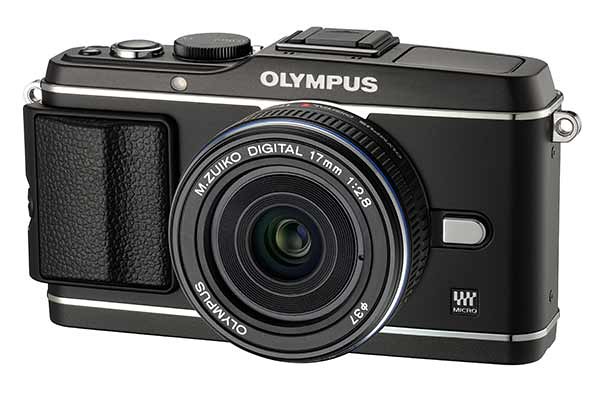
The svelte Olympus PEN E-P3 with a 17mm lens.

The svelte Olympus PEN E-P3 with a 17mm lens.

The Olympus PEN E-P3 is a 12.3-megapixel entry-level DSLR camera which is more compact than traditional DSLRs because the design leaves out the mirror that channels the view through the lens to an optical viewfinder on top of the camera.

The LCD screen at the back of the camera shows a preview of the shot for framing and composition. An optional add-on electronic viewfinder is available for those who prefer to hold the camera to the face rather than at arms length.

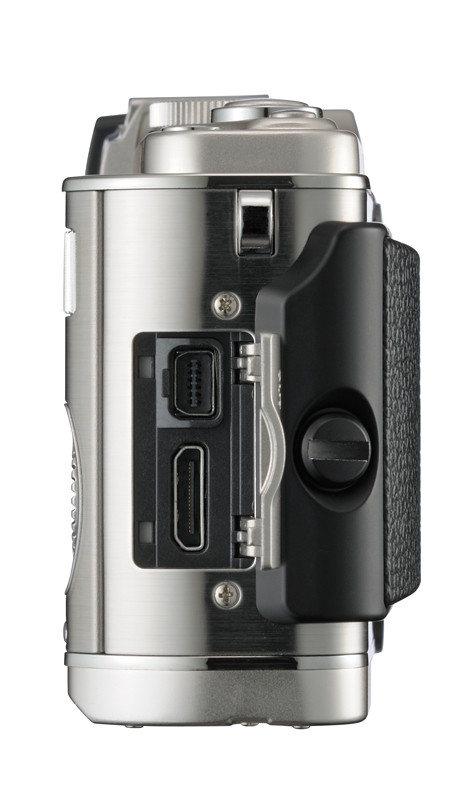
A multi-purpose USB/AV out/remote control socket, and a mini-HDMI connector for connecting to your TV.

A USB/AV out/remote control socket, and a mini-HDMI connector.

The micro four thirds format and size of the image sensor also contributes to the compactness, although some believe the smaller size of the sensor would slightly impact the image quality when compared with other DSLRs using the standard but slightly larger APS-C sized sensor.

The main highlight of the PEN E-P3 is the enhancement of the autofocus system, which has improved the autofocus speed by more than three times when compared to its predecessor.

I’ve tried it during the launch event for the product and the autofocus felt near instantaneous and impressive.

The details are below:

Main Specs
Price (Singapore) to be announced
Effective megapixels 12.3
Monitor 3-inch 3:2 OLED touch screen with 610k dots
Colours Black, Silver or White
Movie – HD 1280 x 720 @ 30fps (16:9)
– SD 640 x 480 @ 30fps (4:3)
The juicy details
Image stabilisation – Photo: “Supersonic Wave Drive” in-body sensor shift (up to 3 EV stops compensation)
– Video: Digital IS
Sensor 4/3 inch hi-speed Live MOS sensor
File format (Photos) JPEG, RAW, MPO (3D)
Largest photo size 4032 x 3024 pixels
Image aspect ratio 4:3, 3:2, 16:9, 1:1
Video recording AVCHD and AVI Motion-JPEG
1920 x 1080, 60i recording, 17 Mbps
Frame rate: 30 fps
Max length: 29 min, 4 GB
Image processor engine TruePic VI
Auto focus FAST AF system with 35-area multiple AF
(Imager contrast detection)
AF assist lamp Yes
Exposure modes iAuto, Program AE (with shift), P, A, S, M, Art Filter, Scene select
Sensitivity – Auto: ISO 200 – 12800
– Manual: ISO 100 – 12800
(adjustable in 1/3 EV step)
Metering modes Digital ESP (324-area multi-pattern metering), Centre-weighted average, Spot (1%)
AE Bracketing 2, 3, 5 or 7 frames
Exposure compensation Up to +/- 3 EV in 1/3, 1/2 or 1.0 steps
Shutter speed 1/4000 sec to 60 sec
WB Auto, Sunny, Shadow, Cloudy, Incandescent, Fluorescent, Flash, Custom
Art filters 10 (Pop Art, Soft Focus, Grainy Film, Pin Hole, Diorama, Dramatic, Pale & Light Color, Light Tone, Cross Process, Gentle Sepia)
Scene modes 23
Continuous shooting – Sequential (3 fps)
– Raw: max 8 frames
– JPEG: Unlimited until memory runs out
Self-timer 2 or 12 sec
Flash – Built-in pop-up (GN10 at ISO 200
– Hotshoe for external flash
Viewfinder Optional EVF
Orientation sensor Yes
Storage SD (SDHC, SDXC)
Dimensions 122 x 69.1 x 34.2 mm
Weight (excl battery and card) 275g / 9.2oz. (incl. Battery and card)
In the box Li-ion battery BLS-5, charger BCS-1, USB/Video multi cable, Shoulder strap, Software CD-ROM, Instruction manual.

First look at the Olympus PEN E-P3

Sunday, July 3rd, 2011
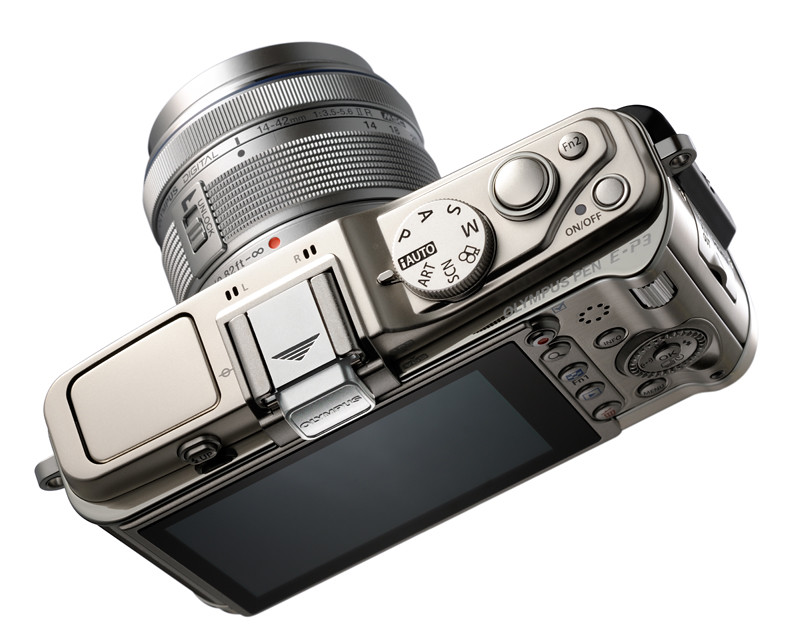
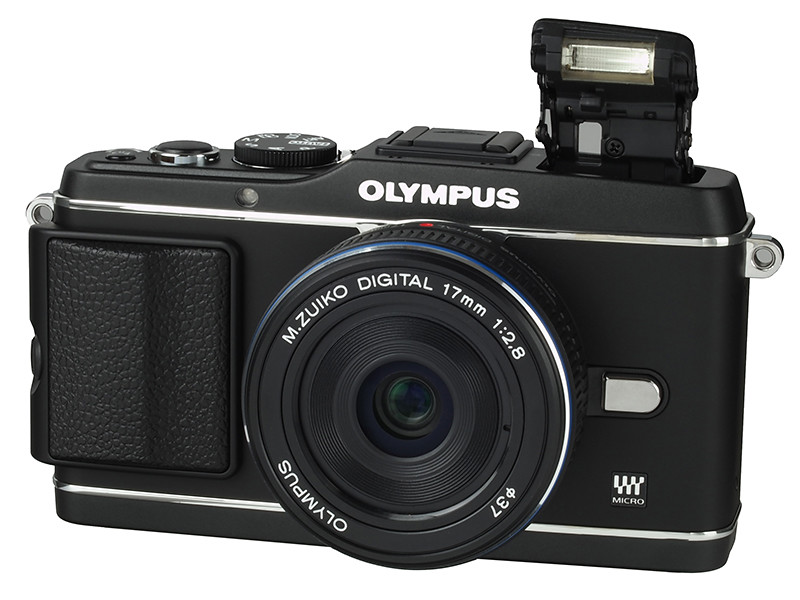
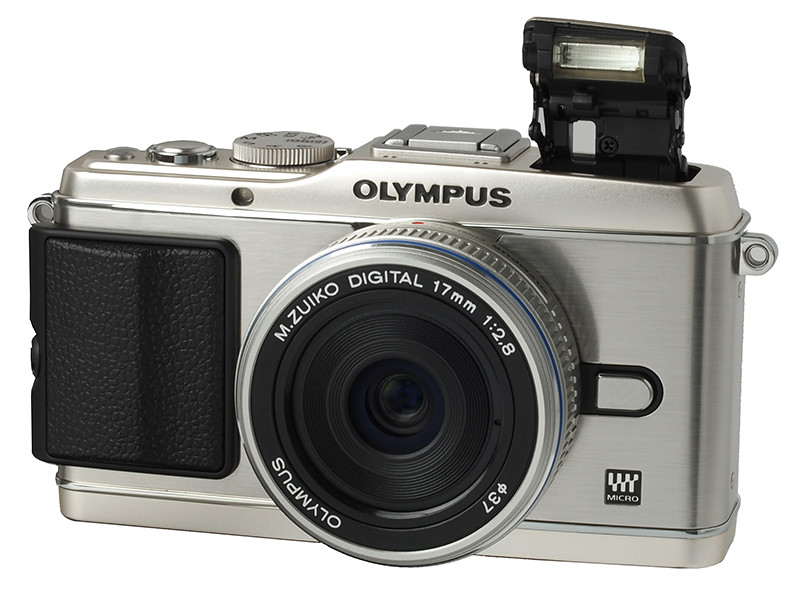
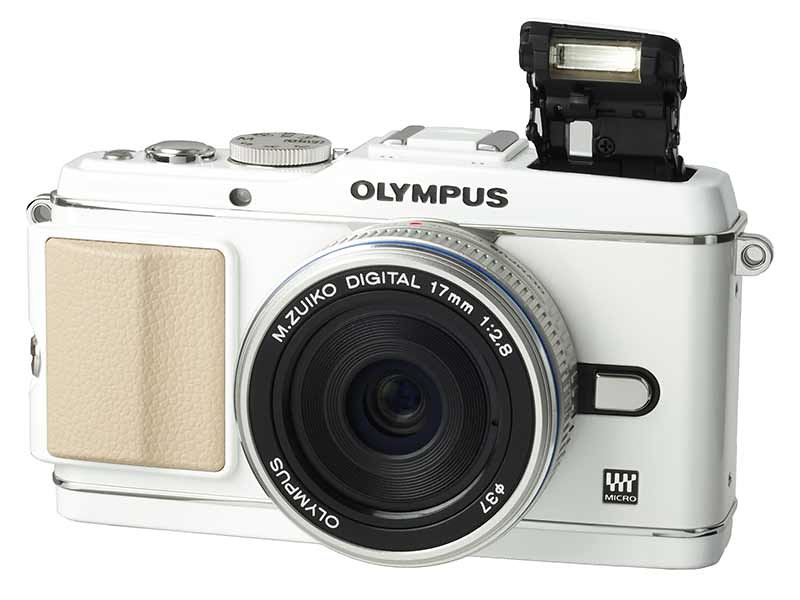
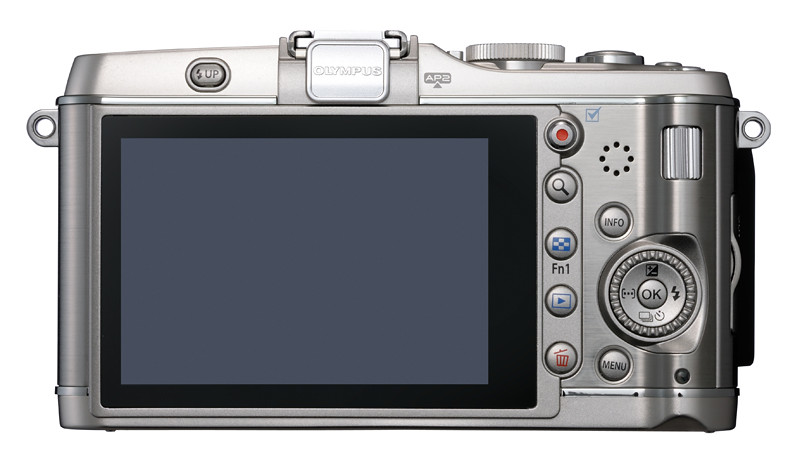
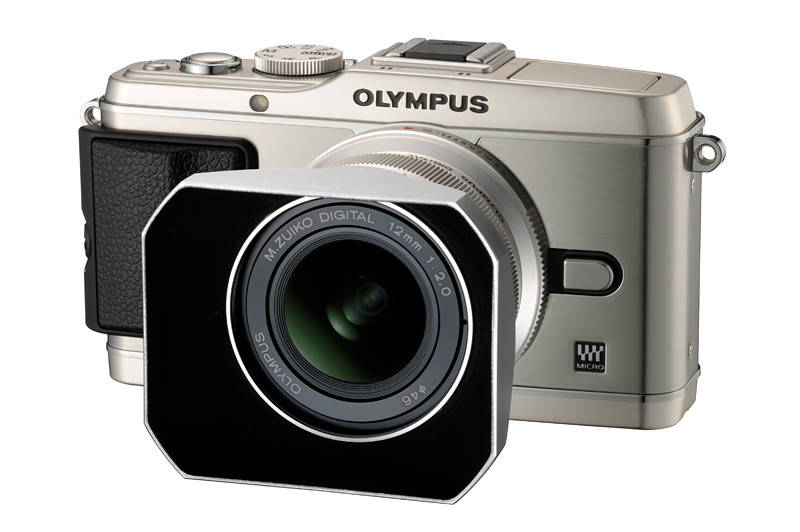
The PEN E-P3 - flagship model for the PEN series of mirrorless interchangeable lens cameras from Olympus.

The PEN E-P3 - flagship model for the PEN series of mirrorless interchangeable lens cameras from Olympus.

Externally similar to its predecessors, the PEN E-P3 has received a new sensor, image processing engine and the autofocus system has been tuned up to become lightning fast.

The PEN E-P3 is scheduled for release in Singapore on July 22, 2011 although the pricing has not been revealed yet. Online retailers such as Adorama is taking preorders for the PEN E-P3 at US$899 with M. Zuiko 14-42mm II R f/3.5-5.6 kit lens. The camera is available in black, white and silver. See the specifications here.

FASTer autofocus

Olympus claims that the new FAST (Frequency Acceleration Sensor Technology) autofocus (AF) system makes the E-P3 the camera to beat when it comes to AF speed. The FAST AF is achieved through the combination of a few innovations.

The PEN E-P3 - flagship model for the PEN series of mirrorless interchangeable lens cameras from Olympus.

Three colours are available - black, silver and white.

Firstly, the Live MOS Sensor is driven at double the previous speed – 120 fps – so that image data can be obtained more quickly than with previous systems. Secondly, the speed of the AF computations that generate the contrast information from the image data – in order to determine the degree of focusing – has also been doubled. Thirdly, the speed of communication for controlling the lens motion during AF has been increased. Finally, the response time from pressing the shutter release to the start-up of AF system has been shortened.

Overall, the imager AF speed has become almost three times faster than before.

I tried out the camera during its launch on 30 June and found the AF was indeed much faster than its predecessors the E-P2 and E-P1 – even at low light. An AF illuminator light – inexplicably absent in previous models – has a range of 3m for low light situations.

The number of focus selection areas has been increased from 11 to 35, enabling detailed, pinpoint AF across a wider area than before. To capture a moving subject accurately, the group area selection can apply AF to a limited region compose of 3 vertical and 3 horizontal areas.

Design and UI
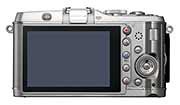
The PEN E-P3 - flagship model for the PEN series of mirrorless interchangeable lens cameras from Olympus.

The Olympus PEN E-P3 retains the retro design of the PEN series and looks similar to its predecessors.

The 3-inch, 610k-dot OLED display is not only bright and sharp but features a touch screen that is easy to use – in fact addictive. Simply tap the main subject on the screen to prefocus, or focus and take the snapshot immediately. The font and graphic design of the user interface and menu system has been improved to become more readable and good-looking.

In terms of external design, its retro look is similar to its predecessors with a few design and functional differences. There are now two Function buttons and a direct movie-recording button – making camera control easier. A built-in GN10 (ISO 200) flash – absent in previous models – is now available. Two designs of detachable camera grips are available in white, black or silver. Alternatively, leave the grip at home for a minimalistic look, showing off the metallic finish on the E-P3 body.

Inside the camera
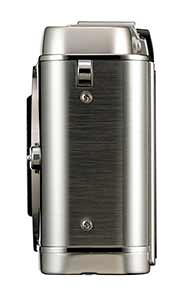
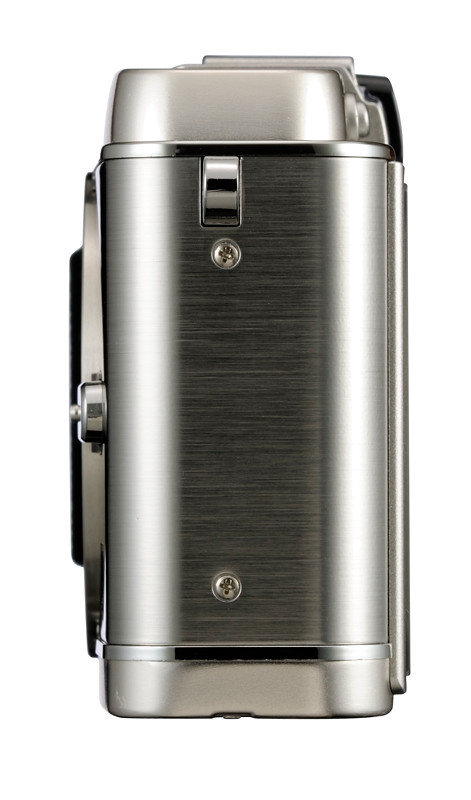
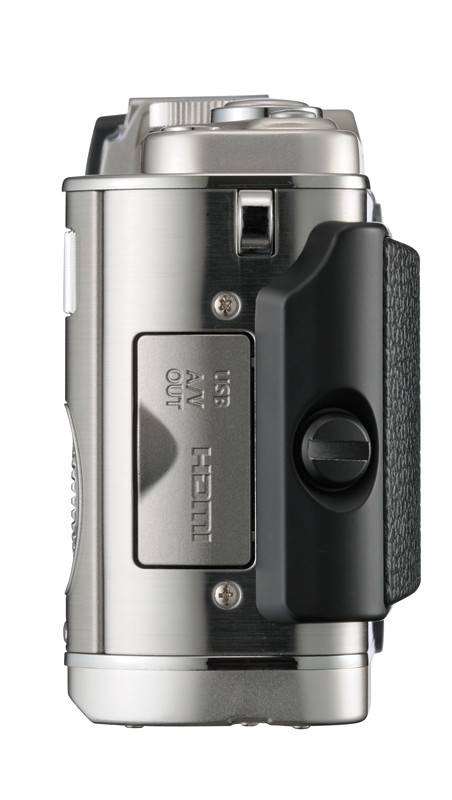
The PEN E-P3 - flagship model for the PEN series of mirrorless interchangeable lens cameras from Olympus.

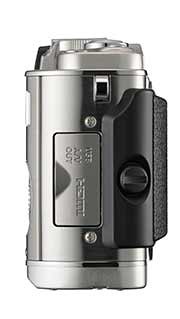
Sideviews of the Olympus PEN E-P3.

A new 12.3 megapixel Live MOS sensor in the micro four thirds interchangeable lens digital camera promises an enhanced image quality. 1080i60 full HD movies in AVCHD format are now possible as is high-sensitivity shooting at ISO12800.

The dual core processor allows live view on the LCD panel and image processing when a shot is taken to be executed in parallel, decreasing the blackout time after snapping each photo. This, together with the aforementioned FASTer AF gives the E-P3 a snappier feel and makes it more responsive – especially when taking multiple shots at a go.

The E-P3 now ships with 10 Art Filters – precanned special effects that are applied to the JPEG image when you snap a photo. This is two more than the E-P2 and four more than the E-PL3. Art Filter bracketing is now possible for recording multiple Art Filtered pictures with a single snapshot.

Two new Art Effects are added – “Starlight” and “White Edge”, as well as a new Art Filter variation called the “Pale & Light Colour II”. The Art Filters can be applied during full HD movie shooting and the 3D Art Filter is compatible with the new 3D Photo Shooting scene mode.

Image processing has been enhanced by incorporating the “Full Detail” processing algorithm used in the E-5, the flagship DSLR from Olympus. New “Real Colour Technology” targets the reproduction of colours that are difficult to accurately reproduce such as emerald green and yellow making the image pop.

The “Advanced Shadow Adjustment Technology” (ASAT) tries to correct backlit photos by brightening the backlit subject independently without blowing out the bright background.

Based on paper specifications and a short physical handling session, the Olympus E-P3 promises to be a much better performer than its predecessor, the E-P2, in terms of AF speed, image quality and camera operation, viz touch screen and enhanced button and menus.

Jay Chou designs notebook for ASUS

Friday, July 1st, 2011

What has Jay Chou, Asus, Intel and Bang & Olufsen have in common? The answer is a new limited edition N-series notebook computer from ASUS.

Jay Chou, renowned artist and songwriter, was appointed by ASUS as the Chief Designer of the N3, which features 2nd generation Intel Core processors and Sandy Bridge architecture that enhance both graphics and multitasking performance.

The notebook also comes with the SonicMaster audio technology which was co-developed last year by a dedicated ASUS team and leading sound experts from Bang & Olufsen ICEpower.

Jay Chou collects his honorary staff pass from ASUS Chairman Jonney Shih

Jay Chou collects his honorary staff pass from ASUS Chairman Jonney Shih.

The notebook was launched in a media conference in Taipei by Jay Chou and ASUS Chairman Jonney Shih. Hoping to blend technology with art, Shih believes that “this strong partnership <with Jay Chou> will continue to bring more exciting products to our customers”.

The notebook is estimated to be available in Singapore by the first half of July 2011 and will retail for S$1298 (GST included).

Unique design inspired by traditional and modern motifs

ASUS Chairman Jonney Shih and celebrity Jay Chou launches the limited edition N series notebook.

ASUS Chairman Jonney Shih and celebrity Jay Chou launches the limited edition N series notebook.

Jay Chou transformed his passion and devotion for music into innovative notebook design by using music notes, sheet music, piano concepts and other musical icons as inspiration for a truly unique notebook. The combination of modern “J-style” text-wrapping with a classical Chinese blue and white porcelain finish infuses the notebook with strong and diverse Asian aesthetics.

“It has been a tremendous pleasure to work with the ASUS Design Center.  They were able to translate and transform my musical inspirations onto the N series notebook product design and functionality.  Every detail on the N series perfectly portrays my personal taste and multimedia lifestyle,” said Jay Chou.

Enhanced sight and sound

The Intel chips in the N3 upgrade graphics and boost flexible multitasking performance while optimizing power consumption. SonicMaster incorporates grand, theater-like acoustics with the constrained physical dimensions of a notebook PC.

The audio technology delivers the clear treble and resonant bass on any portable PC. SonicMaster also enables wide-reaching and powerful surround-sound effects, creating theater-grade and highly lifelike audio.

Below are the main specifications of this collector’s item.

Model: N43SL
Processor: Intel Core i5-2410M (2.3GHz)
Operating system: Genuine Windows 7 Home Premium (64-bit)
Chipset: Mobile Intel HM65 Express chipsets
RAM: 4GB DDR3 RAM
HDD: 640GB SATA HDD (5400rpm)
Display: 14.0” LED-Backlit (1366×768)
VGA: NVIDIA GeForce GT 540M with 2GB dedicated VRAM
ODD: SuperMulti Double Layer
WLAN: Integrated 802.11b/g/n + Bluetooth
Audio: Audio by Bang & Olufsen ICEpower & SonicMaster technology
Weight: 2.4Kg (with 6-cell battery)
Dimension: 35.0(W) x 24.0(D) x 3.30 ~ 3.70 (H) cm
RSP: $1,298 (GST Included)
Availability: Estimated 1st – 2nd week July 2011

Olympus launches PEN E-P3, E-PL3 and E-PM1

Thursday, June 30th, 2011

Olympus has just launched, worldwide, its slew of new cameras, lenses and accessories. The three new camera models include updates to the PEN E-P2 and E-PL2, as well as the new E-PM1 with a similar form factor (for the body) as the Olympus XZ-1. New and repackaged lenses are also being launched.

The new Truepic VI engine and sensor promise enhanced image quality and, together with the new auto-focusing system, deliver much faster auto-focus  on these new cameras.

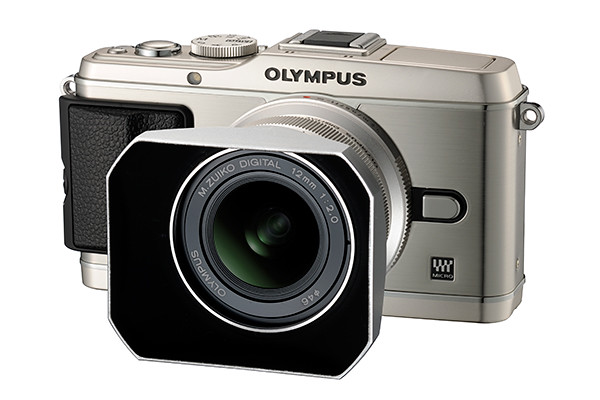
Olympus PEN E-P3, with the 12 mm, f/2.0 lens.

Olympus PEN E-P3, with the 12 mm, f/2.0 lens.

Olympus PEN E-PL3, with the 40-150 mm II R kit lens and retro lens hood.

Olympus PEN E-PL3, with the 40-150 mm II R kit lens and retro lens hood.

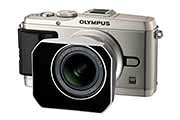
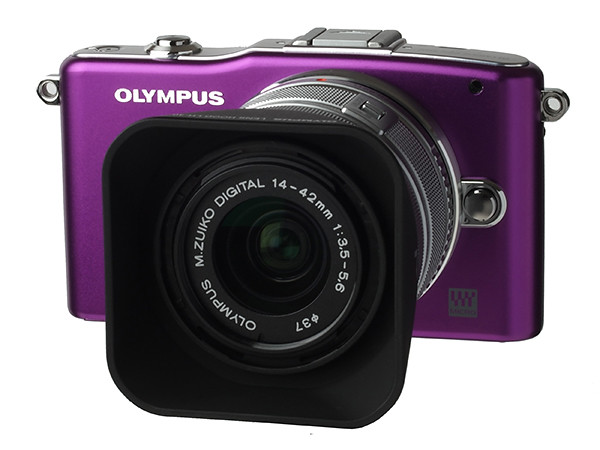
Olympus PEN E-PM1, with the 14-42 mm II R kit lens and retro lens hood.

Olympus PEN E-PM1, with the 14-42 mm II R kit lens and retro lens hood.

The Olympus PEN E-P3 is here. And some of its new powerful features have also been made available to its “Lite” and “Mini” cousins: the E-PL3 and E-PM1 respectively.

Two new lenses – a 12 mm f/2.0 lens and a 45 mm f/1.8 lens – have also been introduced together with the new cameras. At the same time, two existing kit lenses has been repackaged into the 14-42 mm II R and the 40-150 mm II R to match the design of the new cameras, although the functionality remains unchanged. A new external wireless-capable flash – FL300R – was also unveiled.

The PEN E-P3 and the 12 mm f/2.0 lens is scheduled for release in Singapore on July 22, 2011, while the other camera models and lenses will only be available later. As of today’s launch, only the E-P3 was ready for shooting, while the E-PL3 was not ready to be powered on. For the E-PM1, only a mock-up was viewable in a display case.

Prices in Singapore are yet to be determined, although Adorama is taking preorders online for the PEN E-P3 (US$899 with kit lens), the 12 mm f/2.0 lens (US$799) and the 45 mm f/1.8 lens (US$399).

The launch in Singapore at the National Geographic Store in VivoCity is one of 6 venues worldwide holding the event at the same time.

“The much faster autofocus speed is achieved through the combination of four components making up the FAST <Frequency Acceleration Sensor Technology> autofocus system introduced in these new cameras,” Terada Toshiyuki (寺田 利之), Group Leader of the Product and Marketing Planning Group in Olympus told me.

The long awaited worldwide product launch from Olympus.“This includes a new LiveMOS sensor which is driven twice as fast as current sensors, faster calculation of the contrast detection autofocus, faster communications between the camera and the lens, and reduction of the lag in activating autofocus when the shutter release button is pressed,” elaborated the Tokyo-Shinjuku based guest.

Trying out the E-P3 unit myself, I found the auto-focus almost instantaneous – even in low-light. It certainly feels much faster than the previous incarnations of cameras in the PEN series.

I found the touch-screen really addictive and easy to use – simply point at the subject you want to focus on, and the camera focuses quickly on it and takes the snapshot. No more fiddling with buttons and menu systems just to select from a limited number of focus points.

You can also use the touch screen to pre-focus in prefocus mode – simply tap the main screen where the main subject is and the camera focuses but does not release the shutter. Press the regular shutter release button to take the snapshot.

The previous PEN cameras came with auto-tracking of subjects. This works with the touch-screen as well.

Olympus claims that image quality has also been improved with the new sensor and Truepic VI engine. More realistic colour reproduction and selective brightening of back-lit subjects without the addition of noise are some of the advanced features touted.

Olympus set for major product launch tomorrow

Wednesday, June 29th, 2011

Olympus will announce a slew of new products tomorrow (Thursday June 30th) at 6 am London time (1 pm Singapore time). Expect the E-P3, E-PL3, E-PM1 and a slew of new and repackaged lens that leverage a new Truepic VI engine and faster electronic connections to provide faster auto-focus.

Is this what the new Olympus E-P3 looks like?

Is this what the new Olympus E-P3 looks like? Photo from www.43rumors.com

Olympus has been gearing up towards tomorrow’s launch event at multiple venues worldwide. There is much speculation as to what will be launched. Here are some sneak peeks. Check back for the actual specs tomorrow.

Is this what the new Olympus E-PM1 looks like?

Is this what the new Olympus E-PM1 looks like? Photo from www.43rumors.com

The new Truepic VI engine promises to improve the auto-focus speed tremendously, compared to existing Olympus PEN cameras.

New camera models

  • E-P3. New 12 megapixel sensor with dual-processor  Truepic VI engine. ISO 100 to 12,800.
  • E-PL3. Same sensor and af speed as the E-P3.
  • E-PM1. Similar compactness as the Olympus XZ-1 but without any tilt screen nor built-in flash.

New lenses

  • 12 mm f/2.0 lens. Micro Four Thirds High Grade lens made in Japan. Full metal construction with distance scale. Filter size 46 mm with minimum focusing distance at 20 cm.
  • 45 mm f/1.8 lens. No macro.

Reworked lenses

  • 14-42 mm II R. Same price and optical performance as the current 14-42mm lens but with a much faster autofocus performance.
  • 40-150 mm II R. Same price and optical performance as the current 40-150mm lens but with a much faster autofocus performance.

Accessories

  • FL-300R
  • External EVF