With the blistering pace at which technology develops in this cognitive era, the mantra of the day is “disrupt or be disrupted”. IBM explores the possibilities of exploiting disruptive cutting-edge technologies through real-life case studies of how industry leaders have transformed their organisations and markets to lead the pack.
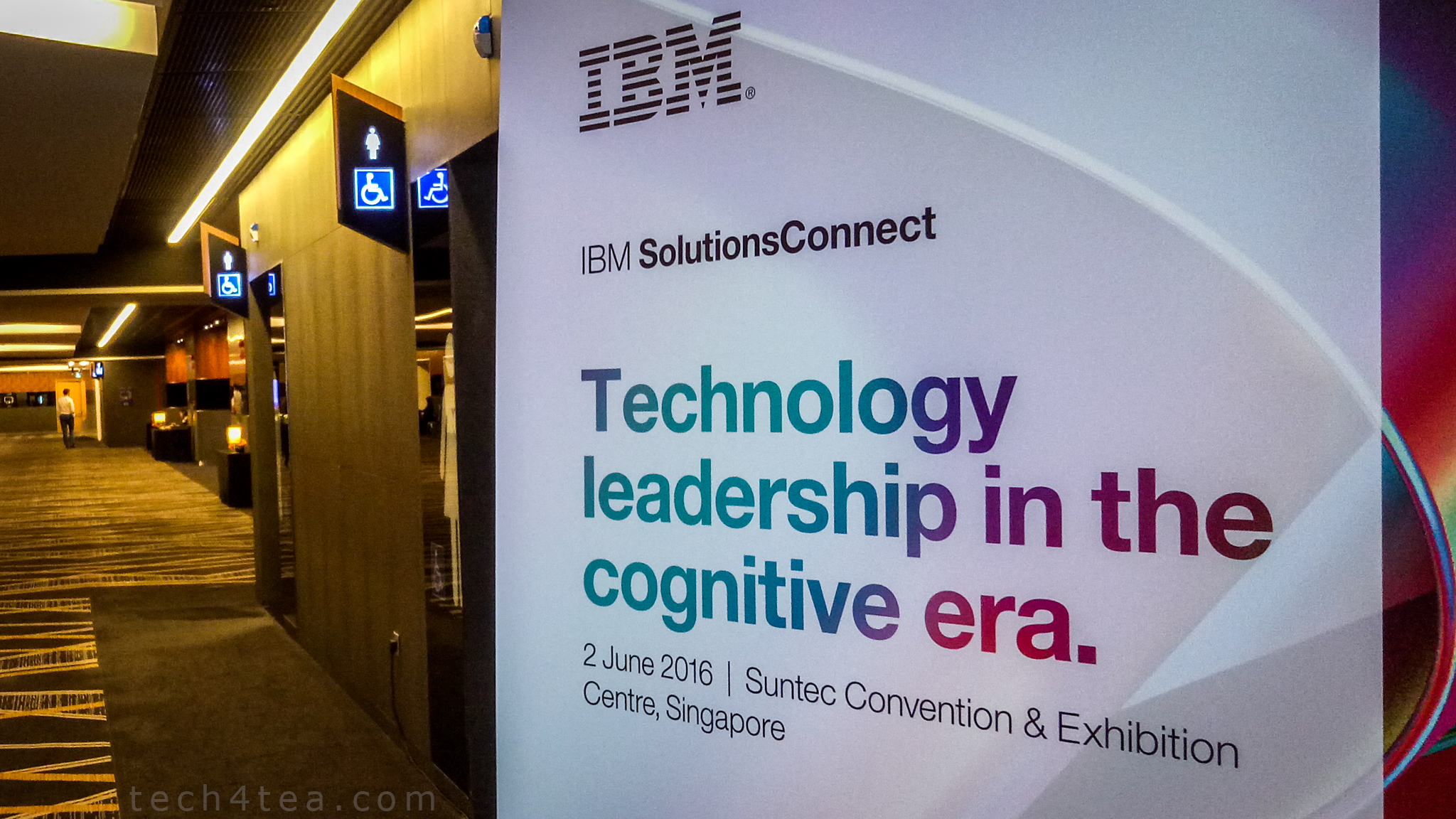
I am at a one-day thought leadership conference held by technology leader IBM at Suntec Convention and Exhibition Centre in Singapore. The conference will discuss leading-edge technologies that organisations can exploit to win. I’m looking forward to the solutions showcase that will demo the latest in cloud, Internet of Things (IoT) and analytics, amongst other technologies of the day.
Brett Michael Nulf brought delegates through various examples of how technology-driven disruptions had decimated many traditional leaders in various industries in recent years, emphasising the importance for enterprises to stay vigilant in order to avoid getting eliminated because of disruption from existing competitors and new startups.
The impetus for disruptive innovation
At the rate at which devices proliferate, their numbers will reach 75 billion by 2020. In fact, some ninety percent of data created was in the last two years because of this proliferation of devices.
Computing systems nowadays are increasingly capable of taking in unstructured data in its many forms though IoT and the rise of the API economy. This has led to the rise of cognitive computing which is transforming digital organisations into cognitive enterprises.
As a result, new business models are emerging, with many of these based on mobile strategies.
New disruptive businesses are leveraging the confluence of analytics, IoT and cloud to create new applications, putting them ahead of incumbent leaders entrenched in legacy technologies.
To succeed in this competitive race, enterprises must be nimble and creative, despite their size.
In order to do this, winners need to accelerate innovation by evolving a progressive technology mindset, mastering technologies such as hybrid clouds and integrating into the API economy.
He mused at how more than seventy percent of companies have dropped off the Fortune 500 list, with the “Unicorn Club” of privately-funded startups reaching US$1bn in value becoming increasingly crowded.
Nulf is a Business Unit Executive for MobileFirst Platform & Cloud, Asia Pacific, IBM Corporation.
He cautioned that although the Fintech arena is currently seeing the most disruptions, other industries are also prone to technology-driven disruptions, such as in manufacturing, healthcare, and even traditional sectors with a long history – such as consumer packaged goods.
An interesting phenomenon that Nulf described was what he called the “Uber syndrome – where a competitor with a completely different business model enters your industry and flattens you”.
It was an interesting example where the innovative newcomer (in this case Uber) enjoyed rapidly growing revenue and market share at the expense of traditional taxis – while the overall pie remained the same.
One key reason why these disruptive newcomers do so well is the speed with which they move and innovate.
Nulf observed that, in general, they move six time faster than their traditional rivals whose infrastructure is too heavy and therefore saddle them with too much inertia when it comes to change and innovation.
He called for a new technology mindset that embraces innovations in mobile, cognitive, cloud, blockchain and IoT.
As a guide to how new business frameworks can be developed to enable disruptive innovation, Nulf listed six avenues that various disruptive companies had successfully pursued.
- Better user experience – GrabTaxi versus traditional taxi hailing.
- Better insights – Netflix, going from mail order to high-end analytics.
- Service for the unserviced – Kickstarter, providing rapid direct funding from small investors.
- Better social network – WeChat, a messaging app that went on to finance and retail.
- Better ecosystem – Flipkart and Yes Bank through API banking.
- Low-end disruptions – Google providing bite-sized advertising through better technology and business model.
At the end of his presentation, Nulf invited three partners who had worked with IBM to engineer disruptive innovation in their organisations.
“To me, IOT can also stand for Internet of Threats. As companies connect more devices, your front of attack actually increases. We’re working with IBM to get data from these connected devices, make sure it’s secure and turn it into knowledge for companies,” said Martin Janse van Rensburg, APJ Partner Engineering Manager & CTO, Partner Organisation – Asia Pacific and Japan, CISCO.
These were Martin Janse van Rensburg, APJ Partner Engineering Manager & CTO, Partner Organisation – Asia Pacific and Japan, CISCO; Callum Eade, Senior Director, Software Defined Data Center, APJ, VMware; and Santanu Ghosh, ASEAN Enterprise Applications Leader for IBM (on behalf of SAP).
These industry leaders shared their experiences of implementing disruptive technologies in their businesses.
Martin shared that CISCO is working with IBM and Apple on integration between CISCO technology and Apple’s iOS. Slated for release later this year, iOS users on CISCO networks will enjoy a fast lane!
Tags: API, Cisco, cognitive, disruptive, Flipkart, Google, GrabTaxi, IBM, IBM SolutionsConnect 2016, Kickstarter, Netflix, SAP, Singapore, SolutionsConnect, technology, VMware, WeChat, Yes Bank